堆简介
- 堆是一个特殊的完全二叉树
- 所有的节点都大于(最大堆)或 小于等于(最小堆)它的子节点
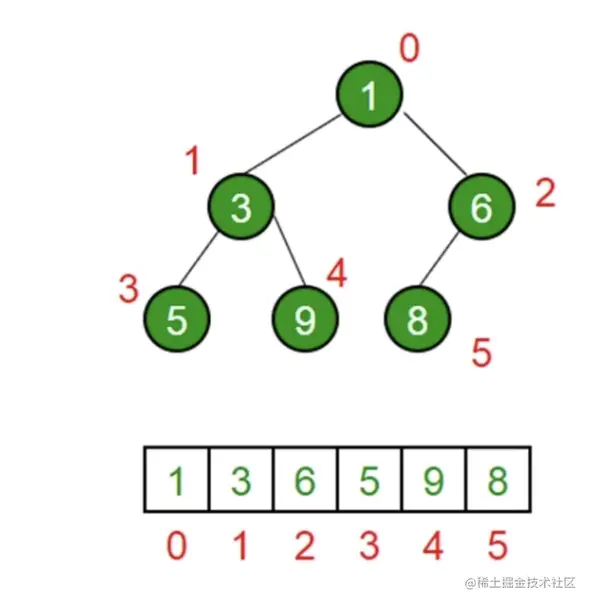
- js中通常用数组表示堆
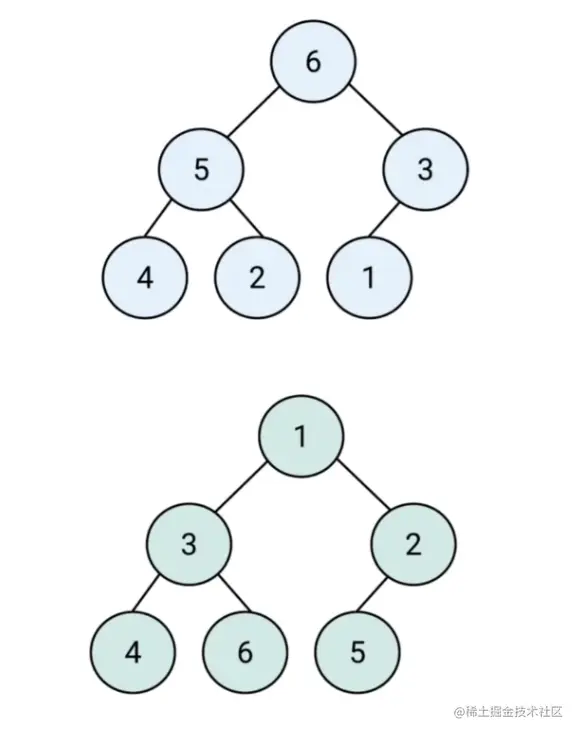
堆表示法和堆特点
- js中通常用数组表示堆
- 左侧子节点的位置(下标)是 2 * index + 1
- 右侧子节点的位置(下标)是 2 * index + 2
- 父节点的位置(下标)是 (index -1)/2
堆的应用
- 堆能高效、快速的找出最大值和最小值, 时间复杂度O(1)
- 找出第k个最大(小)元素
第k个最大元素
- 构建一个最小 堆,并将元素依次插入堆中
- 当堆的容量超过k,就删除堆顶
- 插入结束后,堆顶就是第k个最大元素
js 实现最小堆类
- 在类里,声明一个数组,用来装元素
- 主要方法: 插入、删除堆顶、获取堆顶、获取堆大小
插入
- 将值插入堆的底部,即数组的尾部
- 然后上移: 将这个值和它的父节点进行交换,直到父节点小于等于这个插入的值
- 大小k的堆中插入元素的时间复杂度为O(logk)
删除堆顶
- 用数组尾部元素替换堆顶(直接删除堆顶会破坏堆结构)
- 然后下移:将新的堆顶和它的子节点交换,直到子节点大于等于这个新的堆顶
- 大小为k的堆中删除堆顶的时间复杂度为O(logk)
获取堆顶和堆的大小
- 获取堆顶: 返回数组的头部
- 获取堆的大小: 返回数组的长度
class MinHeap {
constructor() {
this.heap = [];
}
swap(i1, i2) {
const temp = this.heap[i1];
this.heap[i1] = this.heap[i2];
this.heap[i2] = temp;
}
getLeftIndex(index) {
return index * 2 + 1;
}
getRightIndex(index) {
return index * 2 + 2;
}
getParentIndex(index) {
return (index - 1) >> 1;
}
_shiftUp(index) {
if (index === 0) return;
const parentIndex = this.getParentIndex(index);
if (this.heap[parentIndex] > this.heap[index]) {
this.swap(parentIndex, index);
this._shiftUp(parentIndex);
}
}
_shiftDown(index) {
const leftIndex = this.getLeftIndex(index);
const rightIndex = this.getRightIndex(index);
if (this.heap[leftIndex] < this.heap[index]) {
this.swap(index, leftIndex);
this._shiftDown(leftIndex);
}
if (this.heap[rightIndex] < this.heap[index]) {
this.swap(index, rightIndex);
this._shiftDown(rightIndex);
}
}
insert(value) {
this.heap.push(value);
this._shiftUp(this.heap.length - 1);
}
pop() {
this.heap[0] = this.heap.pop();
this._shiftDown(0);
}
get peek() {
return this.heap[0];
}
get size() {
return this.heap?.length;
}
}
const h = new MinHeap();
h.insert(7);
h.insert(10);
h.insert(2);
h.pop();
console.log(h.size, "heap");
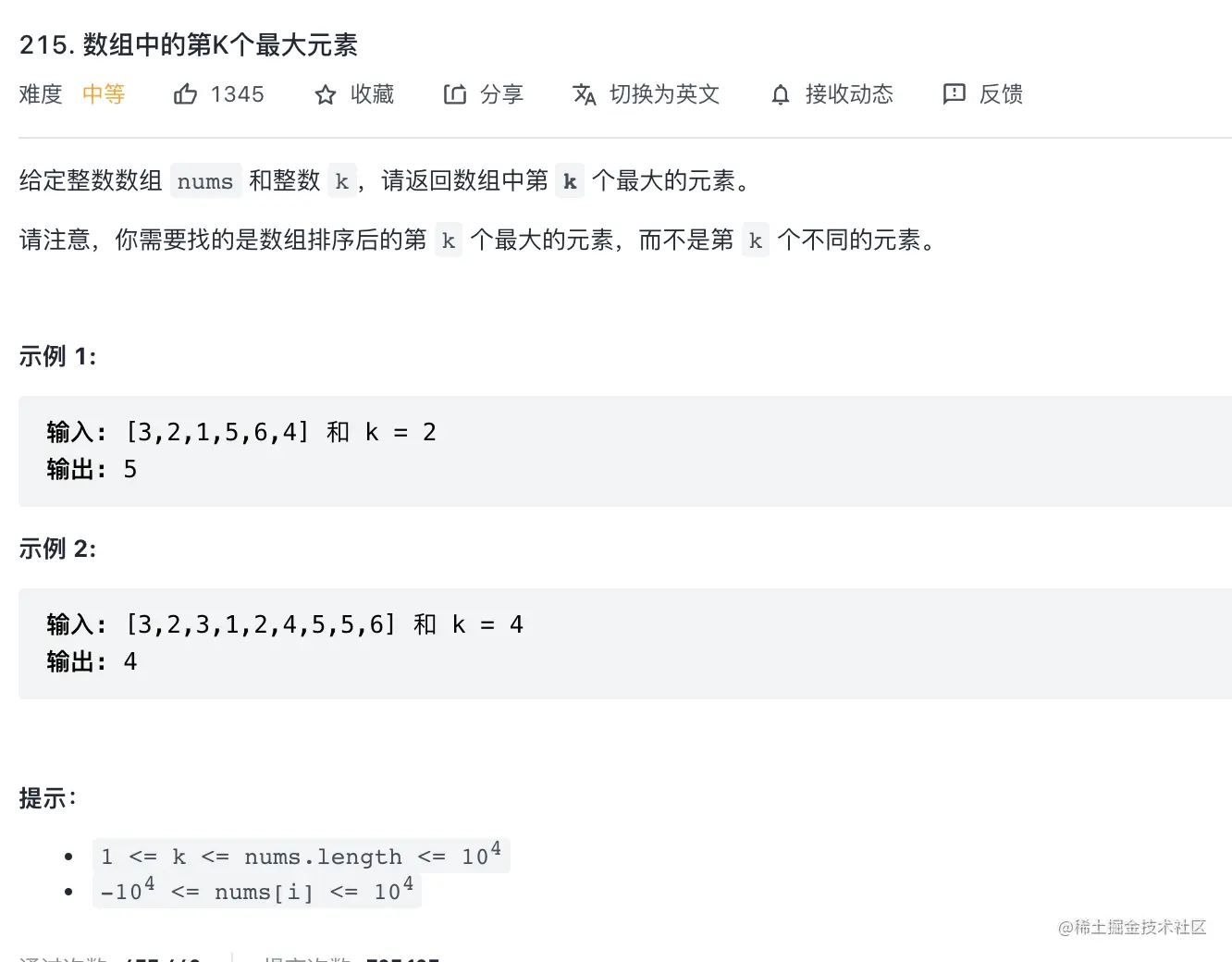
leetcode-cn.com 算法题实战
完整题目请打开 leetcode
解题思路
- 看到“第k个最大元素”
- 考虑选择使用最小堆
- 构建一个最小堆,并依次把数组的值插入堆中
- 当堆的容量超过k,就删除堆顶
- 插入结束后,堆顶就是第k个最大元素
class MinHeap {
constructor() {
this.heap = [];
}
swap(i1, i2) {
const temp = this.heap[i1];
this.heap[i1] = this.heap[i2];
this.heap[i2] = temp;
}
getLeftIndex(index) {
return index * 2 + 1;
}
getRightIndex(index) {
return index * 2 + 2;
}
getParentIndex(index) {
return (index - 1) >> 1;
}
_shiftUp(index) {
if (index === 0) return;
const parentIndex = this.getParentIndex(index);
if (this.heap[parentIndex] > this.heap[index]) {
this.swap(parentIndex, index);
this._shiftUp(parentIndex);
}
}
_shiftDown(index) {
const leftIndex = this.getLeftIndex(index);
const rightIndex = this.getRightIndex(index);
if (this.heap[leftIndex] < this.heap[index]) {
this.swap(index, leftIndex);
this._shiftDown(leftIndex);
}
if (this.heap[rightIndex] < this.heap[index]) {
this.swap(index, rightIndex);
this._shiftDown(rightIndex);
}
}
insert(value) {
this.heap.push(value);
this._shiftUp(this.heap.length - 1);
}
pop() {
this.heap[0] = this.heap.pop();
this._shiftDown(0);
}
get peek() {
return this.heap[0];
}
get size() {
return this.heap?.length;
}
}
var findKthLargest = function(nums, k) {
const h = new MinHeap();
nums.forEach(n => {
h.insert(n);
if(h.size > k) {
h.pop();
}
})
return h.peek;
};
class MinHeap {
constructor() {
this.heap = [];
}
swap(i1, i2) {
const temp = this.heap[i1];
this.heap[i1] = this.heap[i2];
this.heap[i2] = temp;
}
getLeftIndex(index) {
return index * 2 + 1;
}
getRightIndex(index) {
return index * 2 + 2;
}
getParentIndex(index) {
return (index - 1) >> 1;
}
_shiftUp(index) {
if (index === 0) return;
const parentIndex = this.getParentIndex(index);
if (this.heap[parentIndex] && this.heap[parentIndex].value > this.heap[index].value) {
this.swap(parentIndex, index);
this._shiftUp(parentIndex);
}
}
_shiftDown(index) {
const leftIndex = this.getLeftIndex(index);
const rightIndex = this.getRightIndex(index);
if (this.heap[leftIndex] && this.heap[leftIndex].value < this.heap[index].value) {
this.swap(index, leftIndex);
this._shiftDown(leftIndex);
}
if (this.heap[rightIndex] && this.heap[rightIndex].value < this.heap[index].value) {
this.swap(index, rightIndex);
this._shiftDown(rightIndex);
}
}
insert(value) {
this.heap.push(value);
this._shiftUp(this.heap.length - 1);
}
pop() {
this.heap[0] = this.heap.pop();
this._shiftDown(0);
}
get peek() {
return this.heap[0];
}
get size() {
return this.heap?.length;
}
}
var topKFrequent = function(nums, k) {
const map = new Map();
nums?.forEach(n => {
map.set(n, map.has(n) ? map.get(n) + 1 : 1)
})
const h = new MinHeap();
map.forEach((value,key) => {
h.insert({value, key});
if(h.size > k) {
h.pop();
}
})
return h.heap.map(a => a.key);
};
下一站 排序算法