3.5 Methods: How to Write Them
1. Exam Points
Declare and call methods.Implement encapsulation (getter and setter methods)- declare
instance variables as private to hide them
- add
accessor methods (getters) to obtain the value of instance variables.
- Ex: public int getAge() { return age; }
- has a return type and no parameter, so a value must be returned.
- add
mutator methods (setters) to update the value of instance variables.
- Ex: public void setAge(int a) { age = a; }
- has a parameter and no return type
Pass parameters
- For a
primitive type parameter, changes to the parameter have no effect on the corresponding argument.
- For a
reference type parameter, changes to the parameter will reflect on the corresponding argument.
- For a
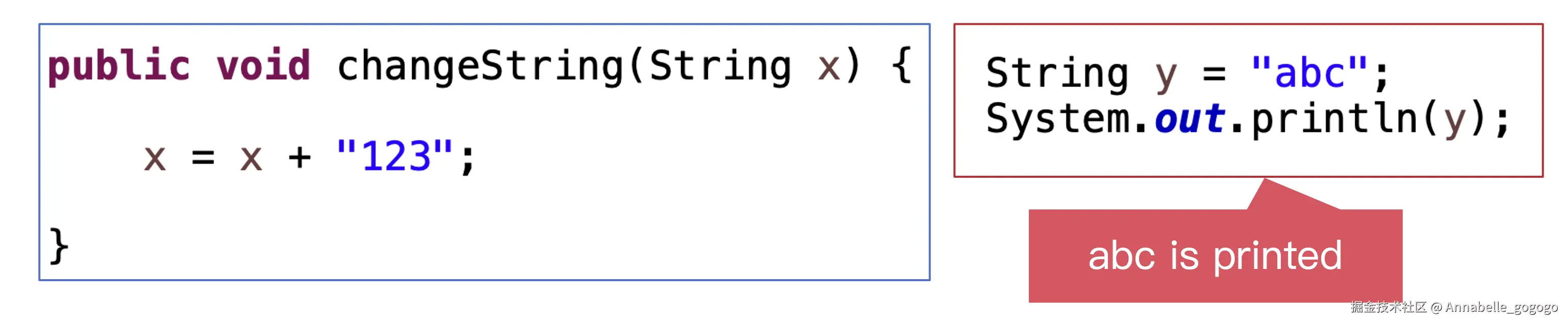
String type parameter, changes to the parameter will not reflect on the argument. String is an immutable class.
Note
If a method has a return type of non-void, a value must be returned.If a method has a return type of void, do not return a value.Only a method with a return type of non-void can be used in print() or println().
2. Knowledge Points
(1) Understand Methods
- If you want to
reuse a code segment, make it a named method.
- To use a method, you should declare a method and then call it.
Each part of a method:
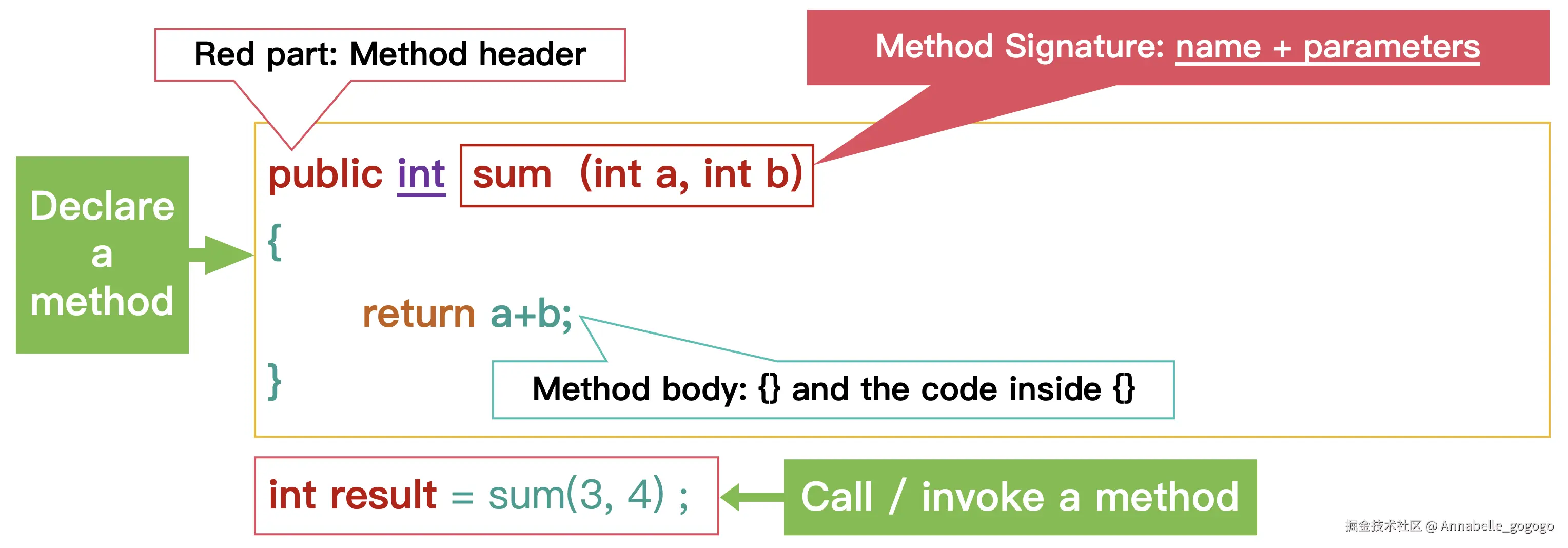
- method header: public returnType methodName(parameter list)
- method body: {} and the code inside {}
- Example:
- In this example:
- method header: public int sum(int a, int b)
- method body: {} and the code inside {}
- method signature: sum(int a, int b)
- a, b: parameters(形式参数)
- 3, 4: arguments(实际参数)
(2) Write Methods
- A method with no parameter

- A method with parameters

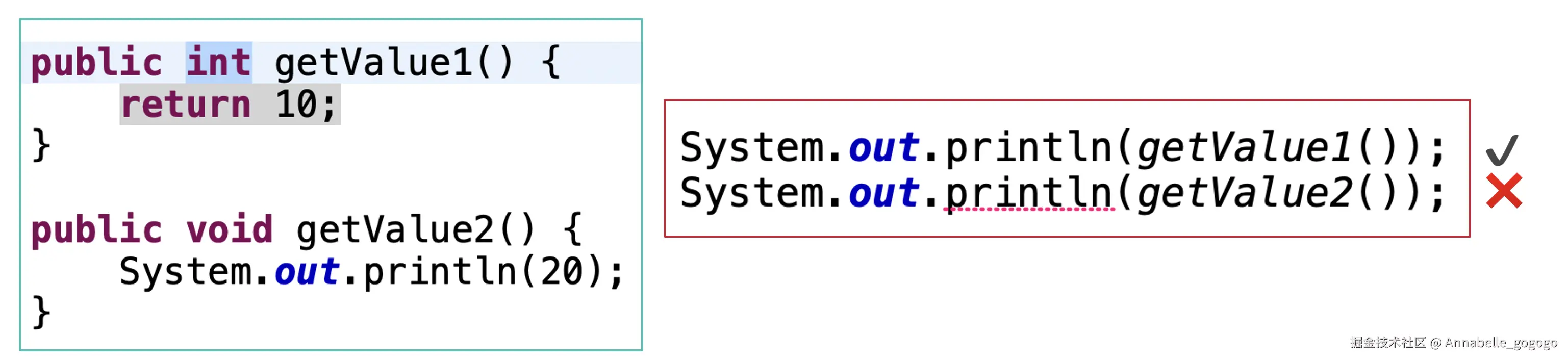
- A method with a return type

- Note: For a method with a return type of
void, do not use it in the 3 ways above as a method with a return type.
(3) The return Keyword
- The return keyword is used to return the flow of control to the point where the method or constructor was called.
- Purpose of a return statement:
- return a value
- return back the flow of control
- Example:
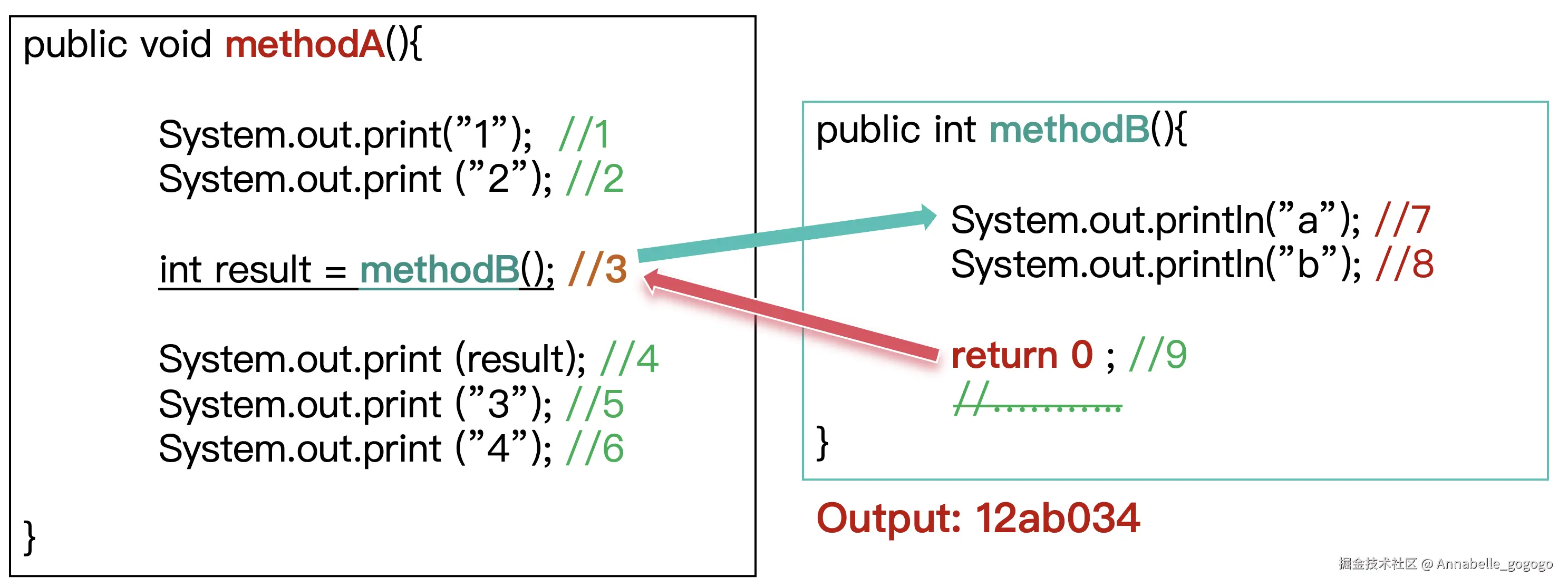
- order of statement execution: 1,2,3 -> 7,8 -> 4,5,6
- output: 12ab034
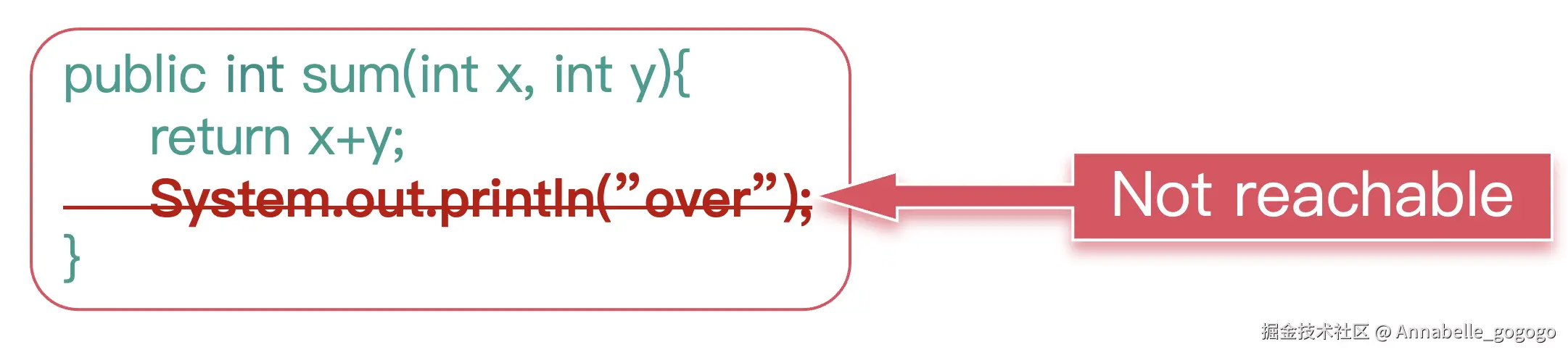
Any code that is sequentially after a return statement will never be executed.
- Executing a
return statement inside a selection or iteration statement will halt the statement and exit the method or constructor. 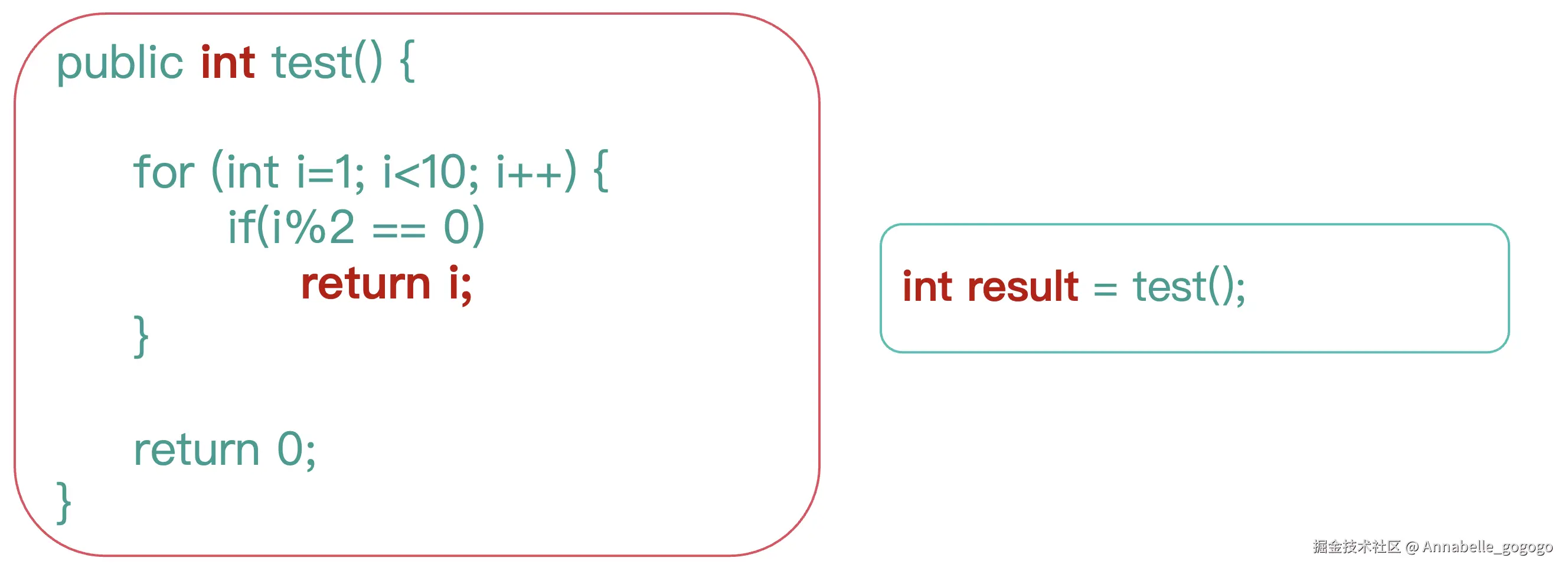
- In this example, the value of result would be 2.
Note:
- If a method has a return type of non-void, a value must be returned.
- If a method has a return type of void, do not return a value.
- Only a method with a return type of non-void can be used in print() or println().
(4) Accessor(访问器) and Mutator(更改器) methods
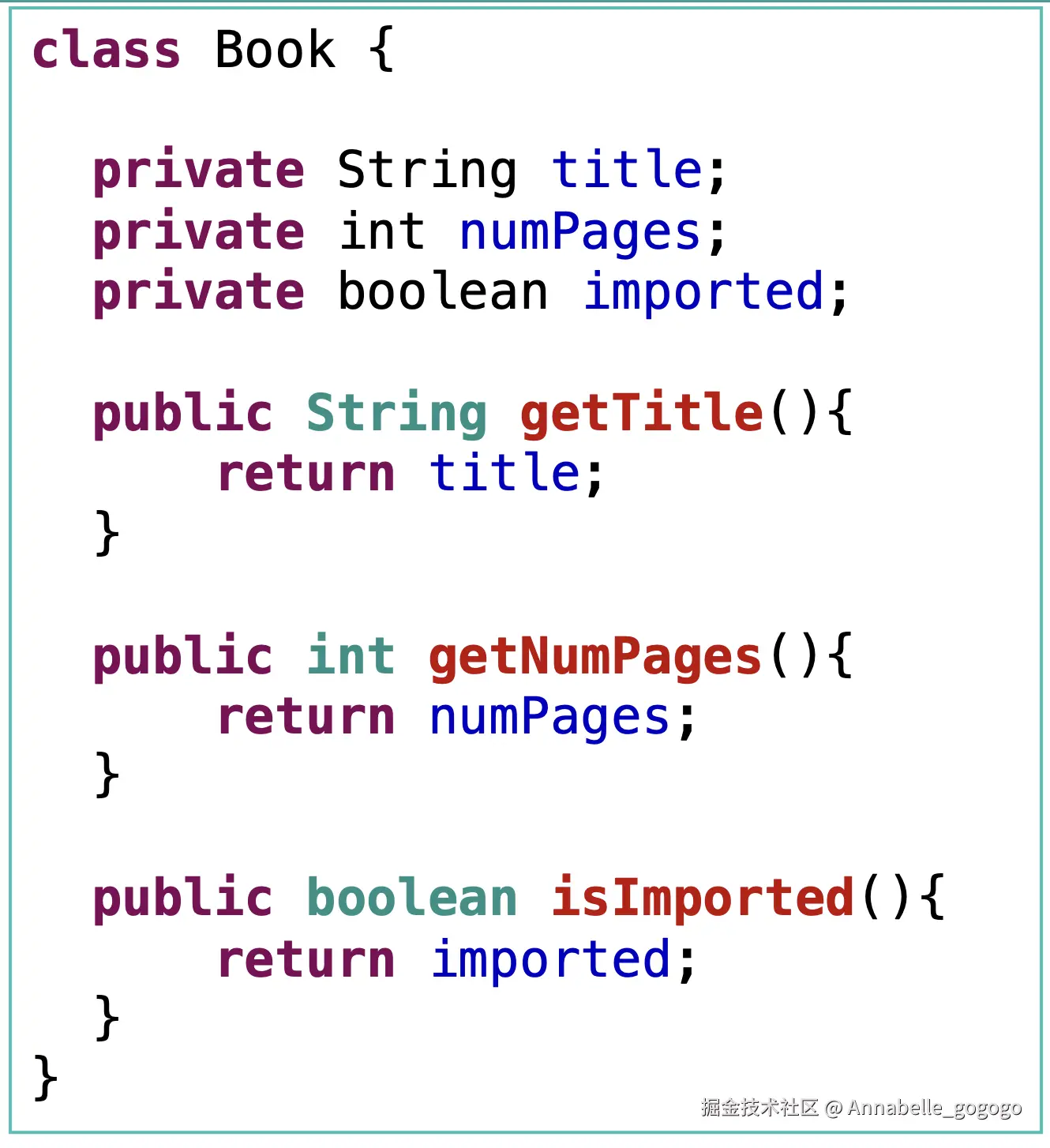
- An
accessor method(getter) allows objects of other classes to obtain a copy of the value of instance variables or class variables. (read/get value).
An accessor method:
- has a
name of getAttributeName
- has a
return type of the attriburte retrieved
- has
no parameters.
- Example:
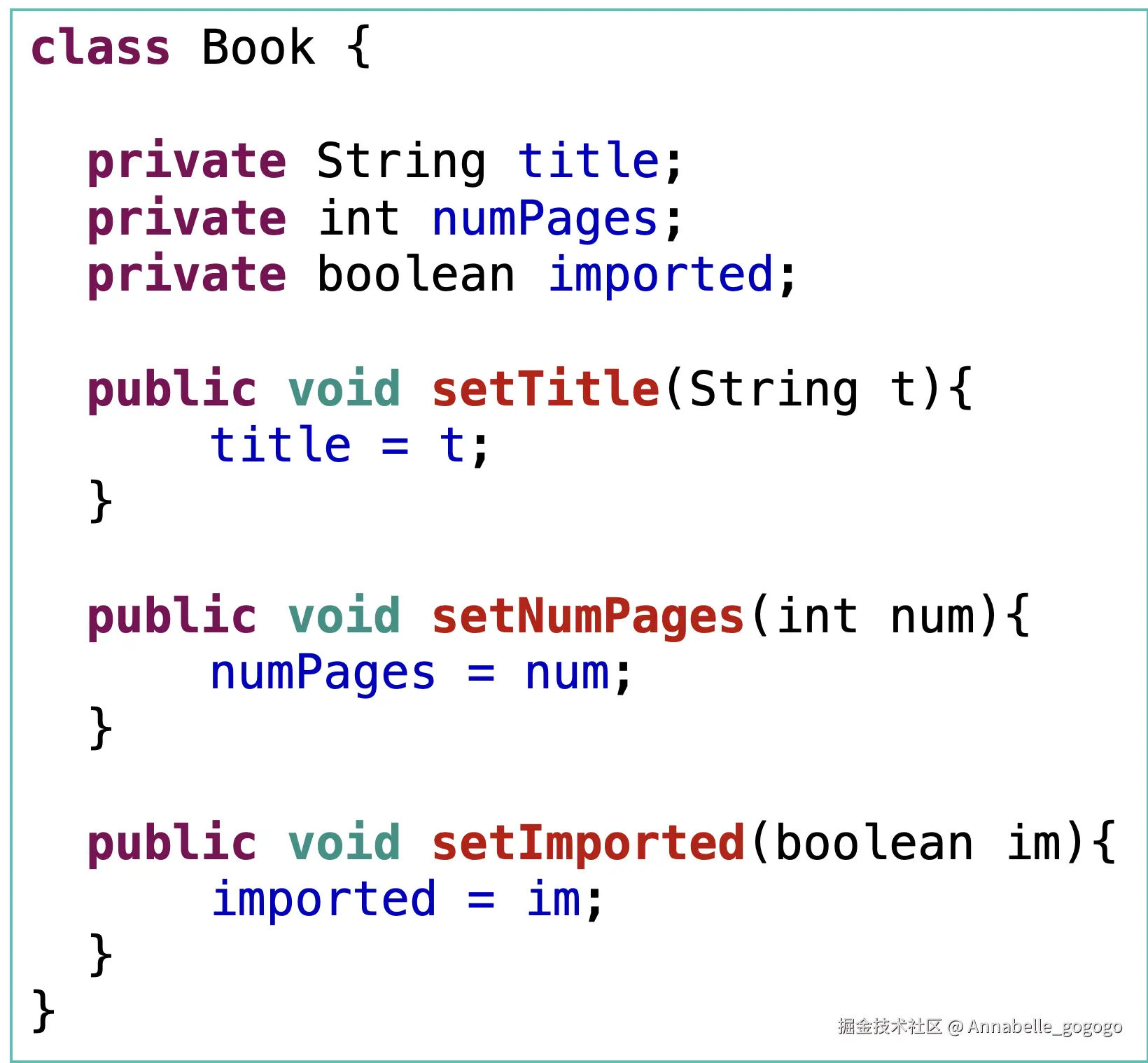
- A
mutator method(setter) is a method that changes the values of the instance variables or class variables. (update/change value)
A mutator method:
- has a
name of setAttributeName
- has a
return type of void
- has
a parameter of the same type as the attribute
- Example:
(5) Pass Arguments to Parameters
- For a
primitive type parameter, changes to the parameter have no effect on the corresponding argument.

- For a
reference type parameter, changes to the parameter will reflect on the corresponding argument.

- Among reference types,
String is an exception, because String is an immutable class.
3. Exercises



