4.1 The Internet
1. Exam Points
- The
Internet vs. WWW
- Bandwidth and how it is measured(bps).
- Role of
IETF
- Protocols:
Benefits of using open and standard protocols for Internet communication: provide a way to standardize data transmission between devices.TCP/IP Protocol: a suite of protocols, a common standard for Internet communication.
IPv4 vs. IPv6- An IP address is assigned to the device to identify the device.
- Scalability:
The Internet is scalable, it supports size change.
- How
data is transmistted over the Internet: divided into packets, tranmistted along different paths, arrive in any order, and get reassembled.
domain name vs. subdomain name.DNS: domain name system: a name service that maps domain names to IP addresses.
2. Knowledge Points
(1) Computer Network
- A computing device is a physical artifact that can run a program. (Ex. computers).
- A computing system is a group of computing devices and programs working together for a common purpose.
- A computer network is a group of interconnected computing devices capable of sending or receiving data.
- A computer network is a type of computing system.
(2) The Internet vs. WWW
- The
Internet is a computer network consisting of interconnected networks that use standardized, open (nonproprietary-非专属) communication protocols.
- The
World Wide Web(WWW-万维网) is a system of linked pages, programs, and files that is accessed using the Internet.
- The
scalability(可扩展性/可伸缩性) of a system is the capacity for the system to change in size and scale to meet new demands.
The Internet was designed to be scalable.
(3) Routing
- A path(路径) between two computing devices (a sender and a receiver) on a computer network is a sequence of directly connected computing devices that begins at the sender and ends at the receiver.
Routing(路由) is the process of finding a path from sender to receiver. (Ex. find a path from device A to device D)
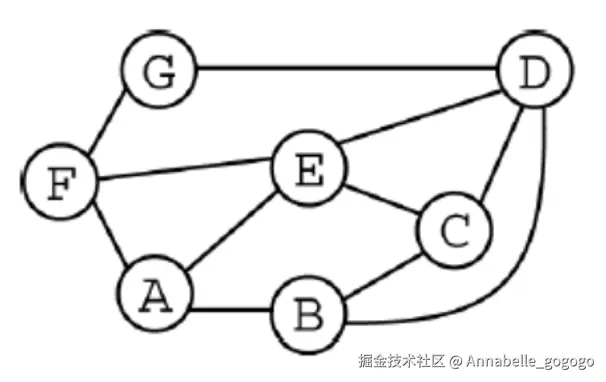
- Routing on the Internet is usually
dynamic, it is not specified in advance.
Redudant routing(冗余路由) (provide multiple paths between two devices) allows messages to be sent on the network even if some network devices or connections have failed.
(4) Bandwidth
- The
bandwidth(带宽) of a computer network is the maximum amount of data that can be sent in a fixed amount of time. (带宽:是指单位时间内链路能够通过的数据量。)
- All of the computing devices on the Internet are communicating in binary. Devices send data represened by streams of
1s and 0s.
- Bandwidth is usually measured in
bits per second (bit/s).
(5) Protocols
- A
protocol is an agreed-upon set of rules that specify the behavior of a system.
- The Internet uses
Open standards and protocols(such as TCP/IP), which allows users to easily connect additional computing devices to the Internet. (not limited by manufacturers, operating systems).
Open protocols provide a standard way for data transmission between devices.Common protocols used on the Internet:
- IP: responsible for addressing and routing
- TCP: responsible for controlling data transmission, ensuring reliable data transmission.
- HTTP: a protocol used by the World Wide Web for sending requests and receiving responses.
TCP/IP: a suite of communication protocols, which stipulates standards for communication.
IETF: an organization for developing standards and protocols for Internet communication.
(6) IP Protocol
IP protocol is used in all Internet communication to handle both addressing(寻址) and routing(路由).IP addresses are used to uniquely identify Internet-connected devices.Any device connected to the Internet is allocated an IP address.- There are actually
two versions of the Internet Protocol in use today:
IPv4 : the first version ever used on the Internet.(4 numbers, 32 bits)
IPv6 : a backwards-compatible successor of IPv4. Allows for more IP addresses. (8 numbers, 128 bits)
- Example: ffff.deca.abac.9876.1111.1234.2341.deca
(7) Data Transmission (Packets)
- Information is passed through the Internet as a data stream(数据流).
- How data is transmitted:
- Data is broken into
packets.
- Packets can be transmitted through
different routes.
- Packets can be
received in any order.
- Packets received will be
reassembled.
- Packets
contain data and metadata.
(8) Domain Name
Domain Name(域名): Example: baidu.com- The
Domain Name System (DNS) is a name service on the Internet. As a distributed database that maps domain names to IP addresses, it makes it easier for people to access the Internet.
- In the Domain Name System (DNS) hierarchy, a subdomain(子域名) is a domain that is a part of another (main) domain.
Domain name and subdomain name:
- Example of a domain name: baidu.com
- Example of a subdomain name: tieba.baidu.com
3. Exercises



