3.3 Mathematical Expressions
1. Exam Points
- Describe an
algorithm using natural language.
- Describe an
algorithm using a flow chart.
Select the correct algorithm(s) based on given scenarios.- Algorithms to
swap the values of two variables.(Use a third variable temp.)
Predict output or result based on a given algorithm.- Understand flow charts and figure out the
algorithm represented by a flow chart.
2. Knowledge Points
(1) Algorithms (算法)
- Programs incorporate iteration(迭代) and selection(选择) constructs(构造) to represent repetition and make decisions to handle varied input values.
- An
algorithm is a finite set of instructions that accomplish a specific task. To put it another way, an algorithm is a step-by-step process of solving a problem.
- Algorithms can be represented using:
Natural language, Diagrams, Pseudocode, Programming languages.
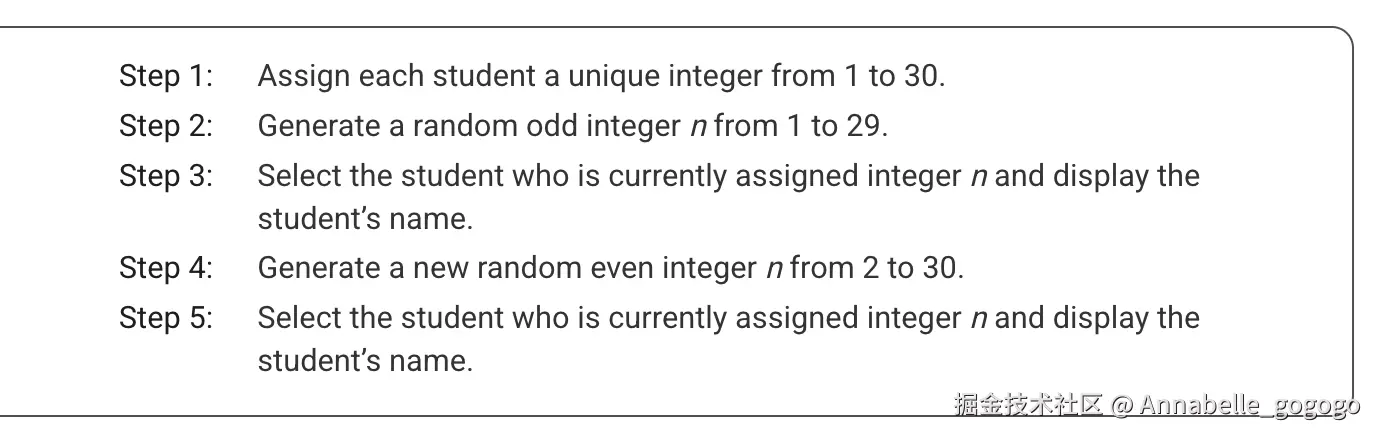
Natural language
- Example:
- Diagrams (
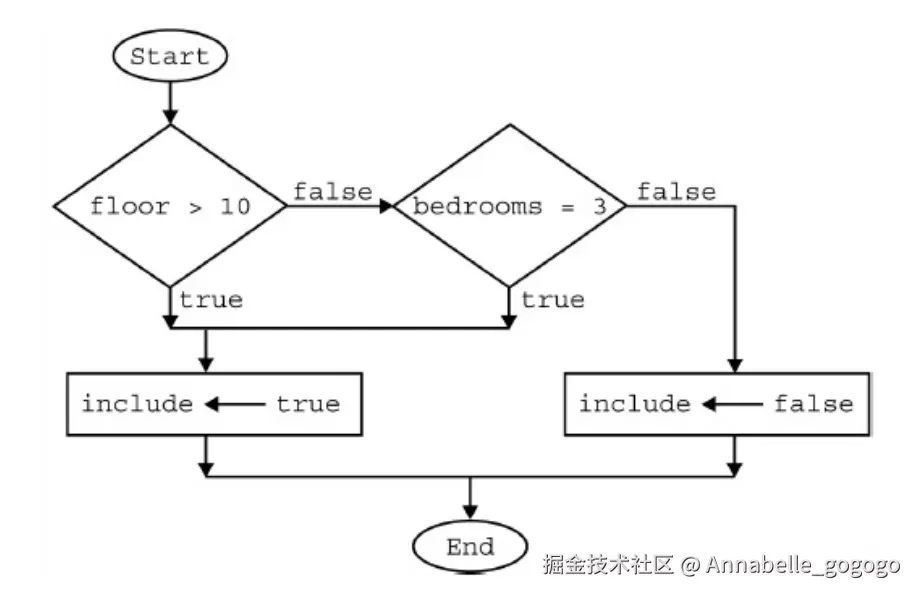
flowchart-流程图)
- Example:
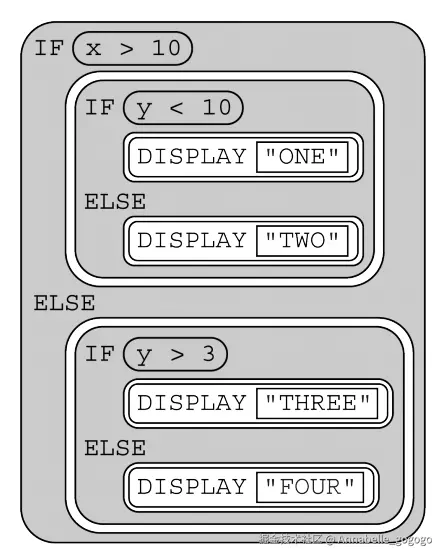
Pseudocode
- Example:
Programming Languages
- Example:
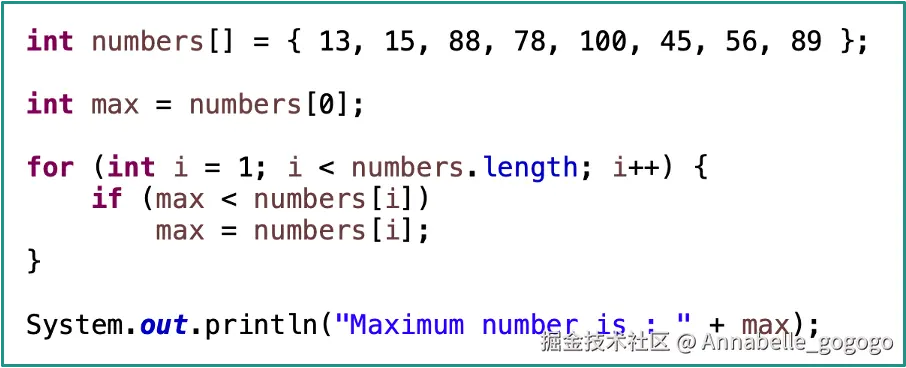
- Algorithms executed by programs are implemented using programming languages.
- Every
algorithm can be constructed using combinations of sequencing, selection, and iteration.
- A
code statement(语句) is a part of program code that expresses an action to be carried out.
(2) Flow Chart (流程图)
- A
flowchart is a diagram that shows the steps in a process.
- Flowcharts are often used for
visualizing the sequence of steps.
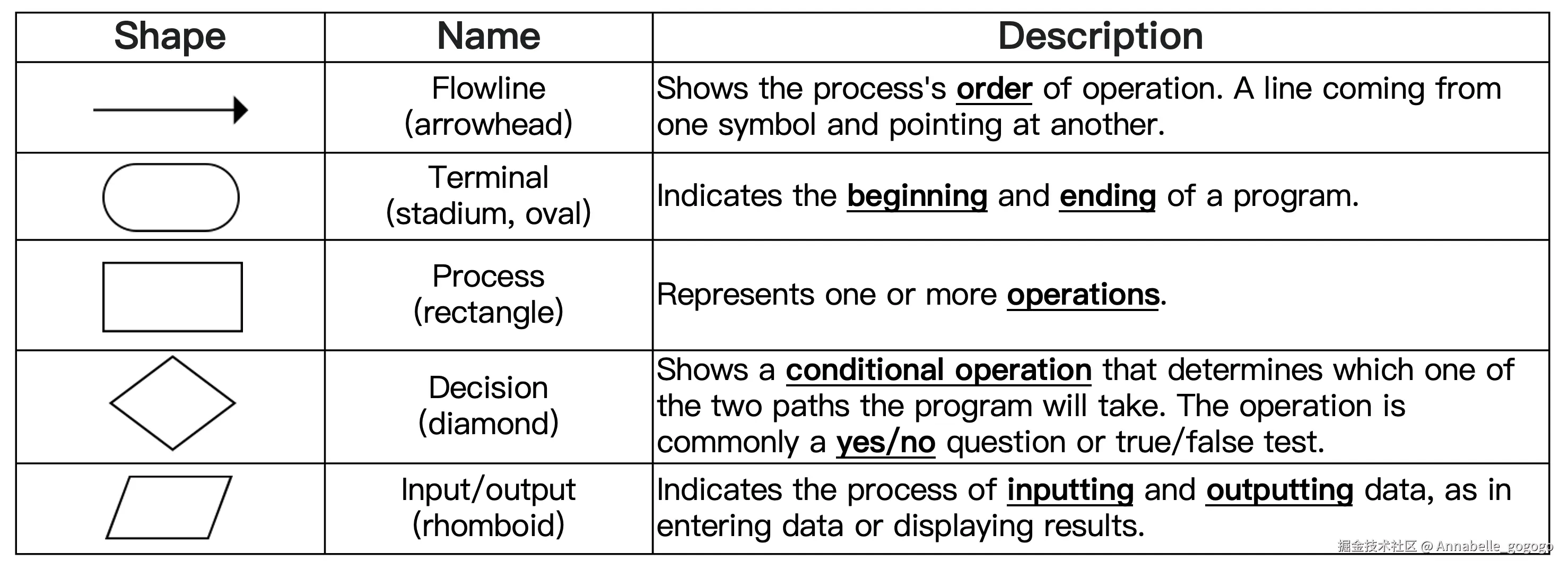
Symbols used in a flow chart:
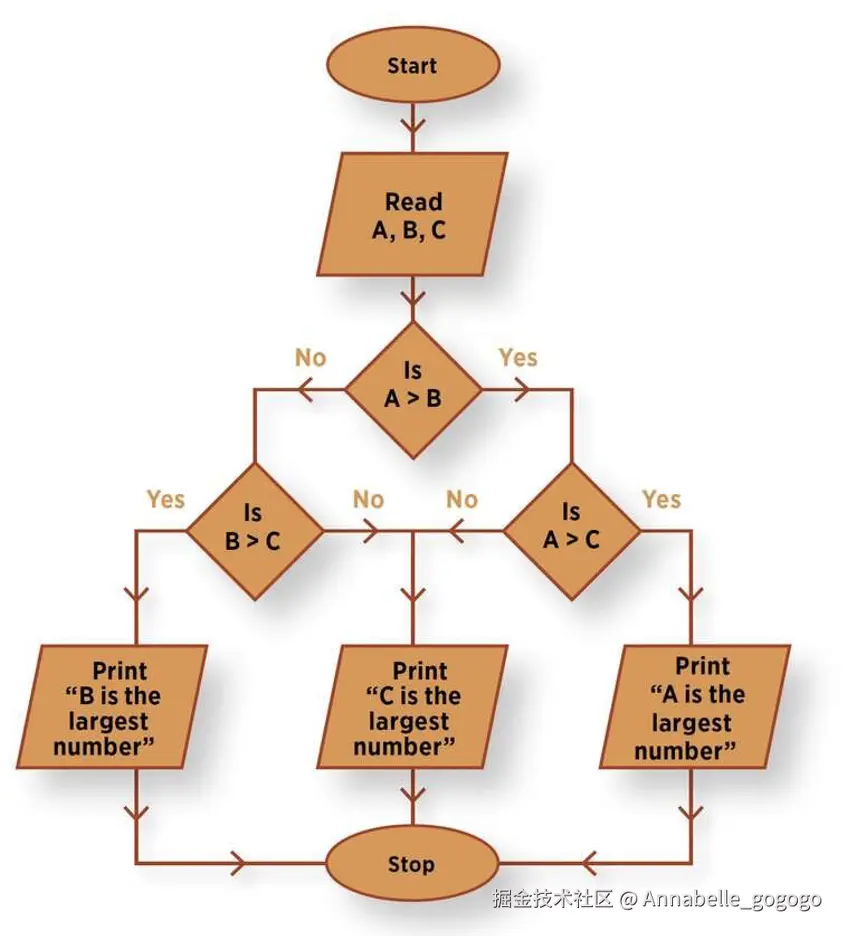
- Example: find the largest among three numbers
(3) Mathematical Expressions (数学表达式)
- An
expression is a combination of operators(运算符) and operands( 操作数).
- Example:
- 10 + 2 , 20 * 3.5, a + b / c, x
- a > b, a < b, a>=b
- a + findMax(b,c)
- Operands(操作数) can be a
value, a variable, a procedure call that returns a value.
- An
expression is evaluated to produce a single value.
- a ← b is not an expression.
- The evaluation of expressions follows a set order (
precedence-优先级) of operations.
Arithmetic operators(算术运算符) include:
- addition(+)
- subtraction(-)
- multiplication(*)
- division(/) :
17 / 5 evaluates to 3.4
- modulus operators (MOD) (取余) :
17 MOD 5 evaluates to 2
- The
MOD operator has the same precedence as the * and / operators.
- For operators of the same precedence, evaluate from left to right.
3. Exercises



