Machine Learning 再也不神秘了。
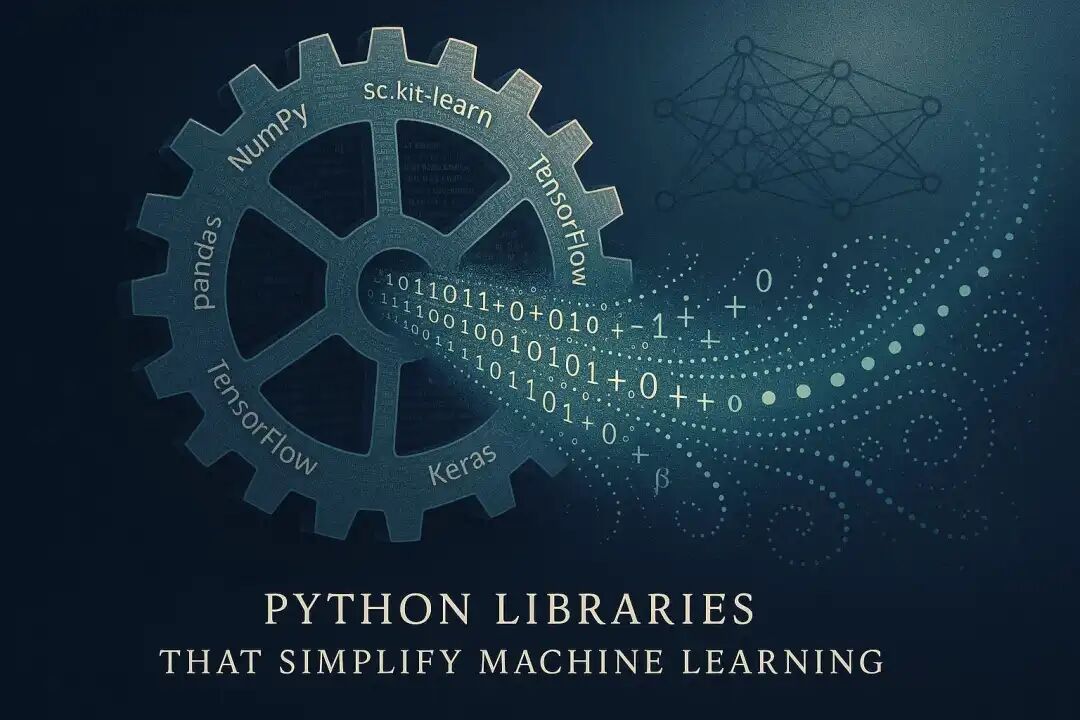
你已经熟悉 scikit-learn、PyTorch 和 XGBoost。很好——现在别再重复造轮子,来看看我在需要更快的实验、更安全的 models,或在招聘经理眼里像魔法一样的 features 时真正会用的 8 个库。它们不是人人都在列的“trendy”清单——而是优雅地解决了我在 production 和 research 中遇到的真实痛点。
1) River - online learning 不折腾
问题:streaming data、concept drift,而且你不想每隔几分钟就 retrain。 River 提供 streaming algorithms(incremental learning),并保留 scikit-learn 的使用手感。
# 使用 River 做 incremental learning
from river import linear_model, preprocessing, metrics
from river.datasets import synth

model = preprocessing.StandardScaler() | linear_model.LinearRegression()
mse = metrics.MSE()

for x, y in synth.Friedman():  # 类似无限的 stream
    y_pred = model.predict_one(x)
    model = model.learn_one(x, y)
    mse = mse.update(y, y_pred)

print('Streaming MSE:', mse.get())
为什么它少见但有用:你可以 single pass 训练与评估、跟踪 drift,并为 IoT 或 realtime scoring 部署超小的 memory-first models。
专业提示:使用 river.drift detectors 在检测到 drift 时 auto-reset 或 blend models。
2) GPyTorch - Gaussian Processes at scale(GPs 不再“流泪”)
问题:Gaussian Processes 理论上非常适合 uncertainty,但数据一过几千点就难以驾驭。GPyTorch 通过 GPU 和 structured kernels 让它变得实际可用。
# 极简 GPyTorch 示例(假设熟悉 PyTorch)
import torch
import gpytorch
from gpytorch.models import ExactGP
from gpytorch.kernels import RBFKernel, ScaleKernel
from gpytorch.likelihoods import GaussianLikelihood

classSimpleGP(ExactGP):
    def__init__(self, train_x, train_y, likelihood):
        super().__init__(train_x, train_y, likelihood)
        self.mean_module = gpytorch.means.ConstantMean()
        self.covar_module = ScaleKernel(RBFKernel())

    defforward(self, x):
        return gpytorch.distributions.MultivariateNormal(self.mean_module(x),
                                                        self.covar_module(x))

# 对大一些的数据使用 CUDA tensors 提速
# train_x, train_y = ...
# likelihood = GaussianLikelihood()
# model = SimpleGP(train_x, train_y, likelihood).cuda()
为什么它少见但有用:现代 GP approximations(variational、SKI)让你在几千——配合 GPUs 可达数万——数据点上获得有原则的 uncertainty。当 predictive uncertainty 很重要时使用它(active learning、RL、anomaly detection)。
专业提示:配合 gpytorch.kernels.ScaleKernel 与 inducing points 以应对超大数据集。
3) Optuna - 真正帮你省时间的 hyperparameter search
问题:grid searches 浪费算力。Optuna 的 define-by-run、pruning 和轻量 API 基本场场必赢。
import optuna
from sklearn.ensemble import RandomForestClassifier
from sklearn.model_selection import cross_val_score

def objective(trial):
    n_estimators = trial.suggest_int('n_estimators', 50, 500)
    max_depth = trial.suggest_int('max_depth', 3, 30)
    clf = RandomForestClassifier(n_estimators=n_estimators, max_depth=max_depth, n_jobs=4)
    return 1.0 - cross_val_score(clf, X, y, cv=3, scoring='accuracy').mean()

study = optuna.create_study(direction='minimize')
study.optimize(objective, n_trials=50)
print(study.best_params)
为什么它少见但有用:pruning 能及早终止糟糕的 trials;sampler system 能更快找到强力的 hyperparameters。用 Optuna 替换慢吞吞的 grid searches,见证实验快速收敛。
专业提示:将 Optuna 与你框架的 early stopping(LightGBM/XGBoost/Keras)集成以更快 prune。
4) NannyML - 在你的老板注意到之前捕捉 performance decay
问题:一旦现实世界变化,models 会默默退化。NannyML 能监测 performance 并解释原因。
# 概念性片段;NannyML 期望有 production predictions + references
import nannyml as nml
import pandas as pd

# predictions_df: production timestamps, y_pred, y_proba, features
# reference_df: labeled data 用作 baseline performance

synth = nml.PerformanceEstimator(predictions_df, reference_data=reference_df, timestamp_column='ts', y_pred='y_pred', y_true='y_true')
synth.fit()
results = synth.estimate()

# 可视化告警
results.plot()
为什么它少见但有用:NannyML 为无 labels 的 production 监控而生——它能估计 performance、定位 drift,以及导致 drift 的 features。如果你在 ship models,把它加入每条 pipeline。
专业提示:将 NannyML 告警与自动 retrain 触发器配对(例如,当 estimated performance drops > X% 时安排一次 full retrain)。
Quick Pause
如果你想提升技能、节省大量挫折时间,99 Python Debugging Tips 是你的最佳指南。充满实用技巧与真实案例,让 debugging 从头痛变成超能力的最快路径。
99 Python Debugging Tips - A Practical Guide for Developers
5) PySyft - 以隐私为先的 ML 与 federated learning 工具
问题:data 不能离开客户现场。PySyft 让你构建 federated training 与 encrypted computations。
# 高层伪代码(API 在演进):remote worker 模式
import syft as sy

hook = sy.TorchHook(torch)
alice = sy.VirtualWorker(hook, id="alice")
bob = sy.VirtualWorker(hook, id="bob")

# 将 tensors 发送到 workers
x_ptr = x.send(alice)
y_ptr = y.send(bob)

# 进行 remote training 步骤或 encrypted aggregation
为什么它少见但有用:隐私法规与企业数据孤岛让 PySyft 成为无需集中 raw data 协作学习的关键(healthcare、finance)。它不算“容易”,但在 privacy-first 项目中是对的工具。
专业提示:结合 secure aggregation 与 differential privacy(DP)primitives,打造符合合规要求的 pipelines。
6) Lightly - 自动化构建图像的 self-supervised embeddings
问题:labeled images 很贵。Lightly 能大规模构建 contrastive/self-supervised embeddings,并导出可直接用于 downstream tasks 的 datasets。
from lightly.api import ApiWorkflowClient
from lightly.data import LightlyDataset
from lightly.models import SimCLR
from torch.utils.data import DataLoader

ds = LightlyDataset(input_dir='images/')
loader = DataLoader(ds, batch_size=64, shuffle=True)
model = SimCLR()
# 标准 training loop 学习 embeddings
为什么它少见但有用:当你想聚类图像、查找 near-duplicates,或用最少 labels 做 transfer learning 预训练时,Lightly 提供可复现的 pipelines 与 dataset versioning。
专业提示:先用 Lightly 预计算 embeddings,再接一个小的 supervised head——往往能胜过从零开始训练。
7) skorch - 像 scikit-learn estimators 一样使用 PyTorch models
问题:你写了一个 PyTorch model,但你的所有 tooling(cv、pipelines、grid search)都期望 scikit-learn。skorch 优雅地架起这座桥。
from skorch import NeuralNetClassifier
import torch.nn as nn

class Net(nn.Module):
    def __init__(self, in_features=10, out=2):
        super().__init__()
        self.fc = nn.Linear(in_features, 50)
        self.out = nn.Linear(50, out)
    def forward(self, X):
        X = torch.relu(self.fc(X))
        return torch.log_softmax(self.out(X), dim=1)

net = NeuralNetClassifier(Net, max_epochs=10, lr=0.01, device='cuda')
net.fit(X_train.astype('float32'), y_train.astype('long'))
为什么它少见但有用:你能获得完整的 PyTorch 性能与灵活性,同时享受 scikit-learn 的便利——GridSearchCV、pipelines、joblib 兼容。非常适合需要与 classical ML stacks 集成的原型开发。
专业提示:当你需要 cross-validation 并在 automated CI/CD pipeline 中使用 PyTorch models 时,用 skorch。
8) RAPIDS cuML - GPU-accelerated、scikit-learn-like API
问题:大数据集让基于 CPU 的训练卡壳。cuML 镜像 scikit-learn APIs,并在 NVIDIA GPUs 上运行,带来巨大加速。
import cudf
from cuml.ensemble import RandomForestClassifier as cuRF

gdf = cudf.DataFrame.from_pandas(X_train)
grf = cuRF(n_estimators=200, max_depth=10)
grf.fit(gdf, y_train)  # y_train as cudf.Series
为什么它少见但有用:如果你有 GPU farm,cuML 能将 classical models 的训练提速到数量级级别,在你接触 deep learning 前就移除瓶颈。
专业提示:把 preprocessing(cudf)与 feature ops 也搬到 GPU——收益是乘法级的。
如果你喜欢这篇文章,记得一键三连,不要错过后续必读更新!
感谢阅读!
关注我,每天收取最新的LLM开发咨询。