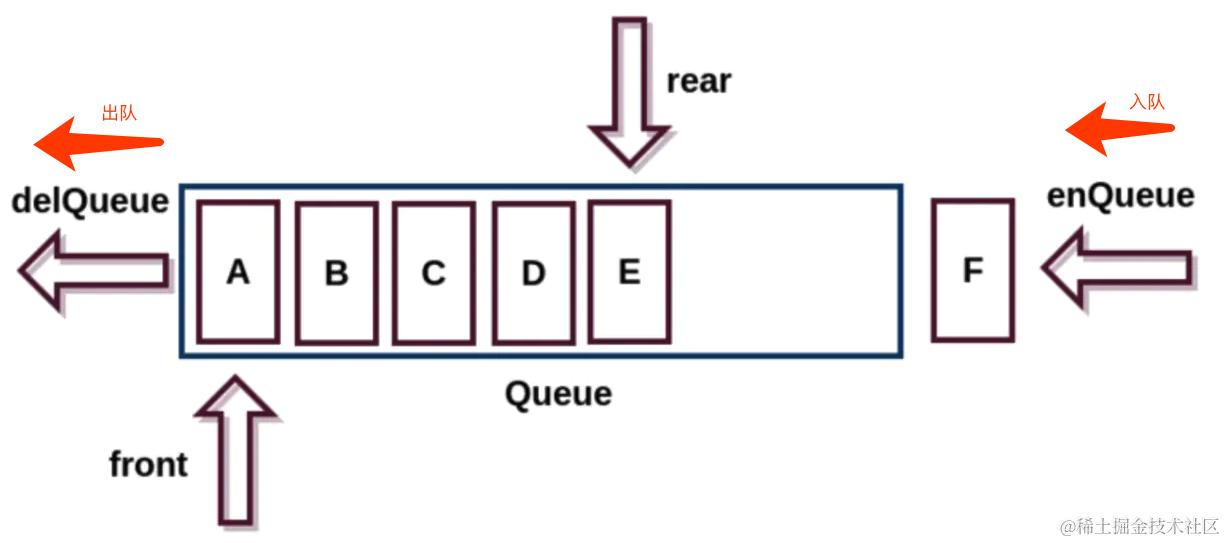
队列(queue)是一种遵循先入先出规则的线性数据结构。
队列头部称为“队首”,尾部称为“队尾”,将把元素加入队尾的操作称为“入队”,删除队首元素的操作称为“出队”。
队列常用操作
队列实现
基于链表的实现
链表的“头节点”和“尾节点”分别视为“队首”和“队尾”,规定队尾仅可添加节点,队首仅可删除节点。
/* 基于链表实现的队列 */
class LinkedListQueue {
    #front; // 头节点 #front
    #rear; // 尾节点 #rear
    #queSize = 0;

    constructor() {
        this.#front = null;
        this.#rear = null;
    }

    /* 获取队列的长度 */
    get size() {
        return this.#queSize;
    }

    /* 判断队列是否为空 */
    isEmpty() {
        return this.size === 0;
    }

    /* 入队 */
    push(num) {
        // 在尾节点后添加 num
        const node = new ListNode(num);
        // 如果队列为空,则令头、尾节点都指向该节点
        if (!this.#front) {
            this.#front = node;
            this.#rear = node;
            // 如果队列不为空,则将该节点添加到尾节点后
        } else {
            this.#rear.next = node;
            this.#rear = node;
        }
        this.#queSize++;
    }

    /* 出队 */
    pop() {
        const num = this.peek();
        // 删除头节点
        this.#front = this.#front.next;
        this.#queSize--;
        return num;
    }

    /* 访问队首元素 */
    peek() {
        if (this.size === 0) throw new Error('队列为空');
        return this.#front.val;
    }

    /* 将链表转化为 Array 并返回 */
    toArray() {
        let node = this.#front;
        const res = new Array(this.size);
        for (let i = 0; i < res.length; i++) {
            res[i] = node.val;
            node = node.next;
        }
        return res;
    }
}
基于数组的实现
在数组中删除首元素的时间复杂度为 ,这会导致出队操作效率较低。然而,我们可以采用以下巧妙方法来避免这个问题
使用一个变量 front 指向队首元素的索引,并维护一个变量 size 用于记录队列长度。定义 rear = front + size ,这个公式计算出的 rear 指向队尾元素之后的下一个位置。
- 入队操作:将输入元素赋值给
rear索引处,并将size增加 1 。 - 出队操作:只需将
front增加 1 ,并将size减少 1 。
在不断进行入队和出队的过程中,front 和 rear 都在向右移动,当它们到达数组尾部时就无法继续移动了。为了解决此问题,我们可以将数组视为首尾相接的“环形数组”。
对于环形数组,我们需要让 front 或 rear 在越过数组尾部时,直接回到数组头部继续遍历。这种周期性规律可以通过“取余操作”来实现,
/* 基于环形数组实现的队列 */
class ArrayQueue {
    #nums; // 用于存储队列元素的数组
    #front = 0; // 队首指针,指向队首元素
    #queSize = 0; // 队列长度

    constructor(capacity) {
        this.#nums = new Array(capacity);
    }

    /* 获取队列的容量 */
    get capacity() {
        return this.#nums.length;
    }

    /* 获取队列的长度 */
    get size() {
        return this.#queSize;
    }

    /* 判断队列是否为空 */
    isEmpty() {
        return this.#queSize === 0;
    }

    /* 入队 */
    push(num) {
        if (this.size === this.capacity) {
            console.log('队列已满');
            return;
        }
        // 计算队尾指针,指向队尾索引 + 1
        // 通过取余操作实现 rear 越过数组尾部后回到头部
        const rear = (this.#front + this.size) % this.capacity;
        // 将 num 添加至队尾
        this.#nums[rear] = num;
        this.#queSize++;
    }

    /* 出队 */
    pop() {
        const num = this.peek();
        // 队首指针向后移动一位,若越过尾部,则返回到数组头部
        this.#front = (this.#front + 1) % this.capacity;
        this.#queSize--;
        return num;
    }

    /* 访问队首元素 */
    peek() {
        if (this.isEmpty()) throw new Error('队列为空');
        return this.#nums[this.#front];
    }

    /* 返回 Array */
    toArray() {
        // 仅转换有效长度范围内的列表元素
        const arr = new Array(this.size);
        for (let i = 0, j = this.#front; i < this.size; i++, j++) {
            arr[i] = this.#nums[j % this.capacity];
        }
        return arr;
    }
}
队列典型应用
- 淘宝订单。购物者下单后,订单将加入队列中,系统随后会根据顺序处理队列中的订单。在双十一期间,短时间内会产生海量订单,高并发成为工程师们需要重点攻克的问题。
- 各类待办事项。任何需要实现“先来后到”功能的场景,例如打印机的任务队列、餐厅的出餐队列等,队列在这些场景中可以有效地维护处理顺序。
- 打印队列:计算机打印多个文件的时候,需要排队打印。
- 线程队列:当开启多线程时,当新开启的线程所需的资源不足时就先放入线程队列,等待 CPU 处理。
击鼓传花
分析:传入一组数据集合和设定的数字 number,循环遍历数组内元素,遍历到的元素为指定数字 number 时将该元素删除,直至数组剩下一个元素。
// 利用队列结构的特点实现击鼓传花游戏求解方法的封装
function passGame(nameList, number) {
  // 1、new 一个 Queue 对象
  const queue = new Queue();

  // 2、将 nameList 里面的每一个元素入队
  for (const name of nameList) {
    queue.enqueue(name);
  }

  // 3、开始数数
  // 队列中只剩下 1 个元素时就停止数数
  while (queue.size() > 1) {
    // 不是 number 时,重新加入到队尾
    // 是 number 时,将其删除

    for (let i = 0; i < number - 1; i++) {
      // number 数字之前的人重新放入到队尾(即把队头删除的元素,重新加入到队列中)
      queue.enqueue(queue.dequeue());
    }

    // number 对应这个人,直接从队列中删除
    // 由于队列没有像数组一样的下标值不能直接取到某一元素,
    // 所以采用,把 number 前面的 number - 1 个元素先删除后添加到队列末尾,
    // 这样第 number 个元素就排到了队列的最前面,可以直接使用 dequeue 方法进行删除
    queue.dequeue();
  }

  // 4、获取最后剩下的那个人
  const endName = queue.front();

  // 5、返回这个人在原数组中对应的索引
  return nameList.indexOf(endName);
}
双向队列
在队列中,我们仅能删除头部元素或在尾部添加元素。双向队列(double-ended queue)提供了更高的灵活性,允许在头部和尾部执行元素的添加或删除操作。
双向队列常用操作
双向队列实现
基于双向链表的实现
双向链表的头节点和尾节点视为双向队列的队首和队尾,同时实现在两端添加和删除节点的功能。
/* 双向链表节点 */
class ListNode {
    prev; // 前驱节点引用 (指针)
    next; // 后继节点引用 (指针)
    val; // 节点值

    constructor(val) {
        this.val = val;
        this.next = null;
        this.prev = null;
    }
}

/* 基于双向链表实现的双向队列 */
class LinkedListDeque {
    #front; // 头节点 front
    #rear; // 尾节点 rear
    #queSize; // 双向队列的长度

    constructor() {
        this.#front = null;
        this.#rear = null;
        this.#queSize = 0;
    }

    /* 队尾入队操作 */
    pushLast(val) {
        const node = new ListNode(val);
        // 若链表为空,则令 front 和 rear 都指向 node
        if (this.#queSize === 0) {
            this.#front = node;
            this.#rear = node;
        } else {
            // 将 node 添加至链表尾部
            this.#rear.next = node;
            node.prev = this.#rear;
            this.#rear = node; // 更新尾节点
        }
        this.#queSize++;
    }

    /* 队首入队操作 */
    pushFirst(val) {
        const node = new ListNode(val);
        // 若链表为空,则令 front 和 rear 都指向 node
        if (this.#queSize === 0) {
            this.#front = node;
            this.#rear = node;
        } else {
            // 将 node 添加至链表头部
            this.#front.prev = node;
            node.next = this.#front;
            this.#front = node; // 更新头节点
        }
        this.#queSize++;
    }

    /* 队尾出队操作 */
    popLast() {
        if (this.#queSize === 0) {
            return null;
        }
        const value = this.#rear.val; // 存储尾节点值
        // 删除尾节点
        let temp = this.#rear.prev;
        if (temp !== null) {
            temp.next = null;
            this.#rear.prev = null;
        }
        this.#rear = temp; // 更新尾节点
        this.#queSize--;
        return value;
    }

    /* 队首出队操作 */
    popFirst() {
        if (this.#queSize === 0) {
            return null;
        }
        const value = this.#front.val; // 存储尾节点值
        // 删除头节点
        let temp = this.#front.next;
        if (temp !== null) {
            temp.prev = null;
            this.#front.next = null;
        }
        this.#front = temp; // 更新头节点
        this.#queSize--;
        return value;
    }

    /* 访问队尾元素 */
    peekLast() {
        return this.#queSize === 0 ? null : this.#rear.val;
    }

    /* 访问队首元素 */
    peekFirst() {
        return this.#queSize === 0 ? null : this.#front.val;
    }

    /* 获取双向队列的长度 */
    size() {
        return this.#queSize;
    }

    /* 判断双向队列是否为空 */
    isEmpty() {
        return this.#queSize === 0;
    }

    /* 打印双向队列 */
    print() {
        const arr = [];
        let temp = this.#front;
        while (temp !== null) {
            arr.push(temp.val);
            temp = temp.next;
        }
        console.log('[' + arr.join(', ') + ']');
    }
}
基于数组的实现
与基于数组实现队列类似,我们也可以使用环形数组来实现双向队列
/* 基于环形数组实现的双向队列 */
class ArrayDeque {
    #nums; // 用于存储双向队列元素的数组
    #front; // 队首指针,指向队首元素
    #queSize; // 双向队列长度

    /* 构造方法 */
    constructor(capacity) {
        this.#nums = new Array(capacity);
        this.#front = 0;
        this.#queSize = 0;
    }

    /* 获取双向队列的容量 */
    capacity() {
        return this.#nums.length;
    }

    /* 获取双向队列的长度 */
    size() {
        return this.#queSize;
    }

    /* 判断双向队列是否为空 */
    isEmpty() {
        return this.#queSize === 0;
    }

    /* 计算环形数组索引 */
    index(i) {
        // 通过取余操作实现数组首尾相连
        // 当 i 越过数组尾部后,回到头部
        // 当 i 越过数组头部后,回到尾部
        return (i + this.capacity()) % this.capacity();
    }

    /* 队首入队 */
    pushFirst(num) {
        if (this.#queSize === this.capacity()) {
            console.log('双向队列已满');
            return;
        }
        // 队首指针向左移动一位
        // 通过取余操作实现 front 越过数组头部后回到尾部
        this.#front = this.index(this.#front - 1);
        // 将 num 添加至队首
        this.#nums[this.#front] = num;
        this.#queSize++;
    }

    /* 队尾入队 */
    pushLast(num) {
        if (this.#queSize === this.capacity()) {
            console.log('双向队列已满');
            return;
        }
        // 计算队尾指针,指向队尾索引 + 1
        const rear = this.index(this.#front + this.#queSize);
        // 将 num 添加至队尾
        this.#nums[rear] = num;
        this.#queSize++;
    }

    /* 队首出队 */
    popFirst() {
        const num = this.peekFirst();
        // 队首指针向后移动一位
        this.#front = this.index(this.#front + 1);
        this.#queSize--;
        return num;
    }

    /* 队尾出队 */
    popLast() {
        const num = this.peekLast();
        this.#queSize--;
        return num;
    }

    /* 访问队首元素 */
    peekFirst() {
        if (this.isEmpty()) throw new Error('The Deque Is Empty.');
        return this.#nums[this.#front];
    }

    /* 访问队尾元素 */
    peekLast() {
        if (this.isEmpty()) throw new Error('The Deque Is Empty.');
        // 计算尾元素索引
        const last = this.index(this.#front + this.#queSize - 1);
        return this.#nums[last];
    }

    /* 返回数组用于打印 */
    toArray() {
        // 仅转换有效长度范围内的列表元素
        const res = [];
        for (let i = 0, j = this.#front; i < this.#queSize; i++, j++) {
            res[i] = this.#nums[this.index(j)];
        }
        return res;
    }
}
双向队列应用
双向队列兼具栈与队列的逻辑,因此它可以实现这两者的所有应用场景,同时提供更高的自由度。
我们知道,软件的“撤销”功能通常使用栈来实现:系统将每次更改操作 push 到栈中,然后通过 pop 实现撤销。然而,考虑到系统资源的限制,软件通常会限制撤销的步数(例如仅允许保存 10 步)。当栈的长度超过 10 时,软件需要在栈底(队首)执行删除操作。但栈无法实现该功能,此时就需要使用双向队列来替代栈。请注意,“撤销”的核心逻辑仍然遵循栈的先入后出原则,只是双向队列能够更加灵活地实现一些额外逻辑。
优先队列的应用
生活中类似优先队列的场景:
- 优先排队的人,优先处理。 (买票、结账、WC)。
- 排队中,有紧急情况(特殊情况)的人可优先处理。
优先级队列主要考虑的问题:
- 每个元素不再只是一个数据,还包含优先级。
- 在添加元素过程中,根据优先级放入到正确位置。
优先队列的实现
// 优先队列内部的元素类
class QueueElement {
  constructor(element, priority) {
    this.element = element;
    this.priority = priority;
  }
}

// 优先队列类(继承 Queue 类)
export class PriorityQueue extends Queue {
  constructor() {
    super();
  }

  // enqueue(element, priority) 入队,将元素按优先级加入到队列中
  // 重写 enqueue()
  enqueue(element, priority) {
    // 根据传入的元素,创建 QueueElement 对象
    const queueElement = new QueueElement(element, priority);

    // 判断队列是否为空
    if (this.isEmpty()) {
      // 如果为空,不用判断优先级,直接添加
      this.items.push(queueElement);
    } else {
      // 定义一个变量记录是否成功添加了新元素
      let added = false;

      for (let i = 0; i < this.items.length; i++) {
        // 让新插入的元素进行优先级比较,priority 值越小,优先级越大
        if (queueElement.priority < this.items[i].priority) {
          // 在指定的位置插入元素
          this.items.splice(i, 0, queueElement);
          added = true;
          break;
        }
      }

      // 如果遍历完所有元素,优先级都大于新插入的元素,就将新插入的元素插入到最后
      if (!added) {
        this.items.push(queueElement);
      }
    }
  }

  // dequeue() 出队,从队列中删除前端元素,返回删除的元素
  // 继承 Queue 类的 dequeue()
  dequeue() {
    return super.dequeue();
  }

  // front() 查看队列的前端元素
  // 继承 Queue 类的 front()
  front() {
    return super.front();
  }

  // isEmpty() 查看队列是否为空
  // 继承 Queue 类的 isEmpty()
  isEmpty() {
    return super.isEmpty();
  }

  // size() 查看队列中元素的个数
  // 继承 Queue 类的 size()
  size() {
    return super.size();
  }

  // toString() 将队列中元素以字符串形式返回
  // 重写 toString()
  toString() {
    let result = "";
    for (let item of this.items) {
      result += item.element + "-" + item.priority + " ";
    }
    return result;
  }
}
测试代码
const priorityQueue = new PriorityQueue();

// 入队 enqueue() 测试
priorityQueue.enqueue("A", 10);
priorityQueue.enqueue("B", 15);
priorityQueue.enqueue("C", 11);
priorityQueue.enqueue("D", 20);
priorityQueue.enqueue("E", 18);
console.log(priorityQueue.items);
//--> output:
// QueueElement {element: "A", priority: 10}
// QueueElement {element: "C", priority: 11}
// QueueElement {element: "B", priority: 15}
// QueueElement {element: "E", priority: 18}
// QueueElement {element: "D", priority: 20}

// 出队 dequeue() 测试
priorityQueue.dequeue();
priorityQueue.dequeue();
console.log(priorityQueue.items);
//--> output:
// QueueElement {element: "B", priority: 15}
// QueueElement {element: "E", priority: 18}
// QueueElement {element: "D", priority: 20}

// isEmpty() 测试
console.log(priorityQueue.isEmpty()); //--> false

// size() 测试
console.log(priorityQueue.size()); //--> 3

// toString() 测试
console.log(priorityQueue.toString()); //--> B-15 E-18 D-20