As a junior majoring in computer science, I was introduced to the Hyperlane framework while working on a Web service project. This high-performance Rust HTTP framework completely changed my perception of Web development. Below is my true experience of learning and applying Hyperlane.
First Encounter with Hyperlane: The Clean ctx Abstraction
When I first started using Hyperlane, I was pleasantly surprised by its clean Context (ctx) abstraction. Previously, in other frameworks, I had to write verbose calls like:
let method = ctx.get_request().await.get_method();
Now, it’s as simple as one line of code:
let method = ctx.get_request_method().await;
This design significantly enhances the readability of my code, especially when dealing with complex business logic, eliminating the need for nested method calls.
Routing and Request Handling: Flexible Method Macros
When implementing RESTful APIs, Hyperlane’s request method macros made route definitions incredibly simple:
#[methods(get, post)]
async fn user_profile(ctx: Context) {
    // Handle GET and POST requests
    ctx.set_response_status_code(200).await;
    ctx.set_response_body("User Profile").await;
}

#[get]
async fn get_users(ctx: Context) {
    // Handle only GET requests
    let users = fetch_all_users().await;
    ctx.set_response_body(users).await;
}
This declarative syntax allows me to focus on business logic rather than HTTP details.
Response Handling: Powerful and Flexible API
During development, I found response handling to be particularly intuitive:
// Set response status
ctx.set_response_status_code(404).await;

// Add custom response headers
ctx.set_response_header("server", "hyperlane").await;

// Send JSON response
let user_data = User { id: 1, name: "Zhang San" };
ctx.set_response_body(user_data).await;
The coolest part is the ability to send responses in chunks, which is very useful when dealing with large files:
// Send response body in chunks
ctx.set_response_body("First part of the data").send_body().await;
ctx.set_response_body("Second part of the data").send_body().await;
Middleware: The Power of the Onion Model
When implementing authentication, I deeply appreciated the power of the middleware onion model:
graph LR
    A[Client Request] --> B[Authentication Middleware]
    B --> C[Logging Middleware]
    C --> D[Route Handling]
    D --> E[Response Formatting Middleware]
    E --> F[Compression Middleware]
    F --> G[Return Response]
With middleware, I can separate cross-cutting concerns from business logic:
// Authentication middleware
async fn auth_middleware(ctx: Context, next: Next) -> Result<Response, Error> {
    if !validate_token(&ctx).await {
        return Err(Error::Unauthorized);
    }
    next.run(ctx).await
}
Routing System: The Perfect Combination of Static and Dynamic
When developing a blog system, dynamic routing played a crucial role:
// Static route
server.route("/about", about_page).await;

// Dynamic route - simple parameter
server.route("/post/{slug}", show_post).await;

// Dynamic route - with regex constraint
server.route("/user/{id:\\d+}", show_user).await;
Retrieving route parameters is also very straightforward:
async fn show_post(ctx: Context) {
    let slug: String = ctx.get_route_param("slug").await;
    let post = fetch_post_by_slug(&slug).await;
    ctx.set_response_body(post).await;
}
Performance Optimization: Impressive QPS
After completing the project, I conducted a performance test using wrk:
wrk -c360 -d60s http://localhost:8000/
The results were astonishing! Hyperlane’s performance is second only to the native Tokio implementation:
| Framework | QPS |
|---|---|
| Tokio | 340,130 |
| Hyperlane | 324,323 |
| Rocket | 298,945 |
| Gin (Go) | 242,570 |
Learning Takeaways and Future Plans
Through this project, I not only mastered the Hyperlane framework but also gained a deep understanding of the design philosophy of modern Web frameworks:
- Clean API design significantly improves development efficiency.
- Middleware onion model offers excellent extensibility.
- Rust’s type system combined with Web frameworks brings safety.
- Asynchronous programming is the core of high-performance services.
For the future, I plan to:
- Explore Hyperlane’s WebSocket support in depth.
- Investigate how the framework leverages Rust’s zero-cost abstractions at the lower level.
- Attempt to build a microservices architecture based on Hyperlane.
Hyperlane is more than just a tool; it has changed my way of thinking about programming. Every ctx call and every middleware I write deepens my understanding of the essence of Web development. This framework has taught me that performance and development experience can be achieved simultaneously, which is the charm of the Rust ecosystem.
推荐几款学习编程的免费平台
免费在线开发平台(docs.ltpp.vip/LTPP/)
探索编程世界的新天地,为学生和开发者精心打造的编程平台,现已盛大开启!这个平台汇集了近4000道精心设计的编程题目,覆盖了C、C++、JavaScript、TypeScript、Go、Rust、PHP、Java、Ruby、Python3以及C#等众多编程语言,为您的编程学习之旅提供了一个全面而丰富的实践环境。
在这里,您不仅可以查看自己的代码记录,还能轻松地在云端保存和运行代码,让编程变得更加便捷。平台还提供了私聊和群聊功能,让您可以与同行们无障碍交流,分享文件,共同进步。不仅如此,您还可以通过阅读文章、参与问答板块和在线商店,进一步拓展您的知识边界。
为了提升您的编程技能,平台还设有每日一题、精选题单以及激动人心的编程竞赛,这些都是备考编程考试的绝佳资源。更令人兴奋的是,您还可以自定义系统UI,选择视频或图片作为背景,打造一个完全个性化的编码环境,让您的编程之旅既有趣又充满挑战。
免费公益服务器(docs.ltpp.vip/LTPP-SHARE/…)
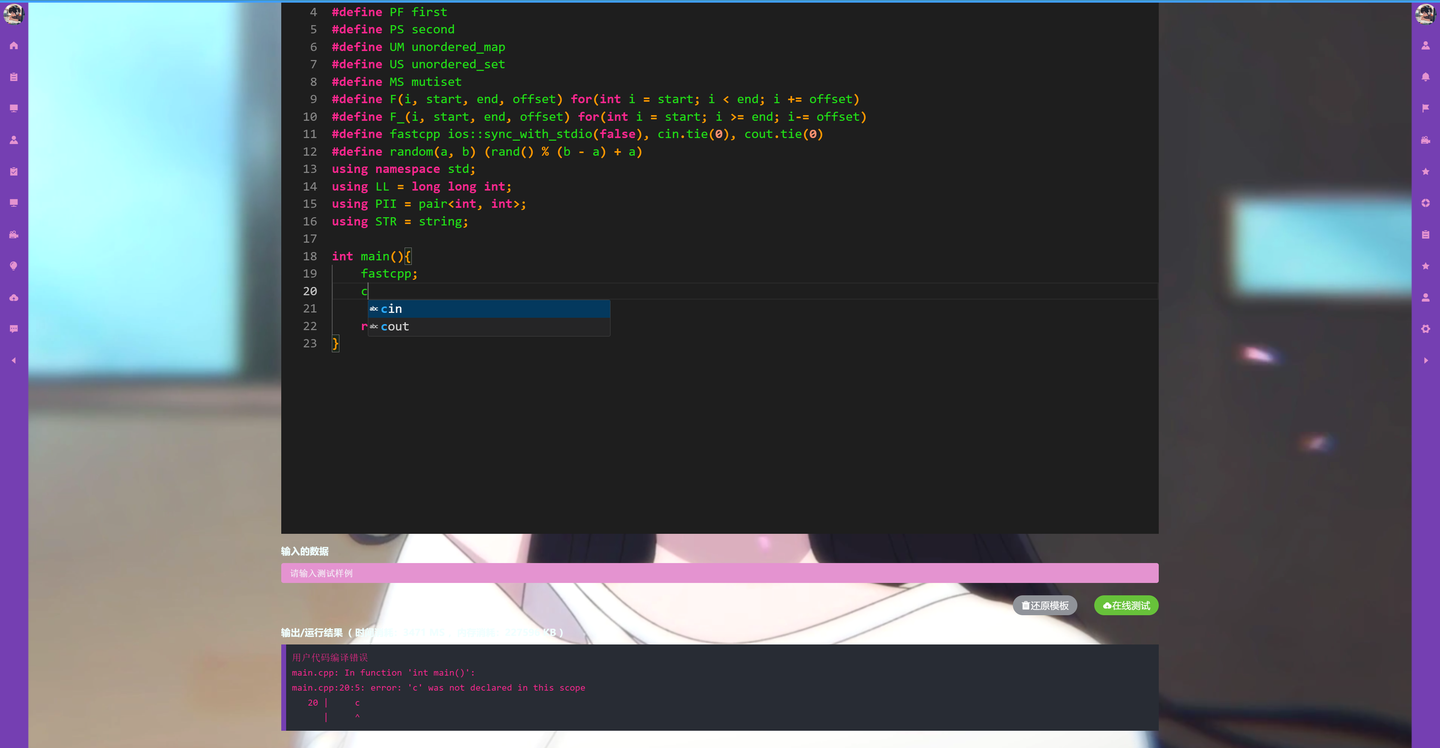
作为开发者或学生,您是否经常因为搭建和维护编程环境而感到头疼?现在,您不必再为此烦恼,因为一款全新的免费公共服务器已经为您解决了所有问题。这款服务器内置了多种编程语言的编程环境,并且配备了功能强大的在线版VS Code,让您可以随时随地在线编写代码,无需进行任何复杂的配置。
随时随地,云端编码
无论您身在何处,只要有网络连接,就可以通过浏览器访问这款公共服务器,开始您的编程之旅。这种云端编码的便利性,让您的学习或开发工作不再受限于特定的设备或环境。
丰富的编程语言支持
服务器支持包括C、C++、JavaScript、TypeScript、Go、Rust、PHP、Java、Ruby、Python3以及C#等在内的多种主流编程语言,满足不同开发者和学生的需求。无论您是初学者还是资深开发者,都能找到适合自己的编程环境。
在线版VS Code,高效开发
内置的在线版VS Code提供了与本地VS Code相似的编辑体验,包括代码高亮、智能提示、代码调试等功能,让您即使在云端也能享受到高效的开发体验。
数据隐私和安全提醒
虽然服务器是免费的,但为了保护您的数据隐私和安全,我们建议您不要上传任何敏感或重要的数据。这款服务器更适合用于学习和实验,而非存储重要信息。

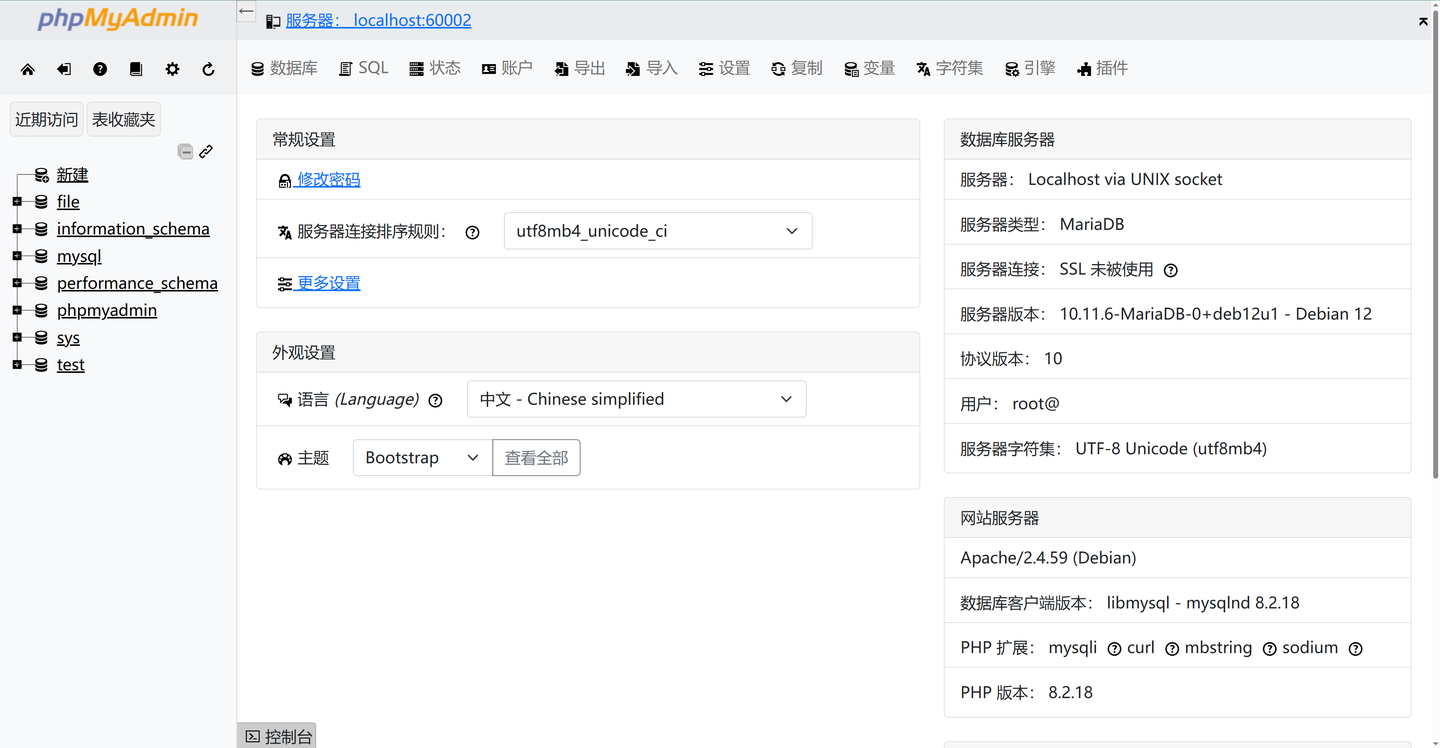
免费公益MYSQL(docs.ltpp.vip/LTPP-SHARE/…)
作为一名开发者或学生,数据库环境的搭建和维护往往是一个复杂且耗时的过程。但不用担心,现在有一款免费的MySQL服务器,专为解决您的烦恼而设计,让数据库的使用变得简单而高效。
性能卓越,满足需求
虽然它是免费的,但性能绝不打折。服务器提供了稳定且高效的数据库服务,能够满足大多数开发和学习场景的需求。
在线phpMyAdmin,管理更便捷
内置的在线phpMyAdmin管理面板,提供了一个直观且功能强大的用户界面,让您可以轻松地查看、编辑和管理数据库。
数据隐私提醒,安全第一
正如您所知,这是一项公共资源,因此我们强烈建议不要上传任何敏感或重要的数据。请将此服务器仅用于学习和实验目的,以确保您的数据安全。