As a junior computer science student, I was working on a campus second-hand trading platform project last semester when I stumbled upon the Hyperlane Rust HTTP framework. I was in a dilemma about choosing a framework— it needed to be powerful enough to handle the peak trading at the end of the semester, and its syntax had to be simple so that I, as a Rust newbie, could get up to speed quickly. To my pleasant surprise, Hyperlane exceeded all my expectations. Today, I want to share my experience with this amazing framework!
I. First Encounter with ctx: Such Thoughtful Abstraction!
When I first started writing route functions, I was amazed by Hyperlane’s Context (or ctx for short). I remember the first time I wanted to get the request method. In traditional Rust HTTP frameworks, I would have to write:
let method = ctx.get_request().await.get_method();
But Hyperlane flattened the methods. Now, I simply write:
let method = ctx.get_request_method().await;
It’s like organizing a backpack with layers. The framework has renamed the subfields of requests and responses according to certain rules. Setting the response status code changed from set_status_code to set_response_status_code. Although it’s a few more letters, the code logic is as clear as a flowchart. I no longer need to flip through the documentation to find the method hierarchy!
II. Route Macros: A Boon for the Lazy
What really hooked me was its request method macros. When I wrote the homepage route, I tried using the #[methods(get, post)] combined annotation, which was much simpler than declaring each enum value one by one. Later, I found out I could even simplify it to #[get]. Suddenly, writing routes felt as easy as writing Markdown:
#[get]
async fn ws_route(ctx: Context) {
    let key = ctx.get_request_header(SEC_WEBSOCKET_KEY).await.unwrap();
    let body = ctx.get_request_body().await;
    ctx.set_response_body(key).await.send_body().await;
    ctx.set_response_body(body).await.send_body().await;
}
Once, my teammate mistakenly wrote #[postman] instead of #[post], but the framework threw a friendly error message. Unlike some frameworks that just throw a compilation error, Hyperlane is super friendly to beginners!
III. Middleware Onion Model: Peeling Back the Layers of Request Processing
When I was working on user authentication, I first understood the beauty of the middleware onion model. I drew a flowchart according to the documentation (even though my Mermaid diagram was a bit crooked) and realized that a request travels from the outer layer of the onion inward:
graph TD
    A[Client Request] --> B[Authentication Middleware]
    B --> C[Logging Middleware]
    C --> D[Controller]
    D --> E[Response Formatting Middleware]
    E --> F[Client Response]
I wrote a JWT verification middleware. When it detects an invalid token, I can simply use ctx.aborted() to terminate the subsequent process. This “short-circuit” operation is much better than repeating the verification logic in each route. I remember once, to debug the middleware order, I deliberately placed the logging middleware after authentication. As a result, the request logs were full of authentication errors, and I realized how strict the middleware order is, just like the layers of an onion!
IV. WebSocket Support: Instant Real-Time Chat Functionality
The most headache-inducing part of the project was the real-time chat feature. To my surprise, Hyperlane’s WebSocket lifecycle is designed very clearly. According to the documentation’s flowchart:
graph TD
    A[Client Connection] --> Z[Pre-upgrade Processing]
    Z --> Y[WebSocket Handshake]
    Y --> X[Connection Established Callback]
    X --> B[Middleware Processing]
    B --> C[Message Handling Controller]
    C --> D[Response Handling]
I spent only one evening completing the WebSocket module. The ctx.closed() method, in particular, can actively close the connection when a user exits the chat. During testing, I found that even with 100 people chatting online simultaneously, the server resource usage remained stable. My roommate once wrote the same feature in Node.js, but it crashed during a 50-person test. The comparison made me feel a great sense of achievement!
V. Dynamic Routing: Adding Regex to Parameters is Fun
When writing the product detail page route, I used dynamic parameters. The ordinary route /goods/{id} is easy to understand, but when I needed to restrict the parameter to numbers, I found I could write:
server.route("/goods/{id:\\d+}", |ctx| async move {
    let id = ctx.get_route_param("id").await.parse::<u32>().unwrap();
    // Database query logic...
}).await;
This regex matching parameter method reminded me of the Regex homework I did in class. However, the framework has encapsulated the complex parsing process. Once, I mistakenly wrote the regex as {id:\\D+}, and the framework returned a 404 instead of a server error. Later, I found out that this is its route error handling mechanism, and the attention to detail is truly impressive!
VI. Performance Testing: Faster than Gin?!
Before the final course presentation, I conducted a performance test using wrk with the command:
wrk -c360 -d60s http://127.0.0.1:6000/
The result left me speechless: Hyperlane’s QPS reached over 320,000, nearly 30% faster than the same interface written by my roommate using Gin! Although it’s a bit slower than the underlying Tokio library, as an upper-layer framework, this performance is more than enough to support thousands of students using it simultaneously. During the defense, when the teacher saw this data, he specifically asked me if I had secretly optimized the server. In fact, I just ran it with the default configuration from the documentation!
VII. From Pitfalls to Love: The Growth Path of a Rust Framework
At the beginning of using Hyperlane, I also encountered many pitfalls. For example, in versions before v4.0.0, the execution order of synchronous routes and asynchronous middleware made me debug for an entire afternoon. Another time, I forgot to call send_body() in the WebSocket processing, which prevented messages from being sent. But every time I checked the documentation, I could find a clear version description. Especially the lifecycle evolution chart, the changes from v3.0.0 to v5.25.1 are very clear:
- After v4.22.0,
ctx.aborted()can interrupt requests, much like a “pause skill” in a game. ctx.closed()in v5.25.1 can actively close connections, solving the long-connection resource leakage problem I encountered before.
Now the project has been deployed on the school server, handling hundreds of transactions every day, and Hyperlane has never let me down. As a newbie transitioning from C++ to Rust, I sincerely feel that this framework balances performance and ease of use. It is especially friendly to student developers—the example code in the documentation can be copied and used directly, unlike some frameworks that require a lot of time to study the architecture before getting started.
If you are also working on a Rust Web project, I strongly recommend giving Hyperlane a try! The feeling of writing code like building with building blocks really makes programming enjoyable!
Note on the URL
I noticed that you mentioned a URL (http://127.0.0.1:6000/). It seems there was an issue with resolving the webpage. This could be due to network issues or an invalid link. Please check the URL’s validity and try accessing it again. If you need further assistance with the content of that webpage, feel free to let me know!
推荐几款学习编程的免费平台
免费在线开发平台(docs.ltpp.vip/LTPP/)
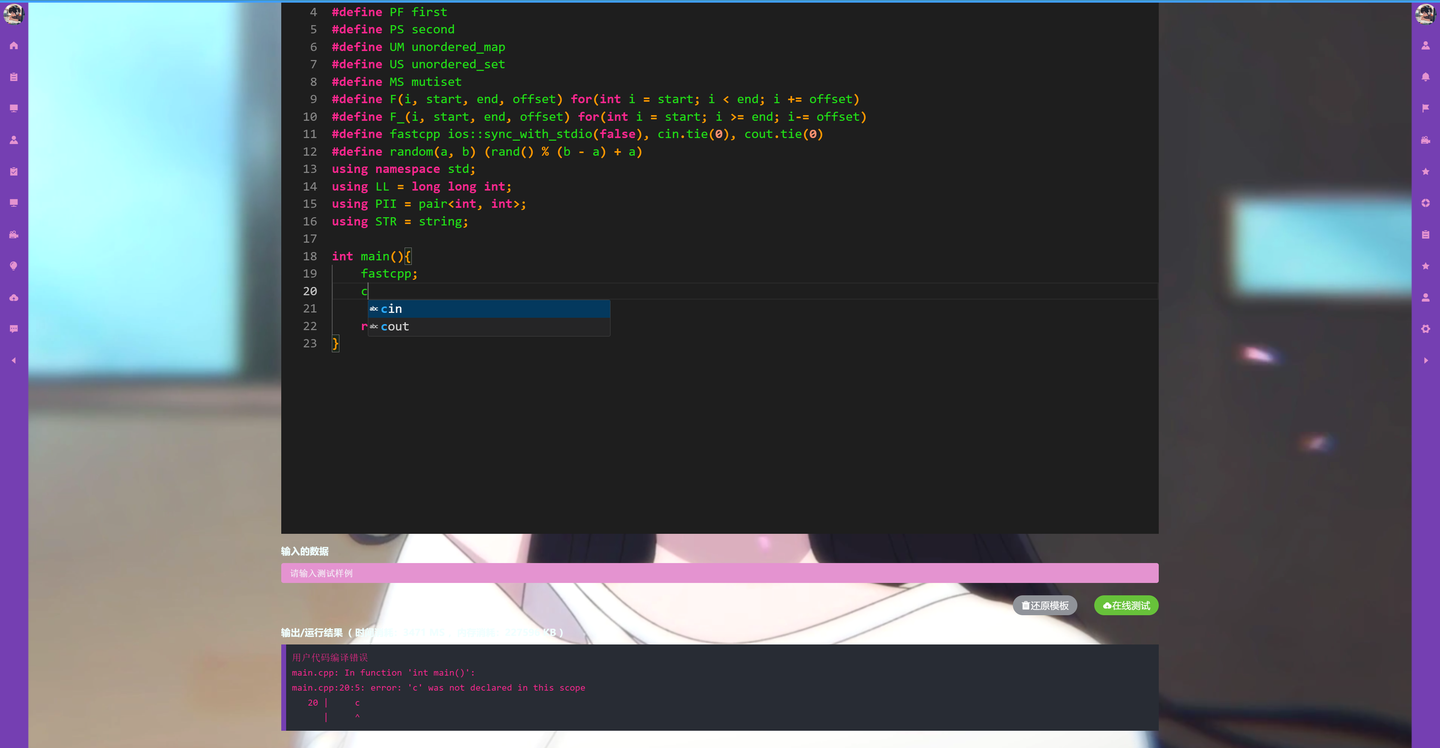
探索编程世界的新天地,为学生和开发者精心打造的编程平台,现已盛大开启!这个平台汇集了近4000道精心设计的编程题目,覆盖了C、C++、JavaScript、TypeScript、Go、Rust、PHP、Java、Ruby、Python3以及C#等众多编程语言,为您的编程学习之旅提供了一个全面而丰富的实践环境。
在这里,您不仅可以查看自己的代码记录,还能轻松地在云端保存和运行代码,让编程变得更加便捷。平台还提供了私聊和群聊功能,让您可以与同行们无障碍交流,分享文件,共同进步。不仅如此,您还可以通过阅读文章、参与问答板块和在线商店,进一步拓展您的知识边界。
为了提升您的编程技能,平台还设有每日一题、精选题单以及激动人心的编程竞赛,这些都是备考编程考试的绝佳资源。更令人兴奋的是,您还可以自定义系统UI,选择视频或图片作为背景,打造一个完全个性化的编码环境,让您的编程之旅既有趣又充满挑战。
免费公益服务器(docs.ltpp.vip/LTPP-SHARE/…)
作为开发者或学生,您是否经常因为搭建和维护编程环境而感到头疼?现在,您不必再为此烦恼,因为一款全新的免费公共服务器已经为您解决了所有问题。这款服务器内置了多种编程语言的编程环境,并且配备了功能强大的在线版VS Code,让您可以随时随地在线编写代码,无需进行任何复杂的配置。
随时随地,云端编码
无论您身在何处,只要有网络连接,就可以通过浏览器访问这款公共服务器,开始您的编程之旅。这种云端编码的便利性,让您的学习或开发工作不再受限于特定的设备或环境。
丰富的编程语言支持
服务器支持包括C、C++、JavaScript、TypeScript、Go、Rust、PHP、Java、Ruby、Python3以及C#等在内的多种主流编程语言,满足不同开发者和学生的需求。无论您是初学者还是资深开发者,都能找到适合自己的编程环境。
在线版VS Code,高效开发
内置的在线版VS Code提供了与本地VS Code相似的编辑体验,包括代码高亮、智能提示、代码调试等功能,让您即使在云端也能享受到高效的开发体验。
数据隐私和安全提醒
虽然服务器是免费的,但为了保护您的数据隐私和安全,我们建议您不要上传任何敏感或重要的数据。这款服务器更适合用于学习和实验,而非存储重要信息。

免费公益MYSQL(docs.ltpp.vip/LTPP-SHARE/…)
作为一名开发者或学生,数据库环境的搭建和维护往往是一个复杂且耗时的过程。但不用担心,现在有一款免费的MySQL服务器,专为解决您的烦恼而设计,让数据库的使用变得简单而高效。
性能卓越,满足需求
虽然它是免费的,但性能绝不打折。服务器提供了稳定且高效的数据库服务,能够满足大多数开发和学习场景的需求。
在线phpMyAdmin,管理更便捷
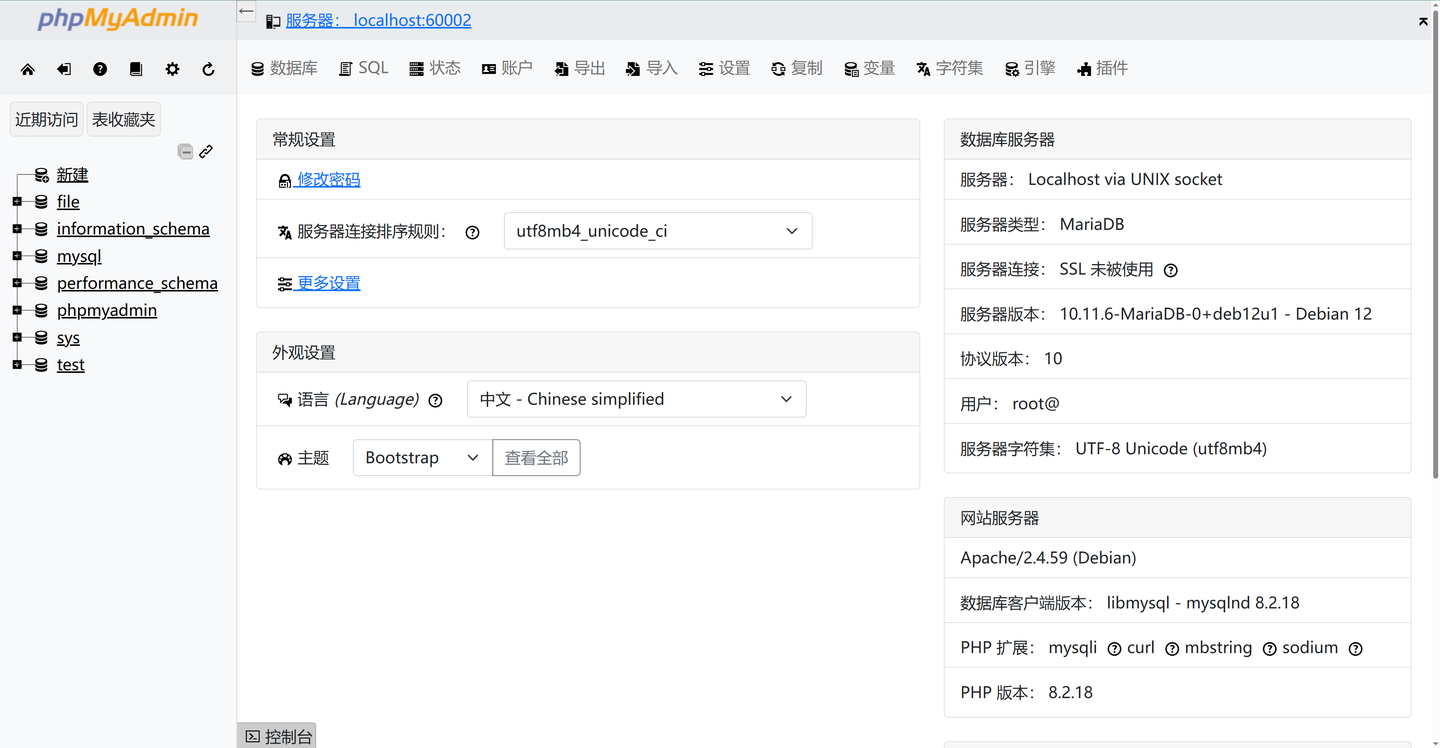
内置的在线phpMyAdmin管理面板,提供了一个直观且功能强大的用户界面,让您可以轻松地查看、编辑和管理数据库。
数据隐私提醒,安全第一
正如您所知,这是一项公共资源,因此我们强烈建议不要上传任何敏感或重要的数据。请将此服务器仅用于学习和实验目的,以确保您的数据安全。