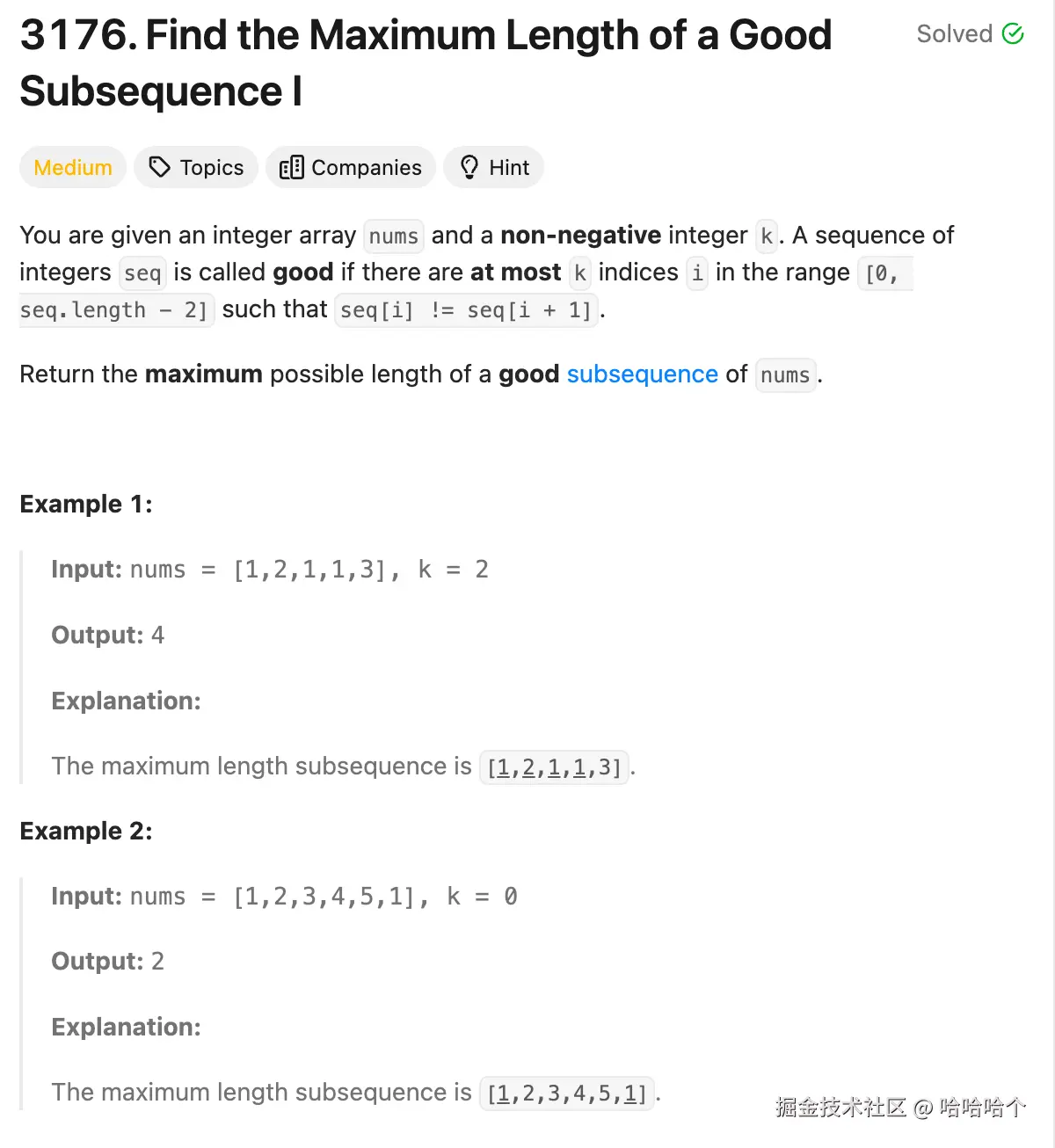
solution: dp O(N^2 * k),O(NK)
dp[i][j] represents the maximum length of subsequence ending at index i with j distinct elements.- Iterate over each element of nums starting from the second element
(i = 1).
- For each element, iterate over all indices before it
(l < i).
- If the current element at index i != the element at index l, it means a new distinct element is being added.
- In this case, if j > 0, update
dp[i][j] to dp[l][j-1] + 1 if it results in a longer subsequence.
- If the current element at index i == the element at index x, no new distinct element is being added.
- In this case, simply update
dp[i][j] to dp[l][j] + 1 if it results in a longer subsequence.
- Update max with the maximum length found so far.
class Solution {
public int maximumLength(int[] nums, int k) {
int[][] dp = new int[nums.length][k + 1];
int res = 1;
for(int i = 0; i < nums.length; i++){
Arrays.fill(dp[i], 1);
}
for (int i = 0; i < nums.length; i++) {
for (int l = 0; l < i; l++) {
for (int j = 0; j <= k; j++) {
if (nums[l] == nums[i]) {
dp[i][j] = Math.max(dp[i][j], 1 + dp[l][j]);
} else if (j >= 1) {
dp[i][j] = Math.max(dp[i][j], 1 + dp[l][j - 1]);
}
res = Math.max(res, dp[i][j]);
}
}
}
return res;
}
}