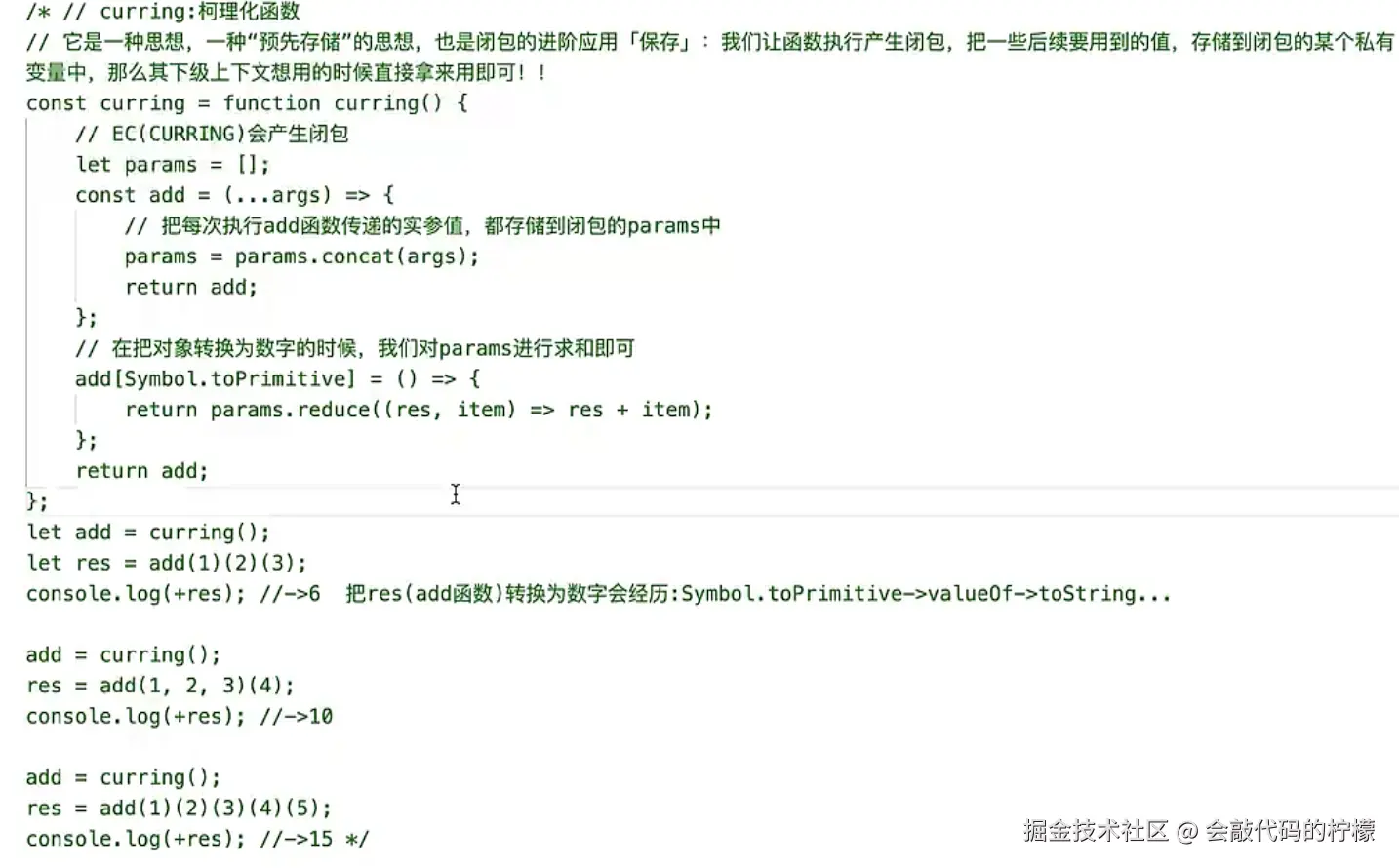
/*
在函数式编程当中有一个很重要的概念就是函数组合,实际上就是把处理数据的函数像管道一样连接起来,然后让数据穿过管道得到最终的结果。 例如:
const add1 = (x) => x + 1
const mul3 = (x) => x * 3
const div2 = (x) => x / 2
div2(mul3(add1(add1(0))))
而这样的写法可读性明显太差了,我们可以构建一个compose函数,它接受任意多个函数作为参数(这些函数都只接受一个参数),然后compose返回的也是一个函数,达到以下的效果:
const operate = compose(div2, mul3, add1, add1)
operate(0) //=>相当于div2(mul3(add1(add1(0))))
operate(2) //=>相当于div2(mul3(add1(add1(2))))
简而言之:compose可以把类似于f(g(h(x)))这种写法简化成compose(f, g, h)(x),请你完成 compose函数的编写
*/
const add1 = x => x + 1
const mul3 = x => x * 3
const div2 = x => x / 2
/*
// redux源码中的
const compose = function compose(...funcs) {
if (funcs.length === 0) return x => x
if (funcs.length === 1) return funcs[0]
// 假如funcs=[div2, mul3, add1]
// 第一轮: a=div2 b=mul3 返回:x=>div2(mul3(x)) “@1”
// 第二轮:a=“@1” b=add1 返回:x=>@1(add1(x)) ===> operate
// operate(0)
// div2(mul3(add1(0)))
return funcs.reduce((a, b) => {
return (...args) => {
return a(b(...args))
}
})
}
*/
const compose = function compose(...funcs){
if (funcs.length === 0) return x => x
if (funcs.length === 1) return funcs[0]
return function operate(x){
return funcs.reduceRight((x,func)=>{
return func(x)
},x)
}
}
const operate = compose(div2,mul3,add1,add1)
console.log(operate(0))
console.log(operate(2))