__REG_CURRENT = 0x04
__REG_CALIBRATION = 0x05

__RST = 15
__BRNG = 13
__PG1 = 12
__PG0 = 11
__BADC4 = 10
__BADC3 = 9
__BADC2 = 8
__BADC1 = 7
__SADC4 = 6
__SADC3 = 5
__SADC2 = 4
__SADC1 = 3
__MODE3 = 2
__MODE2 = 1
__MODE1 = 0

__OVF = 1
__CNVR = 2

__BUS_RANGE = [16, 32]
__GAIN_VOLTS = [0.04, 0.08, 0.16, 0.32]

__CONT_SH_BUS = 7

__AMP_ERR_MSG = ('Expected current %.3fA is greater '
                 'than max possible current %.3fA')
__RNG_ERR_MSG = ('Expected amps %.2fA, out of range, use a lower '
                 'value shunt resistor')
__VOLT_ERR_MSG = ('Invalid voltage range, must be one of: '
                  'RANGE_16V, RANGE_32V')

__LOG_FORMAT = '%(asctime)s - %(levelname)s - INA219 %(message)s'
__LOG_MSG_1 = ('shunt ohms: %.3f, bus max volts: %d, '
               'shunt volts max: %.2f%s, '
               'bus ADC: %s, shunt ADC: %s')
__LOG_MSG_2 = ('calibrate called with: bus max volts: %dV, '
               'max shunt volts: %.2fV%s')
__LOG_MSG_3 = ('Current overflow detected - '
               'attempting to increase gain')

__SHUNT_MILLIVOLTS_LSB = 0.01  # 10uV
__BUS_MILLIVOLTS_LSB = 4  # 4mV
__CALIBRATION_FACTOR = 0.04096
# Max value supported value (65534 decimal) of the calibration register
# (D0 bit is always zero, p31 of spec)
__MAX_CALIBRATION_VALUE = 0xFFFE
# In the spec (p17) the current LSB factor for the minimum LSB is
# documented as 32767, but a larger value (100.1% of 32767) is used
# to guarantee that current overflow can always be detected.
__CURRENT_LSB_FACTOR = 32800

def __init__(self, shunt_ohms, i2c, max_expected_amps=None,
             address=__ADDRESS, log_level=logging.ERROR):
    """Construct the class.

    At a minimum pass in the resistance of the shunt resistor and I2C
    interface to which the sensor is connected.

    Arguments:
    shunt_ohms -- value of shunt resistor in Ohms (mandatory).
    i2c -- an instance of the I2C class from the *machine* module, either
        I2C(1) or I2C(2) (mandatory).
    max_expected_amps -- the maximum expected current in Amps (optional).
    address -- the I2C address of the INA219, defaults to
        *0x40* (optional).
    log_level -- set to logging.DEBUG to see detailed calibration
        calculations (optional).
    """
    logging.basicConfig(level=log_level)
    self._log = logging.getLogger("ina219")
    self._i2c = i2c
    self._address = address
    self._shunt_ohms = shunt_ohms
    self._max_expected_amps = max_expected_amps
    self._min_device_current_lsb = self._calculate_min_current_lsb()
    self._gain = None
    self._auto_gain_enabled = False

def configure(self, voltage_range=RANGE_32V, gain=GAIN_AUTO,
              bus_adc=ADC_12BIT, shunt_adc=ADC_12BIT):
    """Configure and calibrate how the INA219 will take measurements.

    Arguments:
    voltage_range -- The full scale voltage range, this is either 16V
        or 32V represented by one of the following constants;
        RANGE_16V, RANGE_32V (default).
    gain -- The gain which controls the maximum range of the shunt
        voltage represented by one of the following constants;
        GAIN_1_40MV, GAIN_2_80MV, GAIN_4_160MV,
        GAIN_8_320MV, GAIN_AUTO (default).
    bus_adc -- The bus ADC resolution (9, 10, 11, or 12-bit) or
        set the number of samples used when averaging results
        represent by one of the following constants; ADC_9BIT,
        ADC_10BIT, ADC_11BIT, ADC_12BIT (default),
        ADC_2SAMP, ADC_4SAMP, ADC_8SAMP, ADC_16SAMP,
        ADC_32SAMP, ADC_64SAMP, ADC_128SAMP
    shunt_adc -- The shunt ADC resolution (9, 10, 11, or 12-bit) or
        set the number of samples used when averaging results
        represent by one of the following constants; ADC_9BIT,
        ADC_10BIT, ADC_11BIT, ADC_12BIT (default),
        ADC_2SAMP, ADC_4SAMP, ADC_8SAMP, ADC_16SAMP,
        ADC_32SAMP, ADC_64SAMP, ADC_128SAMP
    """
    self.__validate_voltage_range(voltage_range)
    self._voltage_range = voltage_range

    if self._max_expected_amps is not None:
        if gain == self.GAIN_AUTO:
            self._auto_gain_enabled = True
            self._gain = self._determine_gain(self._max_expected_amps)
        else:
            self._gain = gain
    else:
        if gain != self.GAIN_AUTO:
            self._gain = gain
        else:
            self._auto_gain_enabled = True
            self._gain = self.GAIN_1_40MV

    self._log.info('gain set to %.2fV', self.__GAIN_VOLTS[self._gain])

    self._log.debug(
        self.__LOG_MSG_1,
        self._shunt_ohms, self.__BUS_RANGE[voltage_range],
        self.__GAIN_VOLTS[self._gain],
        self.__max_expected_amps_to_string(self._max_expected_amps),
        self.__ADC_CONVERSION[bus_adc], self.__ADC_CONVERSION[shunt_adc])

    self._calibrate(
        self.__BUS_RANGE[voltage_range], self.__GAIN_VOLTS[self._gain],
        self._max_expected_amps)
    self._configure(voltage_range, self._gain, bus_adc, shunt_adc)

def voltage(self):
    """Return the bus voltage in volts."""
    value = self._voltage_register()
    return float(value) * self.__BUS_MILLIVOLTS_LSB / 1000

def supply_voltage(self):
    """Return the bus supply voltage in volts.

    This is the sum of the bus voltage and shunt voltage. A
    DeviceRangeError exception is thrown if current overflow occurs.
    """
    return self.voltage() + (float(self.shunt_voltage()) / 1000)

def current(self):
    """Return the bus current in milliamps.

    A DeviceRangeError exception is thrown if current overflow occurs.
    """
    self._handle_current_overflow()
    return self._current_register() * self._current_lsb * 1000

def power(self):
    """Return the bus power consumption in milliwatts.

    A DeviceRangeError exception is thrown if current overflow occurs.
    """
    self._handle_current_overflow()
    return self._power_register() * self._power_lsb * 1000

def shunt_voltage(self):
    """Return the shunt voltage in millivolts.

    A DeviceRangeError exception is thrown if current overflow occurs.
    """
    self._handle_current_overflow()
    return self._shunt_voltage_register() * self.__SHUNT_MILLIVOLTS_LSB

def sleep(self):
    """Put the INA219 into power down mode."""
    configuration = self._read_configuration()
    self._configuration_register(configuration & 0xFFF8)

def wake(self):
    """Wake the INA219 from power down mode."""
    configuration = self._read_configuration()
    self._configuration_register(configuration | 0x0007)
    # 40us delay to recover from powerdown (p14 of spec)
    utime.sleep_us(40)

def current_overflow(self):
    """Return true if the sensor has detect current overflow.

    In this case the current and power values are invalid.
    """
    return self._has_current_overflow()

def reset(self):
    """Reset the INA219 to its default configuration."""
    self._configuration_register(1 << self.__RST)

def _handle_current_overflow(self):
    if self._auto_gain_enabled:
        while self._has_current_overflow():
            self._increase_gain()
    else:
        if self._has_current_overflow():
            raise DeviceRangeError(self.__GAIN_VOLTS[self._gain])

def _determine_gain(self, max_expected_amps):
    shunt_v = max_expected_amps * self._shunt_ohms
    if shunt_v > self.__GAIN_VOLTS[3]:
        raise ValueError(self.__RNG_ERR_MSG % max_expected_amps)
    gain = min(v for v in self.__GAIN_VOLTS if v > shunt_v)
    return self.__GAIN_VOLTS.index(gain)

def _increase_gain(self):
    self._log.info(self.__LOG_MSG_3)
    gain = self._read_gain()
    if gain < len(self.__GAIN_VOLTS) - 1:
        gain = gain + 1
        self._calibrate(self.__BUS_RANGE[self._voltage_range],
                        self.__GAIN_VOLTS[gain])
        self._configure_gain(gain)
        # 1ms delay required for new configuration to take effect,
        # otherwise invalid current/power readings can occur.
        utime.sleep_ms(1)
    else:
        self._log.info('Device limit reach, gain cannot be increased')
        raise DeviceRangeError(self.__GAIN_VOLTS[gain], True)

def _configure(self, voltage_range, gain, bus_adc, shunt_adc):
    configuration = (
        voltage_range << self.__BRNG | gain << self.__PG0 |
        bus_adc << self.__BADC1 | shunt_adc << self.__SADC1 |
        self.__CONT_SH_BUS)
    self._configuration_register(configuration)

def _calibrate(self, bus_volts_max, shunt_volts_max,
               max_expected_amps=None):
    self._log.info(self.__LOG_MSG_2,
                   bus_volts_max, shunt_volts_max,
                   self.__max_expected_amps_to_string(max_expected_amps))

    max_possible_amps = shunt_volts_max / self._shunt_ohms

    self._log.info("max possible current: %.3fA", max_possible_amps)

    self._current_lsb = \
        self._determine_current_lsb(max_expected_amps, max_possible_amps)
    self._log.info("current LSB: %.3e A/bit", self._current_lsb)

    self._power_lsb = self._current_lsb * 20
    self._log.info("power LSB: %.3e W/bit", self._power_lsb)

    max_current = self._current_lsb * 32767
    self._log.info("max current before overflow: %.4fA", max_current)

    max_shunt_voltage = max_current * self._shunt_ohms
    self._log.info("max shunt voltage before overflow: %.4fmV",
                   max_shunt_voltage * 1000)

    calibration = trunc(self.__CALIBRATION_FACTOR /
                        (self._current_lsb * self._shunt_ohms))
    self._log.info("calibration: 0x%04x (%d)", calibration, calibration)
    self._calibration_register(calibration)

def _determine_current_lsb(self, max_expected_amps, max_possible_amps):
    if max_expected_amps is not None:
        if max_expected_amps > round(max_possible_amps, 3):
            raise ValueError(self.__AMP_ERR_MSG %
                             (max_expected_amps, max_possible_amps))
        self._log.info("max expected current: %.3fA", max_expected_amps)
        if max_expected_amps < max_possible_amps:
            current_lsb = max_expected_amps / self.__CURRENT_LSB_FACTOR
        else:
            current_lsb = max_possible_amps / self.__CURRENT_LSB_FACTOR
    else:
        current_lsb = max_possible_amps / self.__CURRENT_LSB_FACTOR

    if current_lsb < self._min_device_current_lsb:
        current_lsb = self._min_device_current_lsb
    return current_lsb

def _configuration_register(self, register_value):
    self._log.debug("configuration: 0x%04x", register_value)
    self.__write_register(self.__REG_CONFIG, register_value)

def _read_configuration(self):
    return self.__read_register(self.__REG_CONFIG)

def _calculate_min_current_lsb(self):
    return self.__CALIBRATION_FACTOR / \
        (self._shunt_ohms * self.__MAX_CALIBRATION_VALUE)

def _read_gain(self):
    configuration = self._read_configuration()
    gain = (configuration & 0x1800) >> self.__PG0
    self._log.info("gain is currently: %.2fV", self.__GAIN_VOLTS[gain])
    return gain

def _configure_gain(self, gain):
    configuration = self._read_configuration()
    configuration = configuration & 0xE7FF
    self._configuration_register(configuration | (gain << self.__PG0))
    self._gain = gain
    self._log.info("gain set to: %.2fV" % self.__GAIN_VOLTS[gain])

def _calibration_register(self, register_value):
    self._log.debug("calibration: 0x%04x" % register_value)
    self.__write_register(self.__REG_CALIBRATION, register_value)

def _has_current_overflow(self):
    ovf = self._read_voltage_register() & self.__OVF
    return (ovf == 1)

def _voltage_register(self):
    register_value = self._read_voltage_register()
    return register_value >> 3

def _read_voltage_register(self):
    return self.__read_register(self.__REG_BUSVOLTAGE)

def _current_register(self):
    return self.__read_register(self.__REG_CURRENT, True)

def _shunt_voltage_register(self):
    return self.__read_register(self.__REG_SHUNTVOLTAGE, True)

def _power_register(self):
    return self.__read_register(self.__REG_POWER)

def __validate_voltage_range(self, voltage_range):
    if voltage_range > len(self.__BUS_RANGE) - 1:
        raise ValueError(self.__VOLT_ERR_MSG)

def __write_register(self, register, register_value):
    self.__log_register_operation("write", register, register_value)

    register_bytes = self.__to_bytes(register_value)
    self._i2c.writeto_mem(self._address, register, register_bytes)

def __to_bytes(self, register_value):
    return bytearray([(register_value >> 8) & 0xFF, register_value & 0xFF])

def __read_register(self, register, negative_value_supported=False):
    register_bytes = self._i2c.readfrom_mem(self._address, register, 2)
    register_value = int.from_bytes(register_bytes, 'big')
    if negative_value_supported:
        # Two's compliment
        if register_value > 32767:
            register_value -= 65536

    self.__log_register_operation("read", register, register_value)
    return register_value

def __log_register_operation(self, msg, register, value):
    # performance optimisation
    if logging._level == logging.DEBUG:
        binary = '{0:#018b}'.format(value)
        self._log.debug("%s register 0x%02x: 0x%04x %s",
                        msg, register, value, binary)

def __max_expected_amps_to_string(self, max_expected_amps):
    if max_expected_amps is None:
        return ''
    else:
        return ', max expected amps: %.3fA' % max_expected_amps
class DeviceRangeError(Exception): """This exception is throw to prevent invalid readings.
Invalid readings occur When the current is greater than allowed given
calibration of the device.
"""

__DEV_RNG_ERR = ('Current out of range (overflow), '
                 'for gain %.2fV')

def __init__(self, gain_volts, device_max=False):
    """Construct the class."""
    msg = self.__DEV_RNG_ERR % gain_volts
    if device_max:
        msg = msg + ', device limit reached'
    super(DeviceRangeError, self).__init__(msg)
    self.gain_volts = gain_volts
    self.device_limit_reached = device_max
**六、参考资料**
1, scruss.com
**收集整理了一份《2024年最新物联网嵌入式全套学习资料》,初衷也很简单,就是希望能够帮助到想自学提升的朋友。**

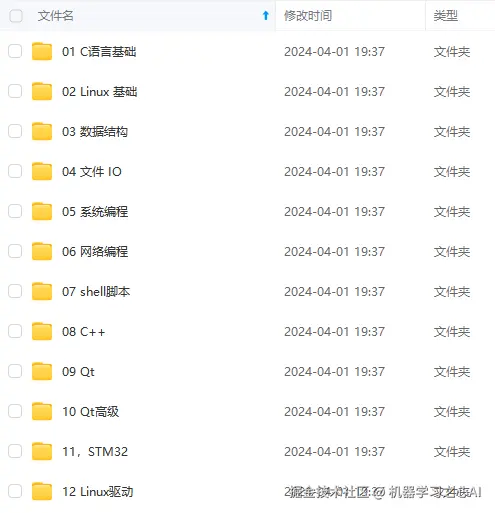
**[如果你需要这些资料,可以戳这里获取](https://gitee.com/vip204888)**
**一个人可以走的很快,但一群人才能走的更远!不论你是正从事IT行业的老鸟或是对IT行业感兴趣的新人**
**都欢迎加入我们的的圈子(技术交流、学习资源、职场吐槽、大厂内推、面试辅导),让我们一起学习成长!**