1、分页
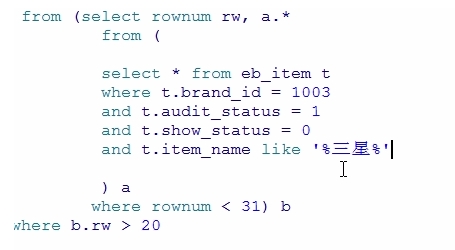
思路:orcale 要使用分页得使用rownum (行号来进行分页),rownum 不支持大于号,查询rownum 起别名
《多少 》多少
2、数据库的备份与管理
用户的创建与授权:
创建用户 | create user username identified by password |
修改密码 | alert user username identified by password; |
| 用户授权 | grant dba to username; |
锁定用户 | 解锁 | alter user username account lock |unlock |
创建连接 | conn username/password |
授予权限:
默认的普通用户scott默认未解锁,不能进行那个使用,新建的用户也没有任何权限,必须授予权限
多个权限用,逗号隔开
grant create session to zhangsan;//授予zhangsan用户创建session的权限,即登陆权限
grant unlimited tablespace to zhangsan;//授予zhangsan用户使用表空间的权限
grant create table to zhangsan;//授予创建表的权限
grante drop table to zhangsan;//授予删除表的权限
grant insert table to zhangsan;//插入表的权限
grant update table to zhangsan;//修改表的权限
grant all to public;//这条比较重要,授予所有权限(all)给所有用户(public)
用户表与表之间的授权:
oralce对权限管理比较严谨,普通用户之间也是默认不能互相访问的,需要互相授权
grant select on tablename to zhangsan;//授予zhangsan用户查看指定表的权限
grant drop on tablename to zhangsan;//授予删除表的权限
grant insert on tablename to zhangsan;//授予插入的权限
grant update on tablename to zhangsan;//授予修改表的权限
grant insert(id) on tablename to zhangsan;
grant update(id) on tablename to zhangsan;//授予对指定表特定字段的插入和修改权限,注意,只能是insert和update
grant alert all table to zhangsan;//授予zhangsan用户alert任意表的权限
撤销权限:
基本语法同grant,关键字为revoke
****revoke**select on tablename to zhangsan;//授予zhangsan用户查看指定表的权限
**
。。。。。。。同上
**查看权限:
**
select * from user_sys_privs;//查看当前用户所有权限
select * from user_tab_privs;//查看所用用户对表的权限
角色:
角色即权限的集合,可以把一个角色授予给用户
create role myrole;//创建角色
grant create session to myrole;//将创建session的权限授予myrole
grant myrole to zhangsan;//授予zhangsan用户myrole的角色
drop role myrole;删除角色
**
**
3、触发器(trigger)
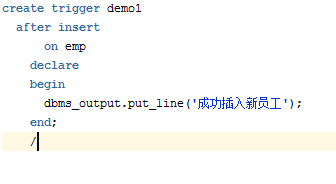
语句级触发器 | 在指定的操作语句操作之前或者之后执行一次,不管这条语句影响了多少行 |
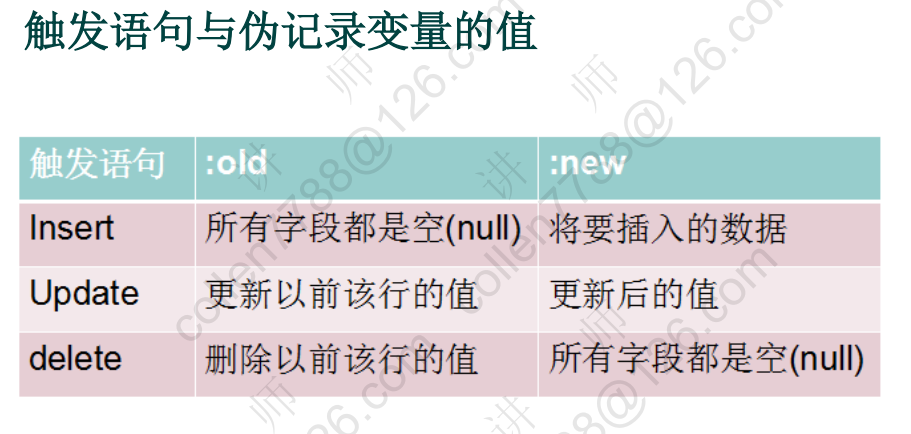
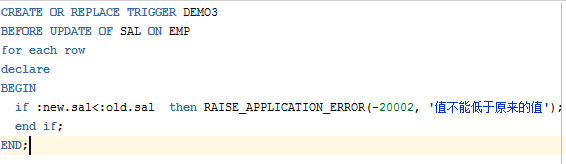
| 行级触发器 | 触发语句作用的每一条记录都被触发,在行级触发器中使用:old 和:new 伪记录变量,识别值的状态 |
or | on | 字段 | 表 |
语句触发器
create or replace trigger  demo2
 before insert
  on emp
  declare
  begin
    if to_number(to_char(sysdate,'hh24')) not between 9 and 17 or to_char(sysdate,'day') in ('星期六','星期日','星期三')
      then RAISE_APPLICATION_ERROR(-20001, '禁止在非工作日时间插入');
      end if;
  end;
行级触发器
4、存储过程
存储过程和存储函数(不用declare 用 as ) 概念:指存储在数据库中供所有用户程序调用的字程序叫做存储过程、存储函数
区别(什么时候用):如果只有一个返回值用存储函数,如果有多个返回值,就用存储过程(申明包结构,创建包体,:游标)
存储过程创建方式: (返回多个值:包结构) | create or replace procedure demo1(mempno number,psal number) as msal emp.sal%type; begin select sal into msal from emp where empno = mempno; update emp set sal =sal+psal; dbms_output.put_line('涨前:'||msal||' 涨后:'||(msal+psal)); commit; end; |
存储函数的创建方式: (返回单个值) | create or replace function queryempincome(eno in number) return number--返回一个值 as --定义变量保存月薪和奖金 psal emp.sal%type; pcomm emp.comm%type; begin select sal,comm into psal,pcomm from emp where empno=eno; --返回年收入 return psal*12+nvl(pcomm,0); end; |
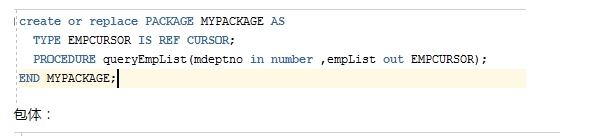
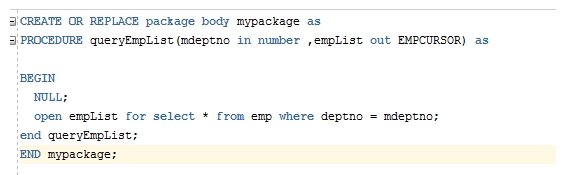
存储过程返回多个值,将游标以集合的方式返回: 需要申明包结构、创建包体
**
**
> 原文链接 www.hanyuanhun.cn | node.hanyuanhun.cn