题目链接

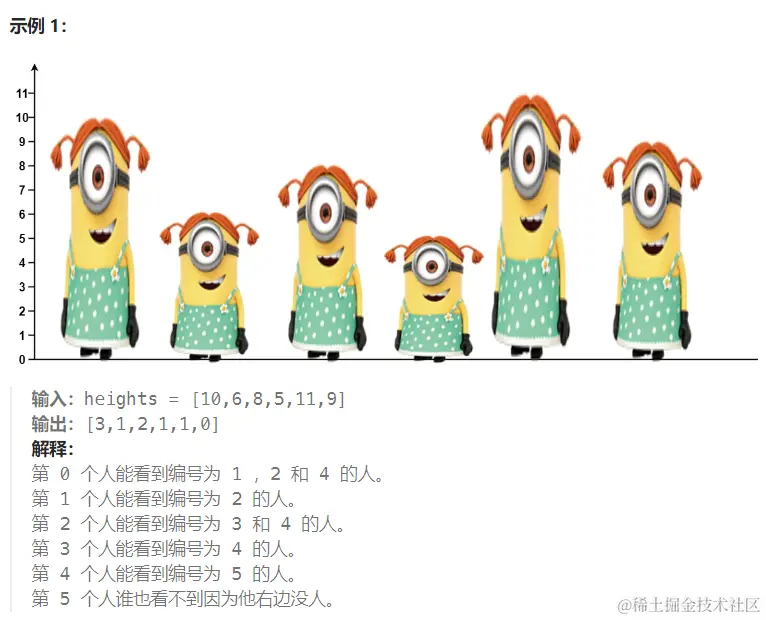
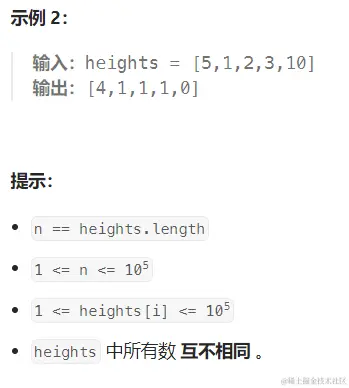
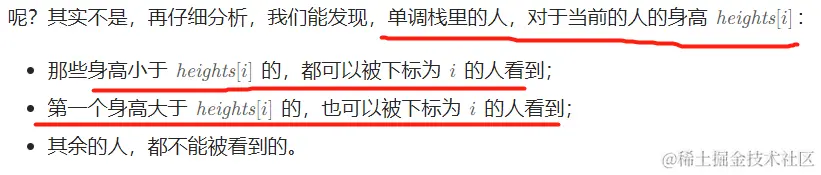
Python3
class Solution:
def canSeePersonsCount(self, heights: List[int]) -> List[int]:
n = len(heights)
res = [0] * n
stack = []
for i in range(n - 1, -1, -1):
while stack and heights[i] > stack[-1]:
res[i] += 1
stack.pop()
if stack:
res[i] += 1
stack.append(heights[i])
return res
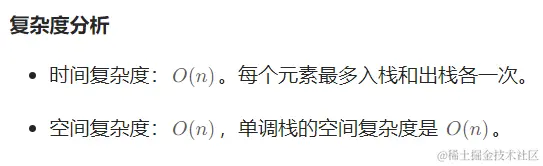
C++
class Solution {
public:
    vector<int> canSeePersonsCount(vector<int>& heights) {
        int n = heights.size();
        vector<int> res(n, 0);
        vector<int> stk;
        for (int i = n - 1; i >= 0; --i){
            while (!stk.empty() && heights[i] > stk.back()){
                res[i] += 1;
                stk.pop_back();
            }
            if (!stk.empty()){
                res[i] += 1;
            }
            stk.emplace_back(heights[i]);
        }
        return res;
    }
};
class Solution {
public:
    vector<int> canSeePersonsCount(vector<int>& heights) {
        int n = heights.size();
        vector<int> res(n, 0);
        stack<int> stk;
        for (int i = n - 1; i >= 0; --i){
            while (!stk.empty() && heights[i] > stk.top()){
                res[i] += 1;
                stk.pop();
            }
            if (!stk.empty()){
                res[i] += 1;
            }
            stk.push(heights[i]);
        }
        return res;
    }
};