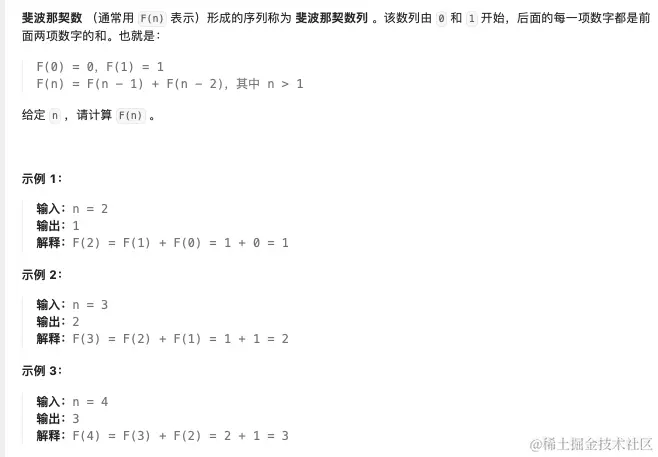
- 509. 斐波那契数
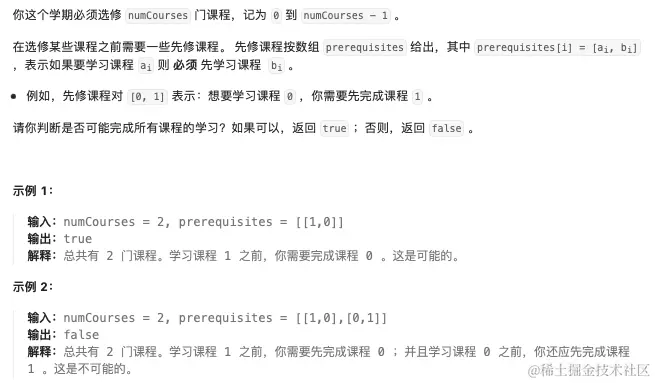
- 207. 课程表
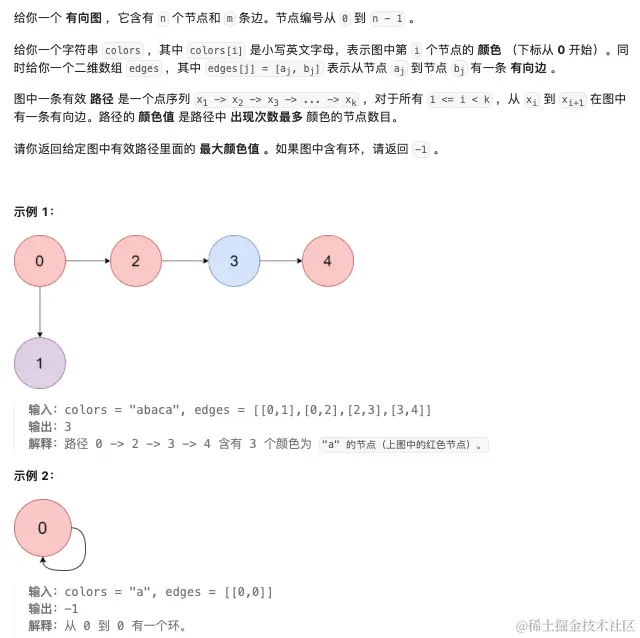
- 1857. 有向图中最大颜色值
解法1: 先序BFS
class Solution {
int fib(int n) {
if (n == 0) return 0
if (n == 1) return 1
queue<int> qu
qu.push(0)
qu.push(1)
vector<int> res(n+1, 0)
res[1] = 1
vector<int> indeg(n+1, 2)
indeg[0] = 0
indeg[1] = 0
while(!qu.empty()) {
int x = qu.front()
qu.pop()
if (x == n) {
return res[x]
}
vector<int> next = x == 0 ? vector<int>{2} : vector<int>{x + 1, x + 2}
for (int y: next) {
if (y > n) break
res[y] += res[x]
indeg[y]--
if (indeg[y] == 0) {
qu.push(y)
}
}
}
return res[n]
}
}
解法2: 先序DFS+递归
class Solution {
public:
int fib(int n) {
if(n == 0) return 0
if(n == 1) return 1
vector<int> dp(n + 1, 0)
dp[1] = 1
vector<int> indeg(n + 1, 2)
indeg[0] = 0
indeg[1] = 0
vector<int> begin = {0, 1}
for(int x : begin) dfs(x, n, dp, indeg)
return dp[n]
}
void dfs(int x, int n, vector<int>& dp, vector<int>& indeg) {
if(x == n) return
vector<int> next = x == 0 ? vector<int>{2} : vector<int>{x + 1, x + 2}
for(int y : next) {
if(y > n) continue
dp[y] += dp[x]
indeg[y]--
if(indeg[y] == 0) dfs(y, n, dp, indeg)
}
}
}
解法3: 先序DFS+栈
class Solution {
public:
int fib(int n) {
if(n == 0) return 0
if(n == 1) return 1
vector<int> dp(n + 1, 0)
dp[1] = 1
vector<int> indeg(n + 1, 2)
indeg[0] = 0
indeg[1] = 0
vector<int> begin = {0, 1}
for(int x : begin) dfs(x, n, dp, indeg)
return dp[n]
}
void dfs(int x, int n, vector<int>& dp, vector<int>& indeg) {
stack<pair<int,int>> stack
stack.push(make_pair(x,0))
while(!stack.empty()){
pair<int,int>* cur = &stack.top()
int x1 = (*cur).first
int vis = (*cur).second
bool case1 = x1 == 0 && vis == 1
bool case2 = x1 != 0 && vis == 2
if(!case1 && !case2){
int next = x1 == 0 ? 2 : x1 + vis + 1
(*cur).second++
if(next > n) continue
indeg[next]--
dp[next] += dp[x1]
if(indeg[next] == 0) stack.push(make_pair(next,0))
}
else stack.pop()
}
}
}
解法1: 先序BFS
class Solution {
public:
bool canFinish(int numCourses, vector<vector<int>>& prerequisites) {
unordered_map<int, vector<int>> courMap
vector<int> ingreed(numCourses, 0)
for (int index = 0
ingreed[prerequisites[index][0]]++
courMap[prerequisites[index][1]].emplace_back(prerequisites[index][0])
}
queue<int> qu
for (int i = 0
if (ingreed[i] == 0) {
qu.push(i)
}
}
int cnt = 0
while (!qu.empty()) {
int top = qu.front()
qu.pop()
cnt++
for (auto adj: courMap[top]) {
ingreed[adj]--
if (ingreed[adj] == 0) {
qu.push(adj)
}
}
}
return (cnt == numCourses)
}
}
class Solution {
public:
int largestPathValue(string colors, vector<vector<int>>& edges) {
int n = colors.size()
vector<int> indeg(n, 0)
vector<vector<int>> graph(n)
// 构建有向图并计算入度
for (const auto& edge : edges) {
int u = edge[0]
int v = edge[1]
graph[u].push_back(v)
indeg[v]++
}
vector<vector<int>> dp(n, vector<int>(26, 0))
queue<int> q
// 将入度为0的节点加入队列
for (int i = 0
if (indeg[i] == 0) {
q.push(i)
}
}
int longestPath = 0
while (!q.empty()) {
int u = q.front()
q.pop()
dp[u][colors[u] - 'a']++
for (int v : graph[u]) {
indeg[v]--
for (int i = 0
dp[v][i] = max(dp[v][i], dp[u][i])
}
if (indeg[v] == 0) {
q.push(v)
}
}
int maxCount = *max_element(dp[u].begin(), dp[u].end())
longestPath = max(longestPath, maxCount)
}
if (count(indeg.begin(), indeg.end(), 0) != n) {
return -1
}
return longestPath
}
}