async / await
async/await 是 ECMAScript 2017(ES8)引入的一种用于处理异步操作的语法糖。它是基于 Promise 的异步编程模型的一种更简洁、更直观的写法async 是一个用于声明异步函数的关键字,用于修饰函数定义。异步函数内部可以使用 await 关键字来暂停函数的执行,等待一个 Promise 对象的解析结果,并将解析的结果返回。
示例1:
- 如果在
async函数内部没有 await,此时async是没有意义的,函数内部就全是同步内容
        async function p(){
               let j = 1
                console.log(j)
              }
              p()
             console.log(2)
- 打印结果为
1 、 2同步执行的
- 注意:此时
p()为一个promise对象,async用于修饰一个函数,表示该函数是异步的,返回一个promsie对象
- 如果在
async函数内部遇到了await,await下面那一行的代码会以异步处理,相当于.then的回调
 async function p(){
       let j = await 1
        console.log(j)
      }
      p()
     console.log(2)
- 打印结果为
2 、 1。
await 将 console.log(j) 变为了 异步执行
示例2:
async function foo(){
        let num = await 100
        console.log(num)
    }
function foo(){
        return Promise.resolve(100).then(num => {
            console.log(num)
        })
    }
await下面的都相当于是放到了.then()的回调函数中
示例3:
async函数内部return语句返回的值,会成为then方法回调函数的参数。
async function fn(){
return 'hello async'
}
fn().then(res => {
console.log(res)
})
async基本语法:
- 函数声明
async function fn(){}
- 函数表达式
let fnn = async function(){}
- 对象方法
let bj = {
            name : 'kk',
            async sayhi() {
                   console.log(111);
            }
        }
- 箭头函数
let p = async () => {}
- 可理解为
async 一般都是写在 function 前面
- 注意: async 必须和await搭配使用 否则只是把函数变成peomise对象
await
await不能单独存在,await必须在async函数内使用,写在普通函数内会报错。- await后面一般会跟着一个promise对象, 返回该对象的结果(成功或失败)
示例1:
const sleep = s => new Promise(resolve => setTimeout(() => resolve(s), s * 1000))
async function fn() {
let res = await sleep(3)
console.log(res)
}
fn()
- 过三秒打印3
- 相当于直接把
await 后面promise的结果给了res
示例2:
const sleep = (s) => {
return new Promise((resolve) => {
setTimeout(() => {
resolve(s);
}, s * 1000);
});
};
async function func1() {
const res1 = await sleep(1);
console.log('res1:', res1);
const res2 = await sleep(3);
console.log('res2:', res2);
}
async function func2() {
const res3 = await sleep(2);
console.log('res3:', res3);
const res4 = await sleep(4);
console.log('res4:', res4);
}
func1();
func2();
- await 阻塞的是async function里面的代码,不会阻塞外面的函数的执行
- 注意:
await sleep(4); 解析这句代码 sleep(4)执行是同步的,不等待。
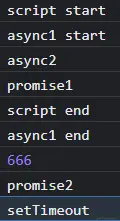
字节跳动的面试题
async function async1() {
console.log('async1 start')
await async2()
console.log('async1 end')
console.log(666)
}
async function async2() {
console.log('async2')
}
console.log('script start')
setTimeout(function () {
console.log('setTimeout')
}, 0)
async1();
new Promise(function (resolve) {
console.log('promise1')
resolve();
}).then(function () {
console.log('promise2')
});
console.log('script end')
- 输出顺序