值和引用类型
哪些类型是值类型?哪些类型是引用类型
- 值类型:String Number Boolean Symbol
- 引用类型 JSON Array null
演示值与引用类型的堆栈
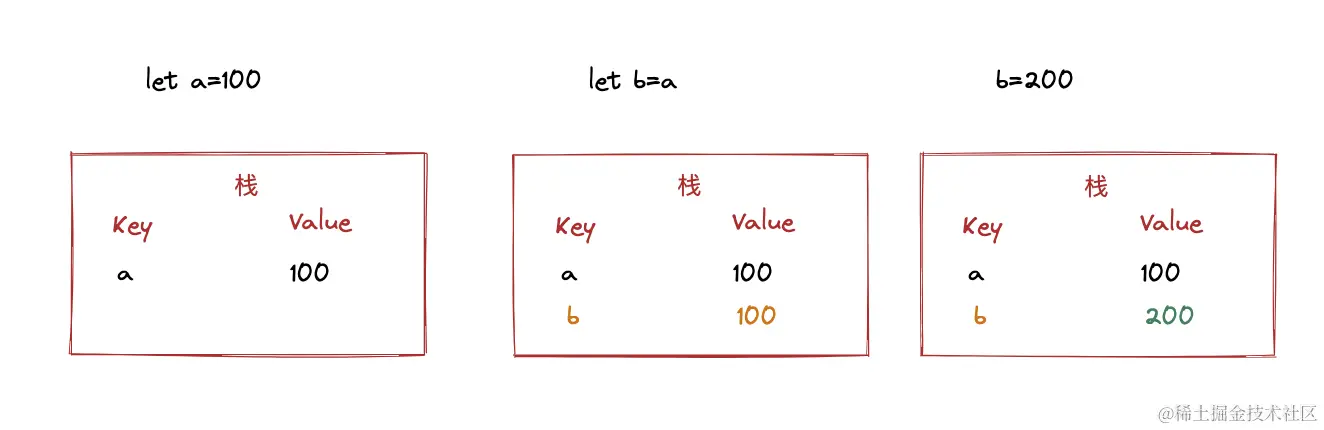
值类型
引用类型
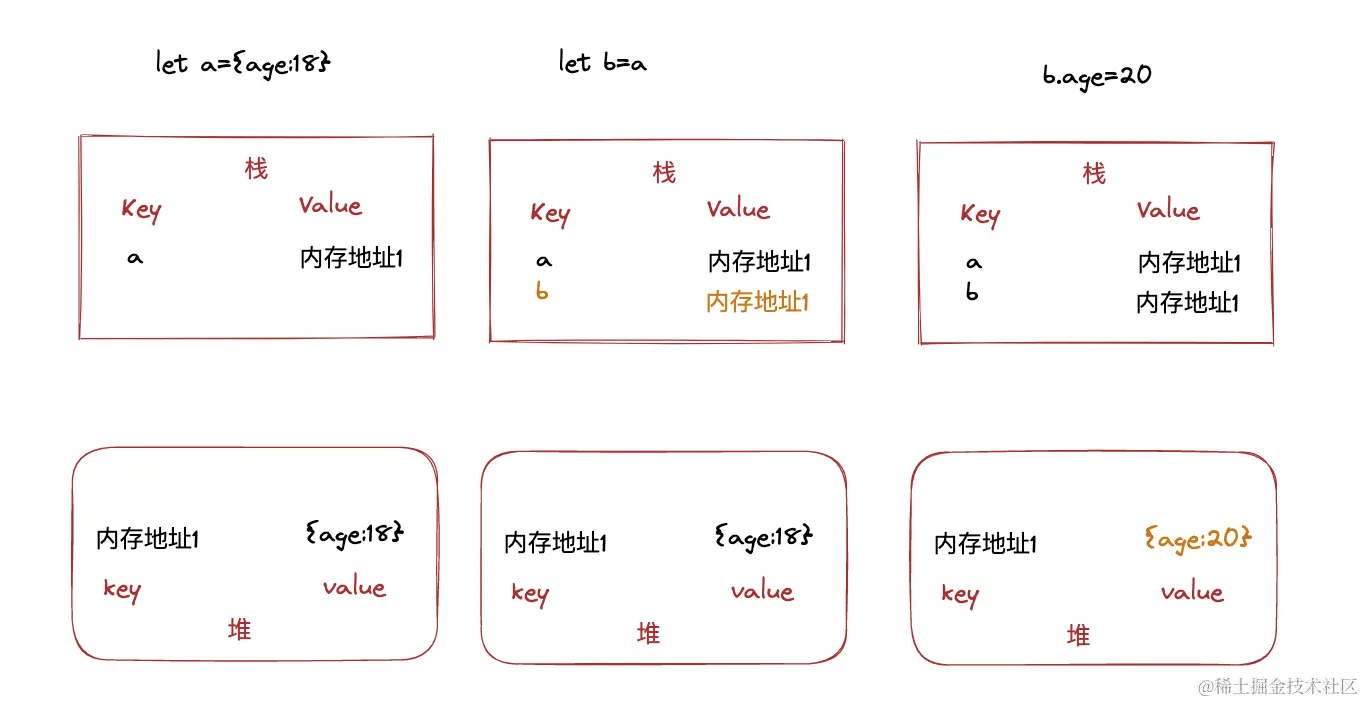
变种提问
<!DOCTYPE html>
<html lang="en">
<head>
    <meta charset="UTF-8">
    <meta http-equiv="X-UA-Compatible" content="IE=edge">
    <meta name="viewport" content="width=device-width, initial-scale=1.0">
    <title>Document</title>
</head>
<body>
    <script>
        // //内存地址不同
        let a = 100
        let b = a
        b = 200
        console.log(a); //100
        //指向同一个内存地址
        let a1 = {age:18}
        let b1 = a1
        b1.age = 20
        console.log(a1);//20

        //变种提问
        const a = {x:100,y:200}
        const b = a
        let c = a.x
        b.x = 300
        console.log(a);//300因为内存地址相同
    </script>
</body>
</html>
手写深拷贝
如何实现深拷贝
JSON.parse(JSON.stringify(obj))
- 不能存放函数 时间对象 正则....
- 递归 lodash.cloneDeep 推荐
<!DOCTYPE html>
<html lang="en">

<head>
   <meta charset="UTF-8">
   <meta http-equiv="X-UA-Compatible" content="IE=edge">
   <meta name="viewport" content="width=device-width, initial-scale=1.0">
   <title>Document</title>
</head>

<body>
   <script>
       const obj1 = {
           name:'张三',
           age:18,
           address:{
               city:'北京'
           },
           hobby:['打篮球','踢足球'],
           fn:function(){
               console.log(12321);
           }
       }
       const obj2 = deepclone(obj1)
       //内存指向不同源数据不会改变
       obj2.age = 20
       obj2.address.city = "上海"
       console.log(obj1);
       console.log(obj2);
       function deepclone(obj){
           if(typeof obj !=='object'||obj==null){
               return obj
           }
           let res = obj instanceof Array ?[]:{}
           for(let key in obj){
               //object.hasOwnProper('属性名') 方法用于判断否个对象中是否有指定的属性
               if(obj.hasOwnProperty(key)){
                   res[key] = deepclone(obj[key])
               }
           }
           return res
       }
   </script>
</body>

</html>
何时使用==何时使用===
== 隐式类型转换
100 == '100'
0 == ''
0 == false
false == ''
null == undefined
只有使用 == null使用双等
if (obj === null || obj === undefined) {

}
示例代码
<!DOCTYPE html>
<html lang="en">
<head>
    <meta charset="UTF-8">
    <meta http-equiv="X-UA-Compatible" content="IE=edge">
    <meta name="viewport" content="width=device-width, initial-scale=1.0">
    <title>Document</title>
</head>
<body>
    <script>
        //隐式转换类型
        console.log(100 == "100");
        console.log(0 == "");
        console.log(0 == false);
        console.log("" == false);
        console.log(null == undefined);

        let obj = {age:18}
        //只有判断obj == null时才用双等
        console.log(obj == null);
        console.log(obj === null || obj === undefined);
    </script>
</body>
</html>
哪些是truly变量哪些是falsely变量
什么是truly变量 什么是falsely变量
- truly:!!val === true
- falsely变量:!!val===false
除了falsely变量都是 truly变量
<!DOCTYPE html>
<html lang="en">
<head>
    <meta charset="UTF-8">
    <meta http-equiv="X-UA-Compatible" content="IE=edge">
    <meta name="viewport" content="width=device-width, initial-scale=1.0">
    <title>Document</title>
</head>
<body>
    <script>
        //truly变量:两次取反后结果是true就是truly变量
        //falsely变量:两次取反后结果是false就是falsely变量
        /*
            空字符串
            数字0
            null
            undefined
            NaN
            注:以上全是falsely变量,其余的全是truly变量
        */
        console.log(!!"" === false);
        console.log(!!NaN === false);
        console.log(!!0 === false);
        console.log(!!undefined === false);
        console.log(!!null === false);
    </script>
</body>
</html>
原型和原型链
复习class基础语法
- class
- construct
- extends
- super
- instanceof
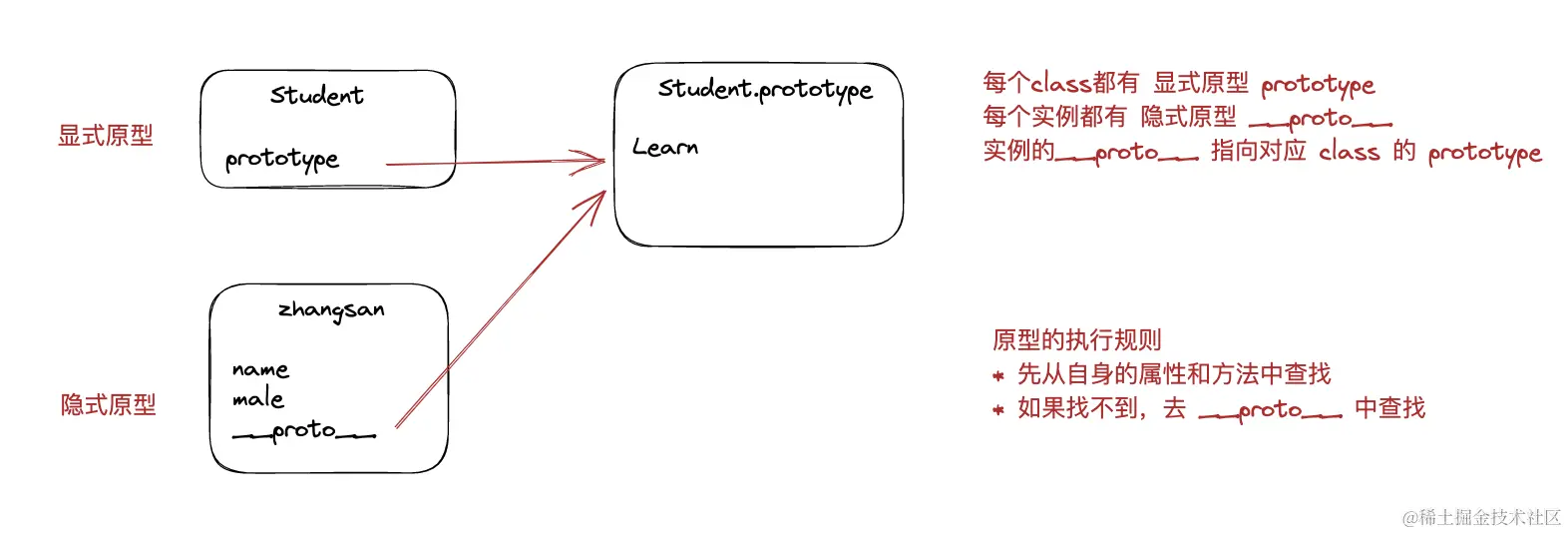
什么是原型
- 每个class类都有一个prototype 每个实例都有隐式 proto
- 实例的__proto___都指向对应class类的prototype
什么是原型链
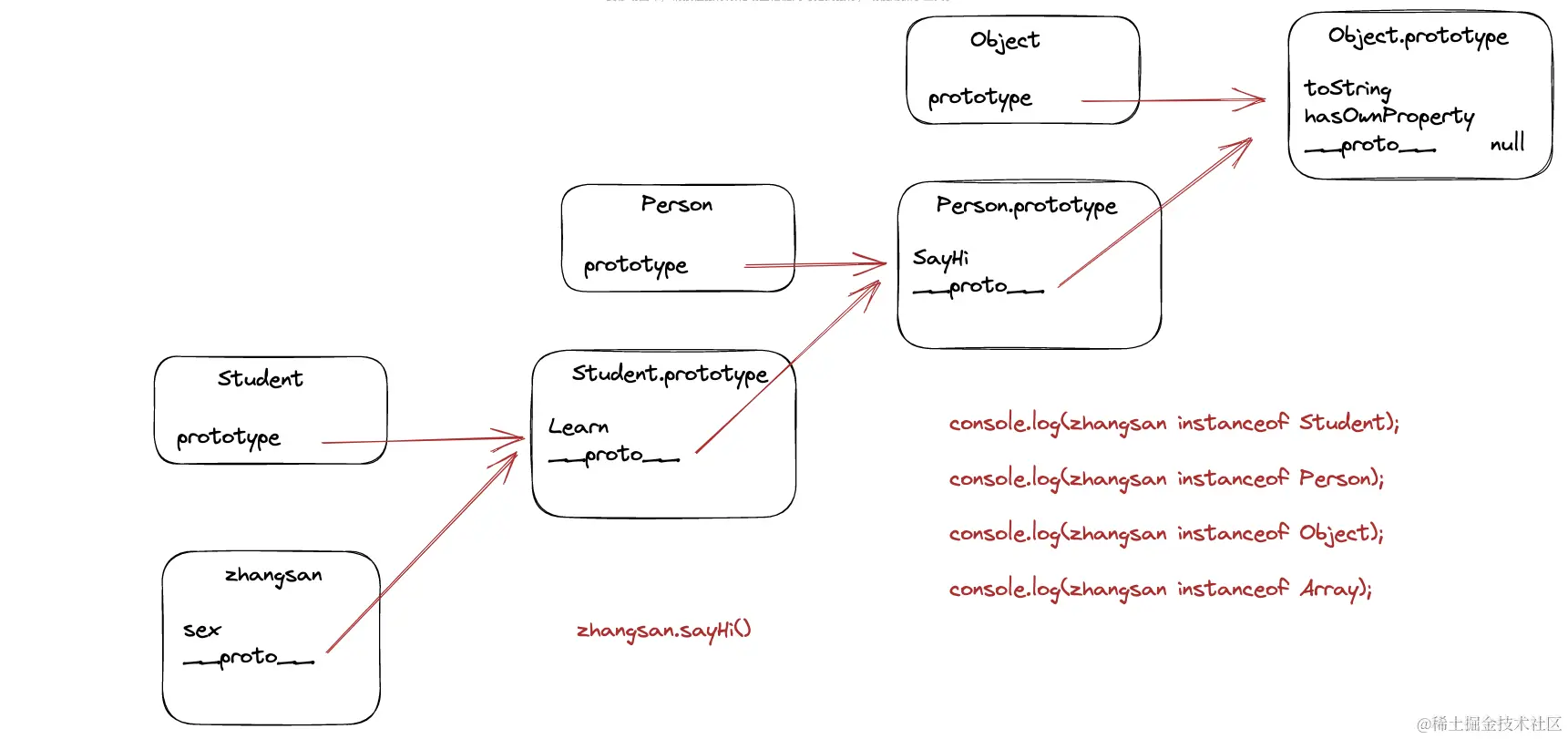
- 每一个对象都有一个
隐式原型,指的就是__proto__,也就是通过它往上查找原型上的属性和方法,如果还没有那么会继续向上查找,直到找到最顶层的Object对象,它的__proto__是Null,这样一层一层通过__proto__向上查找的过程就是原型链
<!DOCTYPE html>
<html lang="en">
<head>
    <meta charset="UTF-8">
    <meta http-equiv="X-UA-Compatible" content="IE=edge">
    <meta name="viewport" content="width=device-width, initial-scale=1.0">
    <title>Document</title>
</head>
<body>
    <script>
        //声明类
        class Person{
            constructor(name,age){
                this.name = name
                this.age = age
            }
            sayHello(){
                console.log(`你好${this.name}`);
                console.log(`你好${this.name}${this.age}岁`);
            }
        }
        //实例化类
        let zhangsan = new Person('zhangsan',18)
        console.log(zhangsan.name);
        console.log(zhangsan.age);
        zhangsan.sayHello()
    </script>
</body>
</html>
<!DOCTYPE html>
<html lang="en">
<head>
    <meta charset="UTF-8">
    <meta http-equiv="X-UA-Compatible" content="IE=edge">
    <meta name="viewport" content="width=device-width, initial-scale=1.0">
    <title>Document</title>
</head>
<body>
    <script>
        //声明类
        class Proson{
            constructor(name,age){
                this.name=name;
                this.age = age
            }
            sayHello(){
                console.log(`你好${this.name}`);
            }
        }
        //继承父级类
        class Student extends Proson{
            //继承父级类子级的constructor中必须要有父级的参数,也可以有自己的参数和方法
            constructor(name,age,sex){
                //super方法 调用父级类
                super(name,age)
                this.sex = sex
            }
            fn(){
                console.log(`你好${this.name}${this.sex}`);
            }
        }
        //实例化
        let zhangsan = new Student("zhangsan",18,"男")
        zhangsan.sayHello()
        zhangsan.fn()
        //instanceof方法用来判断一个构造函数的prototype属性是否在另一个要检测对象的原型链上
        console.log(zhangsan instanceof Proson);//true
        console.log(zhangsan instanceof Student);//true
        console.log(zhangsan instanceof Object);//true
        console.log(Proson instanceof Object);//true
        console.log(zhangsan instanceof Array);//false
    </script>
</body>
</html>