1.获取GET参数
1.1 方法列表
| 方法名 | 描述 |
|---|---|
(r *Request) ParseForm() error | 判断是否解析传参时出错 |
(r *Request) FormValue(key string) string | 接收指定key的参数值 |
1.2 使用示例
// 服务端代码
package main
import (
	"fmt"
	"net/http"
)
func main() {
	http.HandleFunc("/login", login)
	_ = http.ListenAndServe(":8888", nil)
}
func login(w http.ResponseWriter, r *http.Request) {
  // 判断参数是否是Get请求,并且参数解析正常
	if r.Method == "GET" && r.ParseForm() == nil {
    // 接收参数
		userName := r.FormValue("userName")
		fmt.Printf("userName: %s \n", userName)
		passWord := r.FormValue("passWord")
		fmt.Printf("passWord: %s \n", passWord)
		if userName == "" || passWord == "" {
			w.Write([]byte("用户名或密码不能为空"))
		}
		if userName == "admin" && passWord == "1234" {
			w.Write([]byte("登录成功!"))
		} else {
			w.Write([]byte("用户名或密码错误!"))
		}
	}
}
2.获取POST参数
2.1 接收POST参数分以下两种情况
- 普通的Post表单:
Content-Type=application/x-www-form-urlencoded - 有文件上传的Post表单:
Content-Type=multipart/form-data
2.2 普通的Post表单(r.PostFormValue)
// 服务端代码
package main
import (
	"fmt"
	"net/http"
)
func main() {
	http.HandleFunc("/login", login)
	_ = http.ListenAndServe(":8888", nil)
}
// 登录
func login(w http.ResponseWriter, r *http.Request) {
	if r.Method == "POST" && r.ParseForm() == nil {
		// 接收post参数
		userName := r.PostFormValue("userName")
		fmt.Printf("userName: %s \n", userName)
		passWord := r.PostFormValue("passWord")
		fmt.Printf("passWord: %s \n", passWord)
		if userName == "" || passWord == "" {
			w.Write([]byte("用户名或密码不能为空"))
			return
		}
		if userName == "admin" && passWord == "1234" {
			w.Write([]byte("登录成功!"))
			return
		}
		w.Write([]byte("用户名或密码错误!"))
	} else {
		w.Write([]byte("当前接口,仅支持POST请求!"))
	}
	return
}
2.3 有文件上传的Post表单(r.FormFile)
package main
import (
	"fmt"
	"io"
	"net/http"
	"os"
	"path"
)
func main() {
	http.HandleFunc("/upload", upload)
	_ = http.ListenAndServe(":8888", nil)
}
// 上传文件
func upload(w http.ResponseWriter, r *http.Request) {
	if r.Method == "POST" && r.ParseForm() == nil {
		// 接收上传文件的参数
		formFile, fileHeader, err := r.FormFile("file")
		if formFile == nil {
			http.Error(w,"上传的文件不能为空!",http.StatusInternalServerError)
			return
		}
		if err != nil {
			http.Error(w,err.Error(),http.StatusInternalServerError)
			return
		}
		// 延迟关闭文件
		defer formFile.Close()
		// 获取上传文件的名称
		filename := fileHeader.Filename
		fmt.Printf("文件名称: %s \n",filename)
		// 获取文件的后缀
		ext := path.Ext(filename)
		fmt.Printf("文件后缀: %s \n",ext)
		// 创建新文件,如果同名文件存在,则会清空
		pathName := "public/img"
		if !pathExist(pathName) {
			err := os.MkdirAll(pathName, os.ModePerm)
			if err != nil {
				http.Error(w,"创建目录失败: "+ err.Error(),http.StatusInternalServerError)
				return
			}
		}
		newFile, err := os.Create(pathName +"/"+ filename)
		if err != nil {
			http.Error(w,"创建文件失败: "+ err.Error(),http.StatusInternalServerError)
			return
		}
		defer newFile.Close()
		// 将formFile复制到newFile,从而实现上传的功能
		written, err := io.Copy(newFile, formFile)
		fmt.Printf("上传结果: %d \n",written)
		if err != nil {
			http.Error(w,"文件上传失败: "+ err.Error(),http.StatusInternalServerError)
			return
		}
		w.Write([]byte("文件上传成功!"))
	}
	return
}
// 判断目录是否存在
func pathExist(path string) bool  {
	_, err := os.Stat(path)
	if err != nil {
		if os.IsExist(err) {
			return true
		}
		return false
	}
	return true
}
运行结果
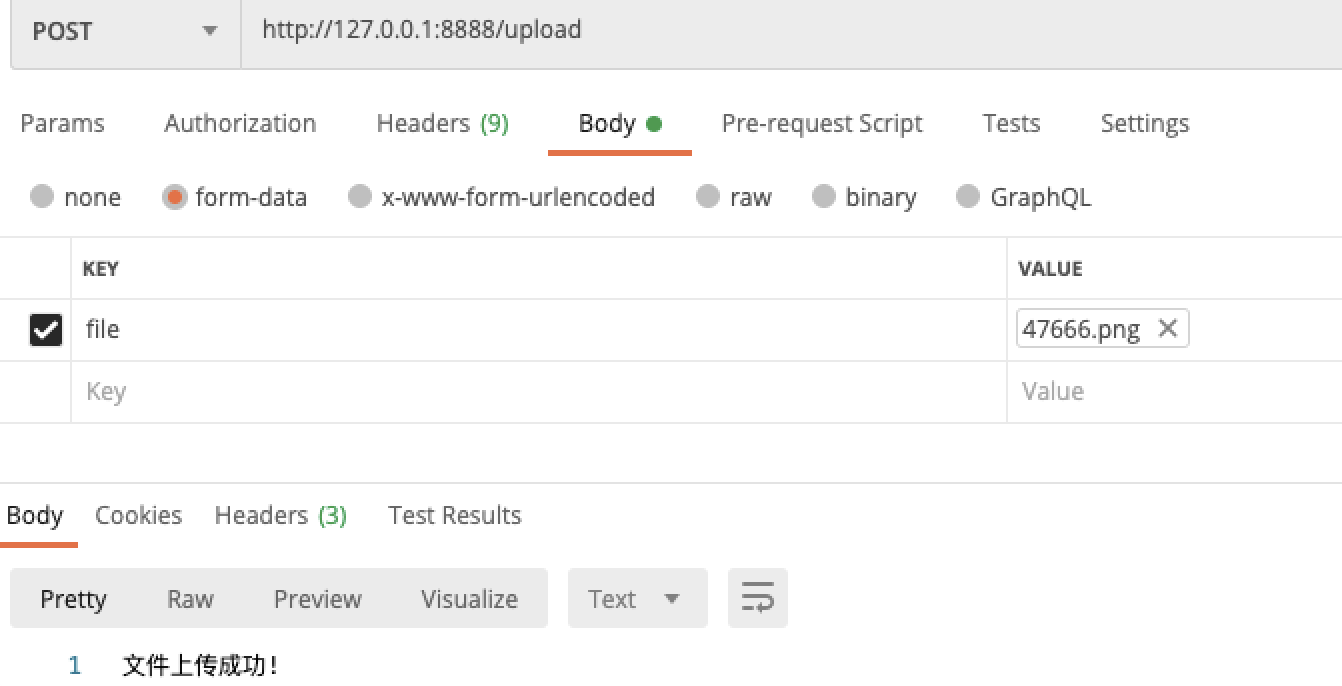
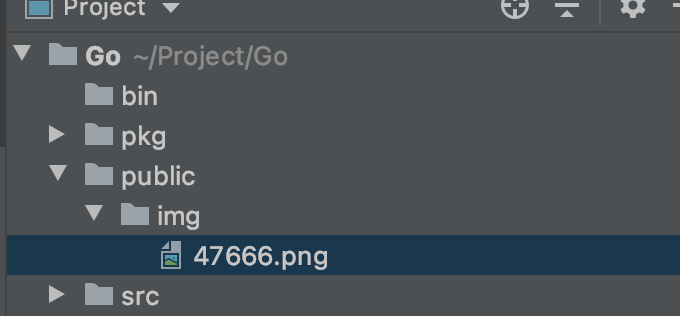
3.获取Cookie中的值
3.1 cookie的数据结构
Cookie是一个结构体,其中有Cookie的名和值、domain、过期时间等信息,具体定义方式如下所示:
type Cookie struct {
	Name  string // 变量名
	Value string // 变量值
	Path       string    // 设置访问哪些路径,应该携带这个cookie,不设置则代表所有
	Domain     string    // 设置访问域名范围的主机时,应该携带这个cookie,不设置则代表所有
	Expires    time.Time // 一个时间值,代表什么时候过期
	RawExpires string    // for reading cookies only
	MaxAge   int //用来设置过期,为负数或等于0表示立即过期,大于0表示过多少秒之后过期
	Secure   bool
	HttpOnly bool
	SameSite SameSite
	Raw      string
	Unparsed []string // Raw text of unparsed attribute-value pairs
}
3.2 使用示例
package main
import (
	"encoding/base64"
	"fmt"
	"net/http"
)
func main() {
	http.HandleFunc("/setCookie", setCookie)
	http.HandleFunc("/getCookie", getCookie)
	_ = http.ListenAndServe(":8888", nil)
}

// 设置cookie中的值
func setCookie(w http.ResponseWriter, r *http.Request)  {
	cookie1 := http.Cookie{
		Name:   "uid",
		Value:  "10001",
		MaxAge: 3600, //一小时后过期
	}
	name := base64.URLEncoding.EncodeToString([]byte("张三"))
	cookie2 := http.Cookie{
		Name:   "name",
		Value:  name,
		MaxAge: 3600, //一小时后过期
	}
	http.SetCookie(w,&cookie1)
	http.SetCookie(w,&cookie2)
	w.Write([]byte("cookie已设置!"))
}
// 获取cookie中的值
func getCookie(w http.ResponseWriter, r *http.Request) {
	key := r.FormValue("key")
	if key == "" {
		http.Error(w,"key不能为空!",http.StatusInternalServerError)
		return
	}
	cookie, err := r.Cookie(key)
	if err != nil {
		http.Error(w,"获取失败: " + err.Error(),http.StatusInternalServerError)
		return
	}
	result := make([]string,2)
	result[0] = cookie.Value
	decodeString, _ := base64.URLEncoding.DecodeString(cookie.Value)
	result[1] = string(decodeString)
	fmt.Println(result)
	w.Write([]byte("cookie已获取!"))
}
微信搜索关注【猿码记】查看更多文章。
本文由mdnice多平台发布