上一篇:Elasticsearch8.5.3源码分析(3)-Get数据读取过程 - 掘金 (juejin.cn)
总述
创建和更新文档的API和对应的处理类如下:
| API Path | Method | RestHandler | 描述 |
|---|---|---|---|
| /{index}/_update/{id} | POST | RestUpdateAction | 编写脚本更新文档,支持部分更新 |
| /{index}/_doc/{id} | POST | RestIndexAction | 创建或全量更新文档 |
| /{index}/_doc/{id} | PUT | RestIndexAction | 创建或全量更新文档 |
| /{index}/_create/{id} | POST | RestIndexAction.CreateHandler | 创建文档 |
| /{index}/_create/{id} | PUT | RestIndexAction.CreateHandler | 创建文档 |
| /{index}/_doc | POST | RestIndexAction.AutoIdHandler | 系统自动生成文档主键ID |
| /_bulk | POST | RestBulkAction | 任意索引批处理 |
| /_bulk | PUT | RestBulkAction | 任意索引批处理 |
| /{index}/_bulk | POST | RestBulkAction | 指定索引批处理 |
| /{index}/_bulk | PUT | RestBulkAction | 指定索引批处理 |
这里以文档创建API 'POST /{index}/_create/{id}' 来分析数据写入的流程。其它API大同小异。
写数据协调过程
图中标注了流程中的核心方法。
- HTTP Rest API请求由RestController统一接收,然后根据路径匹配转发给相应用的RestHandler接口实现类处理。
- NodeClient:拿到RestHandler对应的TransportAction。通过TaskManager注册并执行TransportAction。
- TransportBulkAction.doInternalExecute方法负责创建索引。
- BulkOperation.doRun 将请求按分片分组,同一个分片的请求,合并成一个。
- ReroutePhase.doRun 根据主分片所处节点,将请求重新路由分发。
TransportBulkAction.doExecute
检查索引内存压力,并用新的线程来处理请求
protected void doExecute(Task task, BulkRequest bulkRequest, ActionListener<BulkResponse> listener) {
    final int indexingOps = bulkRequest.numberOfActions();
    final long indexingBytes = bulkRequest.ramBytesUsed();
    final boolean isOnlySystem = isOnlySystem(bulkRequest, clusterService.state().metadata().getIndicesLookup(), systemIndices);
    //统计并检测索引内存压力,超出indexing_pressure.memory.limit配置的值,则拒绝新的请求。
    final Releasable releasable = indexingPressure.markCoordinatingOperationStarted(indexingOps, indexingBytes, isOnlySystem);
    //在返回响应前,释放压力数据
    final ActionListener<BulkResponse> releasingListener = ActionListener.runBefore(listener, releasable::close);
    final String executorName = isOnlySystem ? Names.SYSTEM_WRITE : Names.WRITE;
    threadPool.executor(Names.WRITE).execute(new ActionRunnable<>(releasingListener) {
        @Override
        protected void doRun() {
            doInternalExecute(task, bulkRequest, executorName, releasingListener);
        }
    });
}
TransportBulkAction.doInternalExecute
doInternalExecute(Task task, BulkRequest bulkRequest, String executorName, ActionListener<BulkResponse> listener)
所有的创建更新文档的请求,最终都会经过TransportBulkAction.doInternalExecute处理。所以这里BulkRequest参数包含一个或多个文档操作请求。
该方法核心功能是尝试创建请求中需要的所有索引(如果没有预先创建索引)。
第一步:遍历bulkRequest.requests收集需要创建的索引.
删除请求不应尝试创建索引(如果索引不存在),除非使用外部版本控制
final Map<String, Boolean> indices = bulkRequest.requests.stream()
    .filter(
        request -> request.opType() != DocWriteRequest.OpType.DELETE
            || request.versionType() == VersionType.EXTERNAL
            || request.versionType() == VersionType.EXTERNAL_GTE
    )
    .collect(Collectors.toMap(DocWriteRequest::index, DocWriteRequest::isRequireAlias, (v1, v2) -> v1 || v2));
第二步:筛选索引列表以查找当前不存在的索引
只有目标不是别名时,才自动创建
final Map<String, IndexNotFoundException> indicesThatCannotBeCreated = new HashMap<>();
Set<String> autoCreateIndices = new HashSet<>();
ClusterState state = clusterService.state();
for (Map.Entry<String, Boolean> indexAndFlag : indices.entrySet()) {
    final String index = indexAndFlag.getKey();
    // hasIndexAbstraction判断指定的索引、数据流或别名是否存在
    boolean shouldAutoCreate = indexNameExpressionResolver.hasIndexAbstraction(index, state) == false;
    //indexAndFlag.getValue()为目标索引是否为别名
    if (shouldAutoCreate && (indexAndFlag.getValue() == false)) {
        autoCreateIndices.add(index);
    }
}
第三步:创建所有缺失的索引。在索引创建返回成功后才开始批量操作
if (autoCreateIndices.isEmpty()) {
    //如果不需要创建索引,则直接执行批操作
    executeBulk(task, bulkRequest, startTime, listener, executorName, responses, indicesThatCannotBeCreated);
} else {
    //设置索引数量计数器
    final AtomicInteger counter = new AtomicInteger(autoCreateIndices.size());
    for (String index : autoCreateIndices) {
        //异步创建索引
        createIndex(index, bulkRequest.timeout(), new ActionListener<>() {
            @Override
            public void onResponse(CreateIndexResponse result) {
                //每创建一个索引,计数器减1.直到所有索引创建完毕,才执行批处理
                if (counter.decrementAndGet() == 0) {
                    threadPool.executor(executorName).execute(new ActionRunnable<>(listener) {
                        @Override
                        protected void doRun() {
                            executeBulk(
                                task,
                                bulkRequest,
                                startTime,
                                listener,
                                executorName,
                                responses,
                                indicesThatCannotBeCreated
                            );
                        }
                    });
                }
            }

            @Override
            public void onFailure(Exception e) {
               //创建索引失败,抛出异常

               //异常为IndexNotFoundException则将索引存入indicesThatCannotBeCreated

               //异常为ResourceAlreadyExistsException则将该索引涉及的相关request置为null
               // bulkRequest.requests.set(i, null);

               //然后执行判断计数器,满足条件执行executeBulk
            }
        });
    }
}
BulkOperation.doRun
先检查集群状态,如果状态异常直接返回。
然后遍历bulkRequest.requests,做一些校验将满足如下条件的request抛弃:
- 创建索引抛出IndexNotFoundException异常的
- 创建索引抛出ResourceAlreadyExistsException异常的
- request需要别名,但是metadata未定义别名的。
- 索引状态为closed的
- ...
校验完成后,就是关键逻辑了,见代码: 此处将所有request先按路由规则获取shardId,然后以shardId为key存入requestsByShard中,将相同shardId的请求,放到同一个List中。
Map<ShardId, List<BulkItemRequest>> requestsByShard = new HashMap<>();

for (int i = 0; i < bulkRequest.requests.size(); i++) {
    //此处校验逻辑代码略

    //通过IndexRouting类路由分片,拿到分片ID.
    IndexRouting indexRouting = concreteIndices.routing(concreteIndex);
    //如果doc没有指定ID,此处会生成一个随机ID
    docWriteRequest.process(indexRouting);
    int shardId = docWriteRequest.route(indexRouting);
    //将所有请求按分片分组
    List<BulkItemRequest> shardRequests = requestsByShard.computeIfAbsent(
        new ShardId(concreteIndex, shardId),
        shard -> new ArrayList<>()
    );
    shardRequests.add(new BulkItemRequest(i, docWriteRequest));
}
然后将同一个Shard的请求,组装成一个BulkShardRequest对象,调用client.executeLocally方法执行。
所有请求执行完成后,返回相应的执行结果信息。
//请求计数器
final AtomicInteger counter = new AtomicInteger(requestsByShard.size());
String nodeId = clusterService.localNode().getId();
for (Map.Entry<ShardId, List<BulkItemRequest>> entry : requestsByShard.entrySet()) {
    final ShardId shardId = entry.getKey();
    final List<BulkItemRequest> requests = entry.getValue();
    //构建BulkShardRequest,针对同一个分片的请求,组合成一个BulkShardRequest
    BulkShardRequest bulkShardRequest = new BulkShardRequest(
        shardId,
        bulkRequest.getRefreshPolicy(),
        requests.toArray(new BulkItemRequest[requests.size()])
    );
    bulkShardRequest.waitForActiveShards(bulkRequest.waitForActiveShards());
    bulkShardRequest.timeout(bulkRequest.timeout());
    bulkShardRequest.routedBasedOnClusterVersion(clusterState.version());
    if (task != null) {
        bulkShardRequest.setParentTask(nodeId, task.getId());
    }
    client.executeLocally(TransportShardBulkAction.TYPE, bulkShardRequest, new ActionListener<>() {
        @Override
        public void onResponse(BulkShardResponse bulkShardResponse) {
            for (BulkItemResponse bulkItemResponse : bulkShardResponse.getResponses()) {
                // 拼装响应信息
            }
            //每执行一个request,计数器减1
            //所有request执行完毕,调用返回Response的方法
            if (counter.decrementAndGet() == 0) {
                finishHim();
            }
        }

        @Override
        public void onFailure(Exception e) {
            // create failures for all relevant requests
            for (BulkItemRequest request : requests) {
                // 拼装响应信息
            }
            //每执行一个request,计数器减1
            //所有request执行完毕,调用返回Response的方法
            if (counter.decrementAndGet() == 0) {
                finishHim();
            }
        }

        private void finishHim() {
            //向客户端发送响应信息
            listener.onResponse(
                new BulkResponse(responses.toArray(new BulkItemResponse[responses.length()]), buildTookInMillis(startTimeNanos))
            );
        }
    });
}
ReroutePhase.doRun
//设置任务执行阶段
setPhase(task, "routing");
// ...
//校验集群状态,此处代码略
// ...

//获取主分片索引路由信息,如:id,状态,版本等
final ShardRouting primary = state.getRoutingTable().shardRoutingTable(request.shardId()).primaryShard();

// ...
//状态检测,此处代码略
// ...

//获取主分片集群节点信息
final DiscoveryNode node = state.nodes().get(primary.currentNodeId());
//判断主分片节点是否当前节点
if (primary.currentNodeId().equals(state.nodes().getLocalNodeId())) {
    //主分片在当前节点
    performLocalAction(state, primary, node, indexMetadata);
} else {
    //主分片不在当前节点,执行远程调用
    performRemoteAction(state, primary, node);
}
主分片位于本地节点,执行performLocalAction,将数据写入本地磁盘
private void performLocalAction(ClusterState state, ShardRouting primary, DiscoveryNode node, IndexMetadata indexMetadata) {
    setPhase(task, "waiting_on_primary");
    performAction(
        node,
        transportPrimaryAction,
        true,
        new ConcreteShardRequest<>(
            request,
            primary.allocationId().getId(),
            indexMetadata.primaryTerm(primary.id()),
            true,
            initiatedByNodeClient
        )
    );
}
主分片位于远程节点上,执行performRemoteAction,将请求路由至远程节点。
private void performRemoteAction(ClusterState state, ShardRouting primary, DiscoveryNode node) {

    setPhase(task, "rerouted");
    performAction(node, actionName, false, request);
}
Transport.Connection.sendRequest
TransportService最终在sendRequestInternal方法中调用Transport.Connection接口的sendRequest方法。
Transport.Connection类的实例由如下方法获取,判断是否本地节点,是就返回localNodeConnection。
public Transport.Connection getConnection(DiscoveryNode node) {
    if (isLocalNode(node)) {
        return localNodeConnection;
    } else {
        return connectionManager.getConnection(node);
    }
}
localNodeConnection是一个匿名类,实现了Transport.Connection接口
如果不是本地节点就从连接管理器获取远程节点的连接,连接管理器返回的是TcpTransport.NodeChannels,为Transport.Connection接口的实现类。
分发请求至远程节点
集群中的节点通信通过Netty组件实现。
写请求发送到目标节点后,InboundHandler调用Tranport.RequestHandlers类的getHandler方法,获取对应类型的TransportAction处理类,这里为TransportReplicationAction。
然后调用TransportReplicationAction.handleOperationRequest方法介入ReroutePhase:
private void handleOperationRequest(final Request request, final TransportChannel channel, Task task) {
Releasable releasable = checkOperationLimits(request);
ActionListener<Response> listener = ActionListener.runBefore(
new ChannelActi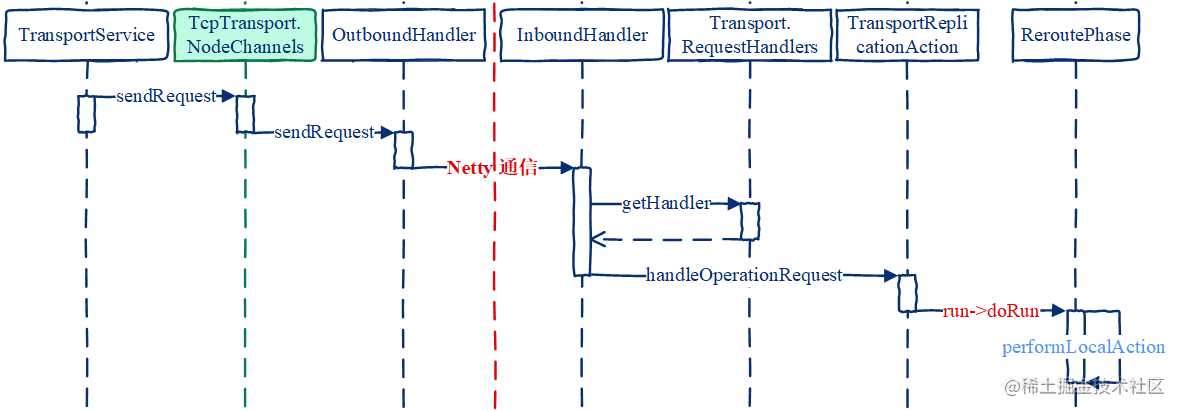onListener<>(channel, actionName, request),
releasable::close
);
runReroutePhase(task, request, listener, false);
}
对比前面从RestHandler进入时调用的TransportReplicationAction.doExecute方法:
protected void doExecute(Task task, Request request, ActionListener<Response> listener) {
    assert request.shardId() != null : "request shardId must be set";
    runReroutePhase(task, request, listener, true);
}
两个方法都是调用的runReroutePhase方法,但是最后一个标识来源是否为NodeClient的参数,一个传True,一个传的False.
private void runReroutePhase(Task task, Request request, ActionListener<Response> listener, boolean initiatedByNodeClient) {
    try {
        new ReroutePhase((ReplicationTask) task, request, listener, initiatedByNodeClient).run();
    } catch (RuntimeException e) {
        listener.onFailure(e);
    }
}
后续的处理过程就是执行本地Action逻辑一样了,最终都会执行performLocalAction方法。