

本文已参与[新人创作礼]活动,一起开启掘金创作之路。
欢迎页配置
默认放在static文件夹下,index.html即为欢迎页
手动修改欢迎页的位置
在application.yaml文件中配置如下
spring:
  web:
    resources:
      static-locations: [classpath:/haha/]
编辑
编辑
注意:可以配置静态资源路径,但不可以配置静态资源的访问前缀,否则导致index.html不能被默认访问
Favicon
将图标放到静态资源路径,默认是static,因为上面我们改了,所以是haha路径下,图标命名应为favicon.ico
编辑
编辑
注意:如果浏览器访问网站时网站还没有图标,后配置,但是浏览器没关,以后图标都不会出现,这是因为浏览器session的缘故,所以需要换一个浏览器尝试,同样也不可以配置静态资源路径前缀,否则会影响功能的实现。
底层分析
大多数配置都在这个Servlet文件夹里
编辑
编辑
给容器中配了什么
@Configuration(proxyBeanMethods = false)
@Import(EnableWebMvcConfiguration.class)
@EnableConfigurationProperties({ WebMvcProperties.class, WebProperties.class })
@Order(0)
public static class WebMvcAutoConfigurationAdapter implements WebMvcConfigurer, ServletContextAware {}
WebMvcProperties.class和spring.mvc进行了绑定,WebProperties和spring.web进行了绑定
编辑
编辑
配置类只有一个有参构造器
有参构造的所有参数的值都会在构造器中确定
public WebMvcAutoConfigurationAdapter(WebProperties webProperties, WebMvcProperties mvcProperties,
				ListableBeanFactory beanFactory, ObjectProvider<HttpMessageConverters> messageConvertersProvider,
				ObjectProvider<ResourceHandlerRegistrationCustomizer> resourceHandlerRegistrationCustomizerProvider,
				ObjectProvider<DispatcherServletPath> dispatcherServletPath,
				ObjectProvider<ServletRegistrationBean<?>> servletRegistrations) {
			this.resourceProperties = webProperties.getResources();
			this.mvcProperties = mvcProperties;
			this.beanFactory = beanFactory;
			this.messageConvertersProvider = messageConvertersProvider;
			this.resourceHandlerRegistrationCustomizer = resourceHandlerRegistrationCustomizerProvider.getIfAvailable();
			this.dispatcherServletPath = dispatcherServletPath;
			this.servletRegistrations = servletRegistrations;
			this.mvcProperties.checkConfiguration();
		}
分析:
禁用静态资源
@Override
public void addResourceHandlers(ResourceHandlerRegistry registry) {
	if (!this.resourceProperties.isAddMappings()) {
		logger.debug("Default resource handling disabled");
		return;
	}
	addResourceHandler(registry, "/webjars/**", "classpath:/META-INF/resources/webjars/");
	addResourceHandler(registry, this.mvcProperties.getStaticPathPattern(), (registration) -> {
				registration.addResourceLocations(this.resourceProperties.getStaticLocations());
		if (this.servletContext != null) {
			ServletContextResource resource = new ServletContextResource(this.servletContext, SERVLET_LOCATION);
			registration.addResourceLocations(resource);
				}
			});
		}
当add-mappings:false时,所有的静态资源都被禁用
编辑
设置缓存的时间
编辑
Webjars的规则
@Override
public void addResourceHandlers(ResourceHandlerRegistry registry) {
	if (!this.resourceProperties.isAddMappings()) {
		logger.debug("Default resource handling disabled");
		return;
   	}
	addResourceHandler(registry, "/webjars/**", "classpath:/META-INF/resources/webjars/");
	addResourceHandler(registry, this.mvcProperties.getStaticPathPattern(), (registration) -> {

        registration.addResourceLocations(this.resourceProperties.getStaticLocations());
		if (this.servletContext != null) {
		ServletContextResource resource = new ServletContextResource(this.servletContext, SERVLET_LOCATION);
		registration.addResourceLocations(resource);
				}
			});
		}
搜索webjars的时候,会沿着该路径往下找
编辑
欢迎页
@Bean
public WelcomePageHandlerMapping welcomePageHandlerMapping(ApplicationContext applicationContext,
FormattingConversionService mvcConversionService, ResourceUrlProvider mvcResourceUrlProvider) {
WelcomePageHandlerMapping welcomePageHandlerMapping = new WelcomePageHandlerMapping(
		new TemplateAvailabilityProviders(applicationContext), applicationContext, getWelcomePage(),
	    this.mvcProperties.getStaticPathPattern());
		welcomePageHandlerMapping.setInterceptors(getInterceptors(mvcConversionService, mvcResourceUrlProvider));
		welcomePageHandlerMapping.setCorsConfigurations(getCorsConfigurations());
		return welcomePageHandlerMapping;
}
这个地方是写死的,所以不能修改静态网页的前缀
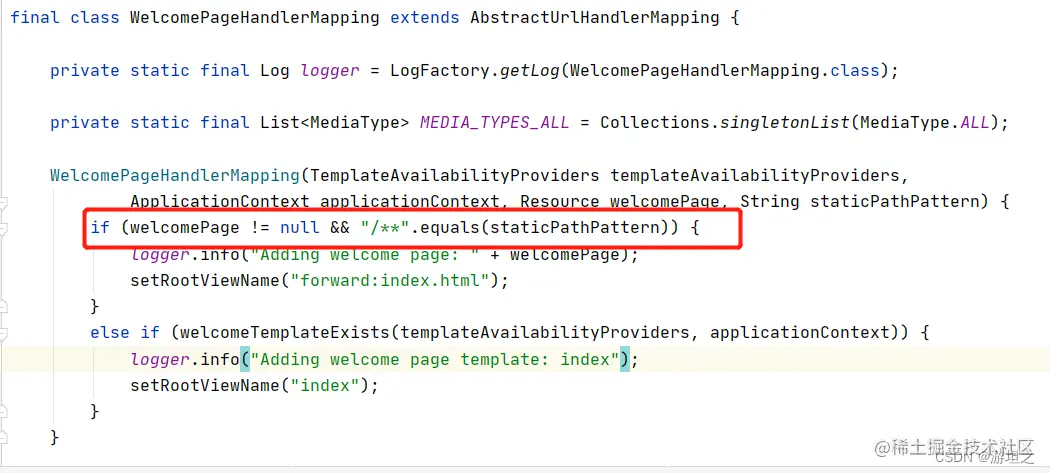
 编辑
编辑

