spring mvc与spring的整合简单介绍
- 本文源码基于spring-framework-5.3.10。
- mvc是spring源码中的一个子模块!
- 本文重点是无xml方式的整合springmvc。
- Spring整合SpringMVC唯一的体现就是父子容器。
spring mvc的父子容器
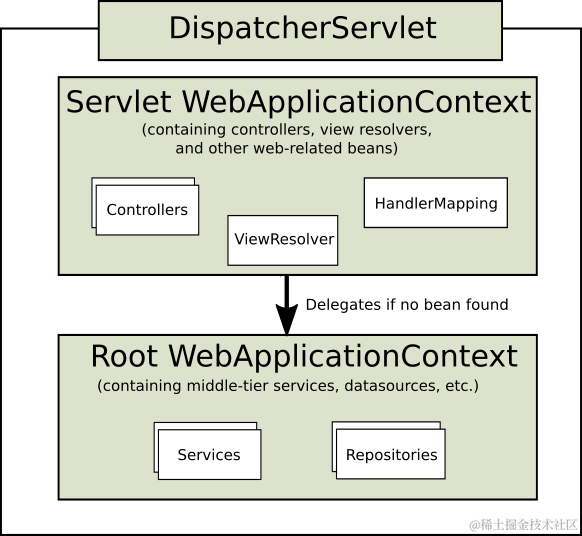
- 父容器(Spring)管理Service、Dao层的Bean, 子容器(SpringMVC)管理Controller的Bean。
- 子容器可以访问父容器的Bean, 父容器无法访问子容器的Bean。
spring整合spring mvc的思路(xml方式)
- 一般会在web.xml中配置下面的代码。核心是一个ContextLoaderListener(加载spring容器)、一个DispatcherServlet(加载spring mvc容器)。
<listener>
<listener-class>org.springframework.web.context.ContextLoaderListener</listener-class>
</listener>
<context-param>
<param-name>contextConfigLocation</param-name>
<param-value>classpath:spring-core.xml</param-value>
</context-param>
<servlet>
<servlet-name>dispatcherServlet</servlet-name>
<servlet-class>org.springframework.web.servlet.DispatcherServlet</servlet-class>
<init-param>
<param-name>contextConfigLocation</param-name>
<param-value>classpath:spring-mvc.xml</param-value>
</init-param>
<load-on-startup>1</load-on-startup>
</servlet>
<servlet-mapping>
<servlet-name>dispatcherServlet</servlet-name>
<url-pattern>/</url-pattern>
</servlet-mapping>
零配置SpringMVC实现方式的基础:SPI
- SPI:我们叫他服务接口扩展,(Service Provider Interface) 直译服务提供商接口。
- 其实就是根据Servlet厂商(服务提供商)提供要求的一个接口,在固定的目录(META-INF/services)放上以接口全类名为命名的文件, 文件中放入接口的实现的全类名,该类由我们自己实现,按照这种约定的方式(即SPI规范),服务提供商会调用文件中实现类的方法,从而完成扩展。
- 在往简单说:定义一个借口,把他的实现的全限定类名配置到一个配置文件,然后通过JDK8提供的方法进行调用。
public class Test {
public static void main(String[] args) {
ServiceLoader<IUserDao> daos = ServiceLoader.load(IUserDao.class);
for (IUserDao dao : daos) {
dao.save();
}
}
}
- spring mvc与spi的关系:在Serlvet3-1的规范手册中:就提供了一种更加易于扩展可用于共享库可插拔的一种方式,参见8.2.4:
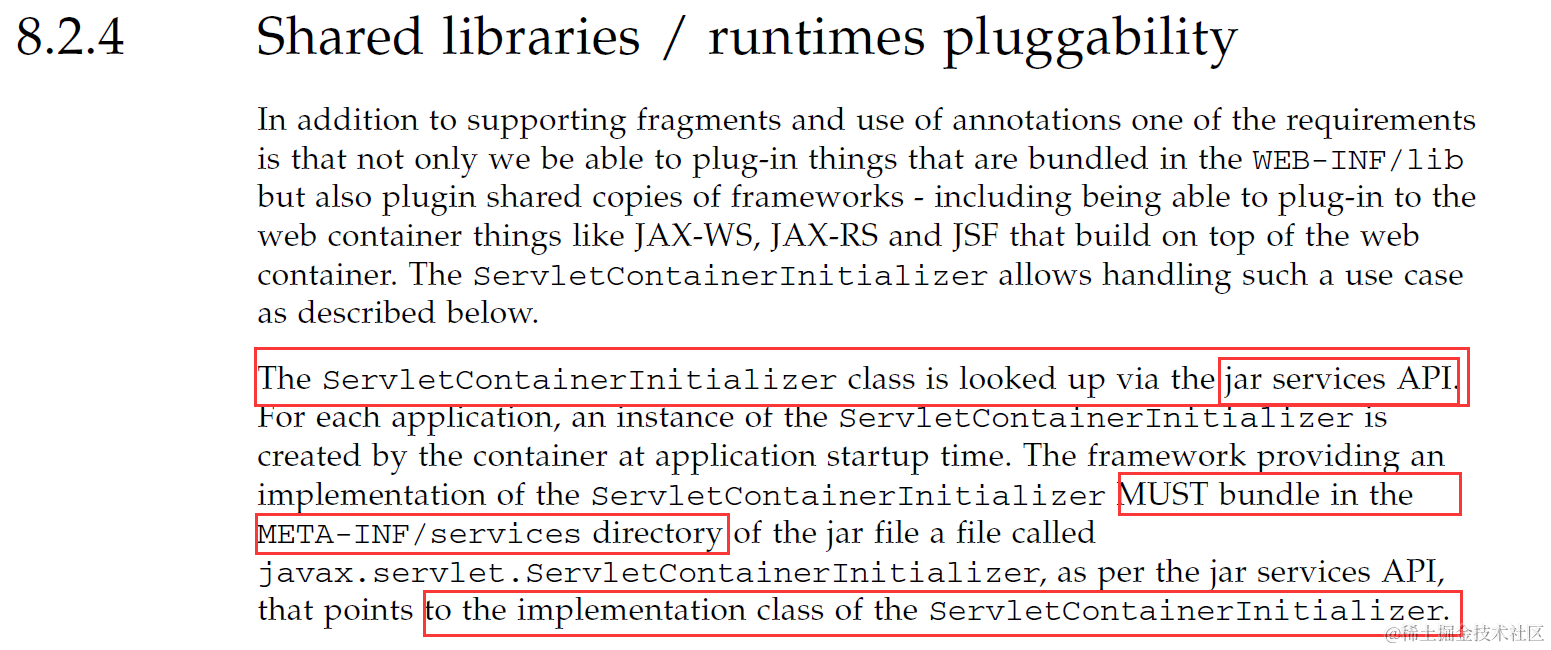
- 简单说就是放一个SPI规范:你在应用META-INF/services 路径下放一个 javax.servlet.ServletContainerInitailizer,里面配置具体的实现的全限定类名!容器(Tomcat)就会去调用
零配置SpringMVC实现方式的基础:HandlesTypes
- 通过HandlesTypes可以将感兴趣的一些类注入到ServletContainerInitializerde的onStartup方法作为参数传入。
- 在SpringServletContainerInitializer的类上配置了@HandlesTypes(WebApplicationInitializer.class)
- tomcat会自动找到程序中所有的实现了WebApplicationInitializer接口的实现类。
- 然后把找到的所有的WebApplicationInitializer实现类传入onStartUp方法的webAppInitializerClasses参数上!
SPI的方式SpringMVC启动原理
- 外置Tomcat启动的时候通过SPI的方式找到我们应用中的/META-INF/service/javax.servlet.ServletContainerInitializer。里面会配置org.springframework.web.SpringServletContainerInitializer。
- 所以会调用SpringServletContainerInitializer.onStartUp()方法。
- 调用onStartUp()前会先找到@HandlesTypes(WebApplicationInitializer.class) 所有实现了WebApplicationInitializer的类,传入到OnStartup的webAppInitializerClasses参数中,并传入Servlet上下文对象。
public void onStartup(@Nullable Set<Class<?>> webAppInitializerClasses, ServletContext servletContext)
throws ServletException {
List<WebApplicationInitializer> initializers = Collections.emptyList();
if (webAppInitializerClasses != null) {
initializers = new ArrayList<>(webAppInitializerClasses.size());
for (Class<?> waiClass : webAppInitializerClasses) {
if (!waiClass.isInterface() && !Modifier.isAbstract(waiClass.getModifiers()) &&
WebApplicationInitializer.class.isAssignableFrom(waiClass)) {
try {
initializers.add((WebApplicationInitializer)
ReflectionUtils.accessibleConstructor(waiClass).newInstance());
}
catch (Throwable ex) {
throw new ServletException("Failed to instantiate WebApplicationInitializer class", ex);
}
}
}
}
if (initializers.isEmpty()) {
servletContext.log("No Spring WebApplicationInitializer types detected on classpath");
return;
}
servletContext.log(initializers.size() + " Spring WebApplicationInitializers detected on classpath");
AnnotationAwareOrderComparator.sort(initializers);
for (WebApplicationInitializer initializer : initializers) {
initializer.onStartup(servletContext);
}
}
spring整合spring mvc的思路(无xml方式)
- 直接看默认是没有一个类(不是接口,不是抽象类的)去实现了WebApplicationInitializer接口,所以需要我们自己去实现
public class ZhangweiStarterInitializer extends AbstractAnnotationConfigDispatcherServletInitializer {
@Override
protected Class<?>[] getRootConfigClasses() {
return new Class[]{RootConfig.class};
}
@Override
protected Class<?>[] getServletConfigClasses() {
return new Class[]{WebAppConfig.class};
}
@Override
protected String[] getServletMappings() {
return new String[]{"/"};
}
}
@Configuration
@ComponentScan(basePackages = "com.zhangwei",excludeFilters = {
@ComponentScan.Filter(type = FilterType.ANNOTATION,value={Controller.class}),
@ComponentScan.Filter(type = ASSIGNABLE_TYPE,value =WebAppConfig.class ),
})
public class RootConfig {}
@Configuration
@ComponentScan(basePackages = {"com.zhangwei"},includeFilters = {
@ComponentScan.Filter(type = FilterType.ANNOTATION,value = {RestController.class, Controller.class})
},useDefaultFilters =false)
@EnableWebMvc
public class WebAppConfig implements WebMvcConfigurer{
}
WebApplicationInitializer接口的实现类执行原理:onStartup源码调用逻辑
public void onStartup(ServletContext servletContext) throws ServletException {
super.onStartup(servletContext);
registerDispatcherServlet(servletContext);
}
public void onStartup(ServletContext servletContext) throws ServletException {
registerContextLoaderListener(servletContext);
}
protected void registerContextLoaderListener(ServletContext servletContext) {
WebApplicationContext rootAppContext = createRootApplicationContext();
if (rootAppContext != null) {
ContextLoaderListener listener = new ContextLoaderListener(rootAppContext);
listener.setContextInitializers(getRootApplicationContextInitializers());
servletContext.addListener(listener);
}
else {
logger.debug("No ContextLoaderListener registered, as " +
"createRootApplicationContext() did not return an application context");
}
}
protected WebApplicationContext createRootApplicationContext() {
Class<?>[] configClasses = getRootConfigClasses();
if (!ObjectUtils.isEmpty(configClasses)) {
AnnotationConfigWebApplicationContext context = new AnnotationConfigWebApplicationContext();
context.register(configClasses);
return context;
}
else {
return null;
}
}
protected void registerDispatcherServlet(ServletContext servletContext) {
String servletName = getServletName();
Assert.hasLength(servletName, "getServletName() must not return null or empty");
WebApplicationContext servletAppContext = createServletApplicationContext();
Assert.notNull(servletAppContext, "createServletApplicationContext() must not return null");
FrameworkServlet dispatcherServlet = createDispatcherServlet(servletAppContext);
Assert.notNull(dispatcherServlet, "createDispatcherServlet(WebApplicationContext) must not return null");
dispatcherServlet.setContextInitializers(getServletApplicationContextInitializers());
ServletRegistration.Dynamic registration = servletContext.addServlet(servletName, dispatcherServlet);
if (registration == null) {
throw new IllegalStateException("Failed to register servlet with name '" + servletName + "'. " +
"Check if there is another servlet registered under the same name.");
}
registration.setLoadOnStartup(1);
registration.addMapping(getServletMappings());
registration.setAsyncSupported(isAsyncSupported());
Filter[] filters = getServletFilters();
if (!ObjectUtils.isEmpty(filters)) {
for (Filter filter : filters) {
registerServletFilter(servletContext, filter);
}
}
customizeRegistration(registration);
}
protected WebApplicationContext createServletApplicationContext() {
AnnotationConfigWebApplicationContext context = new AnnotationConfigWebApplicationContext();
Class<?>[] configClasses = getServletConfigClasses();
if (!ObjectUtils.isEmpty(configClasses)) {
context.register(configClasses);
}
return context;
}
监听器的初始化源码分析:核心是调用父容器的refresh方法
public void contextInitialized(ServletContextEvent event) {
initWebApplicationContext(event.getServletContext());
}
public WebApplicationContext initWebApplicationContext(ServletContext servletContext) {
if (servletContext.getAttribute(WebApplicationContext.ROOT_WEB_APPLICATION_CONTEXT_ATTRIBUTE) != null) {
throw new IllegalStateException(
"Cannot initialize context because there is already a root application context present - " +
"check whether you have multiple ContextLoader* definitions in your web.xml!");
}
servletContext.log("Initializing Spring root WebApplicationContext");
Log logger = LogFactory.getLog(ContextLoader.class);
if (logger.isInfoEnabled()) {
logger.info("Root WebApplicationContext: initialization started");
}
long startTime = System.currentTimeMillis();
try {
if (this.context == null) {
this.context = createWebApplicationContext(servletContext);
}
if (this.context instanceof ConfigurableWebApplicationContext) {
ConfigurableWebApplicationContext cwac = (ConfigurableWebApplicationContext) this.context;
if (!cwac.isActive()) {
if (cwac.getParent() == null) {
ApplicationContext parent = loadParentContext(servletContext);
cwac.setParent(parent);
}
configureAndRefreshWebApplicationContext(cwac, servletContext);
}
}
servletContext.setAttribute(WebApplicationContext.ROOT_WEB_APPLICATION_CONTEXT_ATTRIBUTE, this.context);
ClassLoader ccl = Thread.currentThread().getContextClassLoader();
if (ccl == ContextLoader.class.getClassLoader()) {
currentContext = this.context;
}
else if (ccl != null) {
currentContextPerThread.put(ccl, this.context);
}
if (logger.isInfoEnabled()) {
long elapsedTime = System.currentTimeMillis() - startTime;
logger.info("Root WebApplicationContext initialized in " + elapsedTime + " ms");
}
return this.context;
}
catch (RuntimeException | Error ex) {
logger.error("Context initialization failed", ex);
servletContext.setAttribute(WebApplicationContext.ROOT_WEB_APPLICATION_CONTEXT_ATTRIBUTE, ex);
throw ex;
}
}
protected void configureAndRefreshWebApplicationContext(ConfigurableWebApplicationContext wac, ServletContext sc) {
if (ObjectUtils.identityToString(wac).equals(wac.getId())) {
String idParam = sc.getInitParameter(CONTEXT_ID_PARAM);
if (idParam != null) {
wac.setId(idParam);
}
else {
wac.setId(ConfigurableWebApplicationContext.APPLICATION_CONTEXT_ID_PREFIX +
ObjectUtils.getDisplayString(sc.getContextPath()));
}
}
wac.setServletContext(sc);
String configLocationParam = sc.getInitParameter(CONFIG_LOCATION_PARAM);
if (configLocationParam != null) {
wac.setConfigLocation(configLocationParam);
}
ConfigurableEnvironment env = wac.getEnvironment();
if (env instanceof ConfigurableWebEnvironment) {
((ConfigurableWebEnvironment) env).initPropertySources(sc, null);
}
customizeContext(sc, wac);
wac.refresh();
}
初始化DispatcherServlet:核心是调用父容器的refresh方法
public final void init() throws ServletException {
PropertyValues pvs = new ServletConfigPropertyValues(getServletConfig(), this.requiredProperties);
if (!pvs.isEmpty()) {
try {
BeanWrapper bw = PropertyAccessorFactory.forBeanPropertyAccess(this);
ResourceLoader resourceLoader = new ServletContextResourceLoader(getServletContext());
bw.registerCustomEditor(Resource.class, new ResourceEditor(resourceLoader, getEnvironment()));
initBeanWrapper(bw);
bw.setPropertyValues(pvs, true);
}
catch (BeansException ex) {
if (logger.isErrorEnabled()) {
logger.error("Failed to set bean properties on servlet '" + getServletName() + "'", ex);
}
throw ex;
}
}
initServletBean();
}
protected final void initServletBean() throws ServletException {
getServletContext().log("Initializing Spring " + getClass().getSimpleName() + " '" + getServletName() + "'");
if (logger.isInfoEnabled()) {
logger.info("Initializing Servlet '" + getServletName() + "'");
}
long startTime = System.currentTimeMillis();
try {
this.webApplicationContext = initWebApplicationContext();
initFrameworkServlet();
}
catch (ServletException | RuntimeException ex) {
logger.error("Context initialization failed", ex);
throw ex;
}
if (logger.isDebugEnabled()) {
String value = this.enableLoggingRequestDetails ?
"shown which may lead to unsafe logging of potentially sensitive data" :
"masked to prevent unsafe logging of potentially sensitive data";
logger.debug("enableLoggingRequestDetails='" + this.enableLoggingRequestDetails +
"': request parameters and headers will be " + value);
}
if (logger.isInfoEnabled()) {
logger.info("Completed initialization in " + (System.currentTimeMillis() - startTime) + " ms");
}
}
protected WebApplicationContext initWebApplicationContext() {
WebApplicationContext rootContext =
WebApplicationContextUtils.getWebApplicationContext(getServletContext());
WebApplicationContext wac = null;
if (this.webApplicationContext != null) {
wac = this.webApplicationContext;
if (wac instanceof ConfigurableWebApplicationContext) {
ConfigurableWebApplicationContext cwac = (ConfigurableWebApplicationContext) wac;
if (!cwac.isActive()) {
if (cwac.getParent() == null) {
cwac.setParent(rootContext);
}
configureAndRefreshWebApplicationContext(cwac);
}
}
}
if (wac == null) {
wac = findWebApplicationContext();
}
if (wac == null) {
wac = createWebApplicationContext(rootContext);
}
if (!this.refreshEventReceived) {
synchronized (this.onRefreshMonitor) {
onRefresh(wac);
}
}
if (this.publishContext) {
String attrName = getServletContextAttributeName();
getServletContext().setAttribute(attrName, wac);
}
return wac;
}
protected void configureAndRefreshWebApplicationContext(ConfigurableWebApplicationContext wac) {
if (ObjectUtils.identityToString(wac).equals(wac.getId())) {
if (this.contextId != null) {
wac.setId(this.contextId);
}
else {
wac.setId(ConfigurableWebApplicationContext.APPLICATION_CONTEXT_ID_PREFIX +
ObjectUtils.getDisplayString(getServletContext().getContextPath()) + '/' + getServletName());
}
}
wac.setServletContext(getServletContext());
wac.setServletConfig(getServletConfig());
wac.setNamespace(getNamespace());
wac.addApplicationListener(new SourceFilteringListener(wac, new ContextRefreshListener()));
ConfigurableEnvironment env = wac.getEnvironment();
if (env instanceof ConfigurableWebEnvironment) {
((ConfigurableWebEnvironment) env).initPropertySources(getServletContext(), getServletConfig());
}
postProcessWebApplicationContext(wac);
applyInitializers(wac);
wac.refresh();
}
结束语
- 获取更多本文的前置知识文章,以及新的有价值的文章,让我们一起成为架构师!
- 目前已经完成了并发编程、MySQL、spring源码、Mybatis的源码。可以在公众号下方菜单点击查看之前的文章!
- 接下来的目标是深入分析JVM、tomcat、redis
- 这个公众号,无广告!!!每日更新!!!