“我报名参加金石计划1期挑战——瓜分10万奖池,这是我的第1篇文章,点击查看活动详情”
同步&异步
1. 同步等待
1.1 什么是保护性暂停
In concurrent programming, guarded suspension is a software design pattern for managing operations that require both a lock to be acquired and a precondition to be satisfied before the operation can be executed. The guarded suspension pattern is typically applied to method calls in object-oriented programs, and involves suspending the method call, and the calling thread, until the precondition (acting as a guard) is satisfied.
—— wikipedia
保护性暂停模式是让一个线程等待另一个线程的结果。
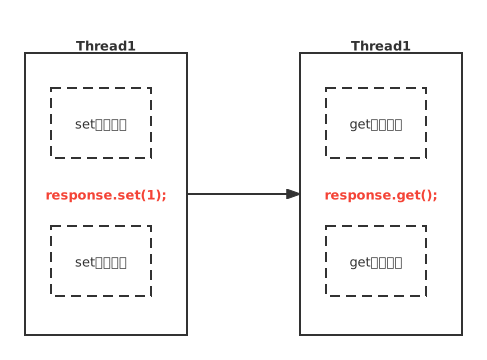
举个例子说明:现在有两个线程,Thread1负责写入结果,Thread2负责读取结果。
import java.util.concurrent.atomic.AtomicReference;
public class Main {
public static void main(String[] args) throws Exception {
//公共变量
AtomicReference<Integer> response = new AtomicReference<>(null);
Thread thread1 = new Thread(()->{
System.out.println("thread1 before set .....");
response.set(1);
System.out.println("thread1 after set .....");
});
Thread thread2 = new Thread(()->{
System.out.println("thread2 before get .....");
System.out.println(response.get());
System.out.println("thread2 after get .....");
});
thread1.start();
thread2.start();
}
}
按照上面的代码,两个线程独立执行,thread2能否获取response的值全靠缘分。
既然要控制先后顺序,自然就要使用wait和notify进行同步(先忽略join、future、CountdownLatch等同步工具)
import java.util.concurrent.atomic.AtomicReference;
public class Main {
public static void main(String[] args) throws Exception {
//公共变量
AtomicReference<Integer> response = new AtomicReference<>(null);
Thread thread1 = new Thread(()->{
System.out.println("thread1 before set .....");
synchronized(response) {
response.set(1);
response.notify();
}
System.out.println("thread1 after set .....");
});
Thread thread2 = new Thread(()->{
System.out.println("thread2 before get .....");
synchronized(response) {
//如果已有response直接获取,否则阻塞
if (response.get() == null){
try {
response.wait();
} catch (InterruptedException e) {
e.printStackTrace();
}
}
System.out.println(response.get());
}
System.out.println("thread2 after get .....");
});
thread1.start();
thread2.start();
}
}
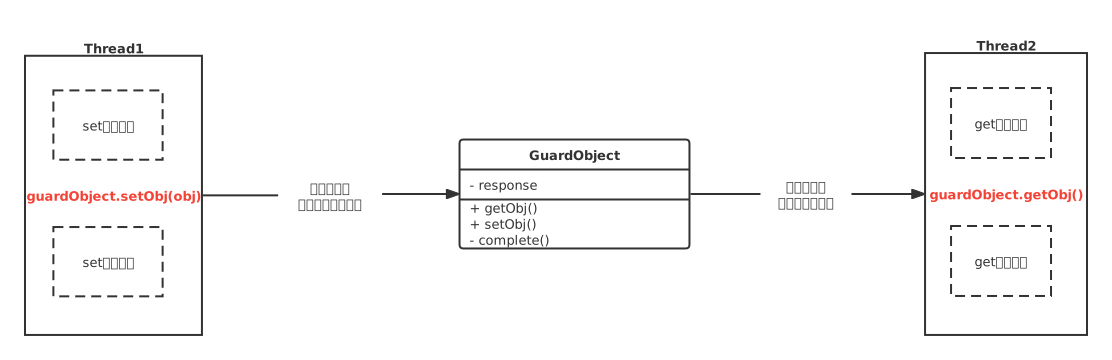
为了代码的简洁和易用,我们将同步逻辑封装到一个对象中,就实现了一个简易的保护性暂停对象:
import java.util.concurrent.atomic.AtomicReference;
public class Main {
public static void main(String[] args) throws Exception {
GuardObject guardObject = new GuardObject();
Thread thread1 = new Thread(()->{
System.out.println("thread1 before set .....");
guardObject.setObj(1);
System.out.println("thread1 after set .....");
});
Thread thread2 = new Thread(()->{
System.out.println("thread2 before get .....");
try {
System.out.println(guardObject.getObj());
} catch (InterruptedException e) {
e.printStackTrace();
}
System.out.println("thread2 after get .....");
});
thread1.start();
thread2.start();
}
static class GuardObject{
private Integer response;
public synchronized int getObj() throws InterruptedException {
if(response == null){
wait();
}
return response;
}
public synchronized void setObj(Integer value){
response = value;
notify();
}
}
}
JDK中的thread.join、FutureTask都是用保护性暂停的设计模式来实现的。
1.2 FutureTask
- 入口:
excutor.submit(callable)
-
生成
RunnableFuture, 加入Worker。线程池会把Callable对象包装进RunnableFuture。RunnableFuture既是Future又是Runnable。然后执行该// java.util.concurrent.AbstractExecutorService /** * @throws RejectedExecutionException {@inheritDoc} * @throws NullPointerException {@inheritDoc} */ public <T> Future<T> submit(Callable<T> task) { if (task == null) throw new NullPointerException(); RunnableFuture<T> ftask = newTaskFor(task); execute(ftask); return ftask; } protected <T> RunnableFuture<T> newTaskFor(Callable<T> callable) { return new FutureTask<T>(callable); }- 工作线程调用
FuturerTask的run方法。
// java.util.concurrent.ThreadPoolExecutor#addWorker final void runWorker(Worker w) { Thread wt = Thread.currentThread(); Runnable task = w.firstTask; w.firstTask = null; w.unlock(); // allow interrupts boolean completedAbruptly = true; try { while (task != null || (task = getTask()) != null) { w.lock(); // If pool is stopping, ensure thread is interrupted; // if not, ensure thread is not interrupted. This // requires a recheck in second case to deal with // shutdownNow race while clearing interrupt if ((runStateAtLeast(ctl.get(), STOP) || (Thread.interrupted() && runStateAtLeast(ctl.get(), STOP))) && !wt.isInterrupted()) wt.interrupt(); try { beforeExecute(wt, task); Throwable thrown = null; try { task.run(); } catch (RuntimeException x) { thrown = x; throw x; } catch (Error x) { thrown = x; throw x; } catch (Throwable x) { thrown = x; throw new Error(x); } finally { afterExecute(task, thrown); } } finally { task = null; w.completedTasks++; w.unlock(); } } completedAbruptly = false; } finally { processWorkerExit(w, completedAbruptly); } }- Future调用get, 如果没有返回值(
outcome变量),会将当前线程封装进WaitNode,并调用UNSAFE.compareAndSwapObject(this, waitersOffset,q.next = waiters, q)存入waiters(头插法), 然后调用LockSupport.unpark阻塞当前线程。
//java.util.concurrent.FutureTask public V get() throws InterruptedException, ExecutionException { int s = state; if (s <= COMPLETING) s = awaitDone(false, 0L); return report(s); } /** * Returns result or throws exception for completed task. * * @param s completed state value */ @SuppressWarnings("unchecked") private V report(int s) throws ExecutionException { Object x = outcome; if (s == NORMAL) return (V)x; if (s >= CANCELLED) throw new CancellationException(); throw new ExecutionException((Throwable)x); } /** * Awaits completion or aborts on interrupt or timeout. * * @param timed true if use timed waits * @param nanos time to wait, if timed * @return state upon completion */ private int awaitDone(boolean timed, long nanos) throws InterruptedException { final long deadline = timed ? System.nanoTime() + nanos : 0L; WaitNode q = null; boolean queued = false; for (;;) { if (Thread.interrupted()) { removeWaiter(q); throw new InterruptedException(); } int s = state; if (s > COMPLETING) { if (q != null) q.thread = null; return s; } else if (s == COMPLETING) // cannot time out yet Thread.yield(); else if (q == null) q = new WaitNode(); else if (!queued) queued = UNSAFE.compareAndSwapObject(this, waitersOffset, q.next = waiters, q); else if (timed) { nanos = deadline - System.nanoTime(); if (nanos <= 0L) { removeWaiter(q); return state; } LockSupport.parkNanos(this, nanos); } else LockSupport.park(this); } }FuturerTask的run方法执行完毕,通过set(result)将结果赋值给outcome, 并激活waiters中所有的阻塞
//java.util.concurrent.FutureTask public void run() { if (state != NEW || !UNSAFE.compareAndSwapObject(this, runnerOffset, null, Thread.currentThread())) return; try { Callable<V> c = callable; if (c != null && state == NEW) { V result; boolean ran; try { result = c.call(); ran = true; } catch (Throwable ex) { result = null; ran = false; setException(ex); } if (ran) set(result); } } finally { // runner must be non-null until state is settled to // prevent concurrent calls to run() runner = null; // state must be re-read after nulling runner to prevent // leaked interrupts int s = state; if (s >= INTERRUPTING) handlePossibleCancellationInterrupt(s); } } protected void set(V v) { if (UNSAFE.compareAndSwapInt(this, stateOffset, NEW, COMPLETING)) { outcome = v; UNSAFE.putOrderedInt(this, stateOffset, NORMAL); // final state finishCompletion(); } } /** * Removes and signals all waiting threads, invokes done(), and * nulls out callable. */ private void finishCompletion() { // assert state > COMPLETING; for (WaitNode q; (q = waiters) != null;) { if (UNSAFE.compareAndSwapObject(this, waitersOffset, q, null)) { for (;;) { Thread t = q.thread; if (t != null) { q.thread = null; LockSupport.unpark(t); } WaitNode next = q.next; if (next == null) break; q.next = null; // unlink to help gc q = next; } break; } } done(); callable = null; // to reduce footprint }2. 异步处理
FutureTask是一种进程等待另一个进程执行结束(同步), 但有时候我们需要的是异步操作,又该如何设计呢?通过注册+回调机制来实现。
import java.util.ArrayList; import java.util.List; public class Main { public static void main(String[] args) throws Exception { FutureAsync<Integer> future = new FutureAsync<>(); Thread thread1 = new Thread(()->{ System.out.println("thread1 before set ....."); try { Thread.sleep(1000); future.fireSuccess(1); } catch (InterruptedException e) { future.fireFailure(); } System.out.println("thread1 after set ....."); }); Thread thread2 = new Thread(()->{ System.out.println("thread2 before get ....."); future.addListener(new FutureCallback() { @Override public void onSuccess(Object value) { System.out.println(String.valueOf(value)); } @Override public void onFailure() { System.out.println("error"); } }); System.out.println("thread2 after get ....."); }); thread1.start(); thread2.start(); } static class FutureAsync<T>{ List<FutureCallback> callbacks = new ArrayList<>(); void addListener(FutureCallback callback){ callbacks.add(callback); } void fireSuccess(T value){ callbacks.stream().forEach((callback)->{callback.onSuccess(value);}); } void fireFailure(){ callbacks.stream().forEach((callback)->{callback.onFailure();}); } } interface FutureCallback<T>{ void onSuccess(T value); void onFailure(); } } - 工作线程调用