原型与原型链
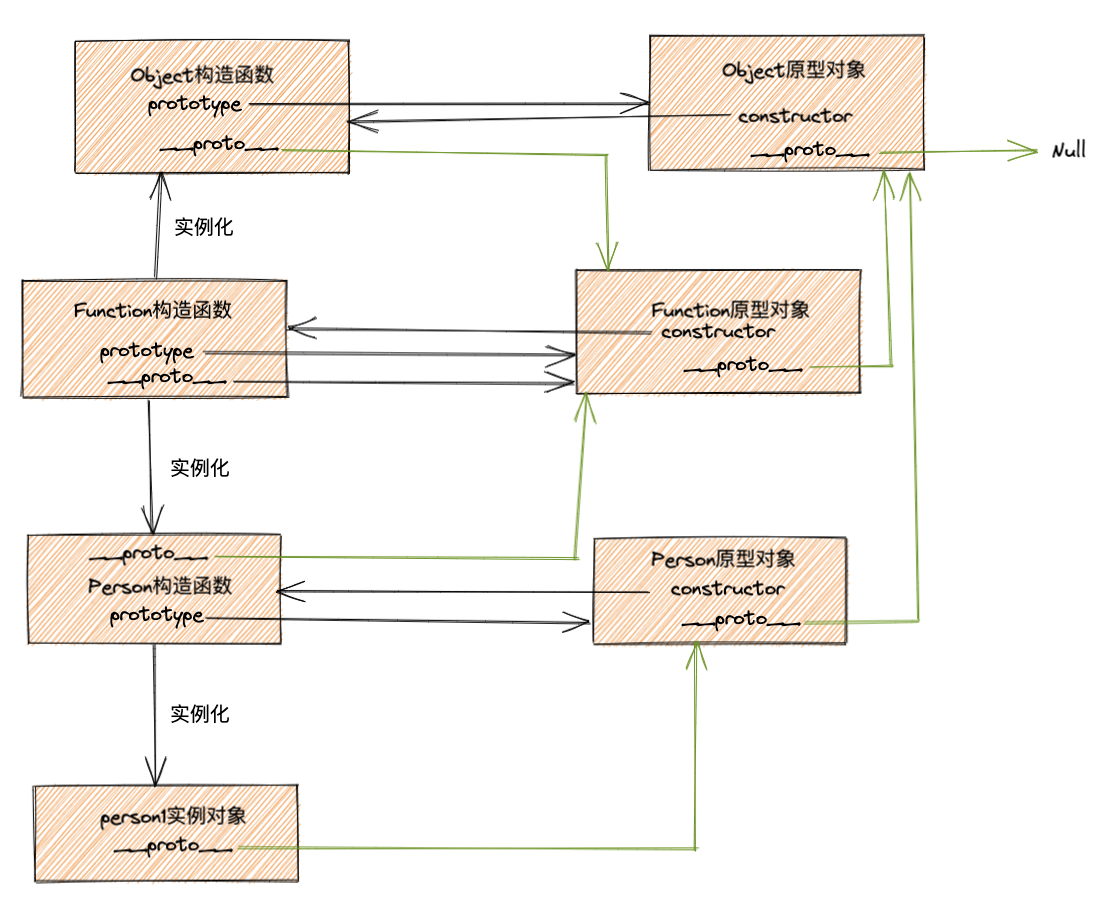
ECMAScript5继承
原型链继承
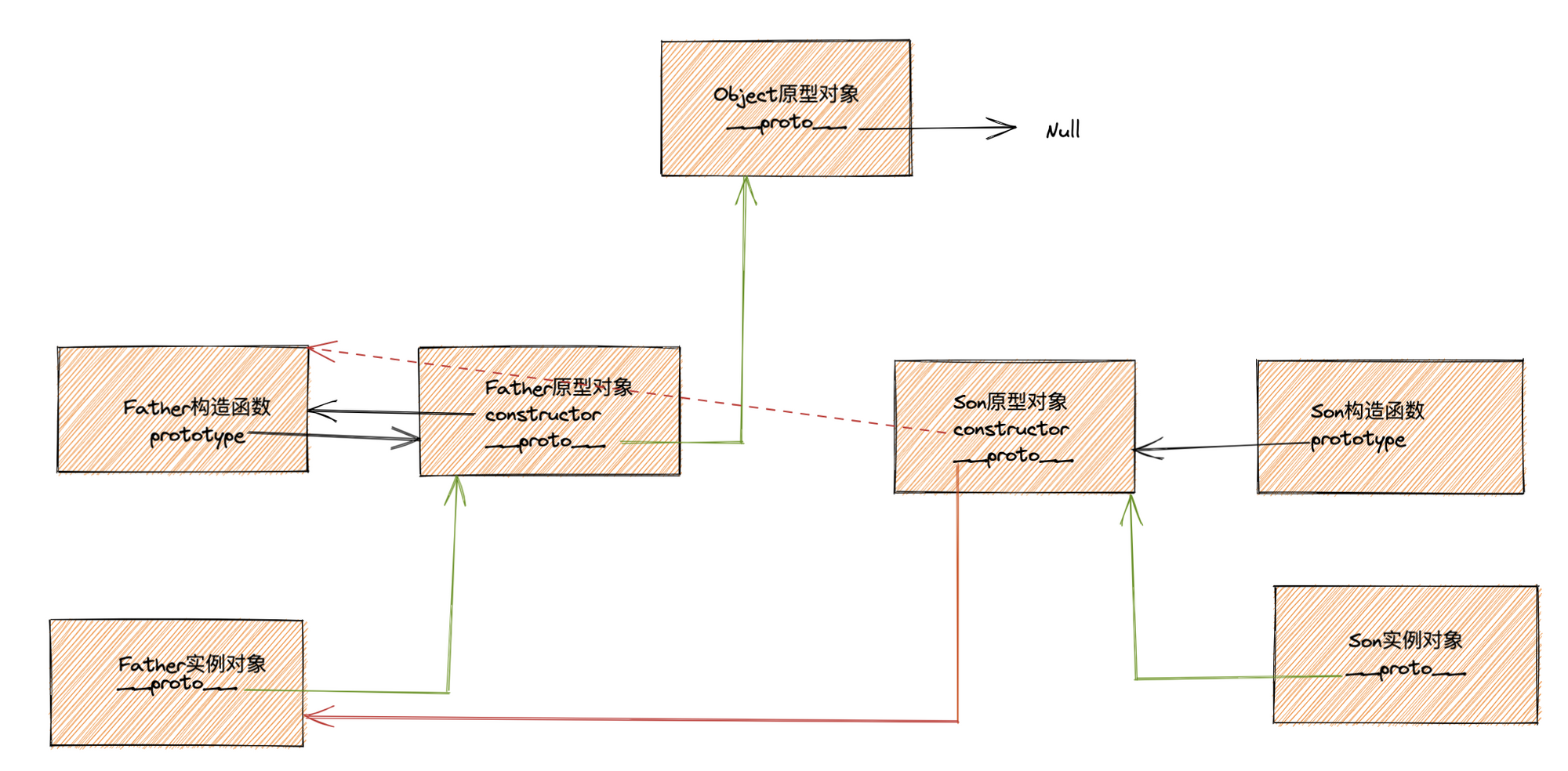
思路:修改子类原型为父类
示例:
function Father(){
  this.color = ['red']
}
function Son(){
}
Son.prototype = new Father()
let son1 = new Son()
原型链关系图:
特点:
- 在创建实例时,不能向父类的构造函数传参
- 引用类型的属性被所有实例共享
function Father(){
  this.color = ['red']
}
function Son(){

}
Son.prototype = new Father()
console.log(Son.constructor) // [Function: Father]

let son1 = new Son()
son1.color.push('blue')
console.log(son1.color) // [ 'red', 'blue' ]

let son2 = new Son()
console.log(son2.color) // [ 'red', 'blue' ]
盗用构造函数
思路:在子类构造函数中调用父类构造函数,父类执行上下文此时为子类
特点:
- 避免了引用类型的属性被所有实例共享
function Father(){
  this.color = ['red']
}
function Son(){
  Father.call(this)
}
let son1 = new Son()
son1.color.push('black')
console.log(son1.color) // [ 'red', 'black' ]

let son2 = new Son()
console.log(son2.color) // [ 'red' ]
- 可以在 Child 中向 Parent 传参
function Father(name){
    this.name = name
    this.color = ['red']
    this.say = function() {
        console.log(this.name)
    }
}
function Son(name){
    Father.call(this, name)
}

let son1 = new Son('qianxun')
son1.say() // qianxun
- 方法都在构造函数中定义,每次创建实例都会创建一遍方法。子类也不能访问父类原型上定义的方法
function Father(name){
    this.name = name
    this.color = ['red']
}
Father.prototype.say = function(){
    console.log('hello')
}
function Son(name){
    Father.call(this, name)
}

let son1 = new Son('qianxun')
son1.say() // son1.say is not a function
组合继承
思路:原型链继承结合盗用构造函数
示例:
function Father(myName){
    this.name = myName;
    this.color = ['red']
}
Father.prototype.sayName = function(){
    console.log(this.name)
}
function Son(name){
    Father.call(this, name)
}

Son.prototype = new Father()
Son.prototype.constructor = Son

let son1 = new Son('qianxun')
son1.color.push('blue')
console.log(son1.color) // [ 'red', 'blue' ]
son1.sayName() // qianxun

let son2 = new Son('chengtuo')
console.log(son2.color) // [ 'red' ]
son2.sayName() // qianxun
特点:
- 融合原型链继承和构造函数的优点
- 父类构造函数会被调用两次
function Father(myName){
    this.name = myName;
    this.color = ['red']
}
Father.prototype.sayName = function(){
    console.log(this.name)
}
function Son(name){
    // 第二次调用Father()
    Father.call(this, name)
}
// 第一次调用Father()
Son.prototype = new Father()
Son.prototype.constructor = Son

let son1 = new Son('qianxun')
console.log(son1)
console.log(Son.prototype)
原型式继承
思路:利用Object.create()创建对象
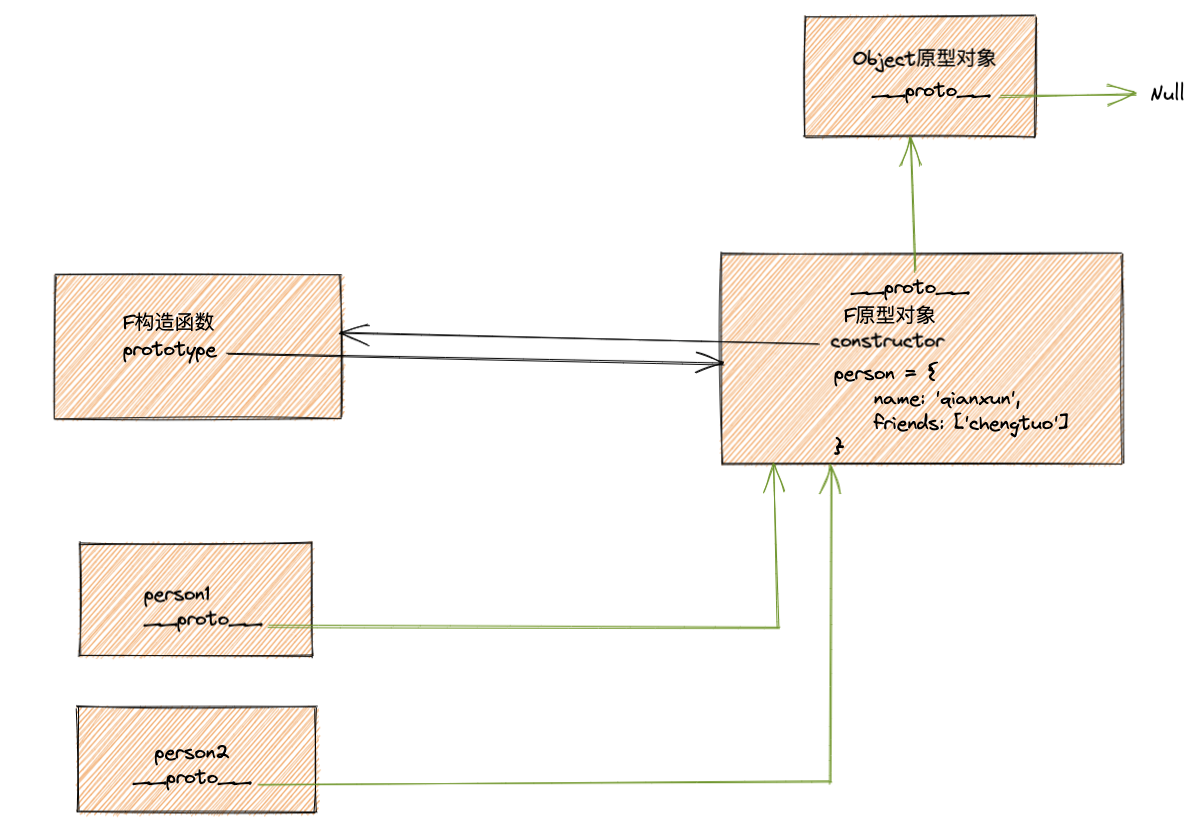
function object(obj){
    function F(){}
    F.prototype = obj
    return new F()
 }
示例:
function object (obj) {
     function F(){}
     F.prototype = obj
     return new F()
 }

 let person = {
     name: 'qianxun',
     friends: ['mumiao']
 }
let person1 = new object(person)
let person2 = new object(person)

person1.name = 'person1'; // 在person1实例对象上新增name属性,并不是修改原型上的name
console.log(person2.name); // qianxun

person1.friends.push('shuangxu');
console.log(person2.friends); // [ 'mumiao', 'shuangxu' ]

console.log(person1.__proto__ === person2.__proto__) // true
原型链图:
特点:
- 引用类型的属性被所有实例共享
寄生式继承
思路:封装继承过程的函数,该函数在内部以某种形式来做增强对象,最后返回对象。
示例:
function Create(obj){
    const clone = Object.create(obj)
    clone.say = function () {
        console.log('hello world')
    }
    return clone
}
let res = Create({})
res.say() // hello world
寄生式组合继承(最优解)
示例:
function Father (name){
    this.name = name
}
Father.prototype.sayName = function () {
    console.log(this.name)
}
function Son (name, age) {
    Father.call(this, name)
    this.age = age
}
// Son.prototype = new Father()
// Son.prototype.constructor = Son
function inherit (Father, Son) {
    const prototype = Object.create(Father.prototype)
    prototype.constructor = Son
    Son.prototype = prototype
}
inherit(Father, Son)
// Son原型上新增的属性和方法必须放在修改关系之后添加
Son.prototype.sayAge = function () {
    console.log(this.age)
}

let son1 = new Son('qianxun', 18)
son1.sayName() // qianxun
son1.sayAge() // 18
原型链图: