

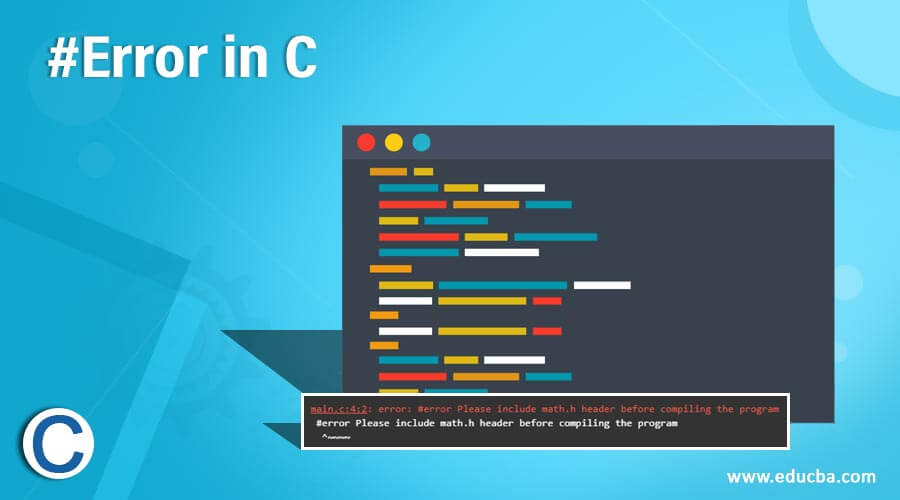
C语言中#错误的介绍
C语言中的#error是C语言预处理程序中最有用的功能之一,它是一个用来表示错误的指令。而它会导致编译失败,同时允许我们发出一条将显示为编译错误的语句。#error指令可以与if条件或elif条件或else条件相结合,导致编译失败并显示相应的信息。只要在程序中遇到#error指令,并且条件为真,就会显示相应的消息作为编译错误输出,并跳过程序编译的其余部分。
C语言中#Error的语法如下。
#error <Compilation failed error message to be displayed as the output>
C语言中#Error的工作原理如下
- 每当需要表明一个错误,同时显示适当的编译错误信息,并跳过程序其余部分的执行时,我们就会使用C语言中的#error指令。
- 当我们在C语言中使用#error指令时,它会导致编译失败,同时允许我们发出一个将被显示为编译错误的语句。
- #error指令可以与if条件、elif条件或else条件相结合,导致编译失败并显示相应的信息。
- 只要在程序中遇到#error指令,并且条件为真,就会显示相应的信息作为编译错误的输出,并且跳过程序编译的其余部分。
C语言中#Error的例子
下面是C语言中#Error的例子。
例子 #1
在C语言中演示如何在程序中使用#error指令,在遇到#error指令时显示自定义的编译错误信息,同时条件为真,并跳过其他程序的编译。
代码。
#include<stdio.h>
//making use of if-else condition while including #error directive with the appropriate compilation failed message to be displayed on the output screen
#ifndef __MATH_H
#error Please include math.h header before compiling the program
#else
//if the #error directive condition is false, then the else part containing the main method is executed which consists of three doubles variables to store double values and then make use of pow function to find the power and display the value.
int main()
{
double a = 2.0;
double b = 2.0;
double c;
c = pow(a, b);
printf("The power of a raised to b is : %lf", c);
return 0;
}
//if else condition ends here
#endif
输出。

在上面的程序中,我们使用了if-else条件,同时包括#error指令,并在输出屏幕上显示适当的编译失败信息。在这里,我们在if-else条件中检查math.h头文件是否包含在程序中,因为该程序使用了math.h头文件中的数学函数。如果头文件没有被包含,就会显示自定义的#error指令信息,并跳过程序的其余部分。如果程序中包含了math.h头文件,就会执行else部分,即计算一个数字的幂,给定两个数字,并显示输出。输出结果如上面的快照所示。
例子#2
在C语言程序中演示如何使用#error指令,在遇到#error指令时显示自定义的编译错误信息,同时条件为真,并跳过程序的其余部分的编译。
代码。
#include<stdio.h>
//making use of if else condition while including #error directive with the appropriate compilation failed message to be displayed on the output screen
#ifndef __MATH_H
#error Please include math.h header before compiling the program
#else
//if the #error directive condition is false, then the else part containing the main method is executed which consists of three doubles variables to store double values and then make use of pow function to find the power and display the value.
int main()
{
int a, b;
a = abs(-50);;
printf("The absolute value of the given number is: %d\n", a);
b = abs(-100);;
printf("The absolute value of the given number is: %d\n", b);
return 0;
}
//if else condition ends here
#endif
输出。

在上面的程序中,我们使用了if-else条件,同时包括#error指令,并在输出屏幕上显示适当的编译失败信息。在这里,我们在if-else条件中检查math.h头文件是否包含在程序中,因为该程序使用了math.h头文件中的数学函数。如果头文件没有被包含,就会显示自定义的#error指令信息,并跳过程序的其余部分。如果程序中包含了math.h头文件;则执行else部分,找到给定数字的绝对值并显示输出。输出结果如上面的快照所示。
在C语言中使用#error指令有几个好处,它们是:1:
- 通过在程序中使用#error指令,可以节省编译整个程序所需的编译时间,因为一旦在程序中遇到#error指令,程序的编译就会停止,而跳过程序的其他部分的编译。
- 通过使用#error指令,可以在输出中显示自定义的编译失败信息。
总结
在本教程中,我们通过定义、语法和#error指令的工作,了解了C语言中#error指令的概念,通过编程实例和它们的输出,了解了在程序中使用#error指令显示自定义编译失败信息并跳过程序其余部分编译的好处。
