面试深受打击了,时候回炉重造了!!!! 怀挺
1. 箭头函数与普通函数有什么区别???
let a = ()=>{}
console.log(a.prototype)
let a = function(){}
console.log(a.prototype)
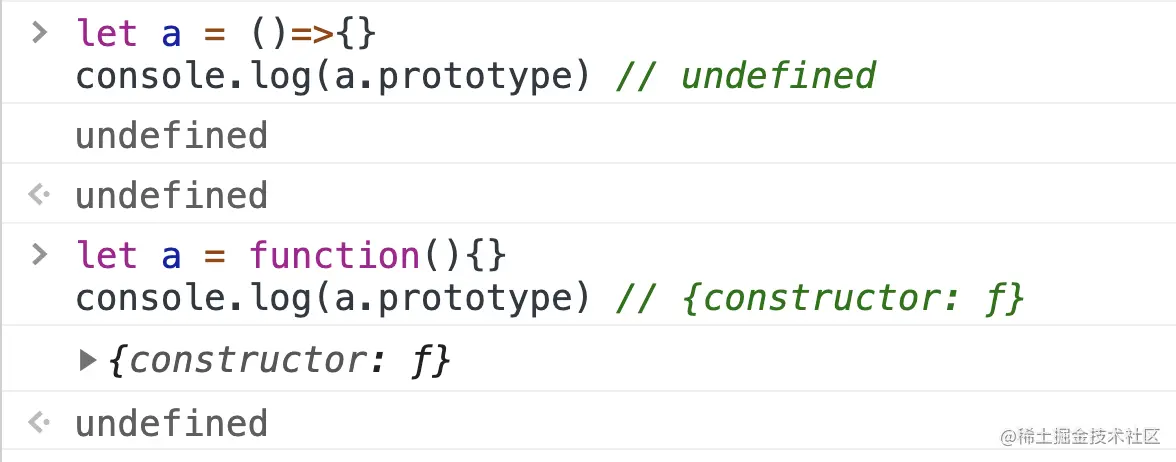
~ 结论:箭头函数没有prototype(原型),所以箭头函数本身没有this
2.如果箭头函数外层没有普通函数,不管是否是严格模式还是非严格模式,this指向都是window; 如果普通函数那就会this指向是undefined
let foo = function(){
console.log(this)
}
foo()
let foo = ()=>{console.log(this)};
foo();
'use strict'
let foo = ()=>{console.log(this)};
foo();
'use strict'
let foo = function() {console.log(this)};
foo();
~ 总结: 箭头函数与普通函数,如果箭头函数外层没有普通函数,他们两个都是指向window如果是严格模式下的话:箭头函数是指向window,普通函数指向是undefined
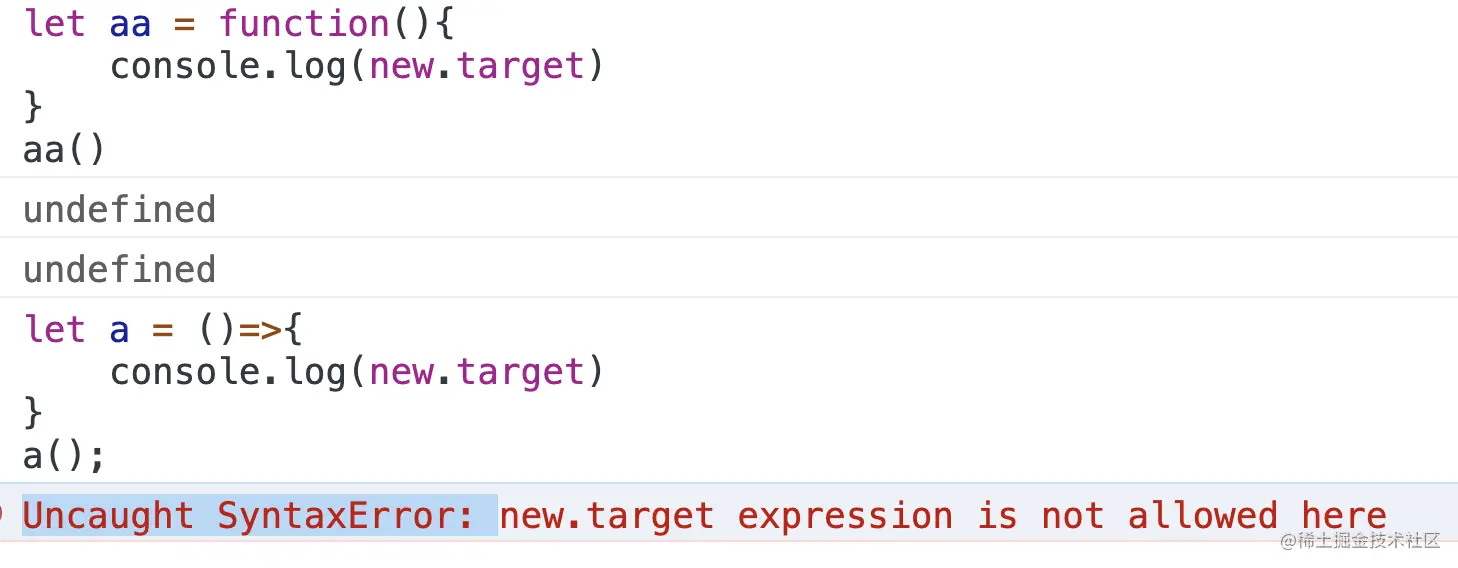
3.箭头函数不支持new.target
let aa = function(){
console.log(new.target)
}
aa()
let a = ()=>{
console.log(new.target)
}
a();
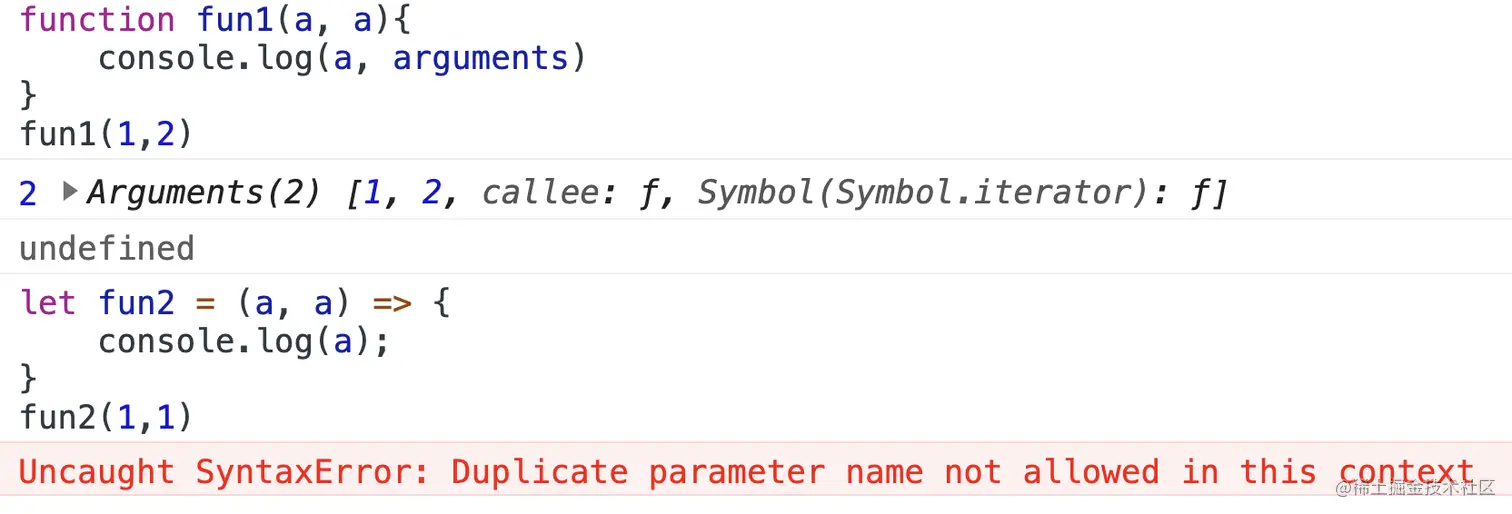
4.箭头函数不支持重命名函数参数,普通函数的函数参数支持重命名
function fun1(a, a){
console.log(a, arguments)
}
fun1(1,2)
let fun2 = (a, a) => {
console.log(a);
}
fun2(1,1)
5.箭头函数相对于普通函数语法更简洁优雅