FutureTask用于在异步操作场景中,FutureTask作为生产者(执行FutureTask的线程)和消费者(获取FutureTask结果的线程)的桥梁,如果生产者先生产出了数据,那么消费者get时能会直接拿到结果;如果生产者还未产生数据,那么get时会一直阻塞或者超时阻塞,一直到生产者产生数据唤醒阻塞的消费者为止。话不多说,下来开始FutureTask的分析。 Future接口和实现Future接口的FutureTask,代表异步计算的结果,Future使用示例如下:
ThreadPoolExecutor executor = new ThreadPoolExecutor(5, 10, 60, TimeUnit.SECONDS, new LinkedBlockingQueue<>());
Future future = executor.submit(() -> {
 System.out.println("hello world");
return "hello world";});
System.out.println(future.get());
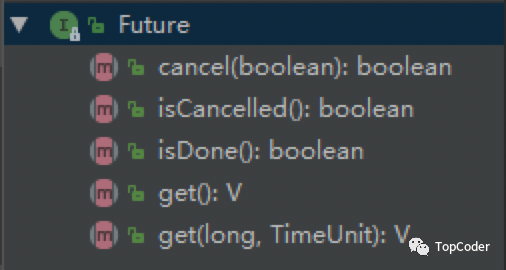
Future接口声明如下:
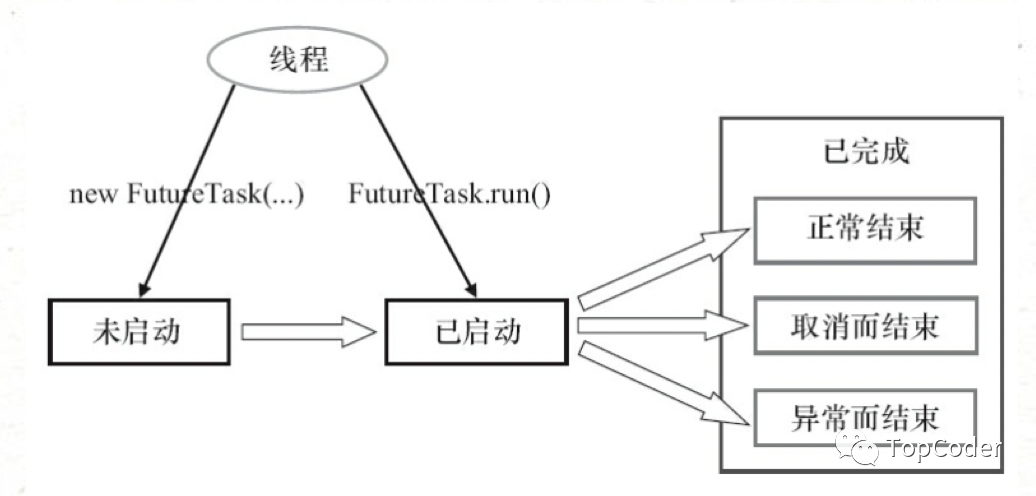
FutureTask除了实现Future接口外,还实现了Runnable接口。因此,FutureTask可以交给Executor执行,也可以由调用线程直接执行(FutureTask.run())。根据FutureTask.run()方法被执行的时机,FutureTask可以处于以下3种状态:未启动、运行中、已完成。
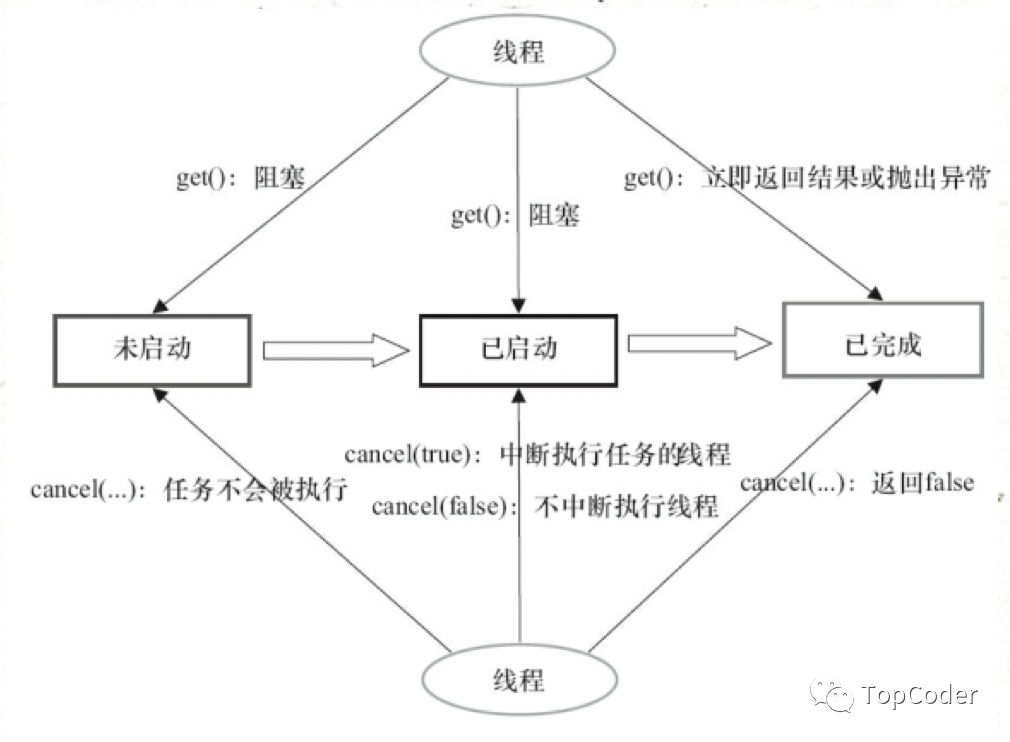
当FutureTask处于未启动或已启动状态时,执行FutureTask.get()方法将导致调用线程阻塞;当FutureTask处于已完成状态时,执行FutureTask.get()方法将导致调用线程立即返回结果或抛出异常。
-
当FutureTask处于未启动状态时,执行FutureTask.cancel()方法将导致此任务永远不会被执行;
-
当FutureTask处于已启动状态时,执行FutureTask.cancel(true)方法将以中断执行此任务线程的方式来试图停止任务;
-
当FutureTask处于已启动状态时,执行FutureTask.cancel(false)方法将不会对正在执行此任务的线程产生影响(让正在执行的任务运行完成);
-
当FutureTask处于已完成状态时,执行FutureTask.cancel(…)方法将返回false。
FutureTask的生命周期如下:
Future.get() 阻塞/唤醒原理
执行future.get()时,如果对应线程还未执行完,则会阻塞当前线程,以FutureTask为例,FutureTask中有一个int型的状态标志,表示future对应线程的运行状态。
/** * Possible state transitions: * NEW -> COMPLETING -> NORMAL * NEW -> COMPLETING -> EXCEPTIONAL * NEW -> CANCELLED * NEW -> INTERRUPTING -> INTERRUPTED */private volatile int state;private static final int NEW = 0;private static final int COMPLETING = 1;private static final int NORMAL = 2;private static final int EXCEPTIONAL = 3;private static final int CANCELLED = 4;private static final int INTERRUPTING = 5;private static final int INTERRUPTED = 6;
当调用FutureTask.get()时,如果Future对应的任务已完成(正常执行完成或者抛出异常),执行返回;如果Future对应的任务未执行完成,则会将当前线程封装成一个NodeWait,以CAS方式添加到FutureTask.waiters链表上(单向链表,新节点都会作为head node添加上),然后会阻塞当前线程(包括超时阻塞)。
public V get() throws InterruptedException, ExecutionException {
 int s = state;
 if (s <= COMPLETING) // 线程未执行完成
 s = awaitDone(false, 0L);
 return report(s);}
private int awaitDone(boolean timed, long nanos)    throws InterruptedException {
final long deadline = timed ? System.nanoTime() + nanos : 0L;
 WaitNode q = null;
boolean queued = false;
 for (;;) {
 if (Thread.interrupted()) {
 removeWaiter(q);
 throw new InterruptedException();        }
 int s = state;
 if (s > COMPLETING) { // 线程已运行完成
 if (q != null)
 q.thread = null;
 return s;        }
 else if (s == COMPLETING) // cannot time out yet
 Thread.yield(); // future task已完成,正在赋值outcome,get()返回的值就是outcome,这时不用加入WaitNode即可
  else if (q == null)            q = new WaitNode(); // 生成WaitNode        else if (!queued)
  queued = UNSAFE.compareAndSwapObject(this, waitersOffset,
 q.next = waiters, q);        else if (timed) {            nanos = deadline - System.nanoTime();
 if (nanos <= 0L) {                removeWaiter(q);                return state;            }
 LockSupport.parkNanos(this, nanos);        }        else            LockSupport.park(this);    }}
private V report(int s) throws ExecutionException {    Object x = outcome;    if (s == NORMAL) // 正常执行结束
 return (V)x;    if (s >= CANCELLED) // 已取消        throw new CancellationException();    throw new ExecutionException((Throwable)x); // 抛出异常}
在任务执行(run()方法)中,调用result = callable.call方法,正常执行完毕后调用set(result)设置Future结果;出现异常则调用setException(ex)。最后会调用finishCompletion()来唤醒阻塞在Future的所有线程。
设置完数据之后(不管是正常数据还是对应异常),当等待数据的线程来get时,就会返回或者直接给它抛异常;如果当线程已经get过并阻塞在这里时,FutureTask需要将这些线程唤醒起来。
public void run() { if (state != NEW || !UNSAFE.compareAndSwapObject(this, runnerOffset, null, Thread.currentThread())) return; try { Callable<V> c = callable; if (c != null && state == NEW) { V result; boolean ran; try { result = c.call(); ran = true; } catch (Throwable ex) { result = null; ran = false; setException(ex); } if (ran) set(result); } } finally { // runner must be non-null until state is settled to // prevent concurrent calls to run() runner = null; // state must be re-read after nulling runner to prevent // leaked interrupts int s = state; if (s >= INTERRUPTING) handlePossibleCancellationInterrupt(s); }}protected void set(V v) { if (UNSAFE.compareAndSwapInt(this, stateOffset, NEW, COMPLETING)) { outcome = v; UNSAFE.putOrderedInt(this, stateOffset, NORMAL); // final state finishCompletion(); }}protected void setException(Throwable t) { if (UNSAFE.compareAndSwapInt(this, stateOffset, NEW, COMPLETING)) { outcome = t; UNSAFE.putOrderedInt(this, stateOffset, EXCEPTIONAL); // final state finishCompletion(); }}// 唤醒所有等待线程private void finishCompletion() { // assert state > COMPLETING; for (WaitNode q; (q = waiters) != null;) { if (UNSAFE.compareAndSwapObject(this, waitersOffset, q, null)) { for (;;) { Thread t = q.thread; if (t != null) { q.thread = null; LockSupport.unpark(t); } WaitNode next = q.next; if (next == null) break; q.next = null; // unlink to help gc q = next; } break; } } done(); callable = null; // to reduce footprint}
小结
FutureTask中的waiters是一个单向链表,如果多个线程阻塞在该Future上,最新阻塞的线程排列在链表前面,唤醒线程时依次从前到后遍历链表唤醒线程,这样处理貌似对最开始阻塞在Future上的线程不太公平哈,因为最开始阻塞的线程是到最后才被唤醒的。