可以用这种方式来生成一个比较器:
private static final Comparator<EntityField> FIELD_COMPARATOR = Comparator.comparing(EntityField::getName)JDK文档如是说:
comparing

static <T,U extends Comparable<? super U>> Comparator<T> comparing(Function<? super T,? extends U> keyExtractor)

Accepts a function that extracts a Comparable sort key from a type T, and returns a Comparator<T> that compares by that sort key.

The returned comparator is serializable if the specified function is also serializable.

API Note:
    For example, to obtain a Comparator that compares Person objects by their last name,


         Comparator<Person> byLastName = Comparator.comparing(Person::getLastName);


Type Parameters:
    T - the type of element to be compared
    U - the type of the Comparable sort key
Parameters:
    keyExtractor - the function used to extract the Comparable sort key
Returns:
    a comparator that compares by an extracted key
Throws:
    NullPointerException - if the argument is null
Since:
    1.8
另外一个比较好的例子
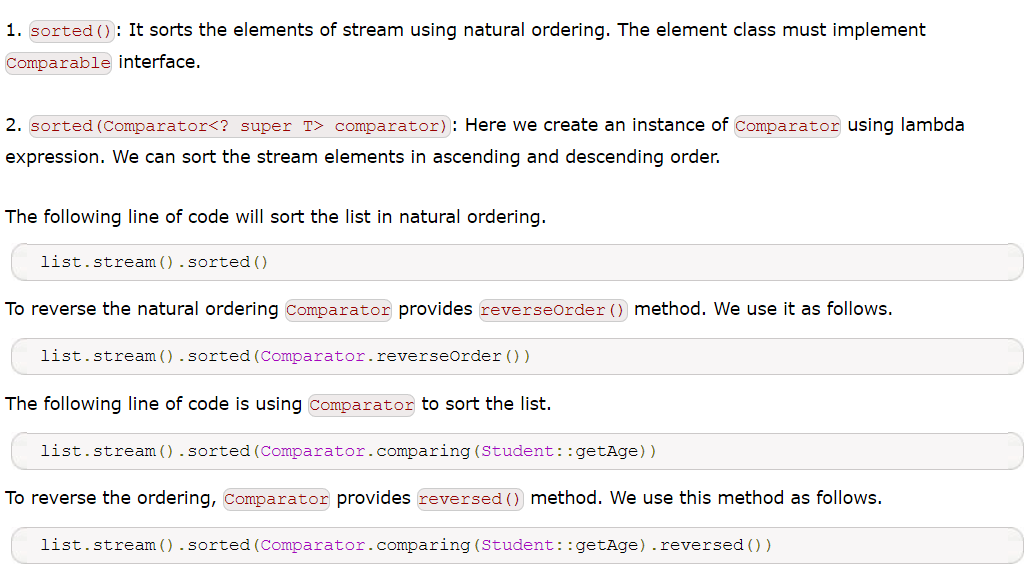
代码:
	public static void main(String[] args) {
		List<Student> list = new ArrayList<Student>();
		list.add(new Student(1, "Mahesh", 12));
		list.add(new Student(2, "Suresh", 15));
		list.add(new Student(3, "Nilesh", 10));

		System.out.println("---Natural Sorting by Name---");
		List<Student> slist = list.stream().sorted().collect(Collectors.toList());
		slist.forEach(e -> System.out.println("Id:"+ e.getId()+", Name: "+e.getName()+", Age:"+e.getAge()));

		System.out.println("---Natural Sorting by Name in reverse order---");
		slist = list.stream().sorted(Comparator.reverseOrder()).collect(Collectors.toList());
		slist.forEach(e -> System.out.println("Id:"+ e.getId()+", Name: "+e.getName()+", Age:"+e.getAge()));

		System.out.println("---Sorting using Comparator by Age---");
		slist = list.stream().sorted(Comparator.comparing(Student::getAge)).collect(Collectors.toList());
		slist.forEach(e -> System.out.println("Id:"+ e.getId()+", Name: "+e.getName()+", Age:"+e.getAge()));

		System.out.println("---Sorting using Comparator by Age with reverse order---");
		slist = list.stream().sorted(Comparator.comparing(Student::getAge).reversed()).collect(Collectors.toList());
		slist.forEach(e -> System.out.println("Id:"+ e.getId()+", Name: "+e.getName()+", Age:"+e.getAge()));
	}