当我们接入了微信、app、ldap等等登录验证的时候,我们如何去具体地了解到登录失败的原因呢?
举个例子,app无法登录有可能是密码错误,也有可能是密码正确但是该账号被限制登录。但是无论上面哪种情况,我们从登录接口拿到的返回信息都是同样的,甚至在app验证失败之后(用户名密码正确,但是用户过期了),在我们明知这个账号的确是app登录账号而不是其他验证方式的情况下,manager还会拿着用户名密码去ldap或者wx进行验证,最后我们连这个错误信息是哪个provider抛出的都不知道。
需求: 当app验证程序发现账号的确是app的账号,但是账号过期或者被锁而验证失败的情况下,忽略剩下的其他验证(比如wx),并且返回详细的验证失败提示信息
先看一下验证过程中的异常处理(可以直接略过A、B、C,解决方法在后面):
A:
for (AuthenticationProvider provider : getProviders()) {
	if (!provider.supports(toTest)) {
		continue;
	}

	if (debug) {
		logger.debug("Authentication attempt using "
				+ provider.getClass().getName());
	}

	try {
		result = provider.authenticate(authentication);  //调用验证方法

		if (result != null) {
			copyDetails(authentication, result);  //如果返回不为空,也没有抛出异常,则视为成功
			break;
		}
	}
	catch (AccountStatusException e) {  //该异常会打断验证
		prepareException(e, authentication);
		// SEC-546: Avoid polling additional providers if auth failure is due to
		// invalid account status
		throw e;
	}
	catch (InternalAuthenticationServiceException e) {   //该异常会打断验证
		prepareException(e, authentication);
		throw e;
	}
	catch (AuthenticationException e) {    //不会打断验证
		lastException = e;
	}
}
循环的最外层,我们暂时叫它A层,往里就是B层、C层...
- 这里除了验证成功,抛出的AccountStatusException 和InternalAuthenticationServiceException 异常会直接打断循环验证,返回给调用者包含的错误信息。
- 最后面catch的AuthenticationException 是AccountStatusException 和InternalAuthenticationServiceException 的父类,它捕获了除这两者以外的该类异常,但是这个异常并不会打断验证,并且很重要的一点是,它会循环赋值给lastException ,最后返回给调用者的是最后一次捕获的AuthenticationException 。
其实spring对于AccountStatusException 已经有了很完备的处理,我们先往里层看。
B、
if (user == null) {
	cacheWasUsed = false;

	try {
		user = retrieveUser(username,
				(UsernamePasswordAuthenticationToken) authentication);      //1、调用下一层的验证方法
	}
	catch (UsernameNotFoundException notFound) {
		logger.debug("User '" + username + "' not found");

		if (hideUserNotFoundExceptions) {
			throw new BadCredentialsException(messages.getMessage(
					"AbstractUserDetailsAuthenticationProvider.badCredentials",
					"Bad credentials"));
		}
		else {
			throw notFound;
		}
	}


        //2、这里很重要,如果返回的user为null,会抛出IllegalArgumentException,这个异常没有catch,直接返回给调用者,所以返回的user不能是null!

   Assert.notNull(user,"retrieveUser returned null - a violation of the interface contract");

}

try {
	preAuthenticationChecks.check(user);                 //3、这里的precheck很重要,如果用户被锁之类的,会抛出相应的AccountStatusException异常
	additionalAuthenticationChecks(user,
			(UsernamePasswordAuthenticationToken) authentication);
}
catch (AuthenticationException exception) {
	if (cacheWasUsed) {
		// 重试一次
                        // 此处省略一大段。。。
	}
	else {
		throw exception;
	}
}

        // 此处省略一大段。。。
return createSuccessAuthentication(principalToReturn, authentication, user);   //4、如果前面没有异常,返回的肯定不会是null
B层没有拦截住验证方法抛出的任何异常,而是通过check方法,手动抛出了AccountStatusException,A层对这个异常是直接抛出的,所以我们主要依靠这个异常来打断验证、返回信息。虽然返回null也可以打断验证,但是没法细分情况和客户化异常信息。
另外,A层的验证循环只有在返回的result 为null,或者抛出了非AccountStatusException或InternalAuthenticationServiceException 的AuthenticationException 异常的情况下才能不打断循环继续验证,但是在B层中是不允许result 为null的,会抛IllegalArgumentException。所以要想继续循环验证的方式只有一个,那就是向A层抛出AuthenticationException 。
C、
UserDetails loadedUser;
try {
        String repositoryProblem = (String)authentication.getCredentials();
       loadedUser = this.getUserDetailsService().loadUserByUsername(username, repositoryProblem);   //1、调用我们客户化的验证方法
} catch (UsernameNotFoundException var5) {                                                      //2、该异常虽然不会被B层拦截,但是A层也没有专门处理该异常
        throw var5;
} catch (Exception var6) {                                                         //3、全部异常都抛成AuthenticationServiceException
         throw new AuthenticationServiceException(var6.getMessage(), var6);
}
if(loadedUser == null) {                                                           //4、null也抛成AuthenticationServiceException
        throw new AuthenticationServiceException("UserDetailsService returned null, which is an interface contract violation");
} else {
       return loadedUser;
}
C层只会抛出UsernameNotFoundException 和AuthenticationServiceException,这两者对A层的循环都没有影响,而且还会被后面抛出的该类型异常给覆盖
下面要请出我们的主角了:
CustomUserDetails userDetails1 = new CustomUserDetails(user.getUserId(), user.getUserName(), user.getPasswordEncrypted(), true, true, true, true, authorities);这就是我们实现验证逻辑的地方,这里构造方法里的的四个true都是啥呢?
public CustomUserDetails(Long userId, String userName, String password, boolean enabled, boolean accountNonExpired, boolean credentialsNonExpired, boolean accountNonLocked, Collection<? extends GrantedAuthority> authorities) {
    this.userId = userId;
    this.userName = userName;
    this.password = password;
    this.enabled = enabled;
    this.accountNonExpired = accountNonExpired;
    this.credentialsNonExpired = credentialsNonExpired;
    this.accountNonLocked = accountNonLocked;
    this.authorities = authorities;
}
各自代表账户的有效、锁定、过期以及client是否过期。
如果我们将这四个属性其中一个设置为false,那么会在B层的preCheck中被检查出来,然后抛出与属性相应的AccountStatusException,打断循环并且返回异常信息,是不是很简单。
B层中调用的检查方法:
public void check(UserDetails user) {
	if (!user.isAccountNonLocked()) {
		throw new LockedException(messages.getMessage(
				"AccountStatusUserDetailsChecker.locked", "User account is locked"));
	}

	if (!user.isEnabled()) {
		throw new DisabledException(messages.getMessage(
				"AccountStatusUserDetailsChecker.disabled", "User is disabled"));
	}

	if (!user.isAccountNonExpired()) {
		throw new AccountExpiredException(
				messages.getMessage("AccountStatusUserDetailsChecker.expired",
						"User account has expired"));
	}

	if (!user.isCredentialsNonExpired()) {
		throw new CredentialsExpiredException(messages.getMessage(
				"AccountStatusUserDetailsChecker.credentialsExpired",
				"User credentials have expired"));
	}
}
检测下效果:
两个验证类:代表app和wx
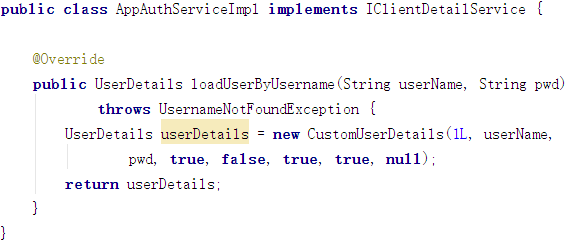
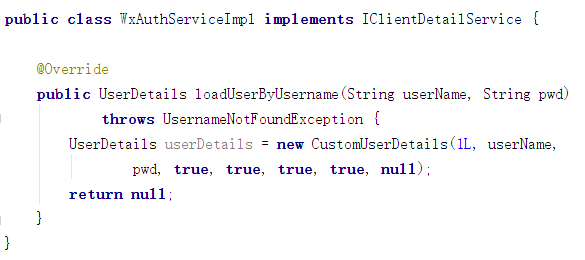
返回值:
{
    "error": "invalid_grant",
    "error_description": "expired"
}
如果需要自定义返回信息,那就不能依靠AccountStatusException,需要重写LoginAuthenticationProvider即C层,在需要的情况下手动抛出InternalAuthenticationServiceException
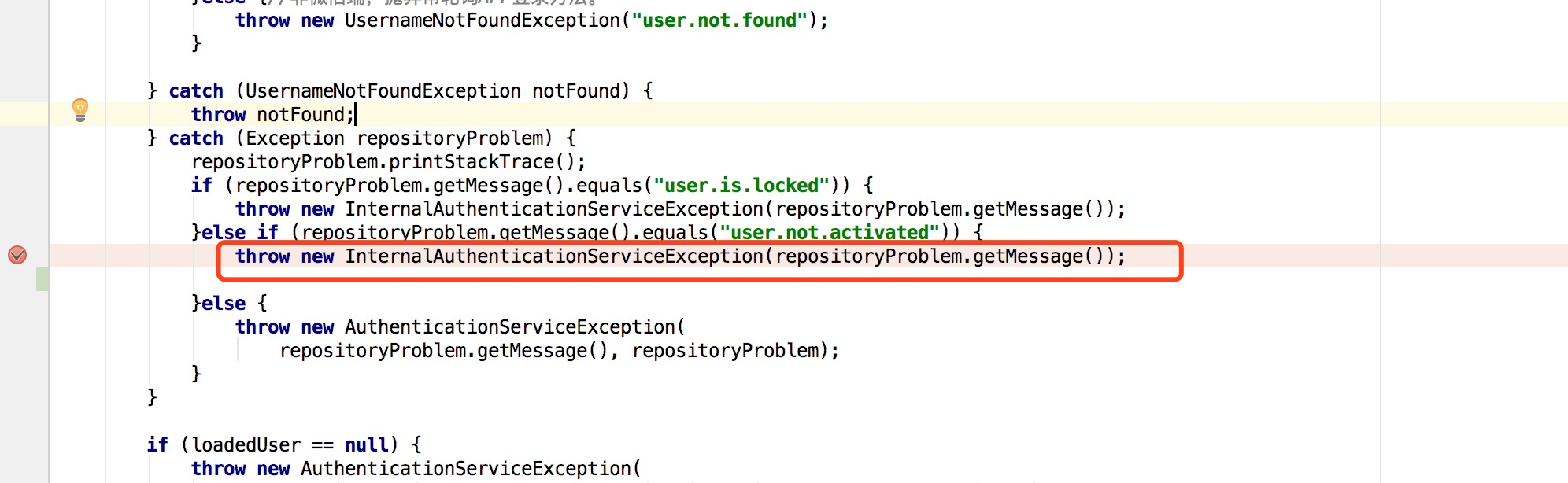
返回值:
{
    "error": "invalid_grant",
    "error_description": "user not activated"
}
这样提示信息看起来会更友好
所以验证失败后不一定要返回null,可以有更多选择