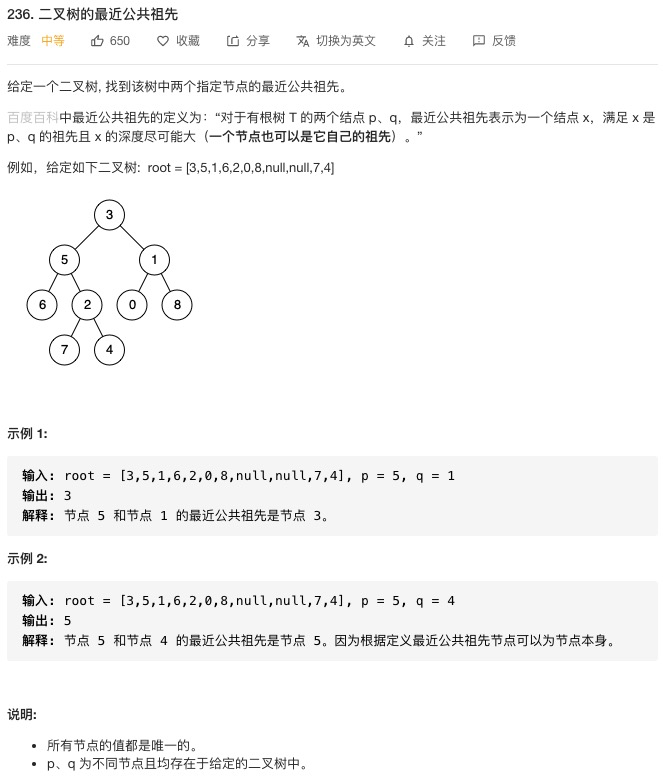
236. 二叉树的最近公共祖先
解题思路
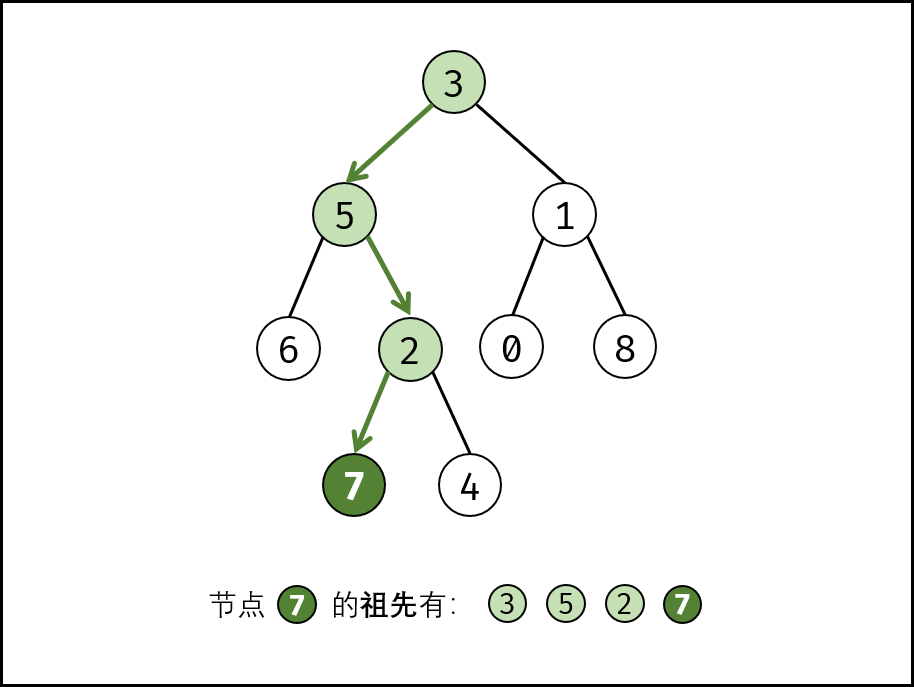
祖先的定义: 若节点 在节点
的左(右)子树中,或
,则称
是
的祖先。
最近公共祖先的定义: 设节点 为 节点
的某公共祖先,若其左子节点
和 右子节点
都不是
的公共祖先,则称
是 “最近的公共祖先”。
根据以上定义,若 是
的最近公共祖先,则只可能为以下情况之一:
和
在
的子树中,且分列
,且
,且
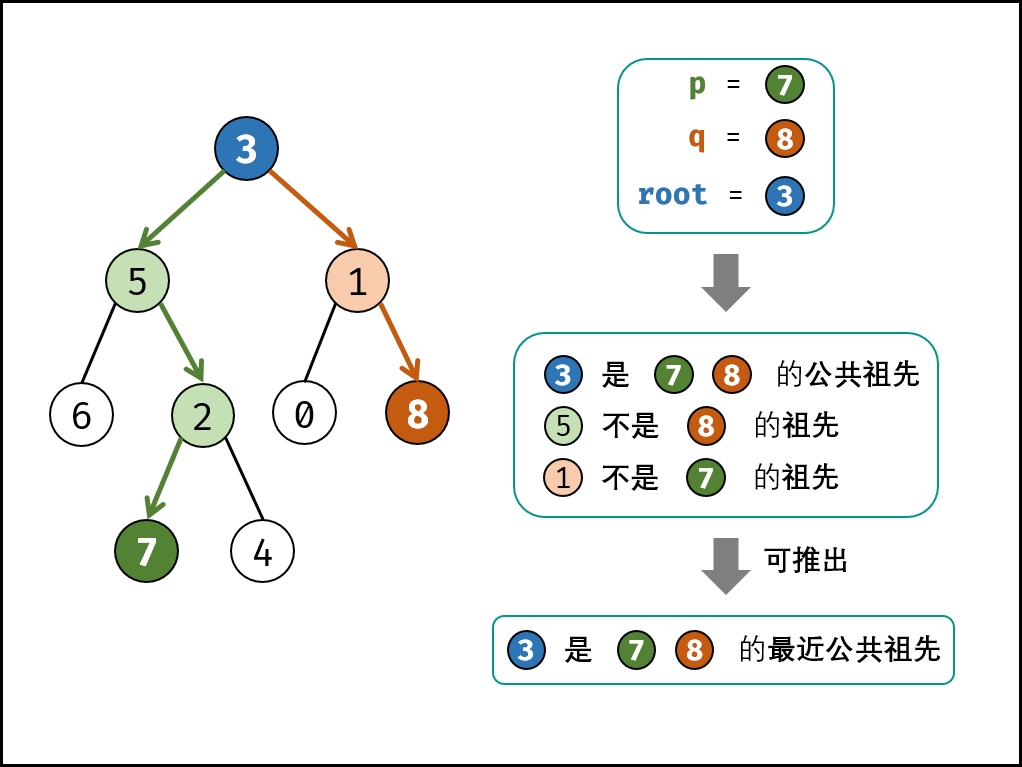
考虑通过递归对二叉树进行后序遍历,当遇到节点 p 或 q 时返回。从底至顶回溯,当节点 p、q 在节点 root 的异侧时,节点 root 即为最近公共祖先,则向上返回 root。
递归解析
- 终止条件
- 当越过叶节点,则直接返回
;
- 当
,则直接返回
- 递归工作
- 开启递归左子节点,返回值记为
;
- 开启递归右子节点,返回值记为
;
- 返回值:根据
- 当
,返回
- 当
- 当
- (1)
- (2)
- (1)
- 当
观察发现,情况1 可合并至 3 和 4 内。
参考代码
/**
 * Definition for a binary tree node.
 * public class TreeNode {
 *     int val;
 *     TreeNode left;
 *     TreeNode right;
 *     TreeNode(int x) { val = x; }
 * }
 */
class Solution {
    public TreeNode lowestCommonAncestor(TreeNode root, TreeNode p, TreeNode q) {
        if (root == null || root == p || root == q) return root;
        TreeNode left = lowestCommonAncestor(root.left, p, q);
        TreeNode right = lowestCommonAncestor(root.right, p, q);
        if(left == null) return right;
        if(right == null) return left;
        return root;
    }


    public TreeNode lowestCommonAncestor2(TreeNode root, TreeNode p, TreeNode q) {
        if(root == null || root == p || root == q) return root;
        TreeNode left = lowestCommonAncestor(root.left, p, q);
        TreeNode right = lowestCommonAncestor(root.right, p, q);
        if(left == null && right == null) return null; //1.
        if(left == null) return right; // 3.
        if(right == null) return left; // 4.
        return root; //2. if(left != null && right != null)
    }
}

部分图片来源于网络,版权归原作者,侵删。