封装fetch请求
目录的划分(utils,api)
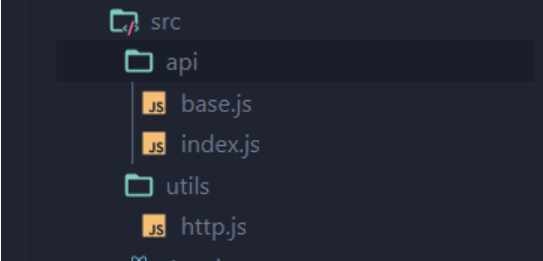
-
将网络请求分成两个部分
-
对于fetch的封装(utils/http.js)
const qs = require('querystring') export function get(url) { return fetch(url).then(res => res.json()) } export function post(url, prams) { prams = { method: 'post', headers: { 'Accept': 'application/json, text/plain, */*', 'content-type': 'application/x-www-form-urlencoded' }, //将参数转化为由&连接的字符串 body: qs.stringify(prams) } return fetch(url, prams).then(res => res.json()) } -
对于请求函数的封装,让其引入到组件中就能通过.then或async await就能调用,不用传递任何参数
-
对于路径的处理,放在api/base.js文件中
export default base = { // 这里是公共路径http://iwenwiki.com/api/blueberrypai/getChengpinInfo.php baseUrl: 'http://127.0.0.1', // 下面是该项目的子路径 // 例如商品路径 category: '/category' } -
对于请求函数的封装放在api/index.js文件中
import base from './base'
import {get, post} from '../utils/http'

/**
 * get方法只有一个url作为参数
 *
 * post方法参数一是url, 参数二是传递的数据(对象)
 */

// 这里是一些最终可用的网路请求函数

export function getCategory() {
  let url = base.baseUrl + base.category
  return get(url)
}


export function postCategory() {
  let url = base.baseUrl + base.category
  return get(url, {
    username: 'zh',
    age: '20'
  })
}
-
-