Netty 是 what?Netty 是一个异步框架。这是一句来自官网的介绍:
Netty is an asynchronous event-driven network application framework for rapid development of maintainable high performance protocol servers & clients.
Netty 是一个具备的特点是快速开发,事件驱动,网络应用框架,用于快速开发可维护的高性能协议服务端和客户端。
我们可以来看看架构图
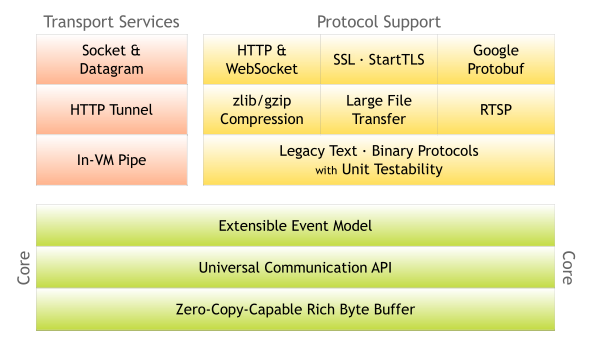
看起来很复杂。其实 Netty 在架构图分为三大块:Core,Protocol Support,Transport Services。
Core核心部分就是指它所用的架构特点:Zore-Copy / 通用 API / 可扩展的事件驱动模型Protocol Support指的是协议支持。这部分涵盖了序列化,大文件传输以及网络安全Transport Services指的是 Netty 提供关于七层网络中的传输层中可供开发使用的服务
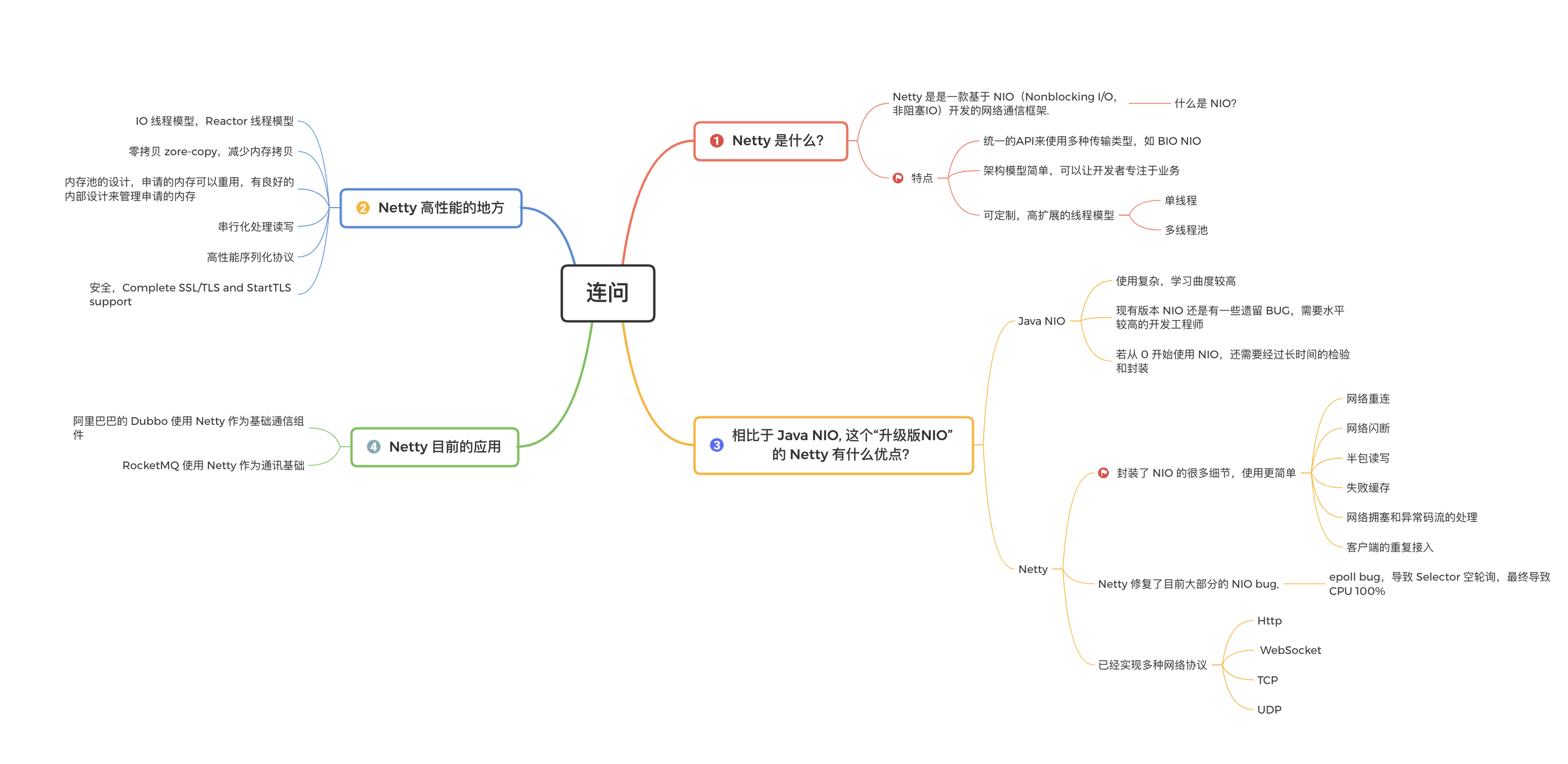
上面是一个概图,我画了一张关于 Netty 的一些优点图。
demo 搭建
依赖
以下我们先来搭建一个简单的 demo。首先是环境的准备,可以新建一个 Spring Boot 的项目,然后在 pom.xml 里面加入依赖:
    <dependencies>
        <dependency>
            <groupId>io.netty</groupId>
            <artifactId>netty-all</artifactId>
            <version>4.1.50.Final</version>
        </dependency>
    </dependencies>
服务端
首先是 TimeServer.java
public class TimeServer {
    public void bind(int port) throws Exception {
        //初始化两个 loopGroup
        EventLoopGroup bossGroup = new NioEventLoopGroup();
        EventLoopGroup workerGroup = new NioEventLoopGroup();

        try {
            //服务端初始化的 bookstrap
            ServerBootstrap s = new ServerBootstrap();
            //加载两个 loopGroup
            s.group(bossGroup, workerGroup)
                    .channel(NioServerSocketChannel.class)
                    .option(ChannelOption.SO_BACKLOG, 1024)
                    .childHandler(new ChildChannelHandler());
            //异步监听端口,同步等待关闭
            ChannelFuture f = s.bind(port).sync();
            f.channel().closeFuture().sync();
        }finally {
            //关闭两个 loopGroup
            bossGroup.shutdownGracefully();
            workerGroup.shutdownGracefully();
        }
    }

    public static void main(String[] args) throws Exception {
        int port = 8080;
        new TimeServer().bind(8080);
    }
}
上面的代码主要做几步
- 初始化两个
EventLoopGroup两个线程组。包含着一组NIO线程,专门用于网络事件的处理。(它们使用的Reactor模型) - 初始化服务器启动辅助配置类
ServerBootstrap,让你通过简单配置便可以启动 NIO 服务器。 - 设置
NioServerSocketChannel,对应了Java NIO的ServerSocketChannel。 - 设置
NioServerSocketChannel的TCP参数,设置backlog为 1024。 - 绑定
IO事件处理类ChildChannelHandler。
ChildChannelHandler 你可以简单粗暴理解为,这个是一个专门用于初始化子 handler 的地方,这样子的话看起来就整齐。我们仅仅需要在这里面加上需要初始化的 channelHandler 就行了。
public class ChildChannelHandler extends ChannelInitializer<SocketChannel> {

    protected void initChannel(SocketChannel socketChannel) throws Exception {
        //获取 channel 的 pipeline,这里仅仅加进尾端
        socketChannel.pipeline().addLast(new TimeServerHandler());
    }
}
Netty 是通过事件驱动的,所以上面的代码算是一个启动的配置文件。而 handler 是我们开发可以专注逻辑处理的地方。来看下 IO 事件的处理类 TimeServerHandler.java
public class TimeServerHandler extends ChannelInboundHandlerAdapter {
    @Override
    public void channelRead(ChannelHandlerContext ctx, Object msg) throws Exception {
        //转换成对应的 ByteBuf
        ByteBuf buf = (ByteBuf) msg;
        //设置长度
        byte[] req = new byte[buf.readableBytes()];
        //读取进 ByteBuf
        buf.readBytes(req);
        //转为字符串
        String body = new String(req, "UTF-8");
        System.out.println("the time server receive order : " + body);
        //查看客户端命令是不是 QUERY ... ORDER
        String currentTime = "QUERY TIME ORDER".equalsIgnoreCase(body)?
                new java.util.Date(System.currentTimeMillis()).toString():"BAD ORDER";
        //通过对currentTime 直接转为 ByteBuf
        ByteBuf resp = Unpooled.copiedBuffer(currentTime.getBytes());
        ctx.write(resp);
    }

    @Override
    public void channelReadComplete(ChannelHandlerContext ctx) throws Exception {
        ctx.flush();
    }

    @Override
    public void exceptionCaught(ChannelHandlerContext ctx, Throwable cause) throws Exception {
        ctx.close();
    }
}
上面主要实现了三个方法 channelRead,channelReadComplete,exceptionCaught。简单说一下,channelRead 是当有链接进来的时候,Netty 会将客户端请求数据作为参数调用的;channelReadComplete 是当 channel 都读取完数据后调用的周期方法;exceptionCaught 是当 channel 调用链发生异常的时候,Netty 也会将异常封装成 Throwable 然后在调用链上传递。
客户端
客户端和服务端类似,只不过客户端对于服务端是 1:n 的关系,客户端发送请求和处理请求仅仅是需要关心自己就行了,所以只需要一个 EventLoopGroup 来处理即可。
TimeClient.java
public class TimeClient {
    public void connect(int port, String host) {
        // 创建客户端处理 IO 读写的 NioEventLoopGroup 线程组
        EventLoopGroup group = new NioEventLoopGroup();
        try {
            // 创建客户端辅助启动类
            Bootstrap b = new Bootstrap();

            b.group(group).channel(NioSocketChannel.class)
                    .option(ChannelOption.TCP_NODELAY, true)
                    .handler(new ChannelInitializer<SocketChannel>() {
                        protected void initChannel(SocketChannel ch) throws Exception {
                            ch.pipeline().addLast(new TimeClientHandler());
                        }
                    });
            //调用connect发起异步请求,调用同步方法等待成功
            ChannelFuture f = b.connect(host, port).sync();
            f.channel().closeFuture().sync();
        }catch (Exception e ) {

        }finally {
            group.shutdownGracefully();
        }
    }


    public static void main(String[] args) {
        int port = 8080;
        new TimeClient().connect(port, "127.0.0.1");
    }
}
客户端与服务端的步骤类似,如
- 创建处理
IO读写的EventLoopGroup - 创建客户端启动配置辅助类
Bootstrap Bookstrap配置为NioSocketChannel.class- 添加处理
IO的处理器NioSocketChannel,并添加到ChannelPipeline。
我们来看看 TimeClientHandler 的实现逻辑。TimeClientHandler 和 TimeServerHandler 一样,仅仅是负责串行化处理从服务端返回的数据。
public class TimeClientHandler extends ChannelInboundHandlerAdapter {
    //日志记录
    private static final Logger logger = Logger.getLogger(TimeClientHandler.class.getName());

    private final ByteBuf firstMessage;

    //实例化,赋值 firstMessage
    public TimeClientHandler() {
        byte[] req = "QUERY TIME ORDER".getBytes();
        firstMessage = Unpooled.buffer(req.length);
        firstMessage.writeBytes(req);
    }

    @Override
    public void channelActive(ChannelHandlerContext ctx) throws Exception {
        ctx.writeAndFlush(firstMessage);
    }

    //当客户端和服务端tcp链路建立成功之后,netty的nio线程会调用channelActive方法
    @Override
    public void channelRead(ChannelHandlerContext ctx, Object msg) throws Exception {
        ByteBuf buf = (ByteBuf) msg;
        byte[] req = new byte[buf.readableBytes()];
        buf.readBytes(req);
        String body = new String(req, "UTF-8");
        System.out.println("now is : " + body);
    }

    @Override
    public void exceptionCaught(ChannelHandlerContext ctx, Throwable cause) throws Exception {
        logger.warning("unexpected exception from downstream: " + cause.getMessage());
        ctx.close();
    }
}
上面和 TimeServerHandler 类似,都是有 channelActive / channelRead / exceptionCaught。我们说一下 channelRead 里面的逻辑:
- 由于服务端是写入
ByteBuf的,客户端也是转变成ByteBuf - 将
ByteBuf读取进字节数组 - 通过
String来将字典数组以UTF-8编码格式转成字符串 - 输出字符串
结尾
其实这篇文章主要是记录一些 Netty 相对于 NIO 的一些优势点/高性能的原因,以及一个最简单的 demo 是如何跑出来的。但是其实我们还有很多东西都没用上的,例如说编解码/自定义序列化/如何理解零拷贝/半包读写等等。下篇文章会继续写我们在网络经常遇到的一个拦路石 - Netty 在 TCP 粘包/拆包的问题!