


Spring 容器之 Resource 和 ResourceLoader
这篇文章是填之前文章的坑来了,首先在 XmlBeanFactory 中,有这么一行代码 new XmlBeanFactory(new ClassPathResource("spring-bean.xml"));
其中的 new ClassPathResource("spring-bean.xml")没有解释,这就是 spring 中的Resource。
其次,在 DefaultListableBeanFactory 中,new XmlBeanDefinitionReader(factory),中完成了对 ResourceLoader 的初始化,所谓的 ResourceLoader
就是对 Spring 资源加载的统一抽象。
在这篇文章中,对 Spring 中的资源,与资源的加载做一个统一学习。
Resource
Spring 把其资源做了一个抽象,底层使用统一的资源访问接口来访问 Spring 的所有资源。
也就是说,不管什么格式的文件,也不管文件在哪里,到 Spring 底层,都只有一个访问接口,Resource。
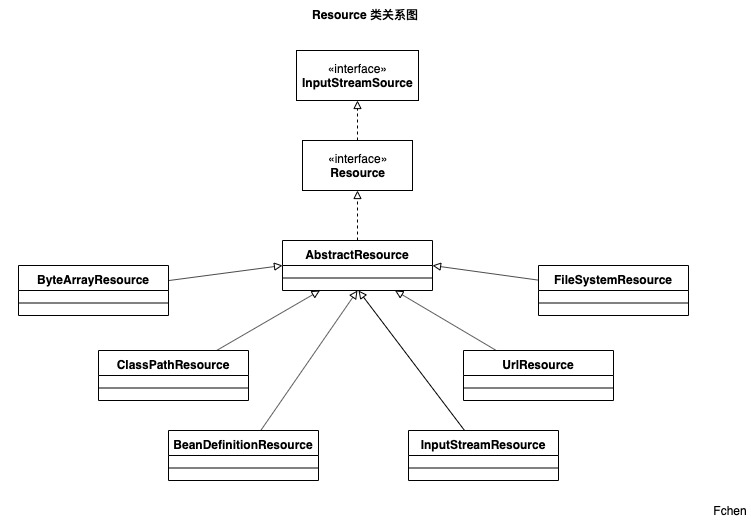 其中 AbstractResource 为 Resource 的默认实现。
- InputStreamSource 封装任何返货 InputStream 的类,比如 File,Classpath 下的资源和 Byte,Array 等。
- Resource 接口抽象了所有 Spring 内部使用到的底层资源:File,URL,Classpath 等。
- ClassPathResource 用来加载 classpath 类型资源的实现。使用给定的 ClassLoader 或者给定的 Class 来加载资源。
- ByteArrayResource 对字节数组提供的数据的封装。
- FileSystemResource 文件相关。
- UrlResource url 资源的加载。
ClassPathResource 的类关系图
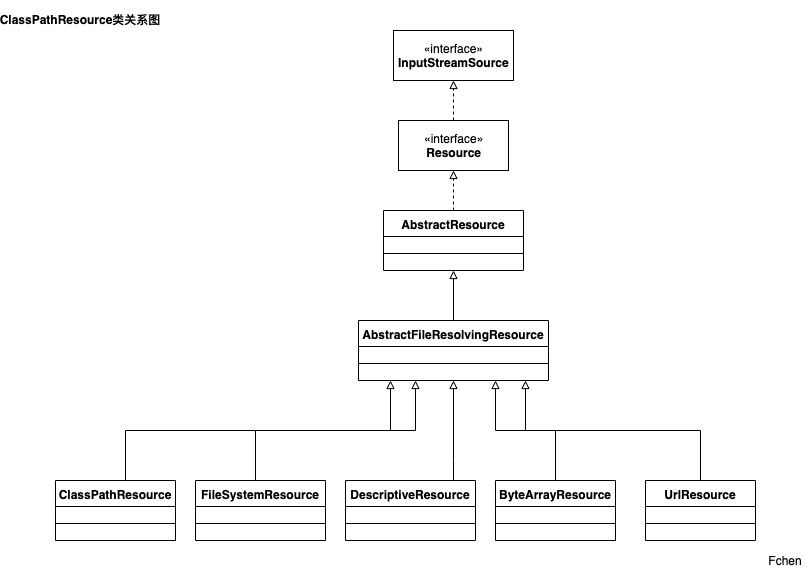
AbstractResource 源码实现:
public abstract class AbstractResource implements Resource {

 /**
  * 判断文件是否存在,若判断过程产生异常(因为会调用SecurityManager来判断),就关闭对应的流
  */
 @Override
 public boolean exists() {
  // Try file existence: can we find the file in the file system?
  try {
   return getFile().exists();
  }
  catch (IOException ex) {
   // Fall back to stream existence: can we open the stream?
   try {
    getInputStream().close();
    return true;
   }
   catch (Throwable isEx) {
    return false;
   }
  }
 }

 /**
  * 这个重写的方法始终返回true,表示可读
  */
 @Override
 public boolean isReadable() {
  return exists();
 }

 /**
  * 这个重写方法始终返回false,表示没有打开
  */
 @Override
 public boolean isOpen() {
  return false;
 }

 /**
  * 这个从写的方法始终返回false,表示不是一个文件
  */
 @Override
 public boolean isFile() {
  return false;
 }

 /**
  * 抛出 FileNotFoundException 异常
  */
 @Override
 public URL getURL() throws IOException {
  throw new FileNotFoundException(getDescription() + " cannot be resolved to URL");
 }

 /**
  * 基于 getURL() 返回的 URL 构建 URI
  */
 @Override
 public URI getURI() throws IOException {
  URL url = getURL();
  try {
   return ResourceUtils.toURI(url);
  }
  catch (URISyntaxException ex) {
   throw new NestedIOException("Invalid URI [" + url + "]", ex);
  }
 }

 /**
  * 抛出 FileNotFoundException 异常,交给子类实现
  */
 @Override
 public File getFile() throws IOException {
  throw new FileNotFoundException(getDescription() + " cannot be resolved to absolute file path");
 }

 /**
  * 根据 getInputStream() 的返回结果构建 ReadableByteChannel
  */
 @Override
 public ReadableByteChannel readableChannel() throws IOException {
  return Channels.newChannel(getInputStream());
 }

 /**
  * 获取资源的长度
  * 这个资源内容长度实际就是资源的字节长度,通过全部读取一遍来判断
  */
 @Override
 public long contentLength() throws IOException {
  InputStream is = getInputStream();
  try {
   long size = 0;
   byte[] buf = new byte[256];
   int read;
   while ((read = is.read(buf)) != -1) {
    size += read;
   }
   return size;
  }
  finally {
   try {
    is.close();
   }
   catch (IOException ex) {
   }
  }
 }

 /**
  * 返回资源最后的修改时间
  */
 @Override
 public long lastModified() throws IOException {
  File fileToCheck = getFileForLastModifiedCheck();
  long lastModified = fileToCheck.lastModified();
  if (lastModified == 0L && !fileToCheck.exists()) {
   throw new FileNotFoundException(getDescription() +
     " cannot be resolved in the file system for checking its last-modified timestamp");
  }
  return lastModified;
 }

 protected File getFileForLastModifiedCheck() throws IOException {
  return getFile();
 }

 @Override
 public Resource createRelative(String relativePath) throws IOException {
  throw new FileNotFoundException("Cannot create a relative resource for " + getDescription());
 }

 /**
  * 获取资源名称,默认返回 null
  */
 @Override
 @Nullable
 public String getFilename() {
  return null;
 }

 @Override
 public boolean equals(Object other) {
  return (this == other || (other instanceof Resource &&
    ((Resource) other).getDescription().equals(getDescription())));
 }

 @Override
 public int hashCode() {
  return getDescription().hashCode();
 }

 @Override
 public String toString() {
  return getDescription();
 }

}
ResourceLoader
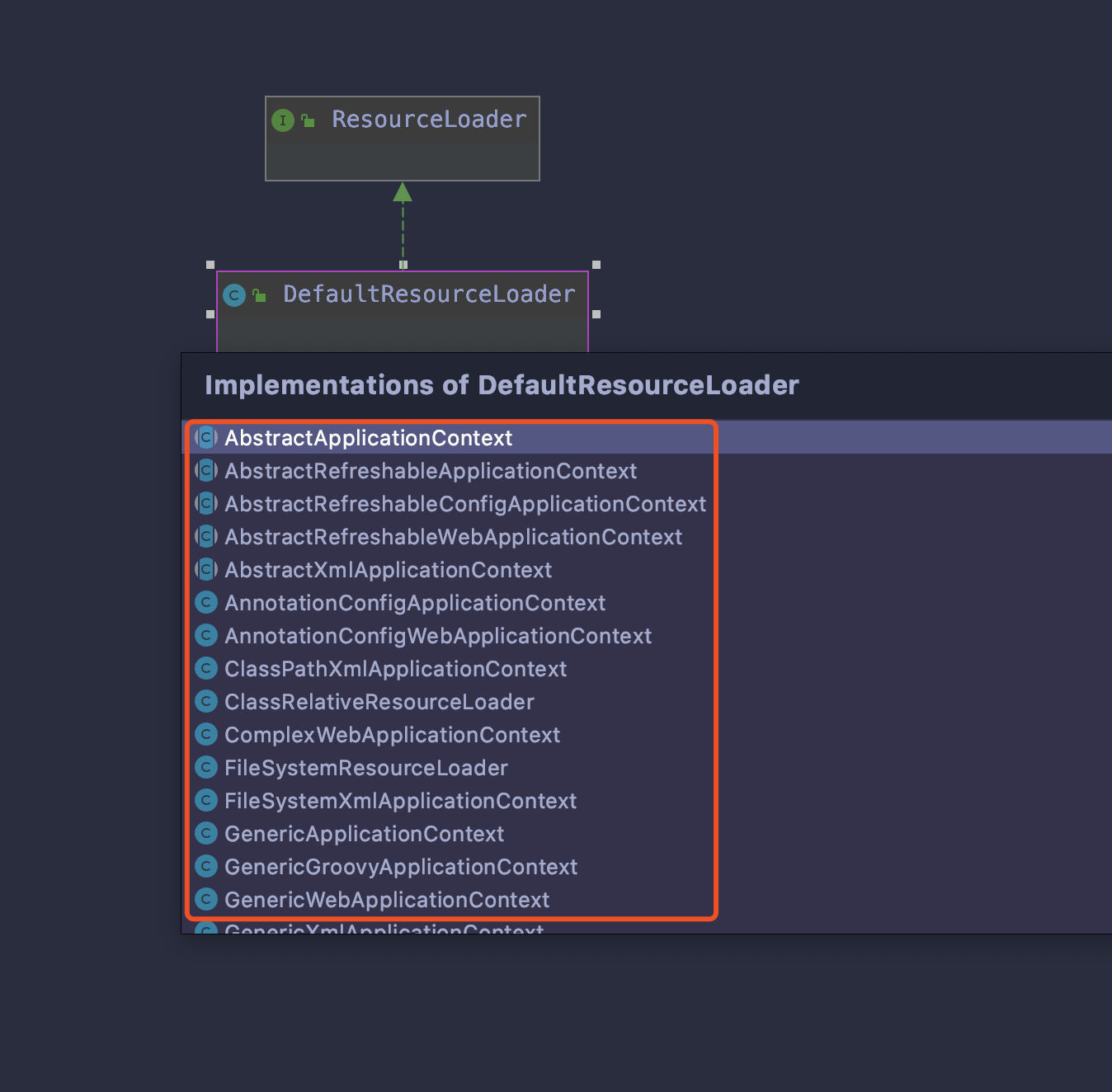
。我们还是从ResourceLoader的类图入手,
可以看到 DefaultResourceLoader 为 ResourceLoader 默认实现。然后 ResourceLoader 为所有 Spring IoC 容器的父接口。这也就说明
所有的 IOC 容器都是具有加载资源的能力。
下面再来看看 ResourceLoader 与 DefaultResourceLoader 中的代码:
ResourceLoader 源码方法
public interface ResourceLoader {

 /** 用于从类路径加载的伪URL前缀: "classpath:" */
 String CLASSPATH_URL_PREFIX = ResourceUtils.CLASSPATH_URL_PREFIX;

 /**
  * 根据所提供资源的路径 location 返回 Resource 实例
  */
 Resource getResource(String location);

 /**
  * 返回 ClassLoader 实例,对于想要获取 ResourceLoader
  * 使用的 ClassLoader 用户来说,可以直接调用该方法来获取
  */
 @Nullable
 ClassLoader getClassLoader();

}
ResourceLoader 默认实现
public class DefaultResourceLoader implements ResourceLoader {

 @Nullable
 private ClassLoader classLoader;

 private final Set<ProtocolResolver> protocolResolvers = new LinkedHashSet<>(4);

 private final Map<Class<?>, Map<Resource, ?>> resourceCaches = new ConcurrentHashMap<>(4);


 /**
  * 创建默认的 ClassLoader
  */
 public DefaultResourceLoader() {
  this.classLoader = ClassUtils.getDefaultClassLoader();
 }

 /**
  * 创建默认的 ClassLoader,将传入的 ClassLoader 赋值给变量
  */
 public DefaultResourceLoader(@Nullable ClassLoader classLoader) {
  this.classLoader = classLoader;
 }

 public void setClassLoader(@Nullable ClassLoader classLoader) {
  this.classLoader = classLoader;
 }

 @Override
 @Nullable
 public ClassLoader getClassLoader() {
  return (this.classLoader != null ? this.classLoader : ClassUtils.getDefaultClassLoader());
 }

 /**
  * 添加protocolResolvers
  */
 public void addProtocolResolver(ProtocolResolver resolver) {
  Assert.notNull(resolver, "ProtocolResolver must not be null");
  this.protocolResolvers.add(resolver);
 }

 public Collection<ProtocolResolver> getProtocolResolvers() {
  return this.protocolResolvers;
 }

 @SuppressWarnings("unchecked")
 public <T> Map<Resource, T> getResourceCache(Class<T> valueType) {
  return (Map<Resource, T>) this.resourceCaches.computeIfAbsent(valueType, key -> new ConcurrentHashMap<>());
 }

 public void clearResourceCaches() {
  this.resourceCaches.clear();
 }

 /**
  * 取得Resource 的具体过程
  * @param location the resource location
  * @return
  */
 @Override
 public Resource getResource(String location) {
  Assert.notNull(location, "Location must not be null");

  for (ProtocolResolver protocolResolver : getProtocolResolvers()) {
   // 看有没有自定义的ProtocolResolver,
   // 如果有则先根据自定义的ProtocolResolver解析location得到Resource
   Resource resource = protocolResolver.resolve(location, this);
   if (resource != null) {
    return resource;
   }
  }

  if (location.startsWith("/")) {
   return getResourceByPath(location);
  }
  /* 处理带有classpath 表示的Resource*/
  else if (location.startsWith(CLASSPATH_URL_PREFIX)) {
   return new ClassPathResource(location.substring(CLASSPATH_URL_PREFIX.length()), getClassLoader());
  }
  else {
   try {
    // Try to parse the location as a URL...
    /* 处理URL 标识的Resource 定位*/
    URL url = new URL(location);
    return (ResourceUtils.isFileURL(url) ? new FileUrlResource(url) : new UrlResource(url));
   }
   catch (MalformedURLException ex) {
    // No URL -> resolve as resource path.
    /*
     * 如果既不是classpath,也不是URL标识的Resource定位,则把getResource的
     * 重任交给getResourcePath(),这个是一个 protected 的方法,默认的实现是
     * 得到一个 ClassPathContextResource,这个方法常常会用子类来实现
     * 例如: FileSystemXmlApplicationContext#getResourceByPath()
     */
    return getResourceByPath(location);
   }
  }
 }

 protected Resource getResourceByPath(String path) {
  return new ClassPathContextResource(path, getClassLoader());
 }


 /**
  * 通过实现ContextResource接口 明确表示下文相关路径的ClassPathResource,此方法重点在于实现ContextResource
  */
 protected static class ClassPathContextResource extends ClassPathResource implements ContextResource {

  // 通过调用父类的构造方法创建
  public ClassPathContextResource(String path, @Nullable ClassLoader classLoader) {
   super(path, classLoader);
  }

  @Override
  public String getPathWithinContext() {
   return getPath();
  }

  @Override
  public Resource createRelative(String relativePath) {
   String pathToUse = StringUtils.applyRelativePath(getPath(), relativePath);
   return new ClassPathContextResource(pathToUse, getClassLoader());
  }
 }
}
ResourceLoader 的扩展
ResourceLoader 用来加载 Spring 定义的资源,DefaultResourceLoader 是ResourceLoader默认的实现 ResourcePatternResolver
是 ResourceLoader 的扩展,它支持根据指定的资源路径匹配模式每次返回多个 Resource 实例。PathMatchingResourcePatternResolver 为
ResourcePatternResolver 最常用的子类,它除了支持 ResourceLoader 和 ResourcePatternResolver 新增的 classpath*: 前缀外,
还支持 Ant 风格的路径匹配模式(类似于 **/*.xml)。
PathMatchingResourcePatternResolver 是ResourceLoader 的子类实现,同样他的作用是用来加载资源Resource。通过 PathMatchingResourcePatternResolver
的构造方法可以看出,ResourceLoader的初始化,如果与传入则用传入对象完成初始化。没有传入则采用默认的子类实现。代码如下:
public PathMatchingResourcePatternResolver() {
 // 使用无参 构造器 指定使用DefaultResourceLoader
 this.resourceLoader = new DefaultResourceLoader();
}

public PathMatchingResourcePatternResolver(ResourceLoader resourceLoader) {
 Assert.notNull(resourceLoader, "ResourceLoader must not be null");
 // 若指定了 ResourceLoader 则使用指定的
 this.resourceLoader = resourceLoader;
}

public PathMatchingResourcePatternResolver(@Nullable ClassLoader classLoader) {
 // 指定类加载器的 通过给定的类加载器完成 ResourceLoader 的实例化
 this.resourceLoader = new DefaultResourceLoader(classLoader);
}
PathMatchingResourcePatternResolver 是用来加载资源的,通过下面的代码来看看,它是如何得到 Resource的:
通过初始化话的 ResourceLoader 获取单个 Resource。
@Override
 public Resource getResource(String location) {
  // 委托给初始化的ResourceLoader 获取资源
  return getResourceLoader().getResource(location);
 }
下面这个方法获取到的是 Resource[]:
 @Override
 public Resource[] getResources(String locationPattern) throws IOException {
  Assert.notNull(locationPattern, "Location pattern must not be null");
  // 以 classpath*: 开头
  if (locationPattern.startsWith(CLASSPATH_ALL_URL_PREFIX)) {
   // 路径包含通配符
   if (getPathMatcher().isPattern(locationPattern.substring(CLASSPATH_ALL_URL_PREFIX.length()))) {
    // a class path resource pattern
    return findPathMatchingResources(locationPattern);
   }
   else {
    // 路径不包含通配符
    return findAllClassPathResources(locationPattern.substring(CLASSPATH_ALL_URL_PREFIX.length()));
   }
  }
  else {
   int prefixEnd = (locationPattern.startsWith("war:") ? locationPattern.indexOf("*/") + 1 :
     locationPattern.indexOf(':') + 1);
   // 路径包含通配符
   if (getPathMatcher().isPattern(locationPattern.substring(prefixEnd))) {
    return findPathMatchingResources(locationPattern);
   }
   else {
    // a single resource with the given name
    return new Resource[] {getResourceLoader().getResource(locationPattern)};
   }
  }
 }
找到 classes 路径下和所有 jar 包中的所有相匹配的资源
 protected Resource[] findAllClassPathResources(String location) throws IOException {
  String path = location;
  // 路径中以 "/" 开头 将 "/" 去掉
  if (path.startsWith("/")) {
   path = path.substring(1);
  }
  // 这里是真正的方法
  Set<Resource> result = doFindAllClassPathResources(path);
  if (logger.isTraceEnabled()) {
   logger.trace("Resolved classpath location [" + location + "] to resources " + result);
  }
  return result.toArray(new Resource[0]);
 }
真正加载 Resource的地方,这也符合 Spring 一以贯之的风格,真正做事的方法都是 doXXX来完成的。
 protected Set<Resource> doFindAllClassPathResources(String path) throws IOException {
  Set<Resource> result = new LinkedHashSet<>(16);
  // 获取 classLoader
  ClassLoader cl = getClassLoader();
  // //通过classloader来加载资源目录,这里也会去找寻classpath路径下的jar包或者zip包
  Enumeration<URL> resourceUrls = (cl != null ? cl.getResources(path) : ClassLoader.getSystemResources(path));
  while (resourceUrls.hasMoreElements()) {
   URL url = resourceUrls.nextElement();
   // 将找到的路径转化为 Resource 对象并添加到 Set 集合中
   result.add(convertClassLoaderURL(url));
  }
  if ("".equals(path)) {
   // The above result is likely to be incomplete, i.e. only containing file system references.
   // We need to have pointers to each of the jar files on the classpath as well...
   // 加载jar协议的资源
   addAllClassLoaderJarRoots(cl, result);
  }
  return result;
 }
本文使用 mdnice 排版
