

今天说说MyBatis3和iBatis2。大家现在正常的项目都应该使用MyBatis3了。动态代理的Mapper机制,只要考虑3个要素(xxxMapper.java, xxxMapper.xml, xxxPojo.java),完全面向对象的开发方式,用起来相当爽。更重要的是,还有Mybatis Generator工具可以自动生成DAO层。
在MyBatis3之前还有iBatis2,有些比较年轻的程序员可能都没有用过这个东西。有些比较老的工程可能还在用,我之前在某银行的时候就用iBatis2,写到DAO层就想睡觉。吐槽下iBatis2开发恶心的地方。
- 表的映射配置,表很大,如果有20个字段。都得逐个copy(调试的时候就怕哪个字段错了)
- sql的id是随便起名字的,表与表之前也没有严格的sql范围划分。
- 写调用代码时是面向过程的,queryForObject出来的对象需要强制转换。
- java代码中各种硬编码
- 大家为了当下省事,在调用时常常使用map进,map出。特别难看
iBatis2的示意代码
public Student findStudentById(int studentId) {
		SqlMapClient sqlMapClient = MyBatisUtil.getSqlSqlMapClient();
		SqlMapSession sqlMapSession = sqlMapClient.openSession();
		try {
			Student student = (Student) sqlMapSession.queryForObject("student.queryByPrimaryKey", studentId);
		} finally {
			sqlMapSession.close();
		}
	}
MyBatis的示意代码
public Student findStudentById(int studentId) {
  SqlSession sqlSession = MyBatisUtil.getSqlSession();
  try {
    StudentMapper studentMapper = sqlSession.getMapper(StudentMapper.class);
    Student student = studentMapper.queryByPrimaryKey(studentId);
    return student;
  } finally {
    sqlSession.close();
  }
}
对比之后会发现MyBatis是面向对象的,使用Mapper机制,可以使得表之前的sql有一定的隔离。入参和出餐都可以尽量使用面向对象的方式。硬编码也没有了。
苦逼程序员在代码还得写,ibatis2还得用,怎么办?能不能在ibatis2基础上做一个适配层,使得我们在业务代码中可以像使用MyBatis3一样面向对象的方式去使用ibatis2呢?
答案当然是可以,要不然我也不会写这文章了。不仅可以像MyBatis3一样调用,连MyBatis Generator的自动生成器也可以拿过来改吧改吧适配iBatis2。下面我们来详细说说。
要干此事的前提是,要先了解MyBatis3在Mapper映射部分的原理。
MyBatis3 源代码分析
Mapper机制从流程上分为3个步骤
1.启动时做初始化动作
2.运行时使用getMapper方法生成动态代理
3.调用sql执行过程(这部分的核型实际与iBatis差不多)
Mapper机制初始化
系统启动首先会初始化Configuration,我们从Configuration的初始化位置开始看。请先找到XMLConfigBuilder类。
  public Configuration parse() {
    if (parsed) {
      throw new BuilderException("Each XMLConfigBuilder can only be used once.");
    }
    parsed = true;
    parseConfiguration(parser.evalNode("/configuration"));
    return configuration;
  }
这段方法,是xml解析过程。重点关注parseConfiguration。
private void parseConfiguration(XNode root) {
    try {
      // 此处省略部分代码
      mapperElement(root.evalNode("mappers"));
    } catch (Exception e) {
      throw new BuilderException("Error parsing SQL Mapper Configuration. Cause: " + e, e);
    }
  }
继续跟进mapperElement
private void mapperElement(XNode parent) throws Exception {
    if (parent != null) {
      for (XNode child : parent.getChildren()) {
        		// 此处省略部分代码
            configuration.addMapper(mapperInterface);
          } else {
            throw new BuilderException("A mapper element may only specify a url, resource or class, but not more than one.");
          }
        }
      }
    }
  }
继续跟进configuration.addMapper(mapperInterface);一路可以跟进到MapperRegistry类
  public void addMappers(String packageName) {
    addMappers(packageName, Object.class);
  }
这个方法是要加载某个包下面的所有xxxMapper.java(也就是我们所写的比如UserMapper.java,这种DAO行为接口),为后续运行时生成动态代理类做准备。(我们在业务代码中常写的sqlSession.getMapper方法,就是在生成动态代理)
public class MapperRegistry {

  private final Map<Class<?>, MapperProxyFactory<?>> knownMappers = new HashMap<Class<?>, MapperProxyFactory<?>>();

	public <T> void addMapper(Class<T> type) {
    if (type.isInterface()) {
      if (hasMapper(type)) {
        throw new BindingException("Type " + type + " is already known to the MapperRegistry.");
      }
      boolean loadCompleted = false;
      try {
        // knownMappers<Mapper接口类型, Mapper代理的工场对象>
        // 初始化时,会把这些东西缓存起来。为后续生成动态代理做准备。
        knownMappers.put(type, new MapperProxyFactory<T>(type));
        MapperAnnotationBuilder parser = new MapperAnnotationBuilder(config, type);
        parser.parse();
        loadCompleted = true;
      } finally {
        if (!loadCompleted) {
          knownMappers.remove(type);
        }
      }
    }
  }
}
关注下knownMappers,这里面的key和value分别是<Mapper接口类型, Mapper代理的工场对象>
初始化时,会把这些东西缓存起来。为后续生成动态代理做准备。
使用getMapper方法生成动态代理
还是在MapperRegistry类中,调用getMapper方法生成动态代理类。关于动态代理不太熟悉的同学,可以相关设计模式,这个模式非常重要。
public <T> T getMapper(Class<T> type, SqlSession sqlSession) {
    final MapperProxyFactory<T> mapperProxyFactory = (MapperProxyFactory<T>) knownMappers.get(type);
    if (mapperProxyFactory == null) {
      throw new BindingException("Type " + type + " is not known to the MapperRegistry.");
    }
    try {
      // 生成动态代理
      return mapperProxyFactory.newInstance(sqlSession);
    } catch (Exception e) {
      throw new BindingException("Error getting mapper instance. Cause: " + e, e);
    }
  }
再来追踪下MapperProxyFactory,我把其中不太重要的部分去掉了
public class MapperProxyFactory<T> {

  private final Class<T> mapperInterface;
  private final Map<Method, MapperMethod> methodCache = new ConcurrentHashMap<Method, MapperMethod>();

  // 去掉了一些不太重要的部分代码

  @SuppressWarnings("unchecked")
  protected T newInstance(MapperProxy<T> mapperProxy) {
    // 实际使用了JDK的动态代理,接口类型就是初始化时候放进knownMappers中的某一个。
    // 具体类型是在getMapper的时候传入的。
    return (T) Proxy.newProxyInstance(mapperInterface.getClassLoader(), new Class[] { mapperInterface }, mapperProxy);
  }

  public T newInstance(SqlSession sqlSession) {
    final MapperProxy<T> mapperProxy = new MapperProxy<T>(sqlSession, mapperInterface, methodCache);
    return newInstance(mapperProxy);
  }

}
实际使用了JDK的动态代理,接口类型就是初始化时候放进knownMappers中的某一个。具体类型是在getMapper的时候传入的。具体我们再回顾下上面那个MyBatis的调用案例。
MyBatis的示意代码
public Student findStudentById(int studentId) {
  SqlSession sqlSession = MyBatisUtil.getSqlSession();
  try {
    StudentMapper studentMapper = sqlSession.getMapper(StudentMapper.class);
    Student student = studentMapper.queryByPrimaryKey(studentId);
    return student;
  } finally {
    sqlSession.close();
  }
}
从这边可以看到。在调用getMapper时,会传入StudentMapper接口的类型。MyBatis会为这个接口生成动态代理类。下面我们看看这个动态代理实际执行了什么操作。找到MapperProxy类
public class MapperProxy<T> implements InvocationHandler, Serializable {

  private static final long serialVersionUID = -6424540398559729838L;
  private final SqlSession sqlSession;
  private final Class<T> mapperInterface;
  private final Map<Method, MapperMethod> methodCache;

  public MapperProxy(SqlSession sqlSession, Class<T> mapperInterface, Map<Method, MapperMethod> methodCache) {
    this.sqlSession = sqlSession;
    this.mapperInterface = mapperInterface;
    this.methodCache = methodCache;
  }

  // 重点关注这个invoke方法
  @Override
  public Object invoke(Object proxy, Method method, Object[] args) throws Throwable {
    // 去掉了一些不太重要的部分代码
    final MapperMethod mapperMethod = cachedMapperMethod(method);// 这边先看看缓存
    return mapperMethod.execute(sqlSession, args);
  }
	// 去掉了一些不太重要的部分代码
}
在业务代码中调用任何一个sql方法,比如selectByPrimaryKey()都会来到这个invoke方法中。我们继续追踪mapperMethod.execute方法
public Object execute(SqlSession sqlSession, Object[] args) {
    Object result;
    switch (command.getType()) {
      case INSERT: {
    	Object param = method.convertArgsToSqlCommandParam(args);
        result = rowCountResult(sqlSession.insert(command.getName(), param));
        break;
      }
      case UPDATE: {
        Object param = method.convertArgsToSqlCommandParam(args);
        result = rowCountResult(sqlSession.update(command.getName(), param));
        break;
      }
      case DELETE: {
        Object param = method.convertArgsToSqlCommandParam(args);
        result = rowCountResult(sqlSession.delete(command.getName(), param));
        break;
      }
      case SELECT:
        if (method.returnsVoid() && method.hasResultHandler()) {
          executeWithResultHandler(sqlSession, args);
          result = null;
        } else if (method.returnsMany()) {
          result = executeForMany(sqlSession, args);
        } else if (method.returnsMap()) {
          result = executeForMap(sqlSession, args);
        } else if (method.returnsCursor()) {
          result = executeForCursor(sqlSession, args);
        } else {
          Object param = method.convertArgsToSqlCommandParam(args);
          result = sqlSession.selectOne(command.getName(), param);
        }
        break;
      case FLUSH:
        result = sqlSession.flushStatements();
        break;
      default:
        throw new BindingException("Unknown execution method for: " + command.getName());
    }
    if (result == null && method.getReturnType().isPrimitive() && !method.returnsVoid()) {
      throw new BindingException("Mapper method '" + command.getName()
          + " attempted to return null from a method with a primitive return type (" + method.getReturnType() + ").");
    }
    return result;
  }
看到上面这个方法,大家应该会明白了。到这边,所有的方法都会根据command.getType(),分化为insert,update,delete,select这4个元操作。
接下来的调用代码就不再这边继续分析了。感兴趣的同学可以继续更进。
到此,我们总结下,适配iBatis2的关键在与MapperMethod.execute这个方法。只需要在这里面实现增删改查4种元操作的时候,调用上iBatis2对应的4中元处理操作,这适配器不就对接上了么。
我们需要新建6个关键的类。分别是:
第一部分:MapperMethod,MapperProxy,MapperProxyFactory,MapperRegistry。这4个类基本是从MyBatis3中直接照搬过来。连类名都一模一样。
第二部分:SqlSession,SqlSessionDefault。这2个类是我们对iBatis2中SqlMapClient, SqlMapSession所做的适配器。这边完全使用了适配器模式。
好,我们先来看看SqlSession。
public interface SqlSession extends SqlMapClient, SqlMapSession {

	<T> T getMapper(Class<T> type); // 模式MyBatis3中的getMapper方法

	SqlMapExecutorDelegate getDelegate();// 是一个执行器,ibatis2需要用到
}
一共2个行为:
1.getMapper,模式MyBatis3中的getMapper方法
2.getDelegate,是一个执行器,ibatis2需要用到
然后看下SqlSession的实现类SqlSessionDefault
public class SqlSessionDefault implements SqlSession {

	private SqlMapClient sqlMapClient; // 持有目标类的执行器

	private MapperRegistry mapperRegistry;

	private SqlMapExecutorDelegate delegate;

  // 本地线程做缓存
	private ThreadLocal<SqlMapSession> localSqlMapSession = new ThreadLocal<>();

	public SqlSessionDefault(SqlMapClient sqlMapClient, MapperRegistry mapperRegistry) {
		this.sqlMapClient = sqlMapClient;
		this.mapperRegistry = mapperRegistry;
		this.delegate = ((ExtendedSqlMapClient) this.sqlMapClient).getDelegate();
	}

	@Override
	public SqlMapSession openSession() {
		return sqlMapClient.openSession();
	}

	@Override
	public SqlMapSession openSession(Connection conn) {
		return sqlMapClient.openSession(conn);
	}

	@Override
	public SqlMapSession getSession() {
		return this.getLocalSqlMapSession();
	}

	@Override
	public void flushDataCache() {
		delegate.flushDataCache();
	}

	@Override
	public void flushDataCache(String cacheId) {
		delegate.flushDataCache(cacheId);
	}

	@Override
	public Object insert(String id, Object parameterObject) throws SQLException {
		return this.getLocalSqlMapSession().insert(id, parameterObject);
	}

	@Override
	public Object insert(String id) throws SQLException {
		return this.getLocalSqlMapSession().insert(id);
	}

	@Override
	public int update(String id, Object parameterObject) throws SQLException {
		return this.getLocalSqlMapSession().update(id, parameterObject);
	}

	@Override
	public int update(String id) throws SQLException {
		return this.getLocalSqlMapSession().update(id);
	}

	@Override
	public int delete(String id, Object parameterObject) throws SQLException {
		return this.getLocalSqlMapSession().delete(id, parameterObject);
	}

	@Override
	public int delete(String id) throws SQLException {
		return this.getLocalSqlMapSession().delete(id);
	}

	@Override
	public Object queryForObject(String id, Object parameterObject) throws SQLException {
		return this.getLocalSqlMapSession().queryForObject(id, parameterObject);
	}

	@Override
	public Object queryForObject(String id) throws SQLException {
		return this.getLocalSqlMapSession().queryForObject(id);
	}

	@Override
	public Object queryForObject(String id, Object parameterObject, Object resultObject) throws SQLException {
		return this.getLocalSqlMapSession().queryForObject(id, parameterObject, resultObject);
	}

	@Override
	public List queryForList(String id, Object parameterObject) throws SQLException {
		return this.getLocalSqlMapSession().queryForList(id, parameterObject);
	}

	@Override
	public List queryForList(String id) throws SQLException {
		return this.getLocalSqlMapSession().queryForList(id);
	}

	@Override
	public List queryForList(String id, Object parameterObject, int skip, int max) throws SQLException {
		return this.getLocalSqlMapSession().queryForList(id, parameterObject, skip, max);
	}

	@Override
	public List queryForList(String id, int skip, int max) throws SQLException {
		return this.getLocalSqlMapSession().queryForList(id, skip, max);
	}

	@Override
	public void queryWithRowHandler(String id, Object parameterObject, RowHandler rowHandler) throws SQLException {
		this.getLocalSqlMapSession().queryWithRowHandler(id, parameterObject, rowHandler);
	}

	@Override
	public void queryWithRowHandler(String id, RowHandler rowHandler) throws SQLException {
		this.getLocalSqlMapSession().queryWithRowHandler(id, rowHandler);
	}

	@Override
	public PaginatedList queryForPaginatedList(String id, Object parameterObject, int pageSize) throws SQLException {
		return this.getLocalSqlMapSession().queryForPaginatedList(id, parameterObject, pageSize);
	}

	@Override
	public PaginatedList queryForPaginatedList(String id, int pageSize) throws SQLException {
		return this.getLocalSqlMapSession().queryForPaginatedList(id, pageSize);
	}

	@Override
	public Map queryForMap(String id, Object parameterObject, String keyProp) throws SQLException {
		return this.getLocalSqlMapSession().queryForMap(id, parameterObject, keyProp);
	}

	@Override
	public Map queryForMap(String id, Object parameterObject, String keyProp, String valueProp) throws SQLException {
		return this.sqlMapClient.queryForMap(id, parameterObject, keyProp, valueProp);
	}

	@Override
	public void startBatch() throws SQLException {
		this.getLocalSqlMapSession().startBatch();
	}

	@Override
	public int executeBatch() throws SQLException {
		return this.getLocalSqlMapSession().executeBatch();
	}

	@Override
	public List executeBatchDetailed() throws SQLException, BatchException {
		return this.getLocalSqlMapSession().executeBatchDetailed();
	}

	@Override
	public void startTransaction() throws SQLException {
		this.getLocalSqlMapSession().startTransaction();
	}

	@Override
	public void startTransaction(int transactionIsolation) throws SQLException {
		this.getLocalSqlMapSession().startTransaction(transactionIsolation);
	}

	@Override
	public void commitTransaction() throws SQLException {
		this.getLocalSqlMapSession().commitTransaction();
	}

	@Override
	public void endTransaction() throws SQLException {
		try {
			getLocalSqlMapSession().endTransaction();
		} finally {
			getLocalSqlMapSession().close();
		}
	}

	@Override
	public void setUserConnection(Connection connection) throws SQLException {
		try {
			getLocalSqlMapSession().setUserConnection(connection);
		} finally {
			if (connection == null) {
				getLocalSqlMapSession().close();
			}
		}
	}

	@Override
	public Connection getUserConnection() throws SQLException {
		return this.getLocalSqlMapSession().getUserConnection();
	}

	@Override
	public Connection getCurrentConnection() throws SQLException {
		return this.getLocalSqlMapSession().getCurrentConnection();
	}

	@Override
	public DataSource getDataSource() {
		return this.getLocalSqlMapSession().getDataSource();
	}

	@Override
	public <T> T getMapper(Class<T> type) {
		return mapperRegistry.getMapper(type, this);
	}

	@Override
	public SqlMapExecutorDelegate getDelegate() {
		return this.delegate;
	}

	@Override
	public void close() {
		this.getLocalSqlMapSession().close();
	}

	private SqlMapSessionImpl getLocalSqlMapSession() {
		SqlMapSessionImpl sqlMapSession = (SqlMapSessionImpl) localSqlMapSession.get();
		if (sqlMapSession == null || sqlMapSession.isClosed()) {
			sqlMapSession = (SqlMapSessionImpl) this.openSession();
			localSqlMapSession.set(sqlMapSession);
		}
		return sqlMapSession;
	}

}
这个类比较长,方法也比较多,但不难看懂。无非就是行为的适配转嫁。或者说是都委托给SqlMapSessionImpl来做真实的执行动作。
换句话说,我们需要在业务层中持有SqlSession的对象就可以调用getMapper方法获取到Mapper接口的代理对象。然后执行各种sql操作。这边先演示最后业务层的代码会张什么样。关于代理的详细执行过程,我们继续往下分析。
User user = new User();
user.setId("1");
user.setName("wujian");
try {
  UserMapper userMapper = sqlSession.getMapper(UserMapper.class);
  userMapper.insert(user);
} finally {
  sqlSession.close();
}
这边下看下业务层最后的执行代码,会跟MyBaits一样。sqlSession可以通过Spring注入到业务代码中。后面会说到这部分。
接下来看看MapperMethod,MapperProxy,MapperProxyFactory,MapperRegistry
public class MapperRegistry {

	private final Map<Class<?>, MapperProxyFactory<?>> knownMappers = new HashMap<Class<?>, MapperProxyFactory<?>>();

	@SuppressWarnings("unchecked")
	public <T> T getMapper(Class<T> type, SqlSession sqlSession) {
		final MapperProxyFactory<T> mapperProxyFactory = (MapperProxyFactory<T>) knownMappers.get(type);
		if (mapperProxyFactory == null) {
			throw new BindingException("Type " + type + " is not known to the MapperRegistry.");
		}
		try {
			return mapperProxyFactory.newInstance(sqlSession);
		} catch (Exception e) {
			throw new BindingException("Error getting mapper instance. Cause: " + e, e);
		}
	}

	public <T> boolean hasMapper(Class<T> type) {
		return knownMappers.containsKey(type);
	}

	public <T> void addMapper(Class<T> type) {
		if (type.isInterface()) {
			if (hasMapper(type)) {
				throw new BindingException("Type " + type + " is already known to the MapperRegistry.");
			}
			knownMappers.put(type, new MapperProxyFactory<T>(type));
		}
	}

	public Collection<Class<?>> getMappers() {
		return Collections.unmodifiableCollection(knownMappers.keySet());
	}

	public void addMappers(String packageName, Class<?> superType) {
		ResolverUtil<Class<?>> resolverUtil = new ResolverUtil<Class<?>>();
		resolverUtil.find(new ResolverUtil.IsA(superType), packageName);
		Set<Class<? extends Class<?>>> mapperSet = resolverUtil.getClasses();
		for (Class<?> mapperClass : mapperSet) {
			addMapper(mapperClass);
		}
	}

	public void addMappers(String packageName) {
		addMappers(packageName, Object.class);
	}
}
MapperRegistry 这个类与MyBatis3中的MapperRegistry是基本一样的。
public class MapperProxy<T> implements InvocationHandler, Serializable {

	private static final long serialVersionUID = -6424540398559729838L;
	private final SqlSession sqlSession;
	private final Class<T> mapperInterface;
	private final Map<Method, MapperMethod> methodCache;

	public MapperProxy(SqlSession sqlSession, Class<T> mapperInterface, Map<Method, MapperMethod> methodCache) {
		this.sqlSession = sqlSession;
		this.mapperInterface = mapperInterface;
		this.methodCache = methodCache;
	}

	@Override
	public Object invoke(Object proxy, Method method, Object[] args) throws Throwable {
		if (Object.class.equals(method.getDeclaringClass())) {
			try {
				return method.invoke(this, args);
			} catch (Throwable t) {
				throw ExceptionUtil.unwrapThrowable(t);
			}
		}
		final MapperMethod mapperMethod = cachedMapperMethod(method);
		return mapperMethod.execute(sqlSession, args);
	}

	private MapperMethod cachedMapperMethod(Method method) {
		MapperMethod mapperMethod = methodCache.get(method);
		if (mapperMethod == null) {
			mapperMethod = new MapperMethod(mapperInterface, method, sqlSession.getDelegate());
			methodCache.put(method, mapperMethod);
		}
		return mapperMethod;
	}

}
MapperProxy 这个类与MyBatis3中的MapperProxy是基本一样的。
public class MapperProxyFactory<T> {

	private final Class<T> mapperInterface;
	private Map<Method, MapperMethod> methodCache = new ConcurrentHashMap<Method, MapperMethod>();

	public MapperProxyFactory(Class<T> mapperInterface) {
		this.mapperInterface = mapperInterface;
	}

	public Class<T> getMapperInterface() {
		return mapperInterface;
	}

	public Map<Method, MapperMethod> getMethodCache() {
		return methodCache;
	}

	@SuppressWarnings("unchecked")
	protected T newInstance(MapperProxy<T> mapperProxy) {
		return (T) Proxy.newProxyInstance(mapperInterface.getClassLoader(), new Class[] { mapperInterface }, mapperProxy);
	}

	public T newInstance(SqlSession sqlSession) {
		final MapperProxy<T> mapperProxy = new MapperProxy<T>(sqlSession, mapperInterface, methodCache);
		return newInstance(mapperProxy);
	}

}
MapperProxyFactory 这个类与MyBatis3中的MapperProxyFactory是基本一样的。
public class MapperMethod {

	private final SqlCommand command;
	private final MethodSignature method;

	public MapperMethod(Class<?> mapperInterface, Method method, SqlMapExecutorDelegate delegate) {
		this.command = new SqlCommand(delegate, mapperInterface, method);
		this.method = new MethodSignature(method);
	}

	public Object execute(SqlSession sqlSession, Object[] args) throws SQLException {
		Object result = null;
		if (StatementType.INSERT == command.getType()) {
			Object param = method.convertArgsToSqlCommandParam(args);
			result = sqlSession.insert(command.getName(), param);
		} else if (StatementType.UPDATE == command.getType()) {
			Object param = method.convertArgsToSqlCommandParam(args);
			result = sqlSession.update(command.getName(), param);
		} else if (StatementType.DELETE == command.getType()) {
			Object param = method.convertArgsToSqlCommandParam(args);
			result = sqlSession.delete(command.getName(), param);
		} else if (StatementType.SELECT == command.getType()) {
			if (method.returnsMany()) {
				result = executeForMany(sqlSession, args);
			} else if (method.returnsMap()) {
			} else {
				Object param = method.convertArgsToSqlCommandParam(args);
				result = sqlSession.queryForObject(command.getName(), param);
			}
		} else {
			throw new BindingException("Unknown execution method for: " + command.getName());
		}
		if (result == null && method.getReturnType().isPrimitive() && !method.returnsVoid()) {
			throw new BindingException("Mapper method '" + command.getName() + " attempted to return null from a method with a primitive return type ("
					+ method.getReturnType() + ").");
		}
		return result;
	}
}
MapperMethod 这个类与MyBatis3中的MapperMethod有些不同。这边需要调用iBatis的一些适配处理,大家可以与MyBatis3中的做一些对比。
到此,适配器的部分已经基本完工。接下来要处理2个问题。
1.启动初始化
2.SqlSession要注入到业务层
我们新建一个类SqlSessionFactoryBean
public class SqlSessionFactoryBean implements FactoryBean<SqlSession>, InitializingBean, ApplicationListener<ApplicationEvent> {

	private static final ThreadLocal<LobHandler> configTimeLobHandlerHolder = new ThreadLocal<LobHandler>();

	public static LobHandler getConfigTimeLobHandler() {
		return configTimeLobHandlerHolder.get();
	}

	private Resource[] configLocations;

	private Resource[] mappingLocations;

	private DataSource dataSource;

	private SqlMapClient sqlMapClient;

	private SqlSession sqlSession;

	private String packageName;

	private MapperRegistry mapperRegistry = new MapperRegistry();

	public SqlSessionFactoryBean() {
		this.transactionConfigProperties = new Properties();
		this.transactionConfigProperties.setProperty("SetAutoCommitAllowed", "false");
	}

  @Override
	public SqlSession getObject() {
		return this.sqlSession;
	}

	@Override
	public void afterPropertiesSet() throws Exception {
		if (this.lobHandler != null) {
			configTimeLobHandlerHolder.set(this.lobHandler);
		}

		try {
			this.sqlMapClient = buildSqlMapClient(this.configLocations, this.mappingLocations, this.sqlMapClientProperties);

			// Tell the SqlMapClient to use the given DataSource, if any.
			if (this.dataSource != null) {
				TransactionConfig transactionConfig = (TransactionConfig) this.transactionConfigClass.newInstance();
				DataSource dataSourceToUse = this.dataSource;
				if (this.useTransactionAwareDataSource && !(this.dataSource instanceof TransactionAwareDataSourceProxy)) {
					dataSourceToUse = new TransactionAwareDataSourceProxy(this.dataSource);
				}
				transactionConfig.setDataSource(dataSourceToUse);
				transactionConfig.initialize(this.transactionConfigProperties);
				applyTransactionConfig(this.sqlMapClient, transactionConfig);
			}

			// 适配器
			this.sqlSession = new SqlSessionDefault(this.sqlMapClient, this.mapperRegistry);
			this.mapperRegistry.addMappers(packageName);
		} finally {
			if (this.lobHandler != null) {
				configTimeLobHandlerHolder.remove();
			}
		}
	}

	protected SqlMapClient buildSqlMapClient(Resource[] configLocations, Resource[] mappingLocations, Properties properties) throws IOException {
		if (ObjectUtils.isEmpty(configLocations)) {
			throw new IllegalArgumentException("At least 1 'configLocation' entry is required");
		}

		SqlMapClient client = null;
		SqlMapConfigParser configParser = new SqlMapConfigParser();
		for (Resource configLocation : configLocations) {
			InputStream is = configLocation.getInputStream();
			try {
				client = configParser.parse(is, properties);
			} catch (RuntimeException ex) {
				throw new NestedIOException("Failed to parse config resource: " + configLocation, ex.getCause());
			}
		}

		if (mappingLocations != null) {
			SqlMapParser mapParser = SqlMapParserFactory.createSqlMapParser(configParser);
			for (Resource mappingLocation : mappingLocations) {
				try {
					mapParser.parse(mappingLocation.getInputStream());
				} catch (NodeletException ex) {
					throw new NestedIOException("Failed to parse mapping resource: " + mappingLocation, ex);
				}
			}
		}

		return client;
	}
}
SqlSessionFactoryBean是spring的一个factoryBean,在初始化时,会被加载。请关注其中2行代码。分别是sqlSession的创建和mapper的加载。
// 适配器
this.sqlSession = new SqlSessionDefault(this.sqlMapClient, this.mapperRegistry);
this.mapperRegistry.addMappers(packageName);
这样。sqlSession就可以在应用中被随意注入了。
总结
到此,我们就把iBatis-mapper适配器的整个过程都已经说完了。有兴趣的小伙伴可以自动动手操作下。经过大量的测试是可以在实际生产中使用的。
抱歉,这边由于篇幅问题,没有贴出整个适配层的所有细节代码。包括Exception的处理,MyBatis3中特别好用的的注解@Param的实现方式。对此有兴趣或者想深入了解的小伙伴可以给我留言或者找我源代码。这边贴下我工程中的类。
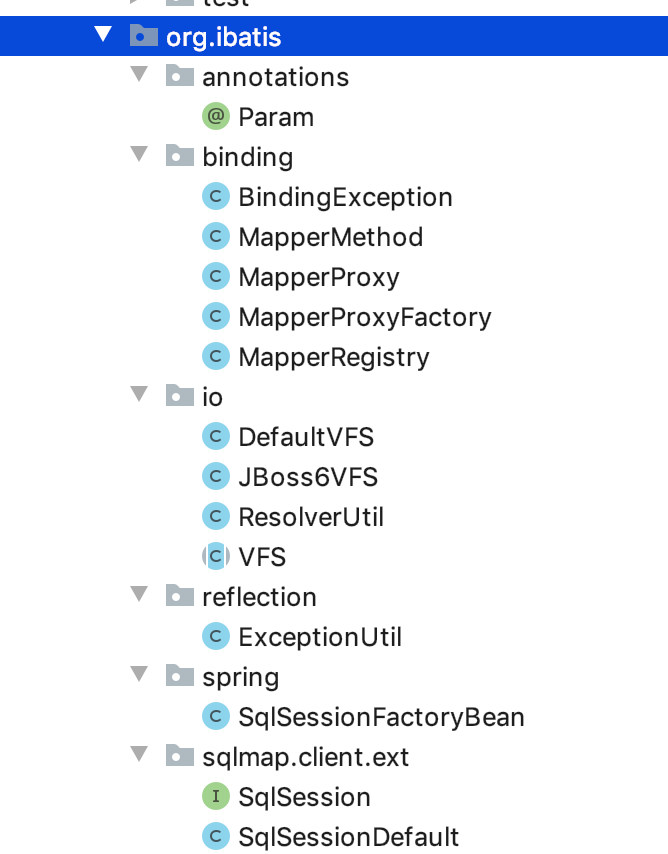
本篇中,我们只讲了适配过程。还没有说iBatis-generator的实现。下篇文章中会详细讲解。
