组成
-
所有Swift的“基本”类型都是值类型
- Int, Double, String,…
-
Swift的所有集合都是值类型
- 数组,集合,字典,…
-
包含值类型的Swift元组、结构和枚举是值类型
特点
变量独立
- Variables Are Logically Distinct
- Mutating one variable of some value type will never affect a different variable
        //--变量独立
        var a: Int = 5
        var b = a
        b = 10
        //结果不同
        print("a = \(a)", "b = \(b)") // a = 5, b = 10
        //地址不同
        var arryA = [1,2]
        var arryB = arryA
        withUnsafePointer(to: &arryA) {print($0)}
        withUnsafePointer(to: &arryB) {print($0)}
可变性表达
- let 声明值不可改变
- var 声明值可变
        //
        let numbers = [1, 2, 3, 4, 5]
        //
        var strings = [String]()
        for x in numbers{
            strings.append(String(x))
        }
拷贝消耗小
-
Copying a low-level, fundamental type is constant time
- Int, Double, etc.
-
Copying a struct, enum, or tuple of value types is constant time
- CGPoint, etc.
-
Extensible data structures use copy-on-write
- Copying involves a fixed number of reference-counting operations
- String, Array, Set, Dictionary, etc.
值类型实践
绘制图像
协议抽象
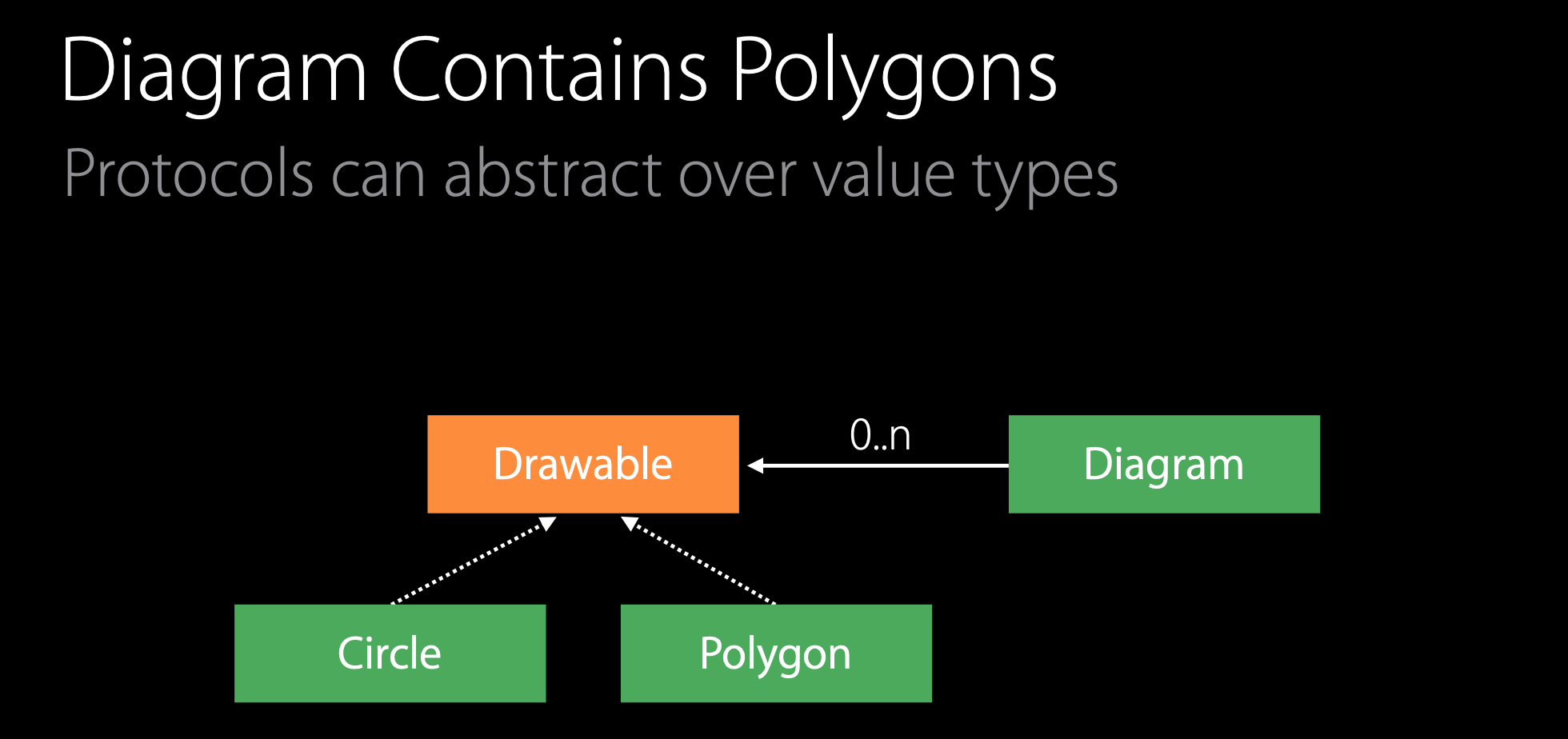
类型结构和协议
struct Polygon {
    var corners: [CGPoint] = []
    init (corners: [CGPoint]){
        self.corners = corners
    }
}

struct Circle {
    var center: CGPoint
    var radius: CGFloat
    init(center: CGPoint, radius: CGFloat) {
        self.center = center
        self.radius = radius
    }
}


protocol Drawable {
  func draw()
}

extension Polygon: Drawable {
    func draw() {
        let ctx = UIGraphicsGetCurrentContext()
        ctx?.move(to: CGPoint.init(x: corners.last!.x, y: corners.last!.y))
        for point in corners {
            ctx?.addLine(to: CGPoint.init(x: point.x, y: point.y))
        }
        ctx?.closePath()
        ctx?.strokePath()
    }
}
extension Circle: Drawable {
    func draw() {
        let ctx = UIGraphicsGetCurrentContext()
        ctx?.addArc(center: CGPoint.init(x: center.x, y: center.y), radius: radius, startAngle: 0, endAngle: CGFloat.pi * 2, clockwise: true)
        ctx?.closePath()
        ctx?.strokePath()
    }
}

struct Diagram {
    var items: [Drawable] = []
    mutating func addItem(item: Drawable) {
        items.append(item)
    }
    func draw() {
        for item in items {
            item.draw()
        }
    }
}
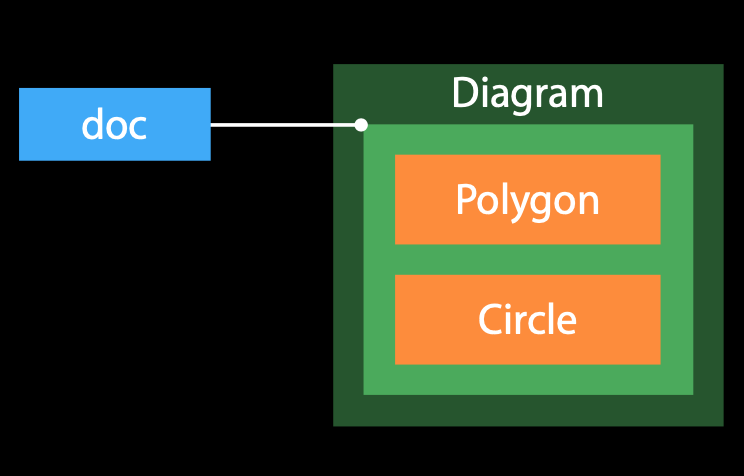
绘图
        //---绘图
        var doc = Diagram()
        let corners = [
            CGPoint.init(x: 0, y: 0),
            CGPoint.init(x: 100, y: 0),
            CGPoint.init(x: 100, y: 100),
            CGPoint.init(x: 0, y: 100)
        ]
        doc.addItem(item: Polygon.init(corners: corners))
        doc.addItem(item: Circle.init(center: CGPoint.init(x: 50, y: 50), radius: 50))
        doc.draw()
copy-on-write写时复制
为什么要使用写时复制
-
因为 Unrestricted mutation of referenced objects breaks value semantics 引用对象的不受限制的突变破坏了值语义. 案例: 值类型中有引用类型对象的属性.
-
高效, 只对突变的部分将引用对象独立拷贝一份,其它引用资源共享.
解决方法
引用对象的变异操作必须先拷贝
案例值类型结构
struct BezierPath{
    private var _path = UIBezierPath()
    var pathForReading: UIBezierPath{
        return _path
    }
    var pathForWriting: UIBezierPath{
        mutating get{
            _path = _path.copy() as! UIBezierPath
            return _path
        }
    }
}
extension BezierPath{
    var isEmpty: Bool{
        return pathForReading.isEmpty
    }
    mutating func addLineToPoint(point: CGPoint){
        pathForWriting.addLine(to: point)
    }
}
案例测试
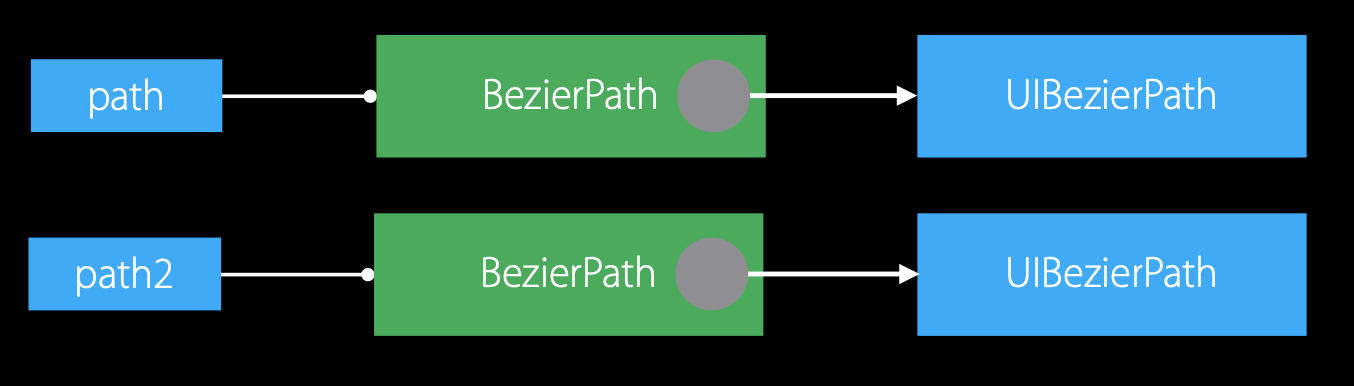
1.未引发写时复制
var path = BezierPath()
var path2 = path
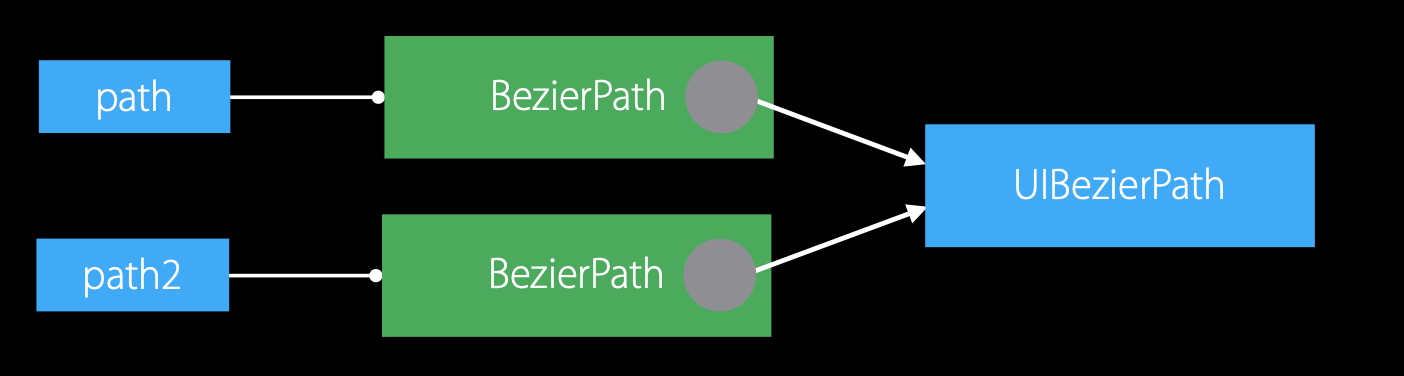
2.写时复制
var path = BezierPath()
var path2 = path
path.addLineToPoint(point: CGPoint(x: 10, y: 20))