1.原型链继承
(1)图示如下: 子类继承父类的属性和方法(目的让子类的实例可以调取父类中的属性和方法)
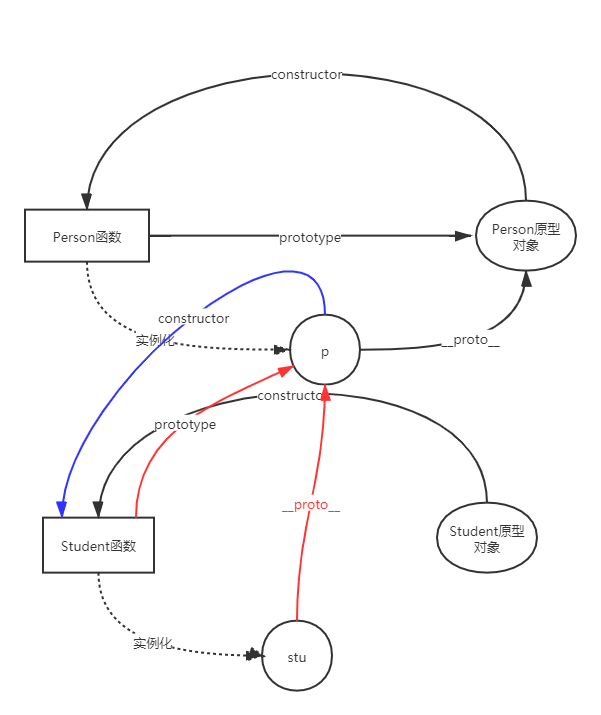
(2)代码举例
       //构造函数Person
        function Person(){
            this.name = "xiaomingming";
            this.pets =["maomao","gougou"];

        }
        Person.prototype.run = function(){
            console.log('runrunrun')
        }
        function Stu(){
            this.num = "bengbeng"
        }
        <!--以下是核心步骤-->
        //1.构造父类的实例
        var p = new Person();
        // 2.设置子类的原型对象
        Stu.prototype = p;
        // 3.修复constructor指针
        Stu.prototype.constructor = Stu;

        //全部继承
        var stu = new Stu();
        console.log(stu);
        console.log(stu.num);

    console.log(stu.name);
    console.log(stu.pets);
问题引入
接以上代码:
  //构造函数Person
    <script>
        function Person(){
            this.name = "xiaomingming";
            this.pets =["maomao","gougou"];

        }
        Person.prototype.run = function(){
            console.log('runrunrun')
        }
        function Stu(){
            this.num = "bengbeng"
        }
        <!--以下是核心步骤-->
        //1.构造父类的实例
        var p = new Person();
        // 2.设置子类的原型对象
        Stu.prototype = p;
        // 3.修复constructor指针
        Stu.prototype.constructor = Stu;

        //全部继承
        var stu = new Stu();
        var stu2 = new Stu();
    </script>
    <script>
        1.
        stu.name = "Jay"
        console.log(stu)
        console.log(stu2)
        2.
        var pets = stu.pets;
        pets.push('huhu')

        console.log(stu)
        console.log(stu2)

    </script>
上面结果
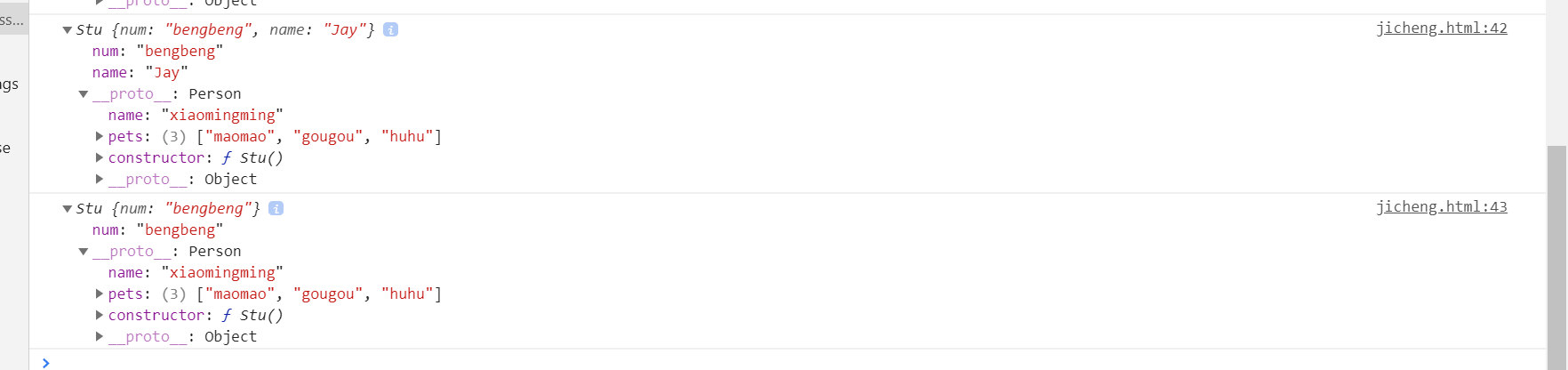
接下来值得注意:
1.子类方法要在实现继承后去定义方法2.子类可以重写父类上的属性和方法 代码示例1:
  //构造函数Person
        function Person(){
            this.name = "xiaomingming";
            this.pets =["maomao","gougou"];
        }
        Person.prototype.run = function(hi){
            this.hi = 'hi'
            console.log('runrunrun')
        }
        function Stu(){
            this.name = 'xinming'
            this.num = "bengbeng"
        }
        Stu.prototype.eat=function(){
            console.log('我是继承前定义的eat')
        }
        //1.构造父类的实例
        var p = new Person();
        // 2.设置子类的原型对象
        Stu.prototype = p;
        // 3.修复constructor指针
        Stu.prototype.constructor = Stu;
        //全部继承
        var stu = new Stu();
        stu.run();
        // stu.eat();
        // 1.
        stu.name = "Jay"
        // 2.
        var pets = stu.pets;
        pets.push('huhu')
        var stu2 = new Stu();
        stu2.run();
        console.log(stu)
        console.log(stu2)
报错:

代码示例2:
     //构造函数Person
        function Person(){
            this.name = "xiaomingming";
            this.pets =["maomao","gougou"];
        }
        Person.prototype.run = function(hi){
            this.hi = 'hi'
            console.log('runrunrun')
        }
        function Stu(){
            this.name = 'xinming'
            this.num = "bengbeng"
        }
        //1.构造父类的实例
        var p = new Person();
        // 2.设置子类的原型对象
        Stu.prototype = p;
        // 3.修复constructor指针
        Stu.prototype.constructor = Stu;
        Stu.prototype.eat=function(){
            console.log('我是继承后定义的eat')
        }
        Stu.prototype.run=function(bye){
            console.log('我是继承后定义的run')
        }
        //全部继承
        var stu = new Stu();
        stu.run();
        stu.eat();
        1.
        stu.name = "Jay"
        // 2.
        var pets = stu.pets;
        pets.push('huhu')
        var stu2 = new Stu();
        stu2.run();
        console.log(stu)
        console.log(stu2)
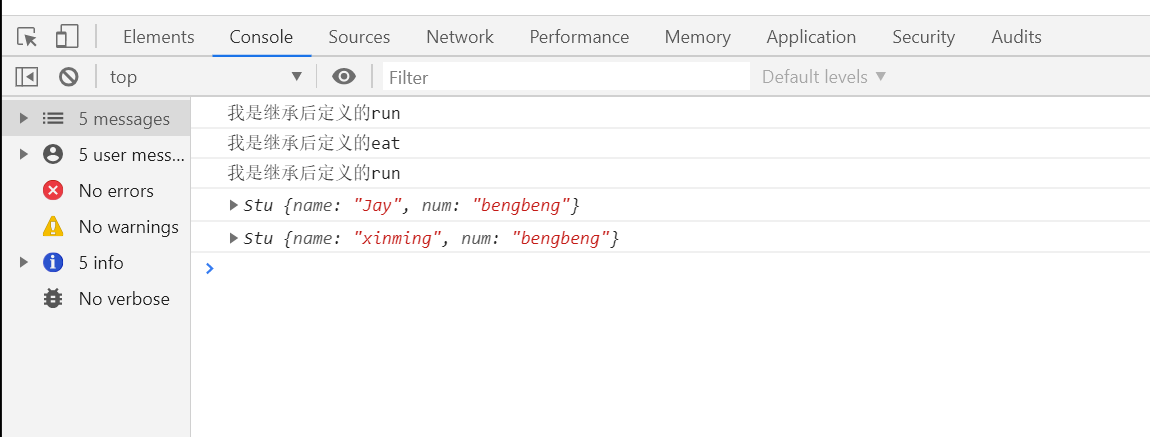
总结: 特点1:父类中私有的属性和方法最会都变成子类公有的属性和方法。 特点2:子类可以重写父类上的属性和方法(导致子类其他实例受影响)
2.单独采用构造函数实现继承
    function Animal(){
        this.species = "动物";
    }
    Animal.prototype.run=function(){
        console.log('animal原型')
    }
    function Cat(name,color){
        this.name = name;
        this.color = color;
    }
    function Cat(name,color){
        Animal.apply(this, arguments);
        this.name = name;
        this.color = color;
    }

    var cat1 = new Cat("AA猫","黑色");
    alert(cat1.species);    // 动物
    cat1.run()
结果:

构造函数继承总结: 特点:1.CHILD方法中把PARENT当做普通函数执行,让PARENT中的THIS指向CHILD的实例,相当于给CHILD设置了很多私有属性方法 1.只能继承父类私有的属性和方法,(因为是把PARENT当做普通函数执行,和其原型上的属性和方法没有关系) 2.父类私有变成子类私有
关于私有公有我们可以理解为,私有的只是在当前的函数里面起作用,公有的是会依照原型进行继承,是会影响到后续的依靠其创建的实例的属性和方法。
3.在原型继承基础上+借助构造函数继承(解决共享问题)
完整代码:
<script>
        /**
     * 构造函数Person
     */
        function Person(name,pets){
            this.name = name;
            this.pets =pets;

        }
        Person.prototype.run = function(){
            console.log('runrunrun')
        }
        function Stu(num,name,pets){
            Person.call(this,name,pets);//这一句要写在上面防止属性覆盖
            this.num = num;
            //构造函数
        }
         //1.构造父类的实例
        var p = new Person();
        // 2.设置子类的原型对象
        Stu.prototype = p;
        // 3.修复constructor指针
        Stu.prototype.constructor = Stu;
        Stu.prototype.run=function(bye){
            console.log('我是继承后定义的run')
        }
    </script>
    <script>
        var stu = new Stu('001','xiaoming',['maomao','gougou'])
        var stu2 = new Stu('002','xiaogang',['momo','gogo'])
        stu.run();
        stu2.run();
        console.log(stu)
        console.log(stu2)
    </script>
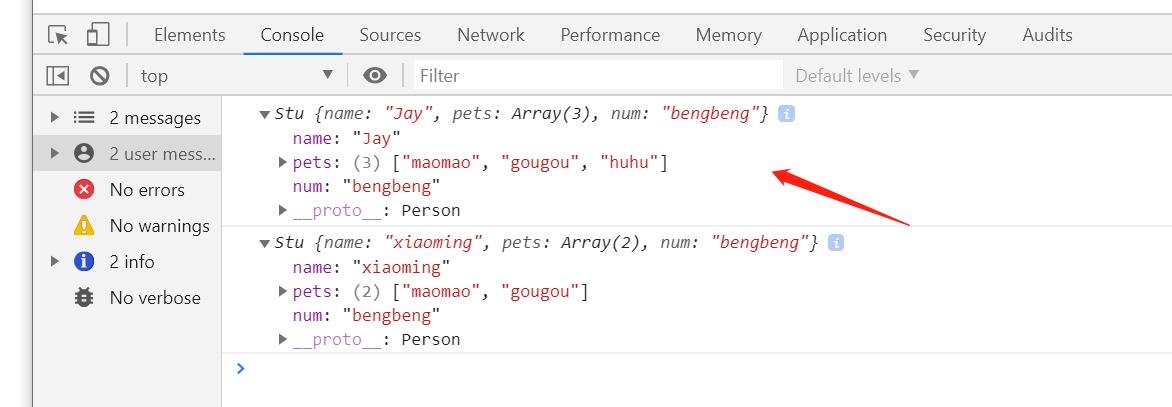
由上面的调用代码我们可以看出子类Stu的实例继承了父类Person的属性和方法,
另外:
    <script>
    var stu = new Stu('001','xiaoming',['maomao','gougou'])
    stu.pets.push('dudu')
    var stu2 = new Stu('002','xiaogang',['momo','gogo'])
    console.log(stu)
    console.log(stu2)
4.寄生组合式继承
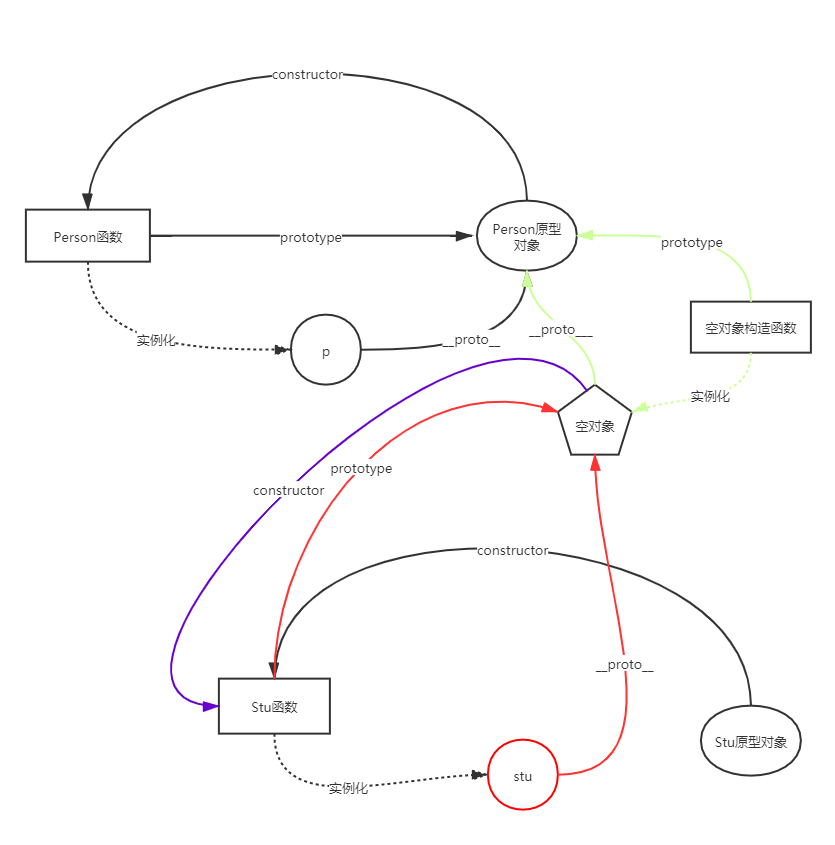
我们想到了Object.create(OBJ)创建一个空的对象,让空对象__proto__指向OBJ。 此api存在ie兼容问题,我们可以自己实现,其中一个实现方式为
Object.create = function(obj){
        function Fn(){}
        Fn.prototype = obj
        return new Fn();
    }
此方法用图表示为(绿色线部分):
    Stu.prototype = Object.create(Person.prototype)
    Stu.prototype.constructor = Stu;
完整的代码:
<script>
   function Person(name,pets){
       this.name = name;
       this.pets =pets;
       var jj = 'jj'
   }
   Person.prototype.run = function(){
       console.log('runrunrun')
   }
   function Stu(num,name,pets){
       Person.call(this,name,pets);//这一句要写在上面防止属性覆盖
       this.num = num;
       //构造函数
   }
   //寄生组合继承
   Stu.prototype = Object.create(Person.prototype)
   Stu.prototype.constructor = Stu;
   //以上方法存在兼容性不兼容ie,我们可以自己写create
   Stu.prototype.joke = function(){
       console.log('walking')

   }
   //自己写create
   思路: 创建一个空对象,使空对象的__proto__指向obj
   <!--Object.create = function(obj){-->
   <!--    let oo = {};-->
   <!--    oo.__proto__= obj;-->
   <!--    return oo;-->
   <!--}-->
   <!--对于不识别_proto_的情况:-->
   <!--Object.create = function(obj){-->
   <!--    function Fn(){}-->
   <!--    Fn.prototype = obj-->
   <!--    return new Fn();-->
   <!--}-->

</script>
<script>
   var stu = new Stu('001','xiaoming',['maomao','gougou'])
   stu.pets.push('dudu')
   var stu2 = new Stu('002','xiaogang',['momo','gogo'])
   stu.run()
   stu2.run()
   stu2.joke()

   console.log(stu)
   console.log(stu2)

</script>