我们知道属性修饰词一般都用nonatomic,因为是修饰对象的,所以关于atomic的源码是在objc,我们打开objc源码,然后查找reallySetProperty方法
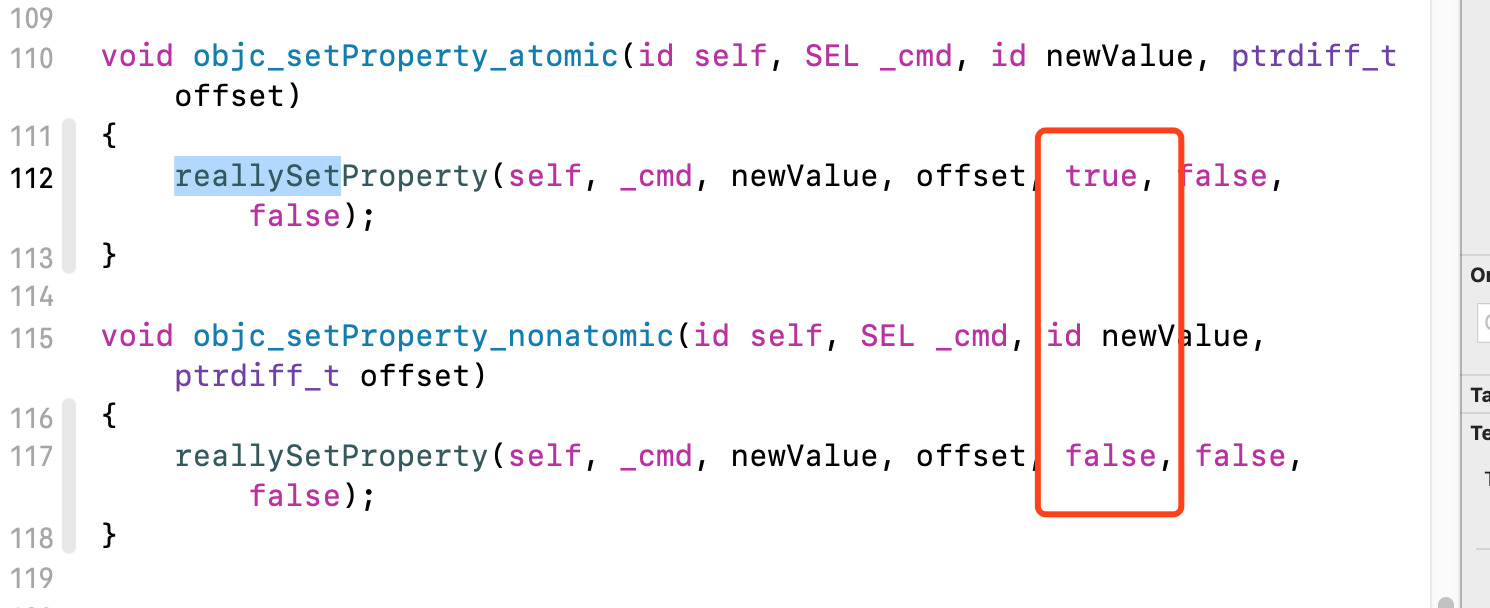
我们看到atomic和nonatomic只有第五个参数是不一样的,我们点进reallySetProperty看看
static inline void reallySetProperty(id self, SEL _cmd, id newValue, ptrdiff_t offset, bool atomic, bool copy, bool mutableCopy)
{
    if (offset == 0) {
        object_setClass(self, newValue);
        return;
    }

    id oldValue;
    id *slot = (id*) ((char*)self + offset);

    if (copy) {
        newValue = [newValue copyWithZone:nil];
    } else if (mutableCopy) {
        newValue = [newValue mutableCopyWithZone:nil];
    } else {
        if (*slot == newValue) return;
        newValue = objc_retain(newValue);
    }
//读写锁、自旋锁、互斥锁
    if (!atomic) {
        oldValue = *slot;
        *slot = newValue;
    } else {
    //对slot进行加盐,避免哈希冲突
        spinlock_t& slotlock = PropertyLocks[slot];
        slotlock.lock();//加锁
        oldValue = *slot;
        *slot = newValue;
        slotlock.unlock();
    }

    objc_release(oldValue);
}
我们看到。当不是atomic时候,setter方法是直接将值传递过去,当时atomic时候会加一把锁后再赋值。
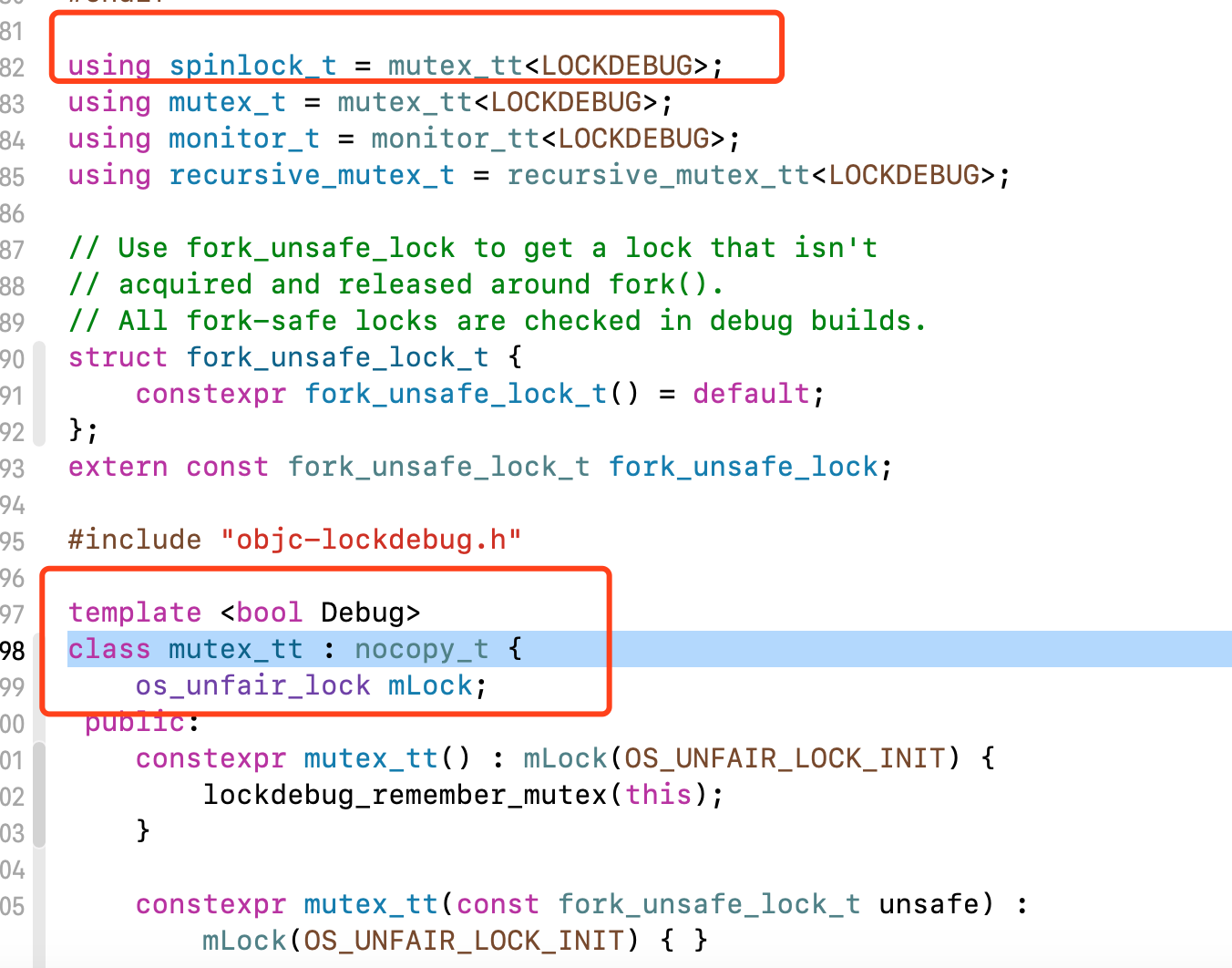
这个地方我们看到spinlock_t其实是做了一下转换,真正的锁是os_unfair_lock,
我们再看一下getter方法,搜一下getProperty
id objc_getProperty(id self, SEL _cmd, ptrdiff_t offset, BOOL atomic) {
    if (offset == 0) {
        return object_getClass(self);
    }

    // Retain release world
    id *slot = (id*) ((char*)self + offset);
    if (!atomic) return *slot;

    // Atomic retain release world
    spinlock_t& slotlock = PropertyLocks[slot];
    slotlock.lock();
    id value = objc_retain(*slot);
    slotlock.unlock();

    // for performance, we (safely) issue the autorelease OUTSIDE of the spinlock.
    return objc_autoreleaseReturnValue(value);
}
我们看到get方法中如果不是atomic的话,直接返回属性里面的值,如果是atomic的话,也会加一个锁,然后将属性值retain一下得到一个新的变量,然后再将这个变量release一下return回去。
上面我们知道atomic会对set和get方法都加上自旋锁,但是因为要不断加锁解锁,所以会很消耗性能,但是是否加完锁就一定安全呢,我们做一下下面验证
- (void)lg_test_atomic2{
    //Thread A
    dispatch_async(dispatch_get_global_queue(0, 0), ^{
        for (int i = 0; i < 100000; i ++) {
            if (i % 2 == 0) {
                self.array = @[@"Hank", @"CC", @"Cooci"];
            }
            else {
                self.array = @[@"Kody"];
            }
            NSLog(@"Thread A: %@\n", self.array);
        }
    });

    //Thread B
    dispatch_async(dispatch_get_global_queue(0, 0), ^{
        for (int i = 0; i < 100000; i ++) {
            if (self.array.count >= 2) {
                NSString* str = [self.array objectAtIndex:1];
            }
            NSLog(@"Thread B: %@\n",self.array);
        }
    });
}
上面代码运行崩了,因为atomic仅仅对set和get方法进行加密,但是无法控制外面的宏观线程,例如上面代码,由于是多线程set和get,在get方法哪里,有可能if判断完成后还没开始get时候又进行了一次set方法,所以无法保证get和set的安全,所以atomic只能保证自己本身的set和get安全,而无法保证外面宏观的线程问题
还有一个例子:
- (void)lg_test_atomic1{

    //Thread A
       dispatch_async(dispatch_get_global_queue(0, 0), ^{
           for (int i = 0; i < 10000; i ++) {
               self.num = self.num+1;
               NSLog(@"Thread A: %d\n", self.num);
           }
       });

       //Thread B
       dispatch_async(dispatch_get_global_queue(0, 0), ^{
           for (int i = 0; i < 10000; i ++) {
               self.num = self.num+1;
               NSLog(@"Thread b : %d\n", self.num);
           }
       });
}


08 13:37:29.917947+0800 005-atomic分析[61880:10355767] Thread A: 19989
2020-03-08 13:37:29.918004+0800 005-atomic分析[61880:10355767] Thread A: 19990
2020-03-08 13:37:29.918085+0800 005-atomic分析[61880:10355767] Thread A: 19991
2020-03-08 13:37:29.918149+0800 005-atomic分析[61880:10355767] Thread A: 19992
2020-03-08 13:37:29.918223+0800 005-atomic分析[61880:10355767] Thread A: 19993
2020-03-08 13:37:29.918309+0800 005-atomic分析[61880:10355767] Thread A: 19994
2020-03-08 13:37:29.918329+0800 005-atomic分析[61880:10355767] Thread A: 19995
2020-03-08 13:37:29.918382+0800 005-atomic分析[61880:10355767] Thread A: 19996
2020-03-08 13:37:29.918433+0800 005-atomic分析[61880:10355767] Thread A: 19997
2020-03-08 13:37:29.918532+0800 005-atomic分析[61880:10355767] Thread A: 19998
按道理最后应该是20000的,但实际上少了两个,进一步验证atomic并不安全,所以关于线程安全还是需要程序员自己去处理