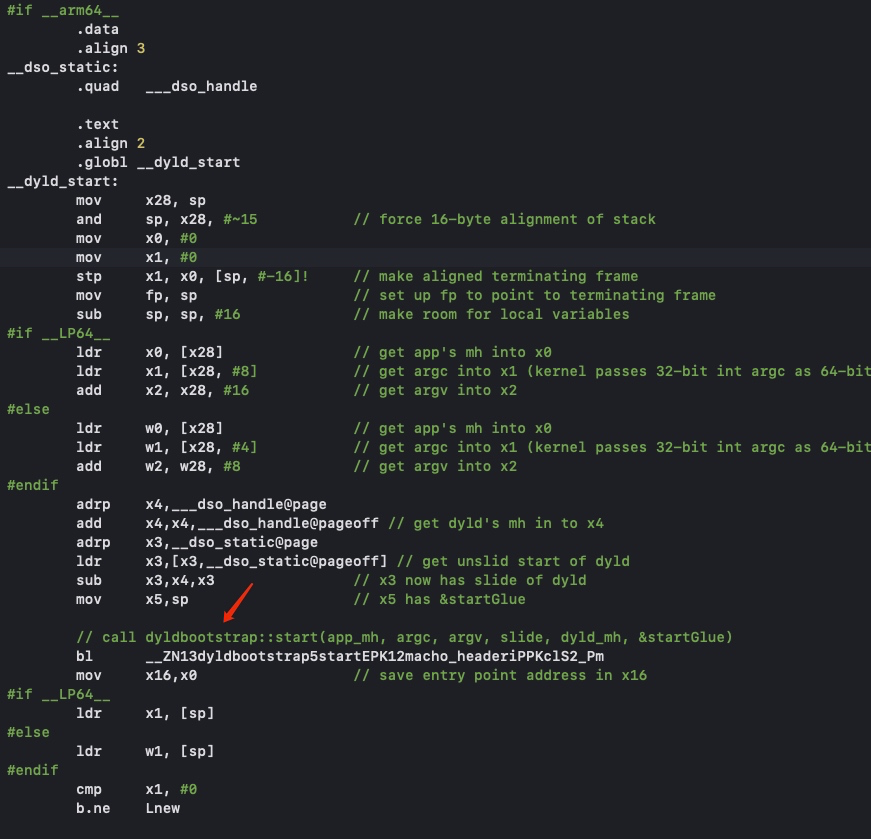
uintptr_t start(const struct macho_header* appsMachHeader, int argc, const char* argv[],
intptr_t slide, const struct macho_header* dyldsMachHeader,
uintptr_t* startGlue)
{
// if kernel had to slide dyld, we need to fix up load sensitive locations
// we have to do this before using any global variables
slide = slideOfMainExecutable(dyldsMachHeader);
bool shouldRebase = slide != 0;
#if __has_feature(ptrauth_calls)
shouldRebase = true;
#endifif ( shouldRebase ) {
rebaseDyld(dyldsMachHeader, slide);
}
// allow dyld to use mach messaging
mach_init();
// kernel sets up env pointer to be just past end of agv array
const char** envp = &argv[argc+1];
// kernel sets up apple pointer to be just past end of envp array
const char** apple = envp;
while(*apple != NULL) { ++apple; }
++apple;
// set up random value for stack canary
__guard_setup(apple);
#if DYLD_INITIALIZER_SUPPORT
// run all C++ initializers inside dyld
runDyldInitializers(dyldsMachHeader, slide, argc, argv, envp, apple);
#endif
// now that we are done bootstrapping dyld, call dyld's main
uintptr_t appsSlide = slideOfMainExecutable(appsMachHeader);
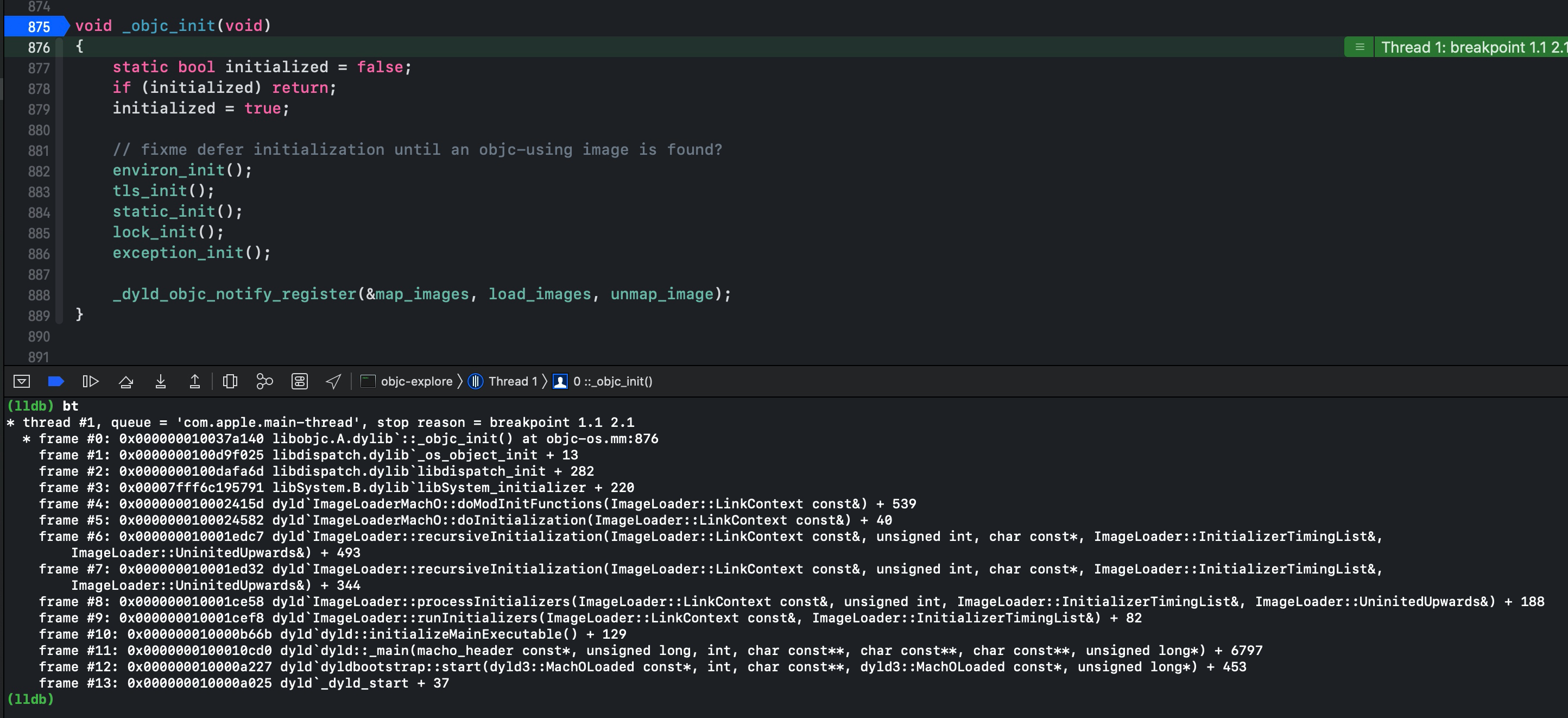
return dyld::_main(appsMachHeader, appsSlide, argc, argv, envp, apple, startGlue);
}