通常在工作中需要循环时我会用for循环,但是也有几个很方便的数组循环方法
forEch()
forEch的功能基本和for一样可以理解成代替了for循环,而forEc参数有两个;
参数:
arr.forEach(function, thisValue)
| 参数 | 可选值 | 描述 | 是否必选 |
|---|---|---|---|
| function | 回调函数 | 数组中每个元素需要调用的函数,函数参数 | true |
| thisValue | --- | 传递给函数的值一般用 "this" 值。如果这个参数为空, "undefined" 会传递给 "this" 值 | false |
例:
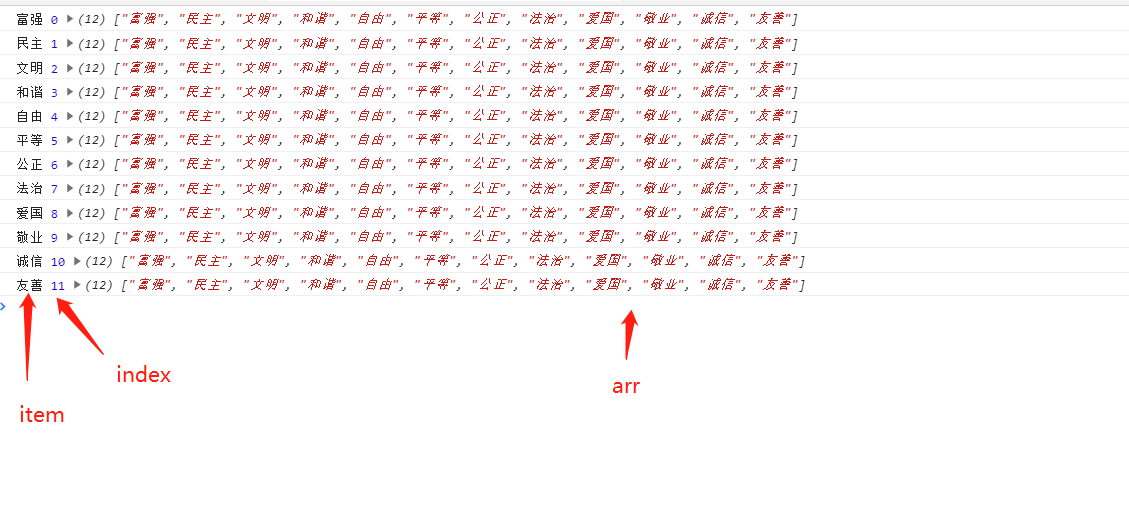
let arr = ['富强', '民主', '文明', '和谐', '自由', '平等', '公正', '法治', '爱国', '敬业', '诚信', '友善',]
arr.forEach((item, index, arr) => {
    console.log(item, index, arr)
})
map()
参数
map的参数和forEch是一样的
| 参数 | 可选值 | 描述 | 是否必选 |
|---|---|---|---|
| function | 回调函数 | 数组中每个元素需要调用的函数,函数参数 | true |
| thisValue | --- | 传递给函数的值一般用 "this" 值。如果这个参数为空, "undefined" 会传递给 "this" 值 | false |
map()方法返回一个新数组,数组中的元素为原始数组元素调用函数处理后的值,不会对空数组进行检测,不会改变原始数组正常情况下是要配合return;
例:
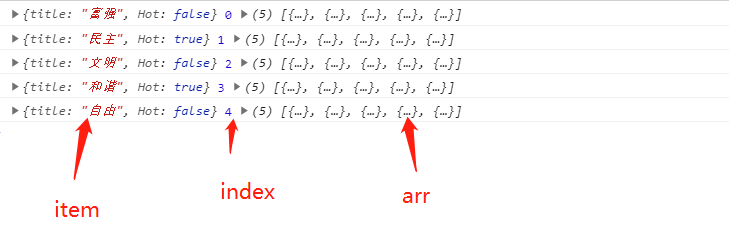
    let arr =[
    	{title:'富强', Hot:false},
    	{title:'民主', Hot:true},
    	{title:'文明', Hot:false},
    	{title:'和谐', Hot:true},
    	{title:'自由', Hot:false}
    ];

    arr.map((item, index, arr)=>{
        console.log(item, index, arr)
    })
上面也说了,正常情况下是要配合return的;
    let arr =[
    	{title:'富强', Hot:false},
    	{title:'民主', Hot:true},
    	{title:'文明', Hot:false},
    	{title:'和谐', Hot:true},
    	{title:'自由', Hot:false}
    ];

    let Newarr = arr.map((item, index, arr)=>{
        return item.title
    })
    console.log(Newarr)
返回新数组并且只取title,且不会改变原数组

上面也说了map返回的是原始数组元素调用函数处理后的新数组所以...
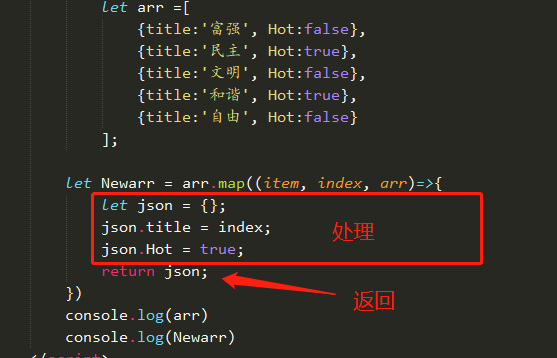
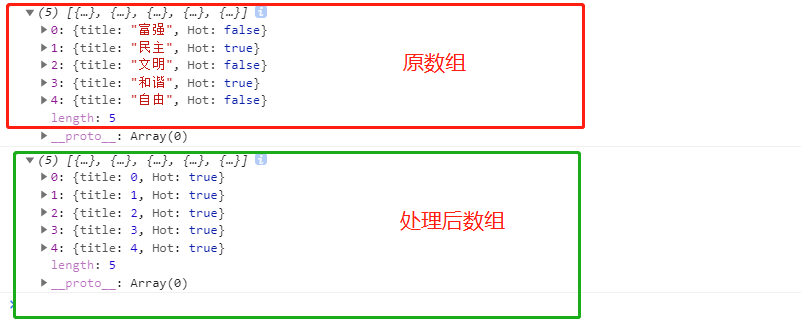
!!!一定要写return
filter()
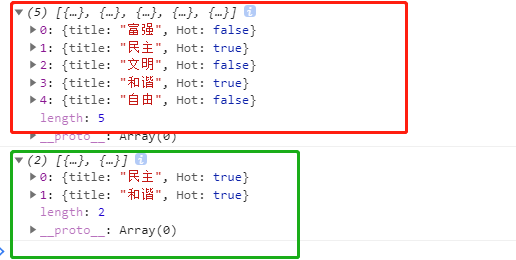
( 过滤 ) 简单来说就是过滤掉你想要或者不想要的数据,返回符合条件的元素的数组
    let arr =[
    	{title:'富强', Hot:false},
    	{title:'民主', Hot:true},
    	{title:'文明', Hot:false},
    	{title:'和谐', Hot:true},
    	{title:'自由', Hot:false}
    ];
    //只取Hot为true的
    let Newarr = arr.filter((item, index, arr)=>{
        return item.Hot
    })
    console.log(Newarr)
some()
some() 方法测试数组中是不是至少有1个元素通过了被提供的函数测试。它返回的是一个Boolean类型的值
只要被执行数组中有符合提供的函数测试的就返回true反之为false
    let arr =[
    	{title:'富强', Hot:false},
    	{title:'民主', Hot:false},
    	{title:'文明', Hot:false},
    	{title:'和谐', Hot:false},
    	{title:'自由', Hot:false}
    ];

    let Newarr = arr.some((item, index, arr)=>{
    	return item.title == '和谐';
    })
    console.log(Newarr)//true
every()
every()方法用于检测数组所有元素是否都符合指定条件,方法使用指定函数检测数组中的所有元素 如果数组中检测到有一个元素不满足,则整个表达式返回 false ,且剩余的元素不会再进行检测,如果所有元素都满足条件,则返回 true
    let arr =[
    	{title:'富强', Hot:false},
    	{title:'民主', Hot:false},
    	{title:'文明', Hot:false},
    	{title:'和谐', Hot:true},
    	{title:'自由', Hot:false}
    ];

    let Newarr = arr.every((item, index, arr)=>{
	    return item.Hot == false;
    })
    console.log(Newarr)//false
for of
    let arr =[
    	{title:'富强', Hot:false},
    	{title:'民主', Hot:false},
    	{title:'文明', Hot:false},
    	{title:'和谐', Hot:false},
    	{title:'自由', Hot:false}
    ];
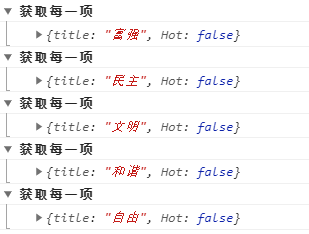
    for(let item of arr)
    {
    	console.group("获取每一项");
    	console.log(item);
    	console.groupEnd();
    }
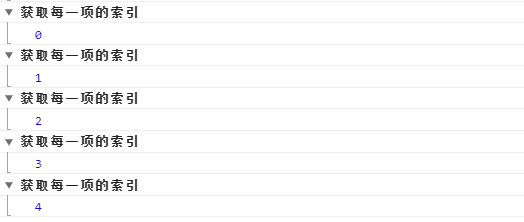
    for(let index of arr.keys())
    {
    	console.group('获取每一项的索引');
    	console.log(index)
    	console.groupEnd();
    }
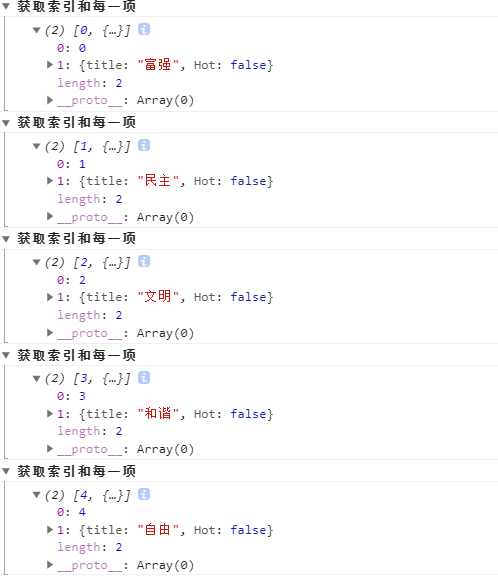
    for(let val of arr.entries())
    {
    	console.group("获取索引和每一项");
    	console.log(val)
    	console.groupEnd();
    }
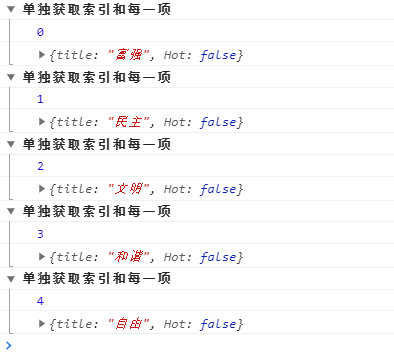
    for(let [index,item] of arr.entries())
    {
    	console.group("单独获取索引和每一项")
    	console.log(index)
    	console.log(item)
    	console.groupEnd();
    }