现在mybatis的用法
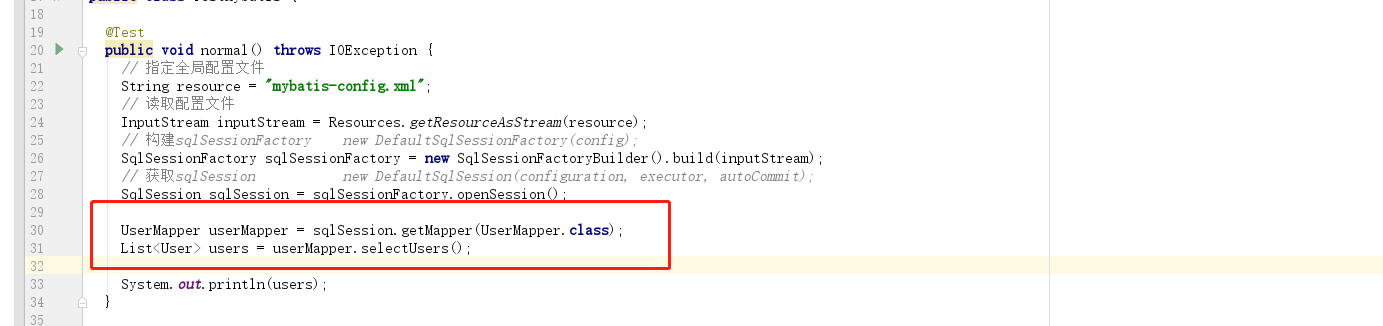
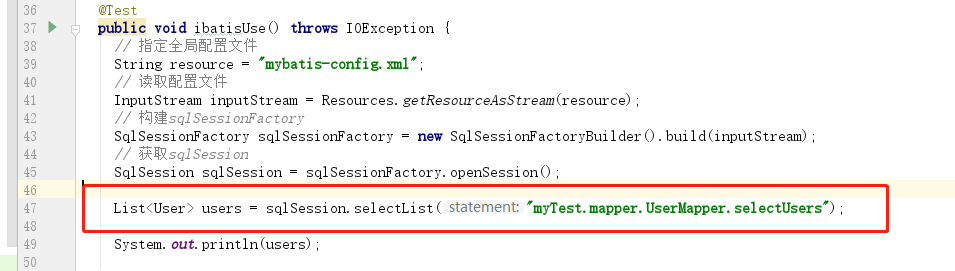
ibatis的用法
首先我们想看
sqlSession.getMapper(UserMapper.class);
但是sqlSession是一个接口,所以我们需要找到它的具体实现类
public class DefaultSqlSessionFactory implements SqlSessionFactory {
  。。。
  private SqlSession openSessionFromDataSource(ExecutorType execType, TransactionIsolationLevel level, boolean autoCommit) {
    Transaction tx = null;
    try {
        /**
         * 先获取需要的对象
         */
        final Environment environment = configuration.getEnvironment();
        final TransactionFactory transactionFactory = getTransactionFactoryFromEnvironment(environment);
        tx = transactionFactory.newTransaction(environment.getDataSource(), level, autoCommit);
        // 创建执行器
        final Executor executor = configuration.newExecutor(tx, execType);
        /**
         * sqlSession实现类
         */
        return new DefaultSqlSession(configuration, executor, autoCommit);
      } catch (Exception e) {
        closeTransaction(tx); // may have fetched a connection so lets call close()
        throw ExceptionFactory.wrapException("Error opening session.  Cause: " + e, e);
      } finally {
        ErrorContext.instance().reset();
      }
    }
   。。。
}
这个类为我们返回SqlSession的具体实现。 DefaultSqlSession类其实也是从Configuration类中拿
public class DefaultSqlSession implements SqlSession {
  。。。
  @Override
  public <T> T getMapper(Class<T> type) {
    return configuration.getMapper(type, this);
  }
  。。。
}
Configuration类在解析xml时会将所有mapper放在MapperRegistry类里
public class Configuration {
  。。。
  public <T> T getMapper(Class<T> type, SqlSession sqlSession) {
    return mapperRegistry.getMapper(type, sqlSession);
  }
  。。。
}
再深入MapperRegistry类发现里面有个HashMap专门保存我们的mapper类的对应工厂
public class MapperRegistry {
  。。。
  private final Map<Class<?>, MapperProxyFactory<?>> knownMappers = new HashMap<>();
  。。。
  public <T> T getMapper(Class<T> type, SqlSession sqlSession) {
    final MapperProxyFactory<T> mapperProxyFactory = (MapperProxyFactory<T>) knownMappers.get(type);
    if (mapperProxyFactory == null) {
      throw new BindingException("Type " + type + " is not known to the MapperRegistry.");
    }
    try {
      return mapperProxyFactory.newInstance(sqlSession);
    } catch (Exception e) {
      throw new BindingException("Error getting mapper instance. Cause: " + e, e);
    }
  }
  。。。
}
获取到对应的mapper的创建工厂后在进入newInstance()方法,可以看到里面有个熟悉的jdk动态代理
public class MapperProxyFactory<T> {

  private final Class<T> mapperInterface;
  private final Map<Method, MapperMethod> methodCache = new ConcurrentHashMap<>();

  public MapperProxyFactory(Class<T> mapperInterface) {
    this.mapperInterface = mapperInterface;
  }

  public Class<T> getMapperInterface() {
    return mapperInterface;
  }

  public Map<Method, MapperMethod> getMethodCache() {
    return methodCache;
  }

  @SuppressWarnings("unchecked")
  protected T newInstance(MapperProxy<T> mapperProxy) {
    return (T) Proxy.newProxyInstance(mapperInterface.getClassLoader(), new Class[] { mapperInterface }, mapperProxy);
  }

  public T newInstance(SqlSession sqlSession) {
    final MapperProxy<T> mapperProxy = new MapperProxy<>(sqlSession, mapperInterface, methodCache);
    return newInstance(mapperProxy);
  }

}
进入MapperProxy类就可以看到invoke()方法,我们再代码中调用mapper的方法实际都时调用这个方法
public class MapperProxy<T> implements InvocationHandler, Serializable {
  。。。
  @Override
  public Object invoke(Object proxy, Method method, Object[] args) throws Throwable {
    try {
      // method的描述是否是一个类
      if (Object.class.equals(method.getDeclaringClass())) {
        return method.invoke(this, args);

        // method是否是一个默认方法,有主体的方法
      } else if (method.isDefault()) {
        return invokeDefaultMethod(proxy, method, args);
      }
    } catch (Throwable t) {
      throw ExceptionUtil.unwrapThrowable(t);
    }
    // 获取方法对应的MapperMethod
    final MapperMethod mapperMethod = cachedMapperMethod(method);
    return mapperMethod.execute(sqlSession, args);
  }

  private MapperMethod cachedMapperMethod(Method method) {
    return methodCache.computeIfAbsent(method, k -> new MapperMethod(mapperInterface, method, sqlSession.getConfiguration()));
  }
  。。。
}
最后所有mapper的调用都会流向MpperMethod.execute()方法。MapperMethod的方法其实都是在组装sql语句和准备sql的参数,然后再调用SqlSession的方法,就如ibatis的用法一样。
public class MapperMethod {
  。。。
  public Object execute(SqlSession sqlSession, Object[] args) {
    Object result;
    switch (command.getType()) {
      case INSERT: {
        Object param = method.convertArgsToSqlCommandParam(args);
        result = rowCountResult(sqlSession.insert(command.getName(), param));
        break;
      }
      case UPDATE: {
        Object param = method.convertArgsToSqlCommandParam(args);
        result = rowCountResult(sqlSession.update(command.getName(), param));
        break;
      }
      case DELETE: {
        Object param = method.convertArgsToSqlCommandParam(args);
        result = rowCountResult(sqlSession.delete(command.getName(), param));
        break;
      }
      case SELECT:
          executeWithResultHandler(sqlSession, args);
          result = null;
        } else if (method.returnsMany()) {
          result = executeForMany(sqlSession, args);
        } else if (method.returnsMap()) {
          result = executeForMap(sqlSession, args);
        } else if (method.returnsCursor()) {
          result = executeForCursor(sqlSession, args);
          Object param = method.convertArgsToSqlCommandParam(args);
          result = sqlSession.selectOne(command.getName(), param);
          if (method.returnsOptional()
              && (result == null || !method.getReturnType().equals(result.getClass()))) {
            result = Optional.ofNullable(result);
          }
        }
        break;
      case FLUSH:
        result = sqlSession.flushStatements();
        break;
      default:
        throw new BindingException("Unknown execution method for: " + command.getName());
    }
    if (result == null && method.getReturnType().isPrimitive() && !method.returnsVoid()) {
      throw new BindingException("Mapper method '" + command.getName()
          + " attempted to return null from a method with a primitive return type (" + method.getReturnType() + ").");
    }
    return result;
  }
  。。。
}
mybatis封装了ibatis为习惯面向对象编程的我们提供了适合我们使用的方式。