ScheduledThreadPoolExecutor 也是一个线程池类,是线程池类 ThreadPoolExecutor 的子类。除了 ThreadPoolExecutor 相关的方法之外,它还增加了执行定时任务和周期性任务的方法。它的类签名和继承结构如下:
public class ScheduledThreadPoolExecutor extends ThreadPoolExecutor implements ScheduledExecutorService {}
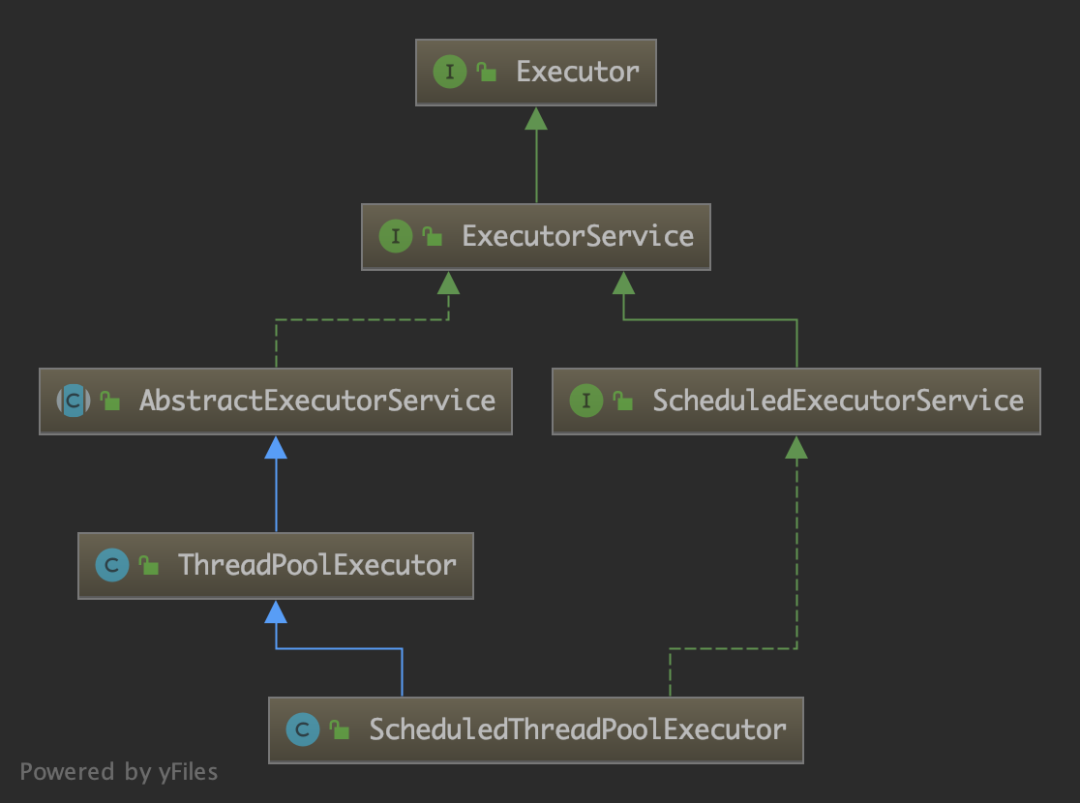 可以看到,它继承了 ThreadPoolExecutor 类(参考 「JDK源码分析-ThreadPoolExecutor」),并且实现了 ScheduledExecutorService 接口(参考 「JDK源码分析-ScheduledExecutorService」),因此具有二者的特性。下面分析其代码实现。
代码分析
内部嵌套类 DelayedWorkQueue
先看它的一个内部嵌套类 DelayedWorkQueue,该类是一个延迟队列,它的类签名和继承结构如下:
static class DelayedWorkQueue extends AbstractQueue<Runnable> implements BlockingQueue<Runnable> {}
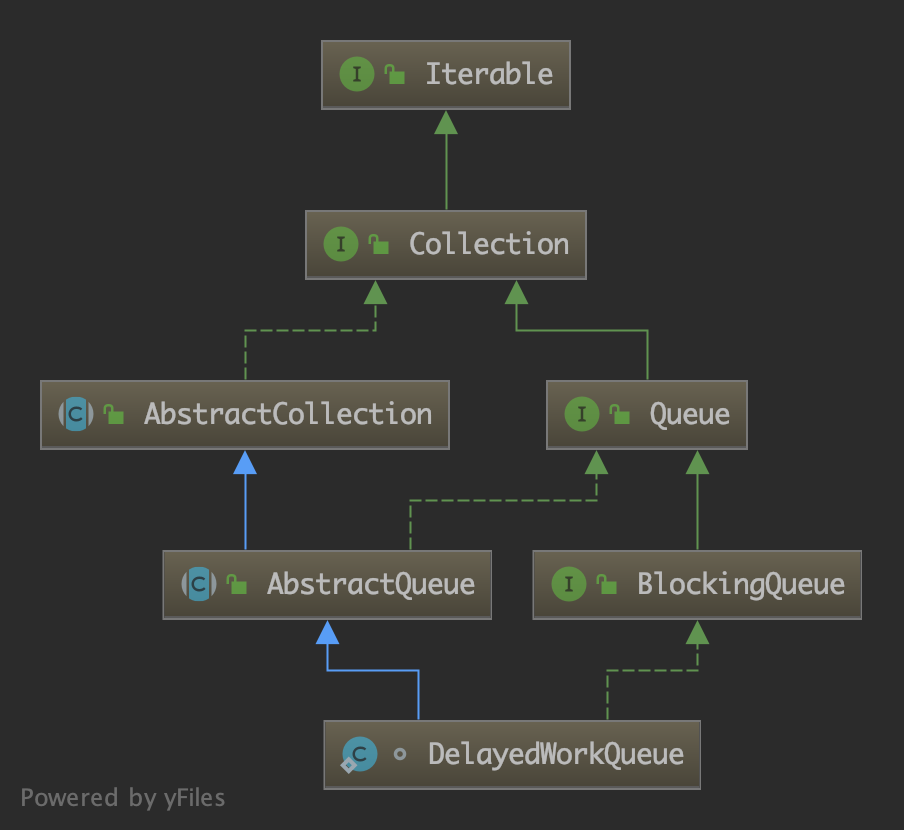 DelayedWorkQueue 类与前文分析的 DelayQueue 「JDK源码分析-DelayQueue」实现原理类似,这里就不再赘述。
构造器
ScheduledThreadPoolExecutor 有如下四个构造器:
public ScheduledThreadPoolExecutor(int corePoolSize) { super(corePoolSize, Integer.MAX_VALUE, 0, NANOSECONDS, new DelayedWorkQueue());}public ScheduledThreadPoolExecutor(int corePoolSize, ThreadFactory threadFactory) { super(corePoolSize, Integer.MAX_VALUE, 0, NANOSECONDS, new DelayedWorkQueue(), threadFactory);}public ScheduledThreadPoolExecutor(int corePoolSize, RejectedExecutionHandler handler) { super(corePoolSize, Integer.MAX_VALUE, 0, NANOSECONDS, new DelayedWorkQueue(), handler);}public ScheduledThreadPoolExecutor(int corePoolSize, ThreadFactory threadFactory, RejectedExecutionHandler handler) { super(corePoolSize, Integer.MAX_VALUE, 0, NANOSECONDS, new DelayedWorkQueue(), threadFactory, handler);}
内部类 ScheduledFutureTask
ScheduledThreadPoolExecutor 还有一个内部类 ScheduledFutureTask,它的继承结构如下:
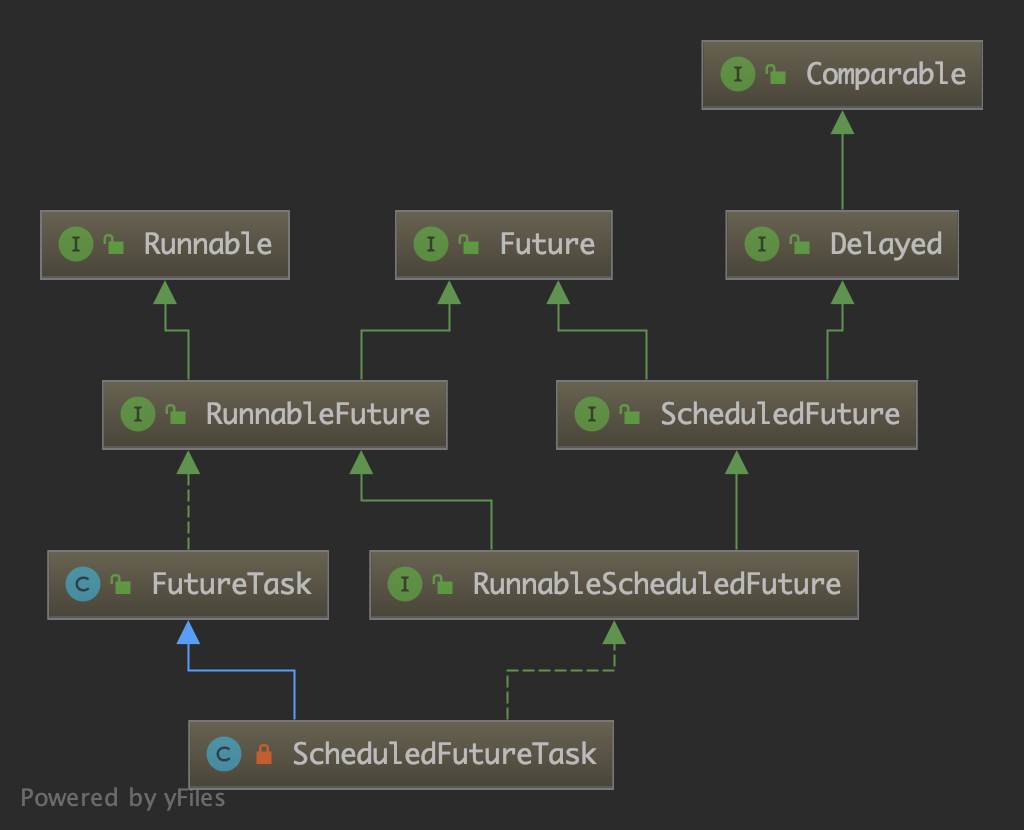
它继承了 FutureTask 类(可参考前文「JDK源码分析-FutureTask」的分析),且实现了 RunnableScheduledFuture 接口,该接口定义如下:
public interface RunnableScheduledFuture<V> extends RunnableFuture<V>, ScheduledFuture<V> { // 一个任务是否周期性执行的,若是则可以重复执行;否则只能运行一次 boolean isPeriodic();}
RunnableScheduledFuture 只定义了一个方法 isPeriodic,该方法用于判断一个任务是否是周期性执行的。它继承的 RunnableFuture 接口在前文 FutureTask 类中已进行分析,而 ScheduledFuture 接口如下:
先看它的主要成员变量:
// 定时任务执行的时间(单位:纳秒)private long time;/** * 重复执行的任务的时间间隔(单位:纳秒) * 正数表示固定频率(fixed-rate)执行 * 负数表示固定延迟(fixed-delay)执行 * 零表示非重复执行的任务 */private final long period;// reExecutePeriodic 方法中重新排队的任务RunnableScheduledFuture<V> outerTask = this;// 延迟队列中的索引位置,便于快速取消int heapIndex;
构造器:
/** * 构造器一:用给定的触发时间(纳秒),创建一个一次性任务 */ScheduledFutureTask(Runnable r, V result, long ns) { super(r, result); this.time = ns; this.period = 0; this.sequenceNumber = sequencer.getAndIncrement();}/** * 构造器二:用给定的触发时间和间隔(纳秒),创建一个周期性任务 */ScheduledFutureTask(Runnable r, V result, long ns, long period) { super(r, result); this.time = ns; this.period = period; this.sequenceNumber = sequencer.getAndIncrement();}/** * 构造器三:用给定的触发时间(纳秒),创建一个一次性任务 */ScheduledFutureTask(Callable<V> callable, long ns) { super(callable); this.time = ns; this.period = 0; this.sequenceNumber = sequencer.getAndIncrement();}
该类是一个任务类,即 Runnable 接口的实现类,因此它最核心的就是 run 方法,如下:
public void run() { // 是否为周期性任务 boolean periodic = isPeriodic(); // 若任务不能执行,则取消 if (!canRunInCurrentRunState(periodic)) cancel(false); // 若为非周期性任务 else if (!periodic) // 若为周期性任务,调用 ScheduledFutureTask 的父类(即 FutureTask)的 run 方法执行 ScheduledFutureTask.super.run(); // 若为周期性任务,调用 ScheduledFutureTask 的父类(即 FutureTask)的 runAndReset 方法执行 else if (ScheduledFutureTask.super.runAndReset()) { setNextRunTime(); // 设置下一次执行时间 reExecutePeriodic(outerTask); // 周期性执行 }}
reExecutePeriodic 方法如下:
/** * 该方法主要是将周期性任务重新排队 * 它的实现与 delayedExecute 方法(后面分析)逻辑有些类似 */void reExecutePeriodic(RunnableScheduledFuture<?> task) { if (canRunInCurrentRunState(true)) { super.getQueue().add(task); if (!canRunInCurrentRunState(true) && remove(task)) task.cancel(false); else ensurePrestart(); }}
schedule & scheduleAtFixedRate & scheduleWithFixedDelay
这几个就是执行定时任务和周期性任务的方法,它们是对前文 「JDK源码分析-ScheduledExecutorService」接口所定义的方法实现,可参考前文的分析。
schedule 方法 1:其作用是延迟指定的时间后执行任务(即执行定时任务),只会执行一次。
public ScheduledFuture> schedule(Runnable command, long delay, TimeUnit unit) { if (command == null || unit == null) throw new NullPointerException(); // 把用户提交的 Runnable 对象包装为 RunnableScheduledFuture 对象 // decorateTask 方法默认返回第二个参数 // decorateTask 方法的修饰符是 protected,可根据需求自行扩展 RunnableScheduledFuture> t = decorateTask(command, new ScheduledFutureTask<Void>(command, null, triggerTime(delay, unit))); // 执行给定的任务 delayedExecute(t); return t;}
delayExecute 方法:
/* * 延迟或周期性任务的主要执行方法。 * 若线程池已关闭,则拒绝该任务(执行拒绝策略); * 否则将任务添加到工作队列,若有需要启动一个线程去执行。 * 若在添加任务时关闭了线程池,则将其从队列移除并取消该任务 */private void delayedExecute(RunnableScheduledFuture<?> task) { // 若线程池已关闭,则执行拒绝策略 if (isShutdown()) reject(task); else { // 将该任务添加到任务队列(即前面的延迟队列) super.getQueue().add(task); // 若当前任务无法执行,则将其从队列移除并且取消执行(类似事务的回滚操作) if (isShutdown() && !canRunInCurrentRunState(task.isPeriodic()) && remove(task)) task.cancel(false); // 任务可以执行,若有需要新增线程以执行该任务 else ensurePrestart(); }}
schedule 方法 2:
public <V> ScheduledFuture<V> schedule(Callable<V> callable, long delay, TimeUnit unit) { if (callable == null || unit == null) throw new NullPointerException(); RunnableScheduledFuture<V> t = decorateTask(callable, new ScheduledFutureTask<V>(callable, triggerTime(delay, unit))); delayedExecute(t); return t;}
scheduleAtFixedRate 方法:
public ScheduledFuture<?> scheduleAtFixedRate(Runnable command, long initialDelay, long period, TimeUnit unit) { if (command == null || unit == null) throw new NullPointerException(); if (period <= 0) throw new IllegalArgumentException(); // 将 Runnable 对象包装为 ScheduledFutureTask 对象 ScheduledFutureTask<Void> sft = new ScheduledFutureTask<Void>(command, null, triggerTime(initialDelay, unit), unit.toNanos(period)); RunnableScheduledFuture<Void> t = decorateTask(command, sft); sft.outerTask = t; delayedExecute(t); return t;}
scheduleWithFixedDelay 方法:
public ScheduledFuture<?> scheduleWithFixedDelay(Runnable command, long initialDelay, long delay, TimeUnit unit) { if (command == null || unit == null) throw new NullPointerException(); if (delay <= 0) throw new IllegalArgumentException(); ScheduledFutureTask<Void> sft = new ScheduledFutureTask<Void>(command, null, triggerTime(initialDelay, unit), unit.toNanos(-delay)); RunnableScheduledFuture<Void> t = decorateTask(command, sft); sft.outerTask = t; delayedExecute(t); return t;}
execute & submit 方法
这两个方法是 Executor 接口和 ExecutorService 接口所定义的方法,代码实现如下:
public void execute(Runnable command) { schedule(command, 0, NANOSECONDS);}public Future<?> submit(Runnable task) { return schedule(task, 0, NANOSECONDS);}它们内部直接调用了 schedule(Runnable) 方法。另外两个 submit 方法:
public <T> Future<T> submit(Runnable task, T result) { return schedule(Executors.callable(task, result), 0, NANOSECONDS);}public <T> Future<T> submit(Callable<T> task) { return schedule(task, 0, NANOSECONDS);}
小结
1. ScheduledThreadPoolExecutor 是线程池的实现类之一;2. 它继承自 ThreadPoolExecutor,并实现了 ScheduledExecutorService 接口;3. 提供了异步提交任务的 execute 方法和 submit 方法;4. 提供了执行定时任务的 schedule 方法和周期性任务的 scheduleAtFixedRate/scheduleWithFixedDelay 方法(使用延迟队列实现)。
相关阅读:JDK源码分析-ThreadPoolExecutorJDK源码分析-ScheduledExecutorServiceJDK源码分析-DelayQueueJDK源码分析-FutureTask