Redux
随着前端应用逐渐变大,状态也越来越复杂,需要一种状态管理的方案,Redux 就是其中一种
MVC(backbone.js...)由于当应用变得很大时,会有多个 View 和多个 Model,(双向的)数据流就会变的非常混乱
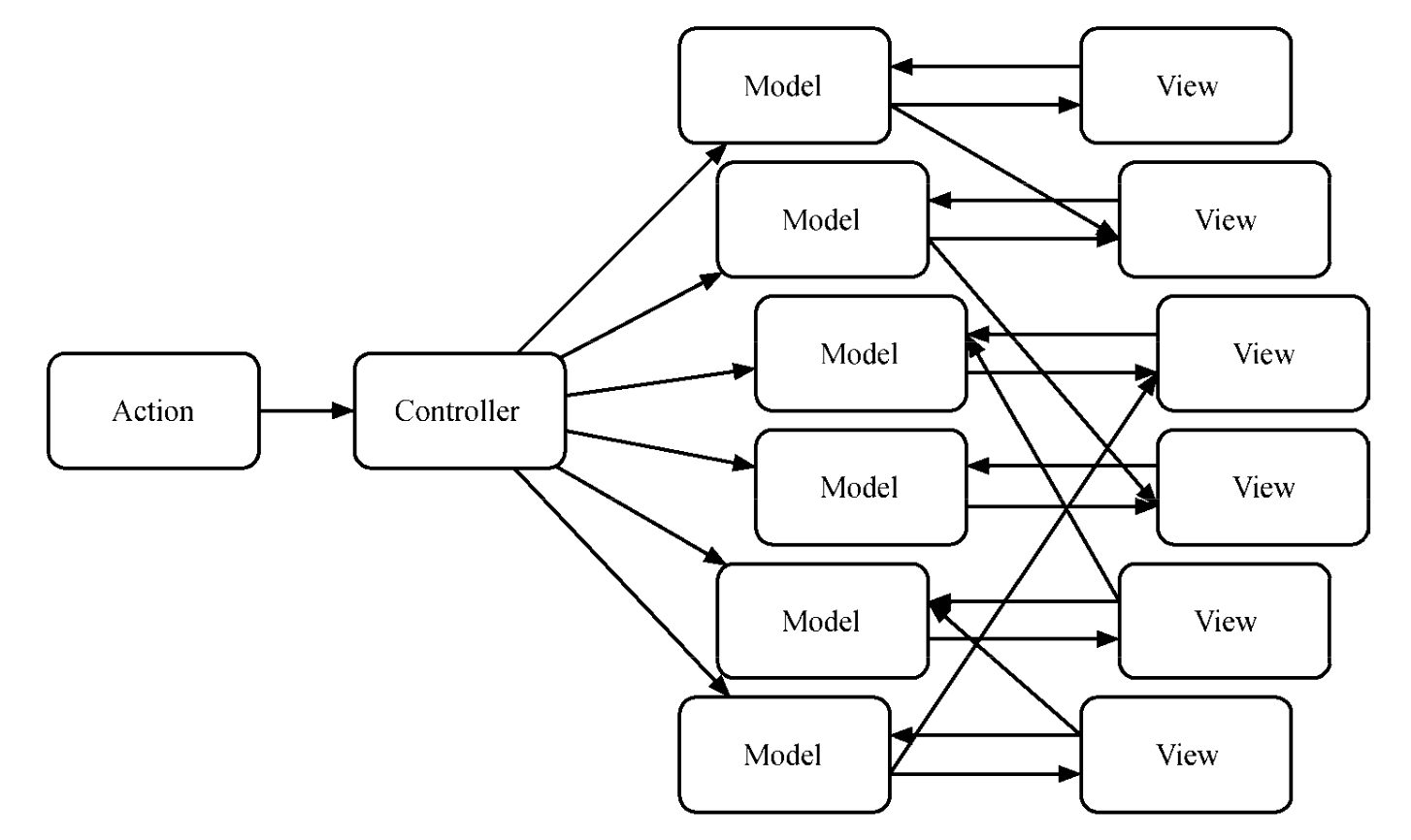
所以出现了 Flux,以单向数据流管理状态,React 推崇的核心也是单向数据流,Flux 中单向数据流可以看作是在其整体架构上的延伸,Redux 是也不是 Flux,它遵循了 Flux 的单向数据流的理念,同时简化了 Flux
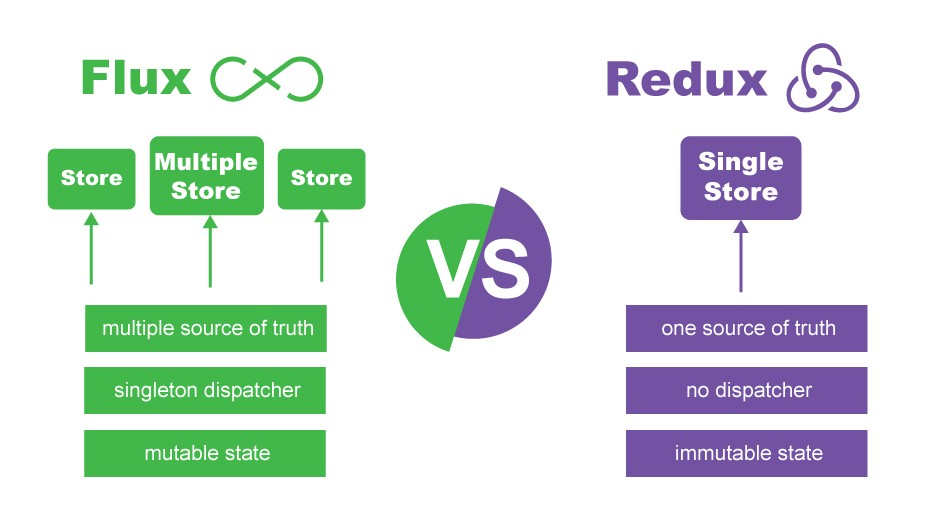
Flux/Redux 这种以单向数据流管理状态更像是一种设计模式
三大原则:
-
单一数据源
-
状态是只读的
-
状态修改均有纯函数完成
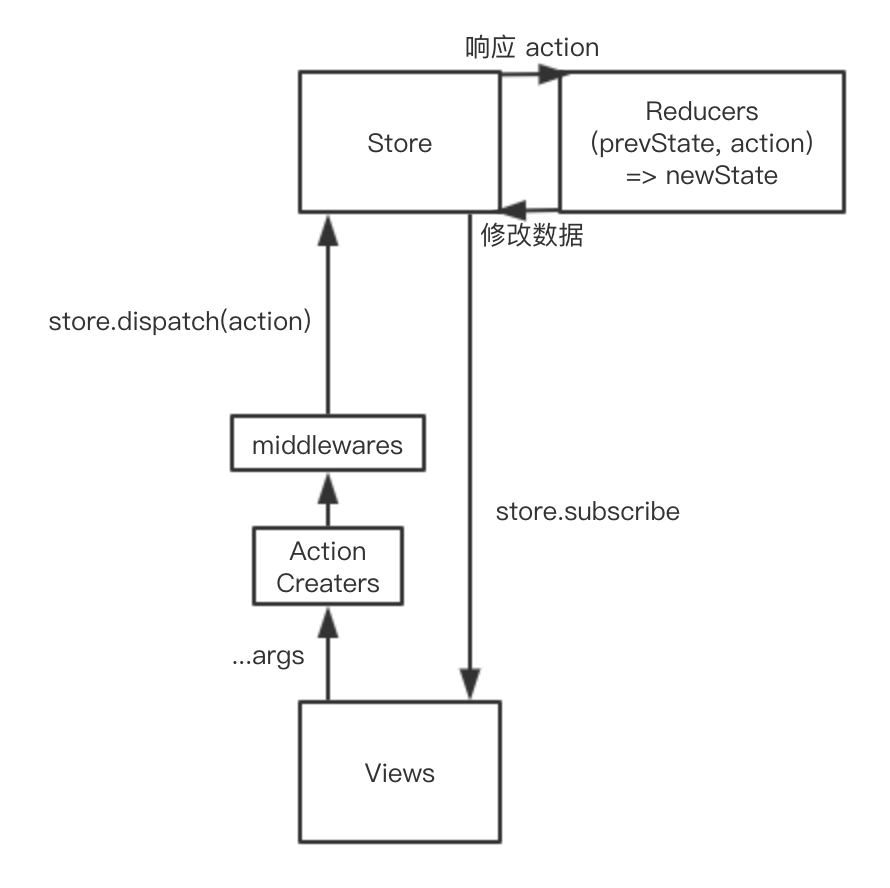
相比 Flux 可以看出,Redux 没有 Dispatcher,Store 是单一的,Store 通过 Reducers 纯函数获取新的 State,使得状态的修改变得简单、纯粹、可测试,并且可以追踪每次变化,实现了时间旅行
middleware
It provides a third-party extension point between dispatching an action, and the moment it reaches the reducer.
它提供了一个分类处理 action 的机会。在 middleware 中,你可以检阅每一个流过的 action,挑选出特定类型的 action 进行相应操作,给你一次改变 action 的机会
高阶 reducer
higher-order-reducer:: reducer => reducer
高阶 reducer 就是指将 reducer 作为参数或者返回值的函数
combineReducers 其实就是一个高阶 reducer,因为 combineReducers 就是将一个 reducer 对象作为参数,最后返回顶层的 reducer
-
reducer 的复用:
我们两个组件,它们的功能是相同的,都是 LOAD_DATA,我们能不能让它们共用一个 reducer?
不能,因为当一个组件出发 action 时,另一个组件的状态也会改变
所以在一个应用中,不同模块间的 actionType 必须是全局唯一的
我们可以用增加前缀的方法解决:
const generateReducer = (prefix, state) => { const LOAD_DATA = prefix + 'LOAD_DATA' const defaultStaet = {} return (state = defaultStaet, action) => { switch (action.type) { case LOAD_DATA: return { ...state, data: action.payload, } default: return state } } } -
reducer 增强
redux-undo:
const undoable = reducer => {
  const defaultState = {
    past: [],
    current: reducer(undefined, {}),
    future: [],
  }

  return (state = defaultState, action) => {
    const { past, current, future } = state

    switch (action.type) {
      case '@@redux-undo/UNDO':
        const previous = past[past.length - 1]
        const newPast = past.slice(0, past.length - 1)

        return {
          past: newPast,
          current: previous,
          future: [current, ...future],
        }
      case '@@redux-undo/REDO':
        const next = future[0]
        const newFuture = future.slice(1)

        return {
          past: [...past, current],
          current: next,
          future: newFuture,
        }
      default:
        const newCurrent = reducer(current, action)

        return {
          past: [...past, current],
          current: newCurrent,
          future: [],
        }
    }
  }
}
源码分析
createStore
createStore 其实就把 reducer 包了一层,根本没有 store,只是暴露出几个接口,方便操作,并用发布订阅模式实现了 state 改变时执行订阅的函数的功能,然后在一开始实现 enhancer,供 applyMiddleware 使用
reducer、preloadedState/initialState 都得自己写,Redux 为我们干的很少
const createStore = (reducer, preloadedState, enhancer) => {
  if (typeof enhancer !== undefined) {
    return enhancer(createStore)(reducer, preloadedState)
  }

  let currentReducer = reducer
  let state = preloadedState
  let listeners = []

  function getState() {
    return state
  }

  function subscribe(listener) {
    // 利用闭包防止多次 unsubscribe
    let isSubscribed = true
    listeners.push(listener)

    return function unsubscribe() {
      if (!isSubscribe) return

      const index = listeners.indexOf(lintener)
      listeners.splice(index, 1)
      isSubscribe = false
    }
  }

  function dispatch(action) {
    state = currentReducer(state, action)
    // 依次执行订阅
    listenters.forEach(listener => listener())

    return action
  }

  function replaceReducer(nextReducer) {
    currentReducer = nextReducer

    dispatch({ type: Symbol('REPLACE') })
  }

  // dispacth 一个没有的 action,仅用来第一次初始化 state
  dispatch({ type: Symbol('INIT') })

  return {
    dispatch,
    subscribe,
    getState,
    replaceState,
  }
}
combineReducers
combineReducers 使我们更方便的组织 state,它干的就是将所有的 reducers 执行,使相应的 reducer 更新相应的 state,最终得到总共的新的 state
const combineReducers = reducers => (state, action) => (
  Object.entries(reducers).reducer((nextState, [key, reducer]) => {
    const previousStateForKey = state[key]
    const nextStateForKey = reducer(previousStateForKey, action)

    return nextState[key] = nextStateForKey
  }, {})
)
compose
compose 就是典型的函数式编程中的组合函数,用于组合多个 enhancers 成一个 enhancer
const compose = (...fns) => fns.reduce((f, g) => (...args) => f(g(...args)))
applyMiddleware
applyMiddleware 可以对特定类型的 action 进行操作
createStore 中的 dispatch 由于有对 action 是否为 plainObject 的检测,所以只能 dispatch plainObject,而中间件可以穿入其他类型的 action(redux-thunk...)
实现就是通过传入旧的 createStore 返回增强过的 store,从旧的 createStore 中提取出原来 dispatch,然后对原来的 dispatch 进行包裹(增强),检测特定类型的 action 并进行的一些操作,然后仍然创建一个 plainObject 的 action,使用原来的 dispatch 派发掉
// 对应 enhancer(createStore)(reducer, preloadedState)
export default function applyMiddleware(...middlewares) {
  return createStore => (...args) => {
    const store = createStore(...args)
    let dispatch = () => {
      throw new Error(
        'Dispatching while constructing your middleware is not allowed. ' +
          'Other middleware would not be applied to this dispatch.'
      )
    }

    // 这里一开始传入报错的 dispatch,防止在组合 middlewares 时 dispatch
    // 之后 dispacth 改变,根据作用域得到增强后的 dispatch
    const middlewareAPI = {
      getState: store.getState,
      dispatch: (...args) => dispatch(...args)
    }
    const chain = middlewares.map(middleware => middleware(middlewareAPI))
    // 组合所有 middleware(enhancer),把原来的 dispatch 传入,得到包裹(增强)的 dispatch
    // 把这行 compose 分开写就是 dispatch = thunk(logger(timer(store.dispatch)))
    dispatch = compose(...chain)(store.dispatch)

    // 返回新的 store
    return {
      ...store,
      dispatch
    }
  }
}
简单的 middleware,在打印日志之前输出当前的时间戳:
// 获取 dispatch 和 getState 方法,方便内部使用,返回接收 dispatch 的函数
// 这里 next 就对应了上一个中间件返回出来的 dispatch
// action 就是之后开发者写的要派发的 action
const timerMiddleware = ({ dispatch, getState }) => next => action => {
  console.log(`timer: ${new Date().getTime()}`)
  next(action)
}
对应 redux-thunk 源码:
// 其实 thunk 就是 ({ dispatch, getState }) => next => action => ... 这个函数
// 再包一层是为了获取额外的参数,以供一些需求使用
function createThunkMiddleware(extraArgument) {
  return ({ dispatch, getState }) => next => action => {
    if (typeof action === 'function') {
      return action(dispatch, getState, extraArgument);
    }

    // action 不是 function 就用原来的 dispatch 派发掉
    return next(action);
  };
}

const thunk = createThunkMiddleware();
thunk.withExtraArgument = createThunkMiddleware;

export default thunk;
参考:
-
深入 react 技术栈