

什么是Lombok
Lombok能够以简单的注解形式来简化java代码,提高开发人员的开发效率。例如开发中创建javabean,需要添加相应的getter/setter、构造器、equals等方法,而且当属性过多时会出现大量的getter/setter方法。Lombok能通过注解的方式,在编译时自动为属性生成getter/setter、构造器、equals等方法。在源码中没有这些方法,但在编译生成字节文件中有这些方法。这样就省去手动重建这些代码的麻烦,并使代码看起来更简洁。
节省代码量的事怎么能错过,我们下面来实际操作下。
具体实现
插件安装
使用Lombok需要安装插件,这样在编译时才不会报错。
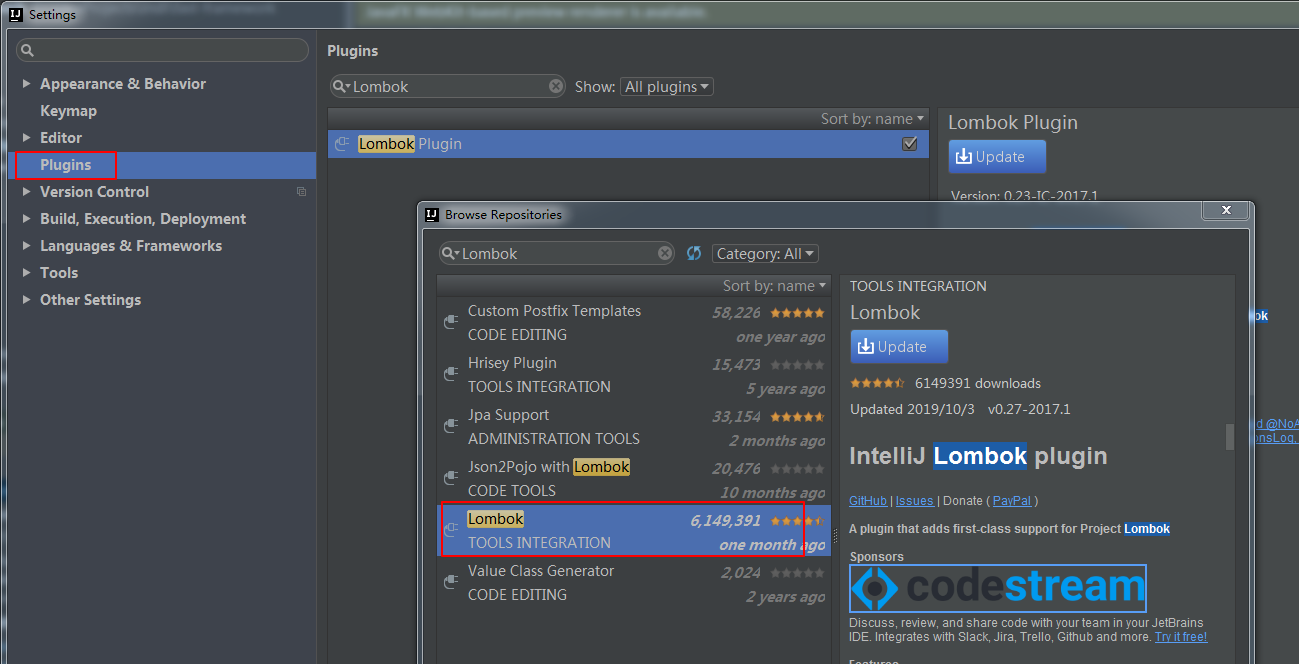
Maven依赖
<!-- lombok -->
<dependency>
    <groupId>org.projectlombok</groupId>
    <artifactId>lombok</artifactId>
    <scope>provided</scope>
</dependency>
@Data
@Data注解在类上,会为类的所有属性自动生成getter/setter、toString、equals、hashCode方法。如果为final属性,则不会为该属性生成setter方法。其实@Data相当于@Getter、@Setter、@RequiredArgsConstructor、@ToString和@EqualsAndHashCode的集合。
官方实例如下:
import lombok.AccessLevel;
import lombok.Data;
import lombok.Setter;
import lombok.ToString;

@Data
public class DataExample {
    private final String name;
    @Setter(AccessLevel.PACKAGE)
    private int age;
    private double score;
    private String[] tags;

    @ToString(includeFieldNames = true)
    @Data(staticConstructor = "of")
    public static class Exercise<T> {
        private final String name;
        private final T value;
    }
}
如果不使用Lombok,则实现如下:
import java.util.Arrays;

public class DataExample {
    private final String name;
    private int age;
    private double score;
    private String[] tags;

    public DataExample(String name) {
        this.name = name;
    }

    public String getName() {
        return this.name;
    }

    void setAge(int age) {
        this.age = age;
    }

    public int getAge() {
        return this.age;
    }

    public void setScore(double score) {
        this.score = score;
    }

    public double getScore() {
        return this.score;
    }

    public String[] getTags() {
        return this.tags;
    }

    public void setTags(String[] tags) {
        this.tags = tags;
    }

    @Override
    public String toString() {
        return "DataExample(" + this.getName() + ", " + this.getAge() + ", " + this.getScore() + ", " + Arrays.deepToString(this.getTags()) + ")";
    }

    protected boolean canEqual(Object other) {
        return other instanceof DataExample;
    }

    @Override
    public boolean equals(Object o) {
        if (o == this) return true;
        if (!(o instanceof DataExample)) return false;
        DataExample other = (DataExample) o;
        if (!other.canEqual((Object) this)) return false;
        if (this.getName() == null ? other.getName() != null : !this.getName().equals(other.getName())) return false;
        if (this.getAge() != other.getAge()) return false;
        if (Double.compare(this.getScore(), other.getScore()) != 0) return false;
        if (!Arrays.deepEquals(this.getTags(), other.getTags())) return false;
        return true;
    }

    @Override
    public int hashCode() {
        final int PRIME = 59;
        int result = 1;
        final long temp1 = Double.doubleToLongBits(this.getScore());
        result = (result * PRIME) + (this.getName() == null ? 43 : this.getName().hashCode());
        result = (result * PRIME) + this.getAge();
        result = (result * PRIME) + (int) (temp1 ^ (temp1 >>> 32));
        result = (result * PRIME) + Arrays.deepHashCode(this.getTags());
        return result;
    }

    public static class Exercise<T> {
        private final String name;
        private final T value;

        private Exercise(String name, T value) {
            this.name = name;
            this.value = value;
        }

        public static <T> Exercise<T> of(String name, T value) {
            return new Exercise<T>(name, value);
        }

        public String getName() {
            return this.name;
        }

        public T getValue() {
            return this.value;
        }

        @Override
        public String toString() {
            return "Exercise(name=" + this.getName() + ", value=" + this.getValue() + ")";
        }

        protected boolean canEqual(Object other) {
            return other instanceof Exercise;
        }

        @Override
        public boolean equals(Object o) {
            if (o == this) return true;
            if (!(o instanceof Exercise)) return false;
            Exercise<?> other = (Exercise<?>) o;
            if (!other.canEqual((Object) this)) return false;
            if (this.getName() == null ? other.getValue() != null : !this.getName().equals(other.getName()))
                return false;
            if (this.getValue() == null ? other.getValue() != null : !this.getValue().equals(other.getValue()))
                return false;
            return true;
        }

        @Override
        public int hashCode() {
            final int PRIME = 59;
            int result = 1;
            result = (result * PRIME) + (this.getName() == null ? 43 : this.getName().hashCode());
            result = (result * PRIME) + (this.getValue() == null ? 43 : this.getValue().hashCode());
            return result;
        }
    }
}
@Getter / @Setter
@Getter/@Setter可以注解在类和属性上。注解在类上,会为类的所有属性生成getter方法,会为类的所有非final属性生成setter方法。注解在属性上,可以为当前属性生成getter/setter方法。
官方实例如下:
import lombok.AccessLevel;
import lombok.Getter;
import lombok.Setter;

public class GetterSetterExample {

    @Getter
    @Setter
    private int age = 10;

    @Setter(AccessLevel.PROTECTED)
    private String name;

    @Override
    public String toString() {
        return String.format("%s (age: %d)", name, age);
    }
}
如果不使用Lombok,则实现如下:
public class GetterSetterExample {

    private int age = 10;

    private String name;

    @Override
    public String toString() {
        return String.format("%s (age: %d)", name, age);
    }

    public int getAge() {
        return age;
    }

    public void setAge(int age) {
        this.age = age;
    }

    protected void setName(String name) {
        this.name = name;
    }
}
@EqualsAndHashCode
@EqualsAndHashCode注解在类上,默认会使用非静态(non-static)和非瞬态(non-transient)属性来生成equals、canEqual和hashCode方法,也能通过exclude注解来排除一些属性。
官方实例如下:
import lombok.EqualsAndHashCode;

@EqualsAndHashCode
public class EqualsAndHashCodeExample {
    private transient int transientVar = 10;
    private String name;
    private double score;
    @EqualsAndHashCode.Exclude
    private Shape shape = new Square(5, 10);
    private String[] tags;
    @EqualsAndHashCode.Exclude
    private int id;

    public String getName() {
        return this.name;
    }

    @EqualsAndHashCode(callSuper = true)
    public static class Square extends Shape {
        private final int width, height;

        public Square(int width, int height) {
            this.width = width;
            this.height = height;
        }
    }
}
如果不使用Lombok,则实现如下:
import java.util.Arrays;

public class EqualsAndHashCodeExample {
    private transient int transientVar = 10;
    private String name;
    private double score;
    private Shape shape = new Square(5, 10);
    private String[] tags;
    private int id;

    public String getName() {
        return this.name;
    }

    @Override
    public boolean equals(Object o) {
        if (o == this) return true;
        if (!(o instanceof EqualsAndHashCodeExample)) return false;
        EqualsAndHashCodeExample other = (EqualsAndHashCodeExample) o;
        if (!other.canEqual((Object) this)) return false;
        if (this.getName() == null ? other.getName() != null : !this.getName().equals(other.getName())) return false;
        if (Double.compare(this.score, other.score) != 0) return false;
        if (!Arrays.deepEquals(this.tags, other.tags)) return false;
        return true;
    }

    @Override
    public int hashCode() {
        final int PRIME = 59;
        int result = 1;
        final long temp1 = Double.doubleToLongBits(this.score);
        result = (result * PRIME) + (this.name == null ? 43 : this.name.hashCode());
        result = (result * PRIME) + (int) (temp1 ^ (temp1 >>> 32));
        result = (result * PRIME) + Arrays.deepHashCode(this.tags);
        return result;
    }

    protected boolean canEqual(Object other) {
        return other instanceof EqualsAndHashCodeExample;
    }

    public static class Square extends Shape {
        private final int width, height;

        public Square(int width, int height) {
            this.width = width;
            this.height = height;
        }

        @Override
        public boolean equals(Object o) {
            if (o == this) return true;
            if (!(o instanceof Square)) return false;
            Square other = (Square) o;
            if (!other.canEqual((Object) this)) return false;
            if (!super.equals(o)) return false;
            if (this.width != other.width) return false;
            if (this.height != other.height) return false;
            return true;
        }

        @Override
        public int hashCode() {
            final int PRIME = 59;
            int result = 1;
            result = (result * PRIME) + super.hashCode();
            result = (result * PRIME) + this.width;
            result = (result * PRIME) + this.height;
            return result;
        }

        protected boolean canEqual(Object other) {
            return other instanceof Square;
        }
    }
}
@ToString
@ToString注解在类上,会为类的生成toString方法。默认会输出类名、所有属性(按照属性定义顺序),用逗号分隔。通过将includeFieldNames参数设为true,就能同时输出属性名。
官方实例如下:
import lombok.ToString;

@ToString
public class ToStringExample {
    private static final int STATIC_VAR = 10;
    private String name;
    private Shape shape = new Square(5, 10);
    private String[] tags;
    @ToString.Exclude
    private int id;

    public String getName() {
        return this.name;
    }

    @ToString(callSuper = true, includeFieldNames = true)
    public static class Square extends Shape {
        private final int width, height;

        public Square(int width, int height) {
            this.width = width;
            this.height = height;
        }
    }
}
如果不使用Lombok,则实现如下:
import java.util.Arrays;

public class ToStringExample {
    private static final int STATIC_VAR = 10;
    private String name;
    private Shape shape = new Square(5, 10);
    private String[] tags;
    private int id;

    public String getName() {
        return this.name;
    }

    public static class Square extends Shape {
        private final int width, height;

        public Square(int width, int height) {
            this.width = width;
            this.height = height;
        }

        @Override
        public String toString() {
            return "Square(super=" + super.toString() + ", width=" + this.width + ", height=" + this.height + ")";
        }
    }

    @Override
    public String toString() {
        return "ToStringExample(" + this.getName() + ", " + this.shape + ", " + Arrays.deepToString(this.tags) + ")";
    }
}
@NoArgsConstructor / @RequiredArgsConstructor / @AllArgsConstructor
注解在类上,会为类的生成无参构造器、部分参数构造器、全参构造器。Lombok没法实现多种参数构造器的重载。
官方实例如下:
import lombok.*;

@RequiredArgsConstructor(staticName = "of")
@AllArgsConstructor(access = AccessLevel.PROTECTED)
public class ConstructorExample<T> {
    private int x, y;
    @NonNull
    private T description;

    @NoArgsConstructor
    public static class NoArgsExample {
        @NonNull
        private String field;
    }
}
如果不使用Lombok,则实现如下:
public class ConstructorExample<T> {
    private int x, y;
    private T description;

    private ConstructorExample(T description) {
        if (description == null) throw new NullPointerException("description");
        this.description = description;
    }

    public static <T> ConstructorExample<T> of(T description) {
        return new ConstructorExample<T>(description);
    }

    @java.beans.ConstructorProperties({"x", "y", "description"})
    protected ConstructorExample(int x, int y, T description) {
        if (description == null) throw new NullPointerException("description");
        this.x = x;
        this.y = y;
        this.description = description;
    }

    public static class NoArgsExample {
        private String field;

        public NoArgsExample() {
        }
    }
}
@NonNull
@NonNull注解在属性、方法或构造器上,Lombok会生成一个空检查语句。
官方实例如下:
import lombok.NonNull;

public class NonNullExample extends Something {
    private String name;

    public NonNullExample(@NonNull Person person) {
        super("Hello");
        this.name = person.getName();
    }
}
如果不使用Lombok,则实现如下:
public class NonNullExample extends Something {
    private String name;

    public NonNullExample(Person person) {
        super("Hello");
        if (person == null) {
            throw new NullPointerException("person is marked @NonNull but is null");
        }
        this.name = person.getName();
    }
}
@Cleanup
@Cleanup注解在本地变量中,可以确保在代码执行路径退出当前范围之前自动清理给定资源。 官方实例如下:
import lombok.Cleanup;

import java.io.*;

public class CleanupExample {
    public static void main(String[] args) throws IOException {
        @Cleanup InputStream in = new FileInputStream(args[0]);
        @Cleanup OutputStream out = new FileOutputStream(args[1]);
        byte[] b = new byte[10000];
        while (true) {
            int r = in.read(b);
            if (r == -1) break;
            out.write(b, 0, r);
        }
    }
}
如果不使用Lombok,则实现如下:
import java.io.*;

public class CleanupExample {
    public static void main(String[] args) throws IOException {
        InputStream in = new FileInputStream(args[0]);
        try {
            OutputStream out = new FileOutputStream(args[1]);
            try {
                byte[] b = new byte[10000];
                while (true) {
                    int r = in.read(b);
                    if (r == -1) break;
                    out.write(b, 0, r);
                }
            } finally {
                if (out != null) {
                    out.close();
                }
            }
        } finally {
            if (in != null) {
                in.close();
            }
        }
    }
}
@Log
@Log注解在类上,Lombok会为当前类生成日志记录器,名为log。
// @Log
private static final java.util.logging.Logger log = java.util.logging.Logger.getLogger(LogExample.class.getName());

// @Log4j
private static final org.apache.log4j.Logger log = org.apache.log4j.Logger.getLogger(LogExample.class);

// @Log4j2
private static final org.apache.logging.log4j.Logger log = org.apache.logging.log4j.LogManager.getLogger(LogExample.class);

// @Slf4j
private static final org.slf4j.Logger log = org.slf4j.LoggerFactory.getLogger(LogExample.class);
官方实例如下:
import lombok.extern.java.Log;
import lombok.extern.slf4j.Slf4j;

@Log
public class LogExample {

    public static void main(String... args) {
        log.severe("Something's wrong here");
    }
}

@Slf4j
public class LogExampleOther {

    public static void main(String... args) {
        log.error("Something else is wrong here");
    }
}
总结
Lombok的优缺点很明显,如下:
优点:
- 能够通过注解的方式生成构造器、getter/setter、equals、hashcode、toString等方法,提高了一定的开发效率
- 让代码变得简洁,不用过多的去关注相应的方法
- 属性做修改时,也简化了为这些属性重新生成新的getter/setter方法等
缺点:
- 需要安装插件
- 不支持多种参数构造器的重载
但是,当你尝试使用过它之后,你很难再不用它。
