通过之前的文章我们已经知道对于一个事务执行多个业务,是通过实现TransactionSynchronization,当提交和回滚是回调完成.那么什么来注册TransactionSynchronization呢
TransactionSynchronizationManager
我们需要看一下registerSynchronization()方法的调用方,我们通过调用就可以知道第三方厂商实现调用的地方
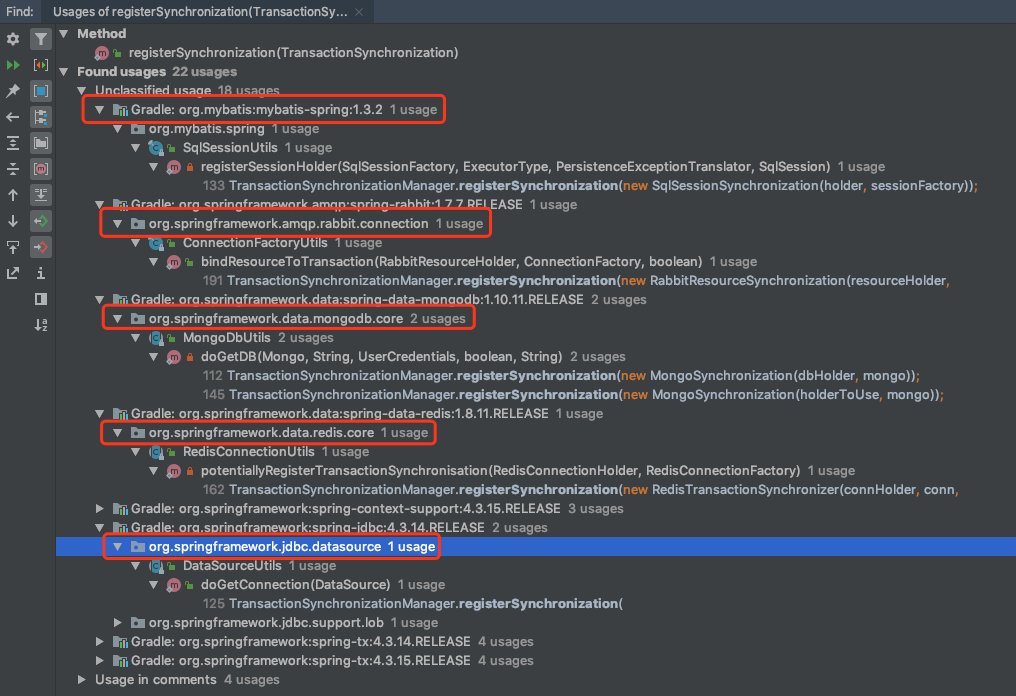
按照调用的引用关系. 目前我们的项目中有MyBatis, RabbitMQ, MongoDB, Redis, 和Spring jdbc有实现
接下来我们一步步看都是在何时注册
Mybatis
SqlSessionUtils#registerSessionHolder()
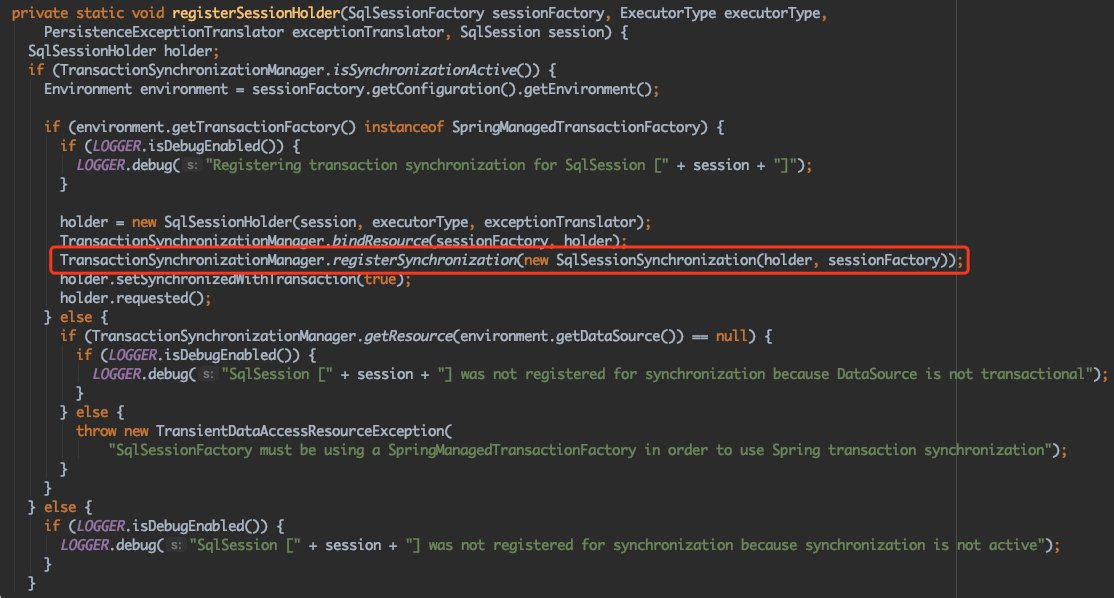
SqlSessionSynchronization
我们看一下具体实现TransactionSynchronization相关的commit和completion代码
public void beforeCommit(boolean readOnly) {
  if (TransactionSynchronizationManager.isActualTransactionActive()) {
    try {
      if (LOGGER.isDebugEnabled()) {
        LOGGER.debug("Transaction synchronization committing SqlSession [" + this.holder.getSqlSession() + "]");
      }
      this.holder.getSqlSession().commit();
    } catch (PersistenceException p) {
      if (this.holder.getPersistenceExceptionTranslator() != null) {
        DataAccessException translated = this.holder
            .getPersistenceExceptionTranslator()
            .translateExceptionIfPossible(p);
        if (translated != null) {
          throw translated;
        }
      }
      throw p;
    }
  }
}

public void beforeCompletion() {
  // Issue #18 Close SqlSession and deregister it now
  // because afterCompletion may be called from a different thread
  if (!this.holder.isOpen()) {
    if (LOGGER.isDebugEnabled()) {
      LOGGER.debug("Transaction synchronization deregistering SqlSession [" + this.holder.getSqlSession() + "]");
    }
    TransactionSynchronizationManager.unbindResource(sessionFactory);
    this.holderActive = false;
    if (LOGGER.isDebugEnabled()) {
      LOGGER.debug("Transaction synchronization closing SqlSession [" + this.holder.getSqlSession() + "]");
    }
    this.holder.getSqlSession().close();
  }
}

public void afterCompletion(int status) {
  if (this.holderActive) {
    // afterCompletion may have been called from a different thread
    // so avoid failing if there is nothing in this one
    if (LOGGER.isDebugEnabled()) {
      LOGGER.debug("Transaction synchronization deregistering SqlSession [" + this.holder.getSqlSession() + "]");
    }
    TransactionSynchronizationManager.unbindResourceIfPossible(sessionFactory);
    this.holderActive = false;
    if (LOGGER.isDebugEnabled()) {
      LOGGER.debug("Transaction synchronization closing SqlSession [" + this.holder.getSqlSession() + "]");
    }
    this.holder.getSqlSession().close();
  }
  this.holder.reset();
}
这里有一个点: 我们发现MyBatis里只是实现了commit, holder的失效和resource的解绑. 并没有实现rollback.
个人觉得mybatis可能是觉得依赖于Connection的commit.因为本身在TransactionSynchronization的概念里,没有rollback只有commit和completion. 而Mybatis一定是依赖于ConnectionHolder,因此一定可以使用Connection的rollback.
但是我觉得我的理解是有问题的,因为MyBatis本身自己就实现了一套commit和rollback机制,当然底层还是使用Connection的commit和rollback.只不过是增加了一些缓存相关的处理.
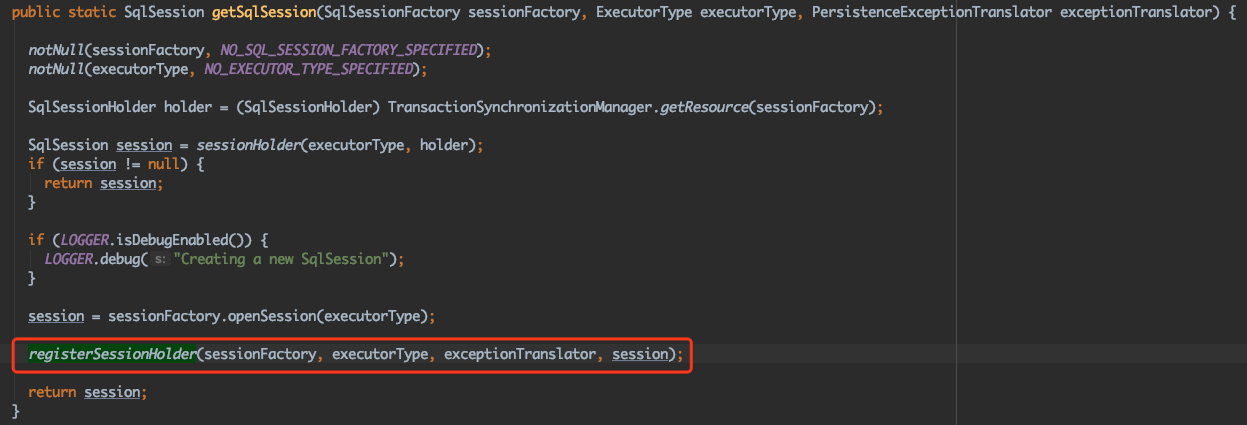
通过方法名我们便可以看出,每当获取Session是,就会注册对应的TransactionSynchronization
RabbitMQ
ConnectionFactoryUtils#bindResourceToTransaction()
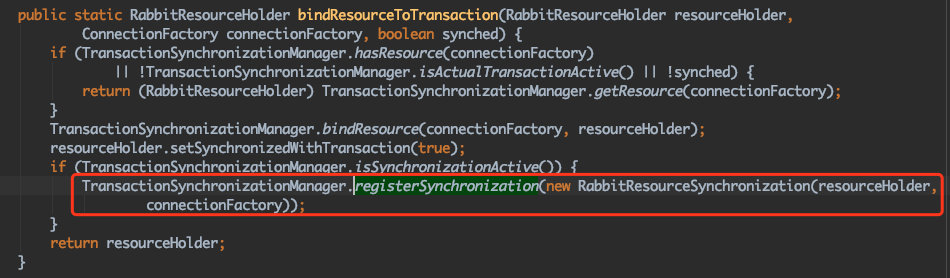
RabbitResourceSynchronization
public void afterCompletion(int status) {
	if (status == TransactionSynchronization.STATUS_COMMITTED) {
		this.resourceHolder.commitAll();
	}
	else {
		this.resourceHolder.rollbackAll();
	}

	if (this.resourceHolder.isReleaseAfterCompletion()) {
		this.resourceHolder.setSynchronizedWithTransaction(false);
	}
	super.afterCompletion(status);
}

protected void releaseResource(RabbitResourceHolder resourceHolder, Object resourceKey) {
	ConnectionFactoryUtils.releaseResources(resourceHolder);
}
Rabbit是已经实现了根据TransactionStatus来决定是commit还是rollback
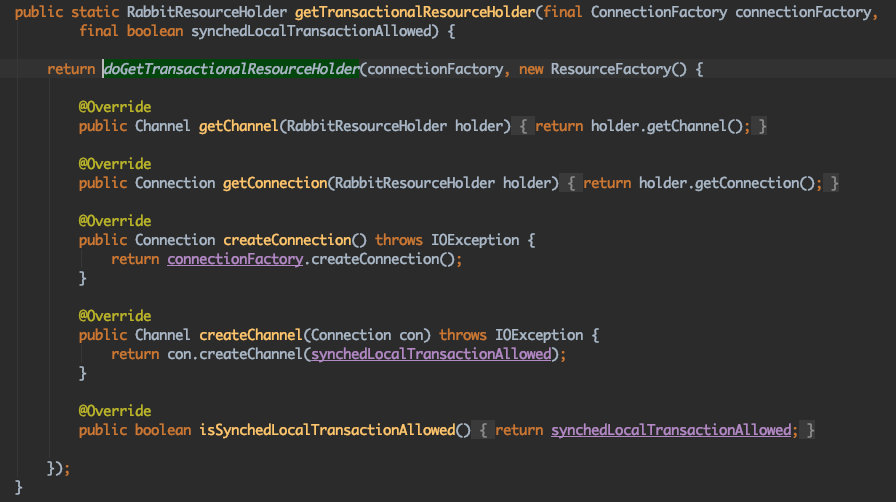
ConnectionFactoryUtils#doGetTransactionalResourceHolder()
private static RabbitResourceHolder doGetTransactionalResourceHolder(ConnectionFactory connectionFactory,
		ResourceFactory resourceFactory) {

	Assert.notNull(connectionFactory, "ConnectionFactory must not be null");
	Assert.notNull(resourceFactory, "ResourceFactory must not be null");

	RabbitResourceHolder resourceHolder = (RabbitResourceHolder) TransactionSynchronizationManager.getResource(connectionFactory);
	if (resourceHolder != null) {
		Channel channel = resourceFactory.getChannel(resourceHolder);
		if (channel != null) {
			return resourceHolder;
		}
	}
	RabbitResourceHolder resourceHolderToUse = resourceHolder;
	if (resourceHolderToUse == null) {
		resourceHolderToUse = new RabbitResourceHolder();
	}
	Connection connection = resourceFactory.getConnection(resourceHolderToUse); //NOSONAR
	Channel channel = null;
	try {
		/*
		 * If we are in a listener container, first see if there's a channel registered
		 * for this consumer and the consumer is using the same connection factory.
		 */
		channel = ConsumerChannelRegistry.getConsumerChannel(connectionFactory);
		if (channel == null && connection == null) {
			connection = resourceFactory.createConnection();
		if (resourceHolder == null) {
			/*
			 * While creating a connection, a connection listener might have created a
			 * transactional channel and bound it to the transaction.
			 */
			resourceHolder = (RabbitResourceHolder) TransactionSynchronizationManager
					.getResource(connectionFactory);
			if (resourceHolder != null) {
					channel = resourceHolder.getChannel();
					resourceHolderToUse = resourceHolder;
				}
			}
			resourceHolderToUse.addConnection(connection);
		}
		if (channel == null) {
			channel = resourceFactory.createChannel(connection);
		}
		resourceHolderToUse.addChannel(channel, connection);
		if (resourceHolderToUse != resourceHolder) {
			bindResourceToTransaction(resourceHolderToUse, connectionFactory,
					resourceFactory.isSynchedLocalTransactionAllowed());
		}
		return resourceHolderToUse;

	}
	catch (IOException ex) {
		RabbitUtils.closeConnection(connection);
		throw new AmqpIOException(ex);
	}
}
从方法名上看是获取TransactionResouceHolder.有点懵,我们继续往上看调用方
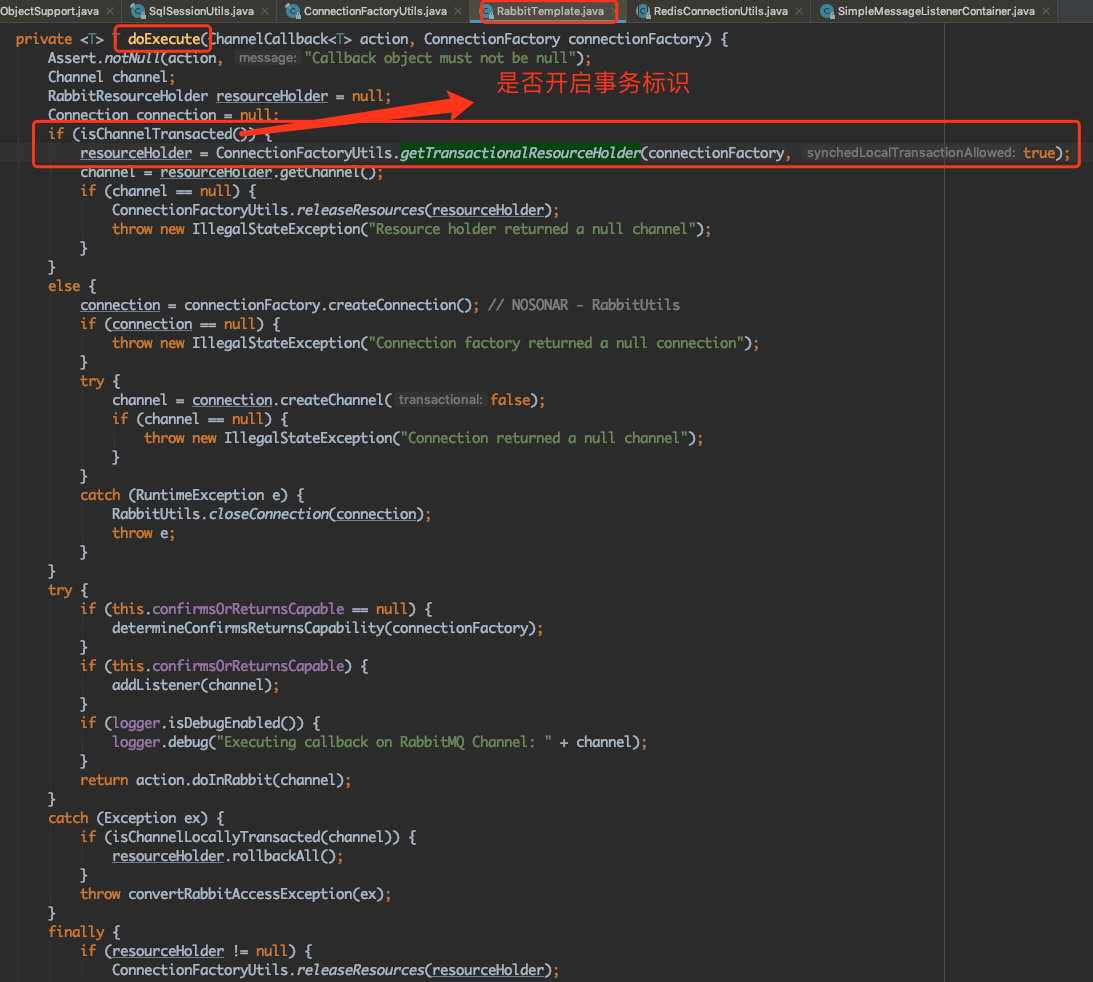
好了. 看到doExecute就知道是我们执行RabbitTemplate#convertAndSend()的具体实现
MongoDB
MongoDbUtils#doGetDB()
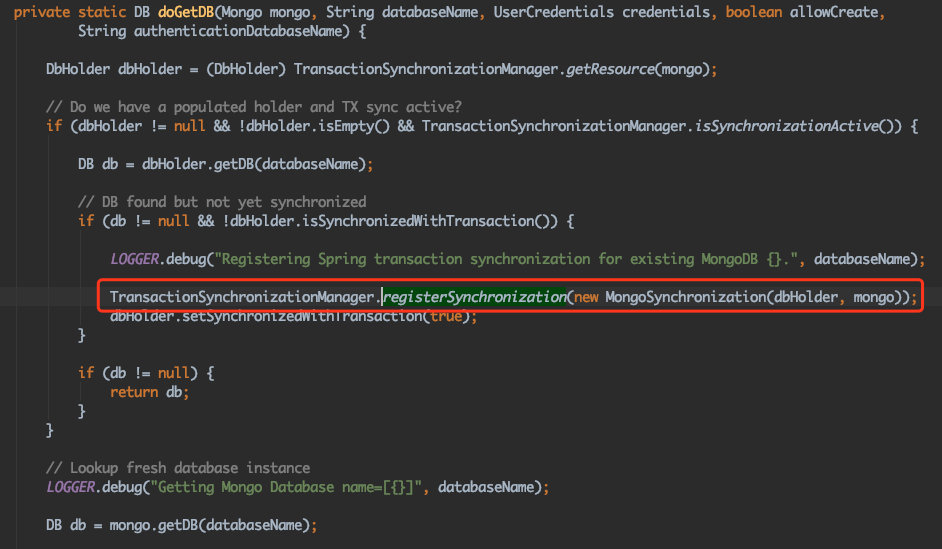
可以理解为建立连接的时候就就直接注册
MongoSynchronization

没什么好说的了,继承父类的绑定解绑Resource.没有自己的实现
Redis
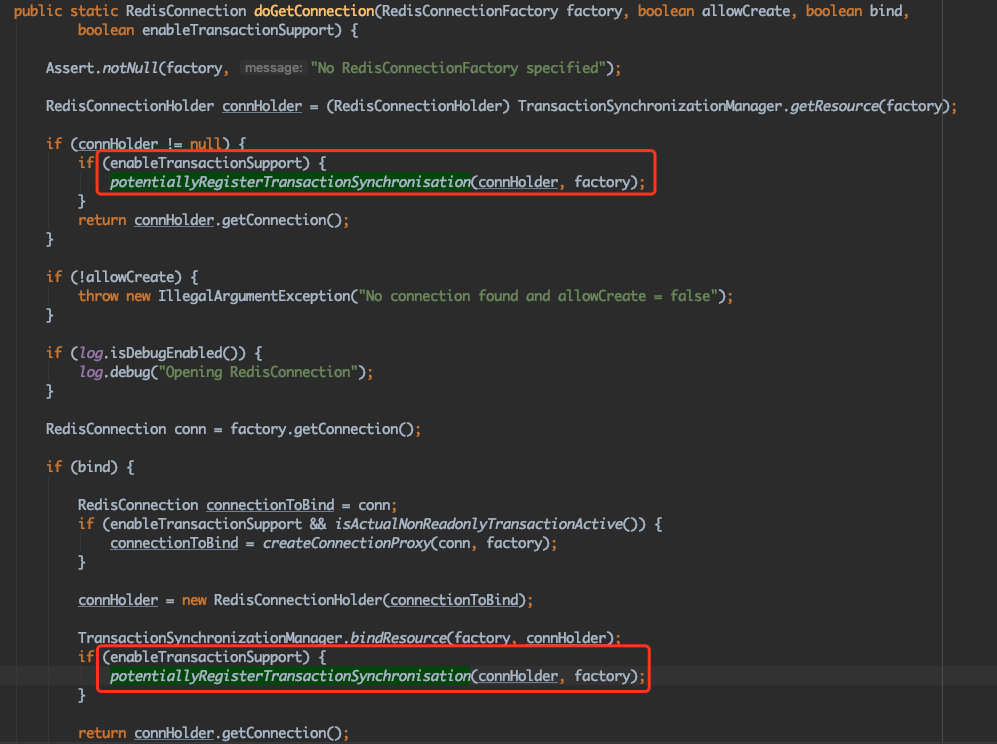
RedisConnectionUtils#potentiallyRegisterTransactionSynchronisation()
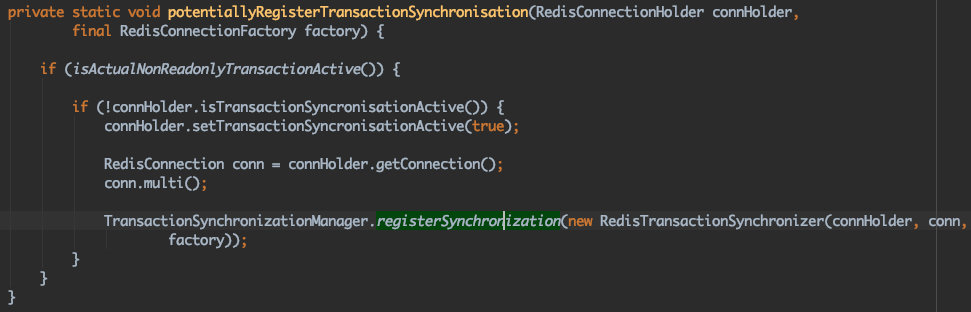
可以看到是获取连接的时候进行注册
RedisTransactionSynchronizer
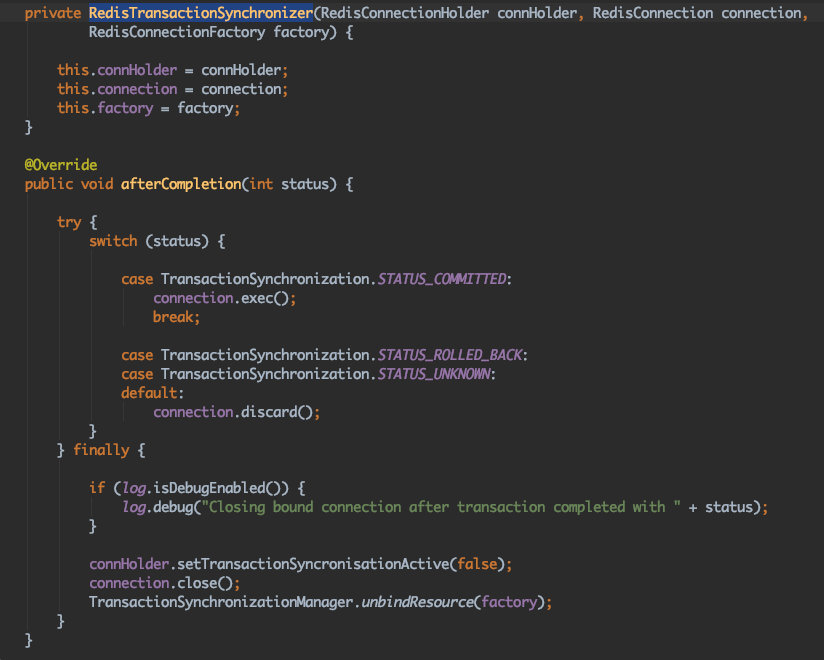
虽然Redis的事务是基于乐观锁实现,很鸡肋,但是至少也是人家的一种态度. 我们看一下他的实现和Rabbit类似,都是继续status来commit或者rollback(discard表示取消事务)
RedisConnectionUtils#doGetConnection()
Spring JDBC
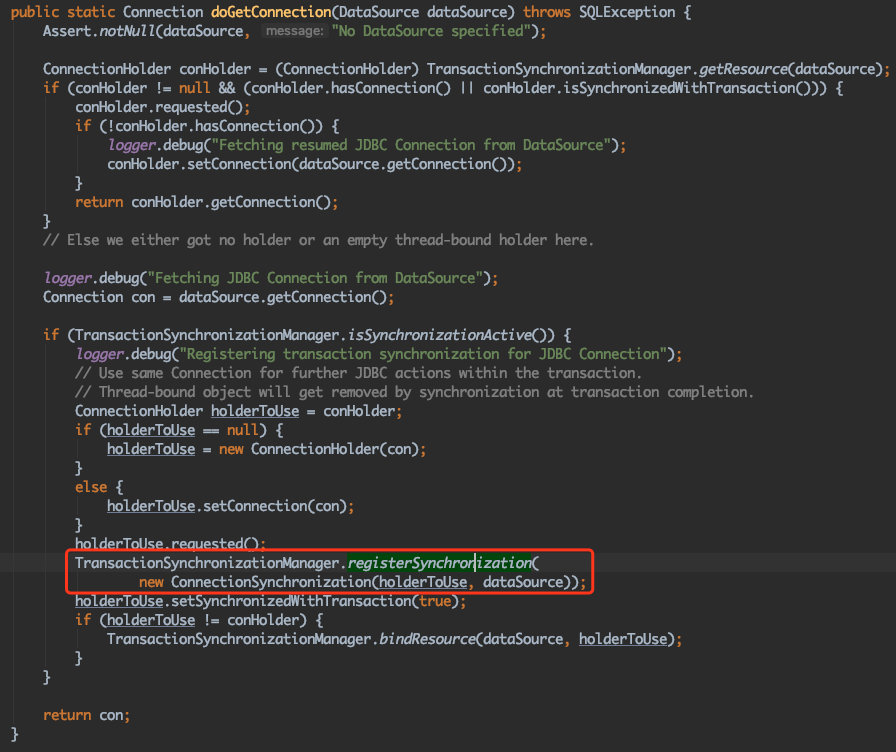
DataSourceUtils#doGetConnection
ConnectionSynchronization
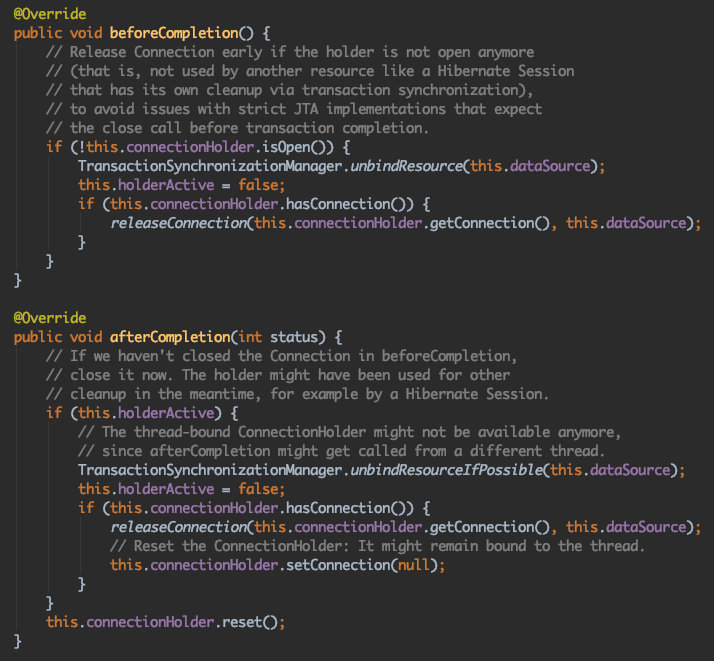
这一部分发现Spring Jdbc主要是先除了解绑dataSource,还有一个作用是关闭连接
总结
通过注册TransactionSynchronization实现类的代码,我们可以发现.这一部分其实是Spring提供开放性扩展的一个地方.首先Spring提供@Transactional注解,如果让自己来控制事务相关,假如一个事务中又有jdbc, 又有rabbit,又有redis,想一下自己控制的话需要写多少的冗余代码.但是spring提供的这个特性,和TransactionManager无关,在任何的TransactionManager中只要注册就可以执行.
例如: RabbitTemplate, RedisTemplate,并不依赖TransactionManager,只需要Connection就可自动和@Transactional集成.
现在我们串一下:
执行@Transactional方法,执行TransactionAspectSupport#invokeWithinTransaction(), 开启事务,执行方法(rabbitTemplate, redisTempalte等在方法中执行是会自动注册TransactionSynchronization至线程安全TransactionSynchronizationManager),异常设置线程共享变量rollbackOnly为true. 提交事务或回滚(TransactionSynchronizationManager#getSynchronizations(),然后遍历执行对应的方法)
好了, Spring事务相关你的代码已经写完. 接下来开始准备Dubbo的源码解析.