第二章: 面向对象
概念? 面向对象(类)三要素:继承 封装 多态? js应用举例?面向对象的意义?
1.概念?
  写一个类,这类提供很多的方法,通过构造多个实例来,使每个实例都有这个类的方法,和属性。
2.面向对象三要素
  ①  继承:子类继承父类 (将公共方法抽离出来,提高代码复用率,减少冗余)
        // 父类
        class Person {
            constructor(name) {
                this.name = name;
            }
            getName() {
                return this.name
            }
        }

        // 子类继承父类
        class Child extends Person {
            constructor(name, number) {
                super(name)
                this.number = number
            }
            study() {
                console.log('学生号为:' + this.number + '名字:' + this.name)
            }
        }

        // 初始化实例,使用子类方法
        let ChilidOne = new Child('marry', 12)
        ChilidOne.study()

        // 调用继承来的父类方法
        let name = ChilidOne.getName()
        console.log(name)

  ② 封装:数据的权限和保密
       例子: (ts演示,es6不支持),使用ts定义变量来控制数据权限
                public 完全开放
                protected 对子类开放
                private 对自己开放
                ts中定义变量可以体现
                http://www.typescriptlang.org/play/index.html (ts转js工具)
       封装三要素:
           减少耦合,不改外露的不外露
           利于数据,接口的权限管理
           es6目前不支持,一般以_开头的属性是private

  ③ 多态:同一接口不同实现
        概念: 提出公共部分,继承公共部分后实现不同子类,保持子类的开放性和灵活性。
        // 父类
        class Person {
            constructor(name) {
                this.name = name;
            }
            getName() {
                return this.name
            }
        }
        // 子类继承父类
        class A extends Person {
            constructor(name, age) {
                super(name)
                this.age = age
            }
            getSome() {
                console.log(this.name + this.age)
            }
        }
        // 子类继承父类
        class B extends Person {
            constructor(name, age) {
                super(name)
                this.age = age
            }
            getSome() {
                console.log(this.name + this.age)
            }
        }
        let a = new A('A', 12)
        a.getName()
        let b = new B('B', 12)
        b.getName()
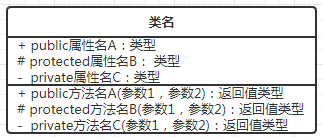
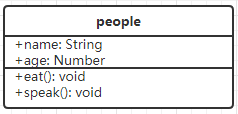
④ UML类图
  unified modeling language  统一建模语言
  类图,UML 包含很多种图,和本科相关的类图
  关系,泛化和关联 (泛化表示继承,关联表示引用关系)
  工具: MS OFFICE VISIO
         https://www.processon.com/
第三章 设计原则 何为设计? 五大设计原则 从设计到模式 介绍23中设计模式 《UNIX/LINUX设计哲学》
1. 10个设计准则
    ① 小即是美
    ② 让每个子程序都做好一个事情
    ③ 快速创建原型
    ④ 舍弃高效率而取可移植性 (通用)
    ⑤ 采用纯文本存储数据
    ⑥ 充分利用软件的杠杆效应(软件复用)
    ⑦ 使用shell脚本提高杠杆效应
    ⑧ 避免强制性的用户界面
    ⑨ 让每个程序都称为过滤器

    小准则
    ① 允许用户配置环境
    ② 操作系统小 轻量化
    ③ 使用小写并简写
    ④ 沉默是金(要输出标准,否则不输出)
    ⑤ 各部分只和大于整体
    ⑥ 寻求90%的解决方案

2. SOLID5个设计原则
    S - 单一职责原则
        一个程序做好一件事,如果功能过于复杂,拆分保持独立
    O - 开放封闭原则
        对扩展开放,对修改缝补,增加需求时,扩展新代码,而非修改已有代码,终极目标。
    L - 李氏置换原则
        子类能覆盖父类,父类能出现的地方子类就能出现,js中使用较少(弱类型&继承使用较少)
    I = 接口独立原则
        保持接口的单一独立,避免出现“胖接口”.
        js终是没有接口的,ts有,使用较少,
        类似于单一职责原理,这里更关注接口。
    D - 依赖倒置原则
        面向接口编程,依赖于抽象而依赖于具体
        使用方关注接口不关注具体类的实现
        js中使用较少( 没有接口&弱类型 )

3. 23种设计模式
   ① 创建型
      工厂模式 (工厂方法模式,抽象工厂模式,建造者模式)
      单例模式
      原型模式
   ② 结构型
      适配器模式
      装饰器模式
      代理模式
      外观模式
      桥接模式
      组合模式
      享元模式
   ③ 行为型 - 1
      策略模式
      模板方法模式
      观察者模式
      迭代器模式
      职责连模式
      命令模式
   ④ 行为型 - 2
      备忘录模式
      状态模式
      访问者模式
      终结者模式
      解释器模式

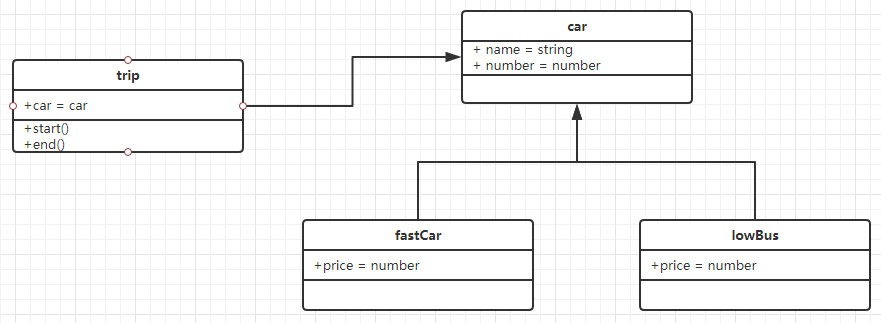
题目1:
   打车时,可以打专车或者快车,任何车都有车牌号码和名称。
   不同车价格不同,快车没公里1元,专车每公里2元。
   行程开始时,显示车辆信息。
   行程结束时,显示打车金额(假设行车5公里)
   请画出 UML 类图? 用es6 语法写出该示例?
    class car {
        constructor(number, name) {
            this.name = name;
            this.number = number;
        }
    }
    class fastCar extends car {
        constructor(number, name) {
            super(number, name)
            this.price = 2;
        }
    }
    class lowCar extends car {
        constructor(number, name) {
            super(number, name)
            this.price = 1;
        }
    }
    class Trip {
        constructor(car) {
            this.car = car
        }
        start() {
            console.log(`形成开始,名称:${this.car.name},车牌号码:${this.car.number}`)
        }
        end() {
            console.log(`行程结束,价格:${ this.car.price*5}`)
        }
    }
    let kuaiche = new fastCar(100, '快车');
    let kcPrice = new Trip(kuaiche)
    kcPrice.start();
    kcPrice.end();

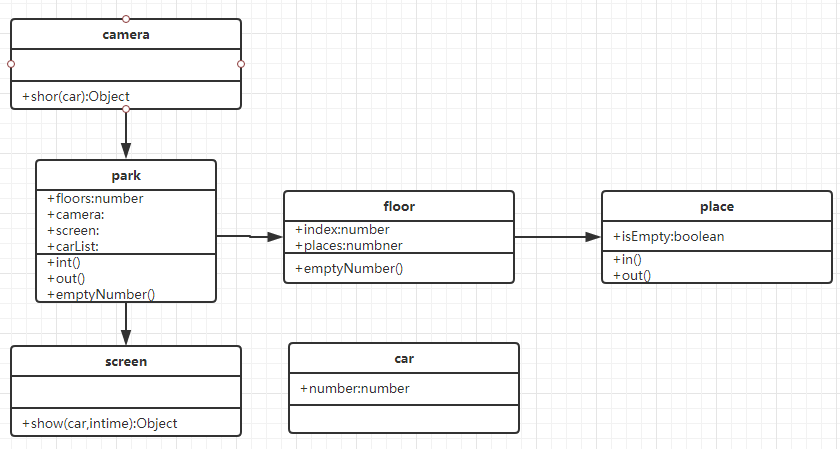
题目2:
     某停车场。分3层,每层100个车位
     每个车位都能监控到车辆的驶入和离开
     车辆进入前,显示每层的空余车位数量
     车辆进入时,摄像头科识别车牌号和时间
     车辆出来时,出口显示器显示车牌号和停车时长
     请画出 UML 类图? es6代码实现?
        class park {
            constructor(floors, camera) {
                this.floors = floors || [];
                this.carList = {};
                this.Camera = new Camera();
                this.Screen = new Screen()
            }
            int(car) {
                let info = this.Camera.shot(car)
                const i = Number.parseInt(Math.random() * 100 / 100);
                let place = this.floors[0].places[i];
                place.int();
                info.place = place;
                this.carList[car.num] = info;
            }
            out(car) {
                let info = this.carList[car.num];
                place = info.place;
                place.out();
                this.Screen.show(info, info.inTime)
                delete this.carList[info.num]
            }
            emptyNum() {
                return this.floors.map(floor => {
                    return `${floor.index} 层还有${floor.emptyNumber()} 个空余停车位`
                }).join('\n')
            }
        }

        class floor {
            constructor(index, places) {
                this.index = index;
                this.places = places;
            }
            emptyNumber() {
                let num = 0;
                this.places.forEach(p => {
                    if (p.empty) {
                        num = num + 1;
                    }
                });
                return num;
            }
        }
        class place {
            constructor() {
                this.empty = true;
            }
            int() {
                this.empty = false
            }
            out() {
                this.empty = true;
            }
        }

        class car {
            constructor(number) {
                this.number = number;
            }
        }

        class Camera {
            shot(car) {
                return {
                    num: car.number,
                    inTime: new Date()
                }
            }
        }

        class Screen {
            show(car, inTime) {
                console.log(`车牌号${car.num}`);
                console.log(`停车时间${new Date() - inTime}秒`);
            }
        }

        const floors = []
        for (let i = 0; i < 3; i++) {
            const placest = [];
            for (let j = 0; j < 100; j++) {
                placest[j] = new place();
            }
            floors[i] = new floor(i + 1, placest)
        }
        const parkt = new park(floors);

        const cart = new car('A100');
        parkt.int(cart)

        const num = parkt.emptyNum();

        console.log(num)
        parkt.out(cart)

1 层还有99 个空余停车位
2 层还有100 个空余停车位
3 层还有100 个空余停车位
part.js:132 车牌号A100
part.js:133 停车时间9秒
*/