线程池
线程池参数
public ThreadPoolExecutor(int corePoolSize, // 核心线程数
                          int maximumPoolSize, // 最大线程数
                          long keepAliveTime, // 空闲线程的保留时间
                          TimeUnit unit, // 空闲线程保留的时间的单位
                          BlockingQueue<Runnable> workQueue, // 用于保存等待执行任务的阻塞队列
                          ThreadFactory threadFactory, // 用于设置创建线程的工厂
                          RejectedExecutionHandler handler // 拒绝策略) {
    if (corePoolSize < 0 ||
        maximumPoolSize <= 0 ||
        maximumPoolSize < corePoolSize ||
        keepAliveTime < 0)
        throw new IllegalArgumentException();
    if (workQueue == null || threadFactory == null || handler == null)
        throw new NullPointerException();
    this.acc = System.getSecurityManager() == null ?
        null :
    AccessController.getContext();
    this.corePoolSize = corePoolSize;
    this.maximumPoolSize = maximumPoolSize;
    this.workQueue = workQueue;
    this.keepAliveTime = unit.toNanos(keepAliveTime);
    this.threadFactory = threadFactory;
    this.handler = handler;
}

-
RejectedExecutionHandler(饱和策略)
- AbortPolicy:直接抛出异常(默认)
- CallerRunsPolicy:只用调用者所在线程来运行任务。
- DiscardPolicy:不处理,丢弃掉
- DiscardOldestPolicy:丢弃队列里最靠前的一个任务,并执行当前任务
-
BlockingQueue(阻塞队列)
- ArrayBlockingQueue(有界队列)
- LinkedBlockingQueue(无界队列)
- SynchronousQueue(同步队列)
- PriorityBlockingQueue(带有优先级的无界阻塞队列)
- DelayQueue(支持延时获取元素的无界阻塞队列)
-
ThreadFactory(用来创建线程池中的线程,通常用默认的即可)
-
TimeUnit
- TimeUnit.SECONDS(秒)
- TimeUnit.MILLISECONDS(毫秒)
-
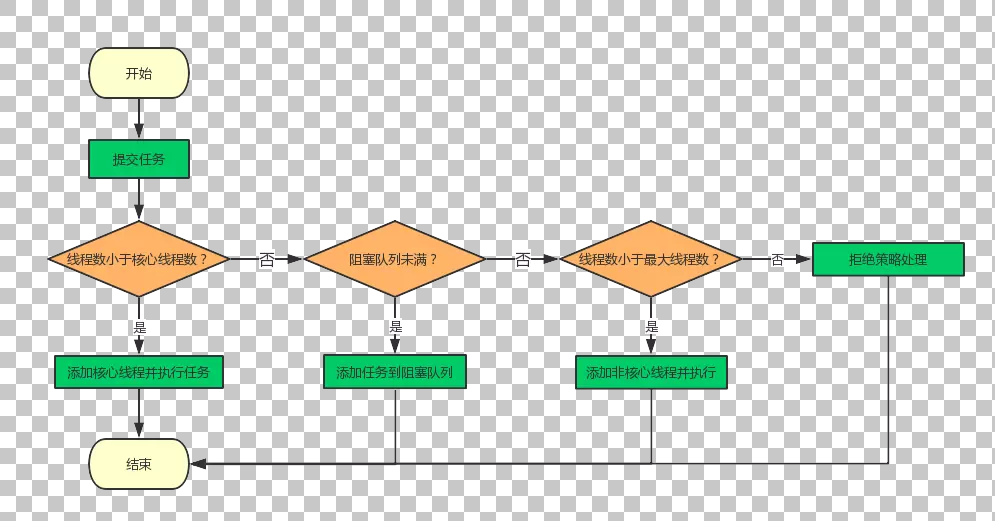
关于核心线程数,最大线程数等要怎么理解
当一个任务要被添加进线程池时,有以下四种执行策略:
- 线程数量未达到 corePoolSize且小于maximumPoolSize,则新建一个线程(核心线程)执行任务。
- 线程数量达到了 corePoolsSize,则将任务移入队列等待。
- 队列已满,新建非核心线程执行任务。
- 队列已满,总线程数又达到了 maximumPoolSize,就会由 RejectedExecutionHandler 抛出异常。
如何创建一个线程
-
通过Executors
- newSingleThreadPool
public static ExecutorService newSingleThreadExecutor() { return new FinalizableDelegatedExecutorService (new ThreadPoolExecutor(1, 1, // 核心线程数和最大线程数都是1 0L, TimeUnit.MILLISECONDS, new LinkedBlockingQueue<Runnable>())); } // 阻塞对列用的是LinkedBlockingQueue- newCachedThreadPool
public static ExecutorService newCachedThreadPool() { return new ThreadPoolExecutor(0, Integer.MAX_VALUE,// 核心线程数0,最大线程数MAX 60L, TimeUnit.SECONDS,// 存活时间60ms new SynchronousQueue<Runnable>()); } // 阻塞队列用的是SynchronousQueue- newFixedThreadPool
public static ExecutorService newFixedThreadPool(int nThreads) { return new ThreadPoolExecutor(nThreads, nThreads,// 核心线程数和最大线程数相等 0L, TimeUnit.MILLISECONDS, new LinkedBlockingQueue<Runnable>()); } // 阻塞队列用的是LinkedBlockingQueue- newScheduledThreadPool
public static ScheduledExecutorService newScheduledThreadPool(int corePoolSize) {
    return new ScheduledThreadPoolExecutor(corePoolSize);
}
public ScheduledThreadPoolExecutor(int corePoolSize) {
    super(corePoolSize, Integer.MAX_VALUE, 0, NANOSECONDS,
          new DelayedWorkQueue());
}		  // 阻塞队列用的是DelayedWorkQueue
public ThreadPoolExecutor(int corePoolSize,
                          int maximumPoolSize,
                          long keepAliveTime,
                          TimeUnit unit,
                          BlockingQueue<Runnable> workQueue) {
    this(corePoolSize, maximumPoolSize, keepAliveTime, unit, workQueue,
         Executors.defaultThreadFactory(), defaultHandler);
}
合理配置
- CPU密集型任务,需要尽量压榨CPU,参考值可以设为NCPU + 1
- IO密集型任务,参考值可以设为2 * NCPU