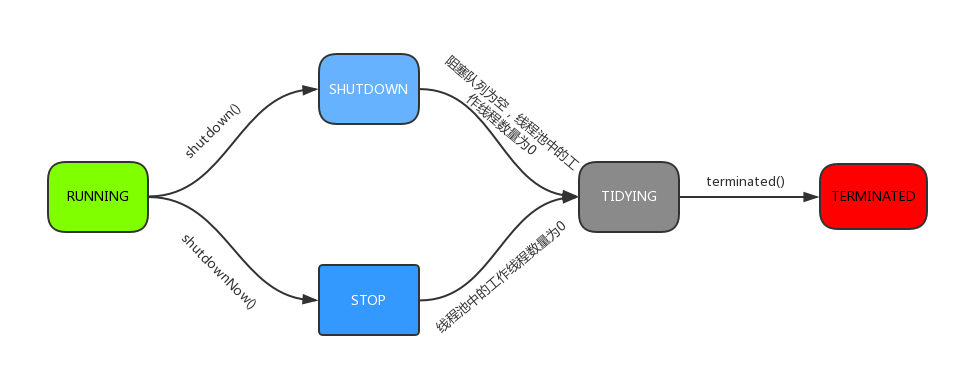
线程池的状态转换过程:
ThreadPoolExecutor execute执行过程:
- 如果workerCount < corePoolSize,则创建并启动一个线程来执行新提交的任务;
- 如果workerCount >= corePoolSize,且线程池内的阻塞队列未满,则将任务添加到该阻塞队列中;
- 如果workerCount >= corePoolSize && workerCount < maximumPoolSize,且线程池内的阻塞队列已满,则创建并启动一个线程来执行新提交的任务;
- 如果workerCount >= maximumPoolSize,并且线程池内的阻塞队列已满, 则根据拒绝策略来处理该任务, 默认的处理方式是直接抛异常。
public void execute(Runnable command) {
    if (command == null)
        throw new NullPointerException();
    int c = ctl.get();
    if (workerCountOf(c) < corePoolSize) {
        if (addWorker(command, true))
            return;
        c = ctl.get();
    }
    if (isRunning(c) && workQueue.offer(command)) {
        int recheck = ctl.get();
        if (! isRunning(recheck) && remove(command))
            reject(command);
        else if (workerCountOf(recheck) == 0)
            addWorker(null, false);
    } else if (!addWorker(command, false))
        reject(command);
}
线程池execute的runnable都是在Worker里执行
private final class Worker
        extends AbstractQueuedSynchronizer
        implements Runnable {
    public void run() {
        runWorker(this);
    }
    final void runWorker(Worker w) {
        Thread wt = Thread.currentThread();
        Runnable task = w.firstTask;
        w.firstTask = null;
        w.unlock(); // allow interrupts
        boolean completedAbruptly = true;
        try {
            while (task != null || (task = getTask()) != null) {
                w.lock();
                // If pool is stopping, ensure thread is interrupted;
                // if not, ensure thread is not interrupted.  This
                // requires a recheck in second case to deal with
                // shutdownNow race while clearing interrupt
                if ((runStateAtLeast(ctl.get(), STOP) ||
                        (Thread.interrupted() &&
                                runStateAtLeast(ctl.get(), STOP))) &&
                        !wt.isInterrupted())
                    wt.interrupt();
                try {
                    beforeExecute(wt, task);
                    Throwable thrown = null;
                    try {
                        task.run();
                    } catch (RuntimeException x) {
                        thrown = x;
                        throw x;
                    } catch (Error x) {
                        thrown = x;
                        throw x;
                    } catch (Throwable x) {
                        thrown = x;
                        throw new Error(x);
                    } finally {
                        afterExecute(task, thrown);
                    }
                } finally {
                    task = null;
                    w.completedTasks++;
                    w.unlock();
                }
            }
            completedAbruptly = false;
        } finally {
            processWorkerExit(w, completedAbruptly);
        }
    }
}
总结一下runWorker方法的执行过程:
- while循环不断地通过getTask()方法获取任务;
- getTask()方法从阻塞队列中取任务;
- 如果线程池正在停止,那么要保证当前线程是中断状态,否则要保证当前线程不是中断状态;
- 调用task.run()执行任务;
- 如果task为null则跳出循环,执行processWorkerExit()方法;
- runWorker方法执行完毕,也代表着Worker中的run方法执行完毕,销毁线程。
如下代码的含义:
if ((runStateAtLeast(ctl.get(), STOP) ||  // 线程池是停止状态
        (Thread.interrupted() &&   //代码执行到此,说明不是停止状态
        runStateAtLeast(ctl.get(), STOP))) &&
        !wt.isInterrupted())
            wt.interrupt();
- 如果线程池是停止状态,则需要保证正在执行的wt为中断状态
- 如果不是停止状态,则要保证当前线程为非中断状态。因为interrupted方法会清除中断标记(可以参考interrupted方法介绍)。
/**
 * Tests whether the current thread has been interrupted.  The
 * <i>interrupted status</i> of the thread is cleared by this method.  In
 * other words, if this method were to be called twice in succession, the
 * second call would return false (unless the current thread were
 * interrupted again, after the first call had cleared its interrupted
 * status and before the second call had examined it).
 *
 * <p>A thread interruption ignored because a thread was not alive
 * at the time of the interrupt will be reflected by this method
 * returning false.
 *
 * @return  <code>true</code> if the current thread has been interrupted;
 */
@FastNative
public static native boolean interrupted();
下面看下getTask()的执行过程:
private Runnable getTask() {
    boolean timedOut = false; // Did the last poll() time out?
    for (;;) {
        int c = ctl.get();
        int rs = runStateOf(c);
        // Check if queue empty only if necessary.
        if (rs >= SHUTDOWN && (rs >= STOP || workQueue.isEmpty())) {
            decrementWorkerCount();
            return null;
        }
        int wc = workerCountOf(c);
        // Are workers subject to culling?
        boolean timed = allowCoreThreadTimeOut || wc > corePoolSize;
        if ((wc > maximumPoolSize || (timed && timedOut))
            && (wc > 1 || workQueue.isEmpty())) {
            if (compareAndDecrementWorkerCount(c))
                return null;
            continue;
        }
        try {
            Runnable r = timed ?
                workQueue.poll(keepAliveTime, TimeUnit.NANOSECONDS) :
                workQueue.take();  // 如果队列为空,take方法会阻塞线程
            if (r != null)
                return r;
            timedOut = true;
        } catch (InterruptedException retry) {
            timedOut = false;
        }
    }
}
通过getTask()可以知道,corepoolSize的线程是通过take阻塞住线程来保证不被销毁的。