/**
*
* @param p 列数的数组
* @param i 相乘的开始
* @param j 相乘的结尾
* @return
*/publicstaticintMatrixChainOrder(int p[], int i, int j){
if (i == j)
return0;
int min = Integer.MAX_VALUE;
for (int k = i; k < j; k++) {
int temp = MatrixChainOrder(p, i, k) + MatrixChainOrder(p, k+1, j) + p[i-1] * p[k] * p[j];
if (temp < min) {
min = temp;
}
}
return min;
}
// Matrix Ai has dimension p[i-1] x p[i] for i = 1..npublicstaticintMatrixChainOrder(int p[], int n){
/* For simplicity of the program, one extra row and one
extra column are allocated in m[][]. 0th row and 0th
column of m[][] are not used */int m[][] = newint[n][n];
int i, j, k, L, q;
/* m[i,j] = Minimum number of scalar multiplications needed
to compute the matrix A[i]A[i+1]...A[j] = A[i..j] where
dimension of A[i] is p[i-1] x p[i] */// cost is zero when multiplying one matrix.for (i = 1; i < n; i++)
m[i][i] = 0;
// L is chain length.for (L=2; L<n; L++)
{
for (i=1; i<n-L+1; i++)
{
j = i+L-1;
if(j == n) continue;
m[i][j] = Integer.MAX_VALUE;
for (k=i; k<=j-1; k++)
{
// q = cost/scalar multiplications
q = m[i][k] + m[k+1][j] + p[i-1]*p[k]*p[j];
if (q < m[i][j])
m[i][j] = q;
}
}
}
return m[1][n-1];
}





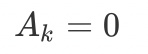
乘法次数记为 0: