认真看完这篇文章, 您可以自己封装一个简易但功能相对齐全的Promise, 还可以加深对Promise的理解
建议 : 看这篇文章之前希望您
- 了解ES6的语法 [ 阮一峰老师的ES6入门 ]
- 了解Promises/A+规范 [ Promises/A+ ]
- 会使用Promise
文章较长, 代码连贯性较强, 从简单开始入手, 读者可以按需选读
一. 最简单的Promise
class Promise {
    constructor (executor) {
        if (typeof executor !== 'function')
            throw new TypeError(`Promise resolver ${executor} is not a function`)

        /* 默认状态 */
        this.state = 'pending'
        this.value = undefined
        this.reason = undefined

        /*
            状态函数 resolve, reject
            1.pending -> fulfilled, pending -> rejected
            2.把数据储存到Promise实例上 this.value = value, this.reason = reason
        */
        const resolve = value => {
            if (this.state === 'pending') {
                this.state = 'fulfilled'
                this.value = value
            }
        }
        const reject = reason => {
            if (this.state === 'pending') {
                this.state = 'rejected'
                this.reason = reason
            }
        }

        executor(resolve, reject)
    }

    then (onFulfilled, onRejected) {
        if (this.state === 'fulfilled') {
            onFulfilled(this.value)
        }
        if (this.state === 'rejected') {
            onRejected(this.reason)
        }
    }
}
ps : 测试工具为vsCode的Quokka插件
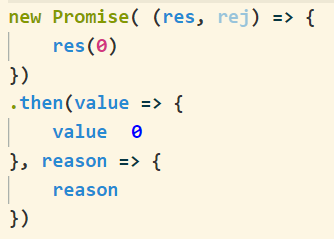
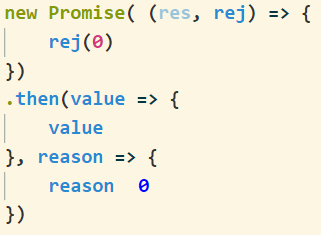
根据Promise的状态函数res和rej,对应执行then中的处理函数onFulfilled和onRejected
二. 异步的Promise
1. then()为异步
我们都知道,Promise中的then函数的代码是异步执行的,而我们写的这个并不是,可以验证一下
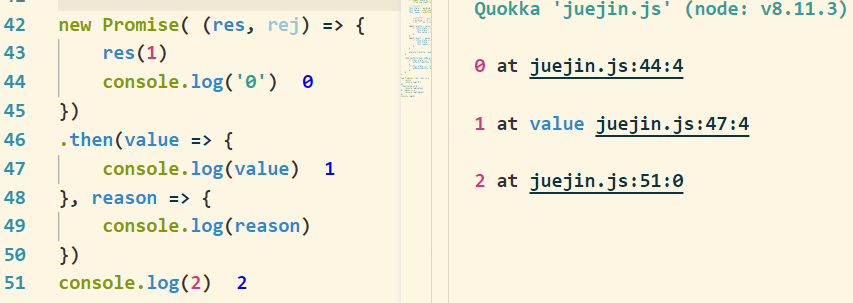
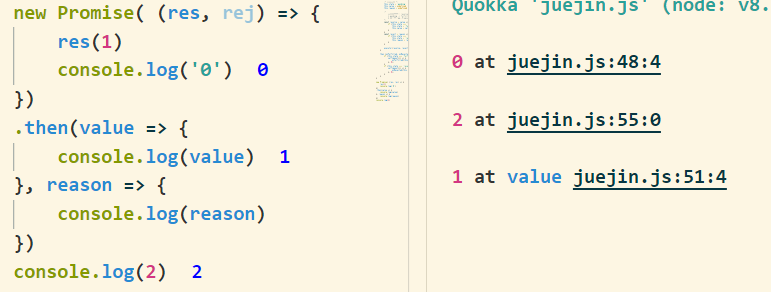
显然这段代码是同步执行的,而我们想要的输出顺序是 0 2 1,所以我们可以使用setTimeout模拟这个异步
class Promise {
    constructor (executor) { ... }

    then (onFulfilled, onRejected) {
        if (this.state === 'fulfilled') {

            /* 使用setTimeout模拟异步 */
            setTimeout(() => {
                onFulfilled(this.value)
            }, 0);

        }
        if (this.state === 'rejected') {
            setTimeout(() => {
                onRejected(this.reason)
            }, 0);
        }
    }
}
2. 状态函数异步执行
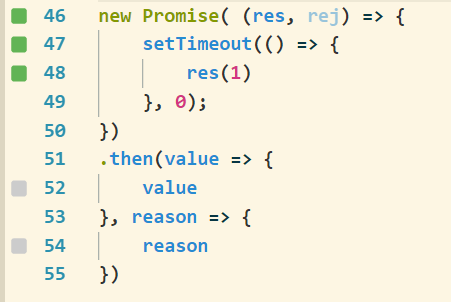
res/rej为异步执行时, 我们可以看到then是没有反应的左边灰色小方块表明这行代码没有执行
为什么呢? 那是因为当执行到then函数的时候,res为异步执行,所以状态还是pending,而我们的then函数里面还没有对状态为pending的处理, 修改一下代码
class Promise {
    constructor (executor) {
        ...
        /* 状态函数异步执行时, 处理函数的存储列表 */
        this.resolveCallBackList = []
        this.rejectCallBackList = []

        const resolve = value => {
            if (this.state === 'pending') {
                ...
                /* 如果有, 则执行处理函数列表里的函数 */
                this.resolveCallBackList.length > 0
                && this.resolveCallBackList.forEach(e => e())
            }
        }
        const reject = reason => {
            if (this.state === 'pending') {
                ...
                this.rejectCallBackList.length > 0
                && this.rejectCallBackList.forEach(e => e())
            }
        }
        ...
    }

    then (onFulfilled, onRejected) {
        ...

        /* 状态为pending时, 把处理函数存储对相应的列表 */
        if (this.state === 'pending') {
            onFulfilled && this.resolveCallBackList.push( () => {
                onFulfilled(this.value)
            })
            onRejected && this.rejectCallBackList.push( () => {
                onRejected(this.reason)
            })
        }
    }
}
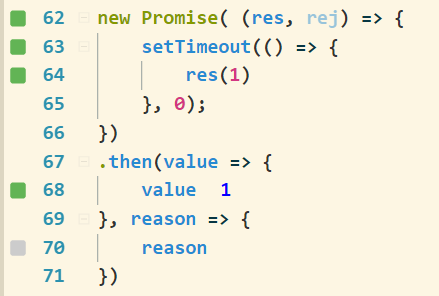
这样, 状态函数异步执行的时候也可以处理了, 可以简单理解为, 当状态为pending时, 把处理函数onFulfilled/onRejected存起来, 等状态函数res/rej执行时, 自动执行对应的处理函数
三. Promise的错误捕捉
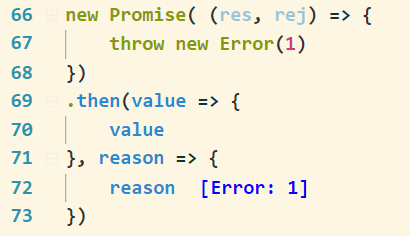
当发生错误时, Promise不会报错, 而是由失败的处理函数then函数的第二个函数捕捉错误并处理, 如果我们自己写的Promise发生错误的话, 毫无意外是直接报错的, 就像这样
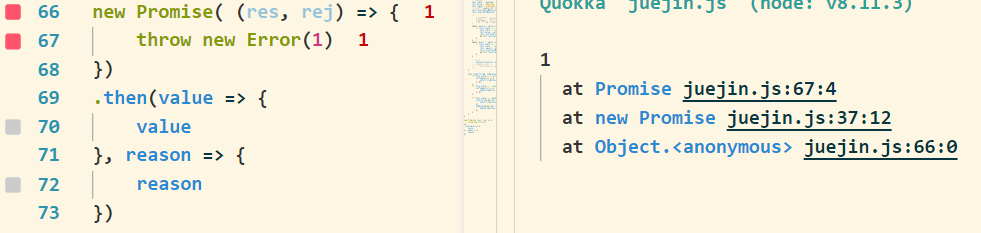
既然执行时发生错误, 那么我们就可以使用try/catch去捕获错误
class Promise {
    constructor (executor) {
        ...

        /* 使用try/catch捕获错误, 并执行reject, 改变状态为rejected */
        try {
            executor(resolve, reject)
        } catch (error) {
            this.state === 'pending' && reject(error)
        }
    }

    then (onFulfilled, onRejected) { ... }
}
四. then函数详解
then函数有两个特性
- then函数执行完返回一个新的Promise实例
- then函数能链式调用
1. then的链式调用
new Promise(res => res(0))
.then(value => {
    console.log(value)   // 0
    return `1 fulfilled`
})
.then(value => {
    console.log(value)   // 1 fulfilled
})
then函数执行后返回一个Promise实例, 该Promise实例的状态由then决定, 下一个then函数根据返回的这个Promise实例执行相应的处理函数, 画个图
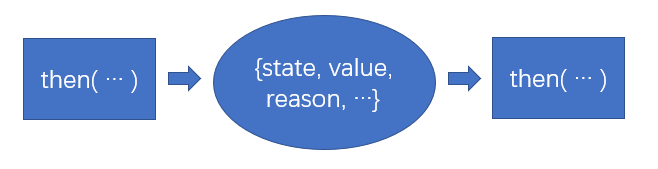
then的执行依赖于上一个then执行返回的Promise实例, 而这个Promise实例的数据由上一个then的处理函数onFulfilled/onRejected的执行和其返回值决定
2.then的处理函数返回值不是一个Promise实例
如果按照字面意思去写代码
class Promise {
    constructor (executor) { ... }

    then (onFulfilled, onRejected) {
        /* 一个新的Promise实例 */
        const newPromise = new Promise ( (res, rej) => {})

        ...

        return newPromise
    }
}
如果这样写, 是没意义的, 返回的Promise实例的状态永远为pending, 因为没有执行状态函数res/rej, 因此也无法进行then函数的链式调用
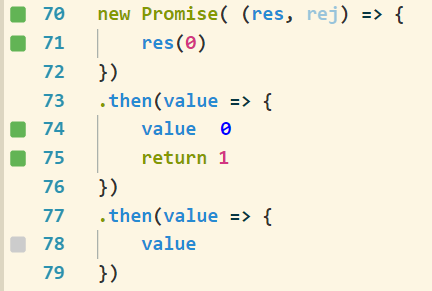
因为new Promise(executor)的executor函数是同步执行的, 所以我们可以这样写
class Promise {
    constructor (executor) { ... }

    then (onFulfilled, onRejected) {
        const newPromise = new Promise ( (res, rej) => {

            /*
                这部分的处理函数是同步执行的, 因此可以放在里面执行
                同时还能通过res/rej改变返回的Promise实例的状态
            */
            if (this.state === 'fulfilled') {
                setTimeout(() => {

                    /* 拿到处理函数执行后的返回值 */
                    const value = onFulfilled(this.value)
                    /* 改变返回的Promise实例的状态并把数据传过去 */
                    res(value)


                }, 0);
            }
            if (this.state === 'rejected') {
                setTimeout(() => {
                    const reason = onRejected(this.reason)
                    res(reason)
                }, 0);
            }

            if (this.state === 'pending') {
                onFulfilled && this.resolveCallBackList.push( () => {
                    const value = onFulfilled(this.value)
                    res(value)
                })
                onRejected && this.rejectCallBackList.push( () => {
                    const reason = onRejected(this.reason)
                    res(reason)
                })
            }
        })

        return newPromise
    }
}
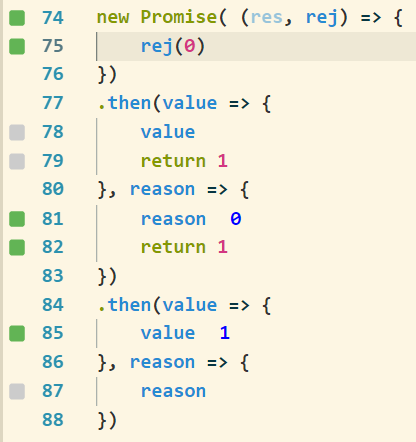
then的链式调用完成了
ps : then的处理函数返回值不是一个Promise实例时, 无论fullfilled还是rejected, 都是执行下一个then函数的onFulfilled
3.then的处理函数返回值是一个Promise实例
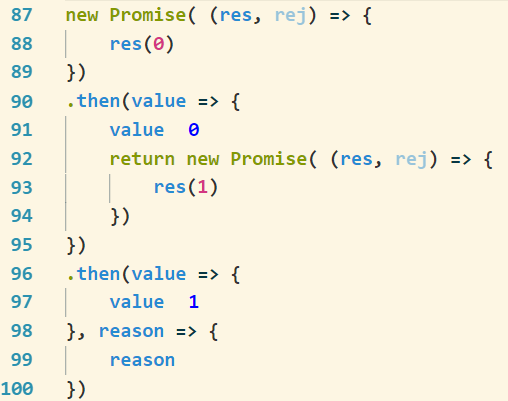
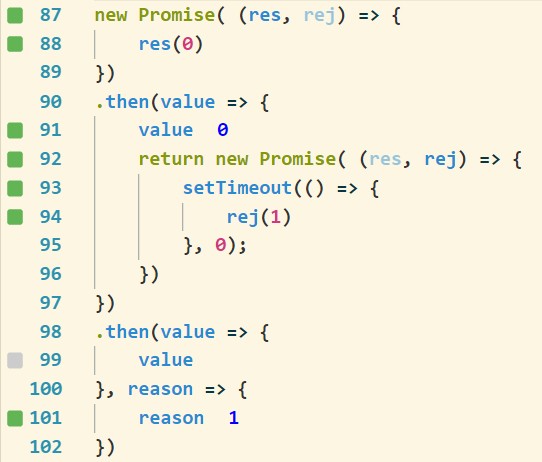
当then的处理函数返回值是一个Promise实例时, 则下一个then函数的执行, 全部由这个Promise实例决定, 所以我们需要使用checkReturnValueIfPromise函数去判断一下返回值的类型并处理对应的情况
class Promise {
    constructor (executor) { ... }

    /*
        promise -> Promise对象
        target -> then的处理函数的返回值
        res/rej -> 要返回的Promise实例的状态函数
    */
    checkReturnValueIfPromise (promise, target, res, rej) {
        if (target instanceof promise) {

            /*
                如果是Promise实例
                则调用then函数,根据Promise实例的状态执行对应的处理函数
                从而改变要返回的Promise实例的状态
                如果下面的代码不能理解, 也可以写成这样
                    target.then( value => {
                        res(value)
                    }, reason => {
                        rej(reason)
                    } )
            */
            target.then(res, rej)


        } else {
            res(target)
        }
    }

    then (onFulfilled, onRejected) {
        const newPromise = new Promise ( (res, rej) => {
            if (this.state === 'fulfilled') {
                setTimeout(() => {

                    const value = onFulfilled(this.value)
                    /* 调用检测函数并做相关处理 */
                    this.checkReturnValueIfPromise(Promise, value, res, rej)

                }, 0);
            }
            if (this.state === 'rejected') {
                setTimeout(() => {
                    const reason = onRejected(this.reason)
                    this.checkReturnValueIfPromise(Promise, reason, res, rej)
                }, 0);
            }

            if (this.state === 'pending') {
                onFulfilled && this.resolveCallBackList.push( () => {
                    const value = onFulfilled(this.value)
                    this.checkReturnValueIfPromise(Promise, value, res, rej)
                })
                onRejected && this.rejectCallBackList.push( () => {
                    const reason = onRejected(this.reason)
                    this.checkReturnValueIfPromise(Promise, reason, res, rej)
                })
            }
        })

        return newPromise
    }
}
五. 一些Promise上的方法 (直接上代码)
对了, 还有一个与then类似的方法catch, 这个方法是专门处理rejected状态的, 代码也就只有一句话
class Promise {
    constructor () { ... }

    then () { ... }

    catch (onRejected) {
        this.then(undefined, onRejected)
    }
}
1. Promise.resolve
返回一个fulfilled状态的Promise实例
class Promise {
    constructor () { ... }

    then () { ... }

    catch () { ... }

    static resolve (value) {
        return new Promise( res => res(value))
    }
}
2. Promise.reject
返回一个rejected状态的Promise实例
class Promise {
    constructor () { ... }

    then () { ... }

    catch () { ... }

    static resolve () { ... }

    static reject (reason) {
        return new Promise( (undefined, rej) => rej(reason))
    }
}
3. Promise.race
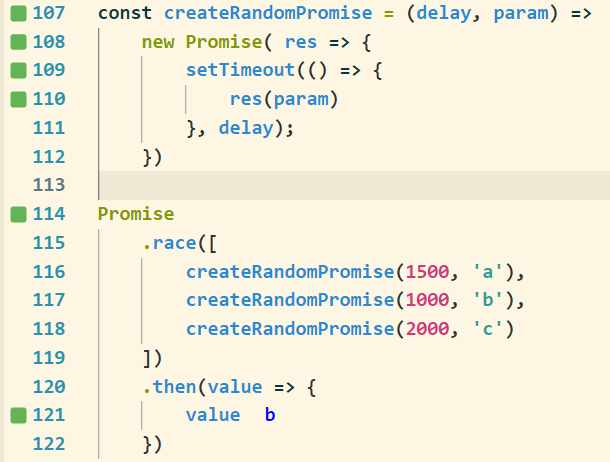
接收一个Promise实例的数组promiseArray, 返回一个Promise实例, 返回的Promise实例由promiseArray中执行最快的Promise实例决定
class Promise {
    constructor () { ... }

    then () { ... }

    catch () { ... }

    static resolve () { ... }

    static reject () { ... }

    static race (promiseArray) {
        return new Promise ( (res, rej) => {
            promiseArray.forEach( promise => {
                promise.then(res, rej)
            })
        })
    }
}
4. Promise.all
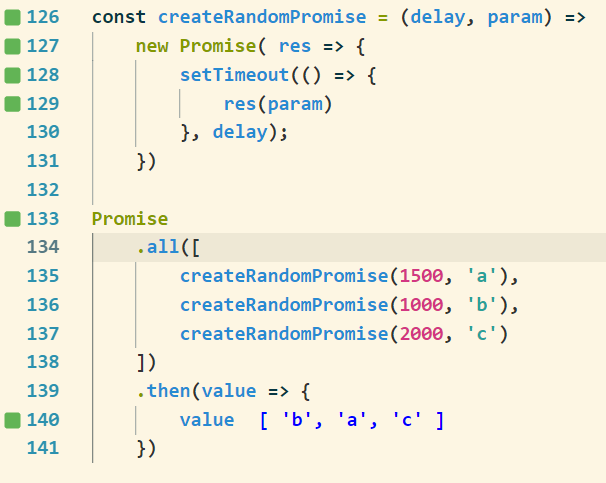
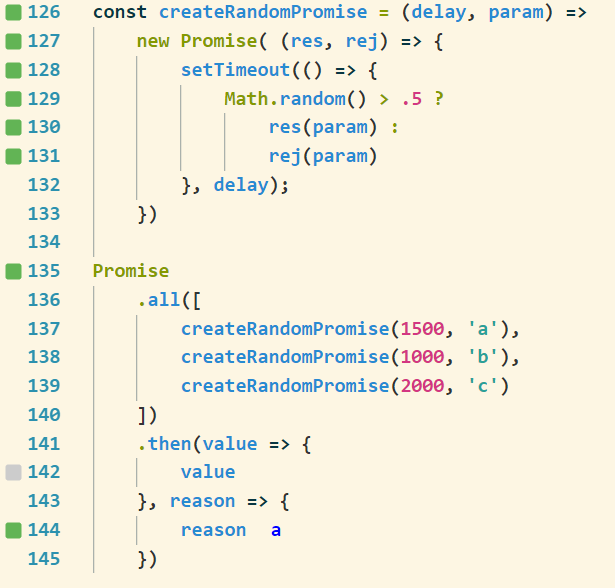
功能描述太长了, 不懂的可以去看 阮一峰老师对于Promise.all的介绍
class Promise {
    constructor () { ... }

    then () { ... }

    catch () { ... }

    static resolve () { ... }

    static reject () { ... }

    static race () { ... }

    static all (promiseArray) {
        let count = 0,
            resultArray = []

        return new Promise( (res, rej) => {
            promiseArray.forEach( promise => {
                promise.then( value => {
                    count++
                    resultArray.push(value)
                    if (count === promiseArray.length) {
                        res(resultArray)
                    }
                }, reason => {
                    rej(reason)
                })
            })
        })
    }
}
六. 结语
谢谢浏览我的文章, 希望你能学到东西