Model and Cost Function
1 模型概述 - Model Representation
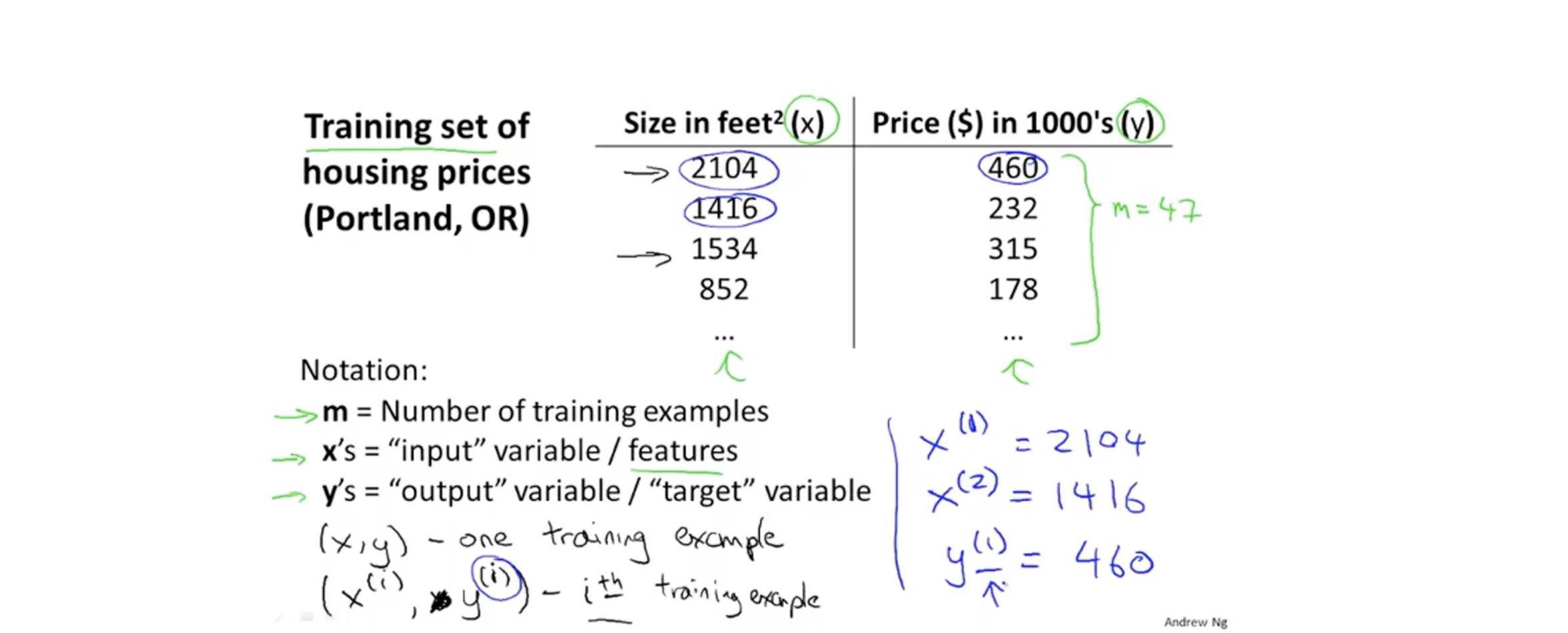
To establish notation for future use, we’ll use
- x(i)
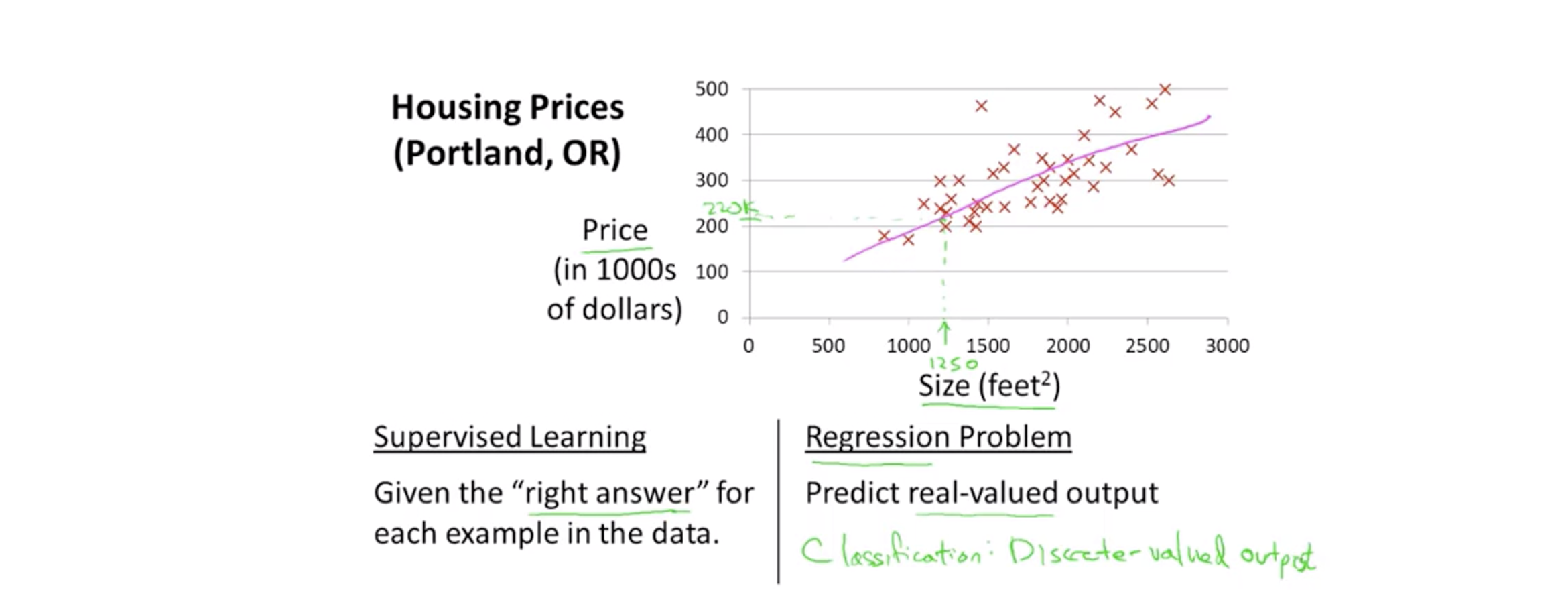
denote the “input” variables (living area in this example), also called input features, and - y(i)
denote the “output” or target variable that we are trying to predict (price).
A pair (x(i),y(i)) is called a training example
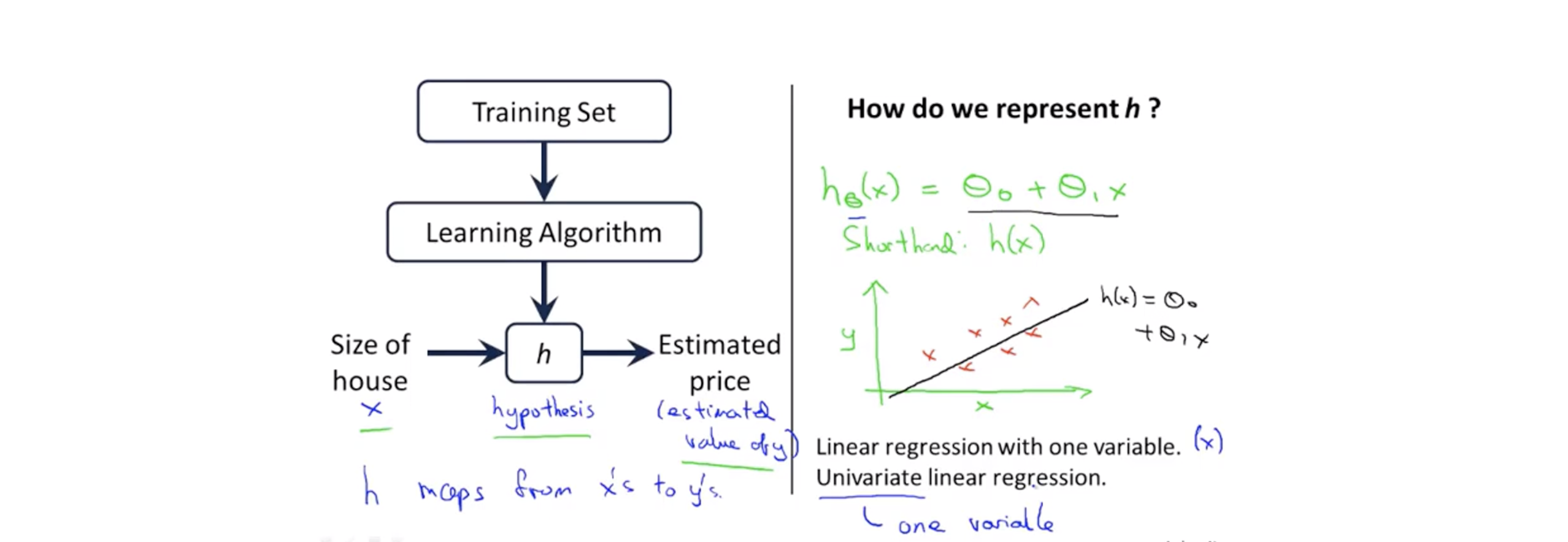
the dataset that we’ll be using to learn—a list of m training examples (x(i),y(i));i=1,...,m—is called a training set. Note that the superscript “(i)” in the notation is simply an index into the training set, and has nothing to do with exponentiation. We will also use X to denote the space of input values, and Y to denote the space of output values. In this example, X = Y = R. To describe the supervised learning problem slightly more formally, our goal is, given a training set, to learn a function h : X → Y so that h(x) is a “good” predictor for the corresponding value of y. For historical reasons, this function h is called a hypothesis. Seen pictorially, the process is therefore like this: