- volatile则是通知jvm当前变量在寄存器或者cpu中的值是不确定的,需要从主存中读取。不会阻塞线程。
- synchronized是通过锁机制来控制变量是否可以访问。当变量被锁时,其他线程访问变量将被阻塞,直至锁释放。
volatile
- volatile保证其他线程对这个变量操作时是立即可见的,即操作的是从内存中读取的最新值
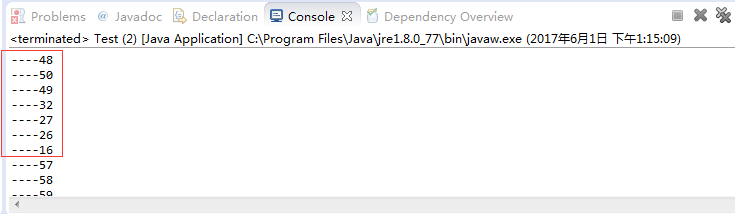
- 无法保证原子性
- 只能修饰变量
public class Test {
	private volatile int count;
	public void increase() {
		count++;
		System.out.println("----" + count);
	}
	public static void main(String[] args) throws Exception {
		Test test = new Test();

		for (int i = 0; i < 10; i++) {
			new Thread() {
				public void run() {
					for (int j = 0; j < 10; j++) {
						test.increase();
					}
				};
			}.start();
		}
	}
}
- 控制台输出:
- 使用场景(DCL双重检测锁):
class Singleton{
    private volatile static Singleton instance = null;

    private Singleton() {}

    public static Singleton getInstance() {
        if(instance==null) {
            synchronized (Singleton.class) {
                if(instance==null)
                    instance = new Singleton();
            }
        }
        return instance;
    }
}
synchronized
- 保证原子性
- 即可修饰变量也可修饰方法
- 会阻塞线程
synchronized非静态方法
public class Test {
	public synchronized void increase1() {
		for (int i = 0; i < 5; i++) {
			try {
				Thread.sleep(1000);
			} catch (InterruptedException e) {
				// TODO Auto-generated catch block
				e.printStackTrace();
			}
			System.out.println("increase1---->" + i);
		}
	}

	public synchronized void increase2() {
		for (int i = 0; i < 5; i++) {
			try {
				Thread.sleep(1000);
			} catch (InterruptedException e) {
				// TODO Auto-generated catch block
				e.printStackTrace();
			}
			System.out.println("increase2---->" + i);
		}
	}

	public static void main(String[] args) throws Exception {
		Test test = new Test();


			new Thread() {
				public void run() {
					test.increase1();
				};
			}.start();
			new Thread() {
				public void run() {
					test.increase2();
				};
			}.start();
	}
}
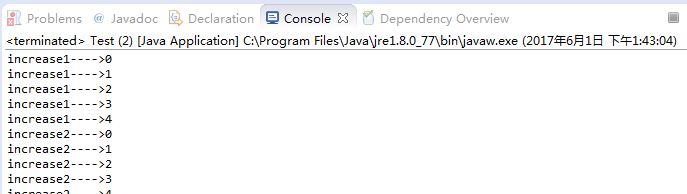
- 控制台输出:
- 结论:
如果一个对象有多个synchronized方法,多个线程同时调用该对象的方法,将会同步执行,即同时只能有一个synchronized方法被调用,其他调用将被阻塞直至该方法执行完
synchronized静态方法
懒。。 直接给结论了
synchronized静态方法和非静态方法的区别在于给方法上锁的对象不一样,非静态方法是给调用的对象上锁,静态方法是给类的Class对象上锁
synchronized块
public class Test {
	public void increase1() {
		System.out.println("increase1----------> start");
		synchronized (this) {
			for (int i = 0; i < 5; i++) {
				try {
					Thread.sleep(1000);
				} catch (InterruptedException e) {
					// TODO Auto-generated catch block
					e.printStackTrace();
				}
				System.out.println("increase1---->" + i);
			}
		}
		System.out.println("increase1----------> end");
	}

	public void increase2() {
		System.out.println("increase2----------> start");
		synchronized(this) {
			for (int i = 0; i < 5; i++) {
				try {
					Thread.sleep(1000);
				} catch (InterruptedException e) {
					// TODO Auto-generated catch block
					e.printStackTrace();
				}
				System.out.println("increase2---->" + i);
			}
		}
		System.out.println("increase2----------> end");
	}

	public static void main(String[] args) throws Exception {
		Test test = new Test();


			new Thread() {
				public void run() {
					test.increase1();
				};
			}.start();
			new Thread() {
				public void run() {
					test.increase2();
				};
			}.start();
	}
}
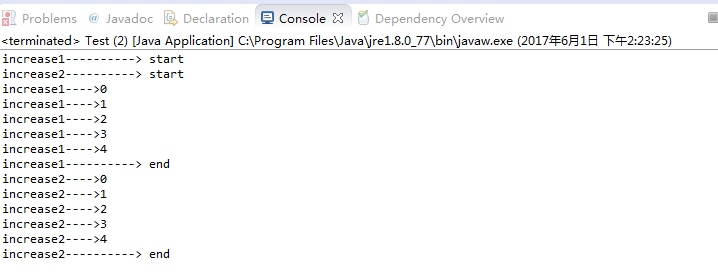
- 控制台输出:
- 结论
synchronized方法是控制同时只能有一个线程执行synchronized方法;synchronized块是控制同时只能有一个线程执行synchronized块中的内容