概述
线程间协作即有多个线程需要按照一定顺序相互协作进行。主要有两种方法来实现,使用锁(互斥)来同步两个任务的行为。另一种是使用BlockingQueue,它已经帮我们处理好了同步机制,实现更加简单。
举例
接下来以一个实际场景为例,进行演示。假设在一个餐馆中有一个服务员,有一个厨师,而服务员要等到厨子把菜做好了才能上菜,然后回来继续等待。而厨师得到新订单后开始做菜。用两种方式实现之前,我们分析知厨师和服务员分别是一个独立的线程,他们通过餐厅联结在一起。在这个模型中厨师代表生产者,服务员代表消费者。Order是他们共享的资源,需要进行同步。
使用锁的互斥
菜
public class Order {
  private int num=0;

  public Order(int num) {
      this.num=num;
  }

  @Override
  public String toString() {
      return "order num:"+num;
  }
}
餐馆
public class Restaurant { Order order; Chef chef=new Chef(this); Waiter waiter=new Waiter(this); ExecutorService executorService= Executors.newCachedThreadPool(); public Restaurant() { order =null; executorService.execute(chef); executorService.execute(waiter); try { TimeUnit.SECONDS.sleep(5); }catch (Exception e){ e.printStackTrace(); } executorService.shutdown(); } public static void main(String[] args){ new Restaurant(); } }- 厨师
public class Chef implements Runnable {
 private Restaurant restaurant;
 private int counter=0;
 public Chef(Restaurant restaurant) {
     this.restaurant = restaurant;
 }
 @Override
 public void run() {
     try{
         while (!Thread.interrupted()){
             synchronized (this){
                 while (restaurant.meal!=null){
                     wait();//等服务员上菜,获得新订单
                 }
             }
             synchronized (restaurant.waiter){
                 //获得服务员的锁,让他等我做菜
                 restaurant.meal=new Meal(counter++);
                 System.out.print("a meal is done");
                 Thread.sleep(500);
                 restaurant.waiter.notifyAll();
                 //告诉服务员可以上菜了
             }
         }
     }catch (Exception e){
         e.printStackTrace();
     }
 }
}
服务员
public class Waiter implements Runnable {
  private Restaurant restaurant;

  public Waiter(Restaurant restaurant) {
      this.restaurant = restaurant;
  }

  @Override
  public void run() {
      try {
          while (!Thread.interrupted()){
              synchronized (this){
                  while (restaurant.order ==null){
                      wait();//等待厨师做完菜后被chef的notifyAll()唤醒,注意wait()会释放当前获得的锁
                  }
              }
              synchronized (restaurant.chef){
                  System.out.print("waiter: order up\n");
                  restaurant.order =null;
                  restaurant.chef.notifyAll();//告诉厨师可以做菜了
              }
          }
      }catch (Exception e){
          e.printStackTrace();
      }
  }
}
图片.png
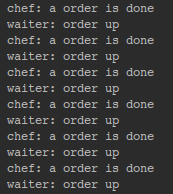
由此可见chef与waiter按照顺序协调了
使用BlockingQueue同步
- 创建自己的BlockingQueue
public class MealQueue extends LinkedBlockingQueue<Order> {
}
餐馆
public class Restaurant {
  private MealQueue waitQueue;
  private MealQueue finishedQueue;
  private Chef chef;
  private Waiter waiter;

  public Restaurant() {
      waitQueue = new MealQueue();
      finishedQueue = new MealQueue();
      chef = new Chef(waitQueue, finishedQueue);
      waiter = new Waiter(waitQueue, finishedQueue);
      ExecutorService executorService = Executors.newCachedThreadPool();
      executorService.execute(chef);
      executorService.execute(waiter);

      try {
          Thread.sleep(5000);
      } catch (InterruptedException e) {
          e.printStackTrace();
      }

      executorService.shutdown();
  }

  public static void main(String[] args){
      new Restaurant();
  }
}
厨师
public class Chef implements Runnable{
  private MealQueue waitQueue;
  private MealQueue finishedQueue;

  public Chef(MealQueue waitQueue, MealQueue finishedQueue) {
      this.waitQueue = waitQueue;
      this.finishedQueue = finishedQueue;
  }

  @Override
  public void run() {
      try {
          while (!Thread.interrupted()){
              Order order =waitQueue.take();
              Thread.sleep(500);
              System.out.print("chef:order done   "+ order.toString()+"\n");
              finishedQueue.add(order);
          }
      } catch (Exception e) {
          e.printStackTrace();
      }
  }
}
服务员
public class Waiter implements Runnable{
  private MealQueue waitQueue;
  private MealQueue finishedQueue;
  private int count;

  public Waiter(MealQueue waitQueue, MealQueue finishedQueue) {
      this.waitQueue = waitQueue;
      this.finishedQueue = finishedQueue;
      count=0;
  }

  @Override
  public void run() {
      try {
          while (!Thread.interrupted()){
              Order newOrder=new Order(count++);
              waitQueue.add(newOrder);
              System.out.print("waiter:a new order\n");
              Order order =finishedQueue.take();
              System.out.print("waiter:order complete  "+ order.toString()+"\n");
          }
      } catch (Exception e) {
          e.printStackTrace();
      }
  }
}
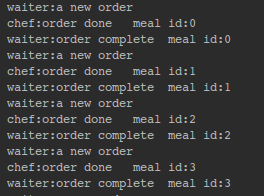
在这个版本中,我们没有在任何一个地方显示加锁,但它仍能有序进行非常简单
总结
我们通过两种方法完成了线程的协作,个人觉得使用BlockingQueuer更容易也更好管理。最后还有一个例子模拟生产吐司面包,第一步制作吐司,第二步抹黄油,第三步涂果酱。代码已同步到github,不再赘述。如发现错误,欢迎指正。